Nick Nelson
Administrator
-
Joined
-
Last visited
Everything posted by Nick Nelson
-
Friday marks the deadline for MLB teams to tender contracts to arbitration-eligible players. The Minnesota Twins have a number of decisions to make, ranging from no-brainer to head-scratcher. Let's review each arbitration tender candidate case by case, in order from easiest to most difficult stay-or-go calls. Image courtesy of Nick Wosika-USA TODAY Sports Minnesota's front office got a few of these decisions out of the way early by waiving Jake Cave (claimed by Baltimore), Danny Coulombe, and Cody Stashak. All would have been eligible for arbitration, albeit with fairly modest projected salaries. They also took care of business already with Kyle Garlick, agreeing on a one-year, $750,000 contract. It's barely above the league minimum, but the move to strike an early deal does signal at least some level of intent for the Twins to stick with Garlick as a right-handed complement to their LH-heavy corner outfield mix. Eight players remain who are in the designated service-time range – between three and six years – where they can start to negotiate their own salary. On Friday the Twins will need to commit to tendering a contract and keeping them for 2023 (barring a trade) or letting them go. Here's a case-by-case breakdown, starting with the easiest of easy decisions. (Salary projections courtesy of MLB Trade Rumors.) 8. Luis Arraez, 1B Year 2 of 4 in arbitration Projected 2023 Salary: $5 million The reigning All-Star and batting champ is a lovely bargain in the $5 million range. He still has three years of team control remaining so the Twins do have some leverage for extension talks, but there's not a ton of incentive to pursue one for a 25-year-old with bad knees. 7. Jorge Alcalá, RHP Year 1 of 3 in arbitration Projected 2023 Salary: $800K The right-hander technically accrued a year of service in 2022 while making only two appearances due to an elbow issue that never got right. He didn't need surgery and is expected back at full strength next spring, so there's no reason to think twice about bringing back Alcalá, owner of a career 3.39 ERA and 1.06 WHIP through 87 ⅔ MLB innings, at essentially the league minimum. 6. Caleb Thielbar, LHP Year 2 of 3 in arbitration Projected 2023 Salary: $2.4 million You don't see many guys entering their second year of arbitration at the age of 35. But then, you don't see many stories like Caleb Thielbar. His mildly escalating cost is the only reason you'd have slight pause in extending a contract, but $2.4 million is a paltry sum for the kind of performance Thielbar provided last year. He'll be a cost-efficient centerpiece of bullpen planning. 5. Jorge López, RHP Year 2 of 3 in arbitration Projected 2023 Salary: $3.7 million Here's where the decisions start to get a little thornier. I'm not going to say keeping López is a tough call, because they'll do it without hesitation, but nearly $4 million could be viewed as a hefty price tag based on what he did for the Twins (4.37 ERA) and in his career prior to 2022 (6.04 ERA). Alas, his first spectacular four months in Baltimore compelled the Twins to part with three prospects for him at the deadline, and will compel them to tender a contract – especially since he has another year of team control in 2024. 4. Tyler Mahle, RHP Year 3 of 3 in arbitration Projected 2023 Salary: $7.2 million It's hard to imagine how Mahle's post-trade time with the Twins could've gone worse in 2022. If he merely performed badly, you'd chalk it up as a rough second half or adjustment to new scenery, and hope for a rebound to previous form. If he tore a labrum in his shoulder or elbow ligament, you'd non-tender without a second thought. Instead, his mysterious recurring shoulder fatigue kept him from being able to pitch at all, leaving the front office with no choice but to gamble $7 million on this issue disappearing in the offseason. They'll do it, especially because of what they gave up to get him, but it's really hard to plan confidently around him at this point. 3. Emilio Pagán, RHP Year 3 of 3 in arbitration Projected 2023 Salary: $3.7 million I'm not saying this decision should be remotely difficult. But ... there's a reason the Twins kept Pagán around all year despite having ample reason to jettison him. The guy has legitimately excellent stuff. He averaged 12 K/9 with a 14% swinging strike rate. But he also got crushed, for a third straight season, because he has shown no ability to consistently execute. With such a long-running sample of failure, the choice to move on at almost $4 million should be obvious. But I don't get the sense it's viewed that way. 2. Chris Paddack, RHP Year 2 of 3 in arbitration Projected 2023 Salary: $2.4 million The righty's past standing as one of the game's better young pitchers, and his three remaining seasons of team control, were key reasons the Twins pulled the trigger on a deal that brought him over alongside Pagan in exchange for Taylor Rogers just ahead of Opening Day. Paddack only lasted five starts before his partially torn UCL gave way, requiring a second Tommy John surgery that will knock him out for almost all of next year. Essentially, the Twins would be paying about $2.5 million for the opportunity to try and get one more season out of Paddack, in 2024 when he'll be in his final year of arbitration. That's probably worth it, but hardly a lock, especially when you consider the opportunity cost of needing to dedicate a 40-man roster spot all winter before you can move him to the 60-day IL next spring. While the upside was once easy to see, you now really have to squint: he's got a 97 career ERA+ and in 2024 he'll be a 28-year-old coming off his second TJ surgery. The track record for pitchers who've undergone it twice is not promising. 1. Gio Urshela, 3B Year 3 of 3 in arbitration Projected 2023 Salary: $9.2 million A funny story: In mid-September I tweeted a 2023 roster projection that didn't include Urshela, and Athletic beat writer Dan Hayes challenged me by saying the veteran third baseman should be considered a lock for at least a tender. Dan tends to be pretty plugged into what's going on and instinctually sound, so I started to adjust my thinking. I even came around on the idea as Urshela finished strong with a .333/.404/.425 slash line in the final month while Jose Miranda failed to impress much at third base. Then, after the season ended, Dan informed me he'd softened his stance and was no longer so sure Urshela would be tendered. (He expressed this view on a recent Gleeman and the Geek appearance.) It seems the consensus on Urshela is that while he's a good and desirable player, that price tag is a tad more than you'd like to pay when you've already got some options. For the Twins, this decision hinges on a few factors. Are they confident enough in Miranda and his defense (or the depth behind him) to commit as a full-time third baseman? Do they have other offseason plans, like signing Brandon Drury or Jose Abreu, that would negate any need for Urshela on the roster? Does the front office believe they could tender and trade him, to keep their options open? I lean toward the last one, so I do think he'll be tendered. But it's far from a lock. View full article
-
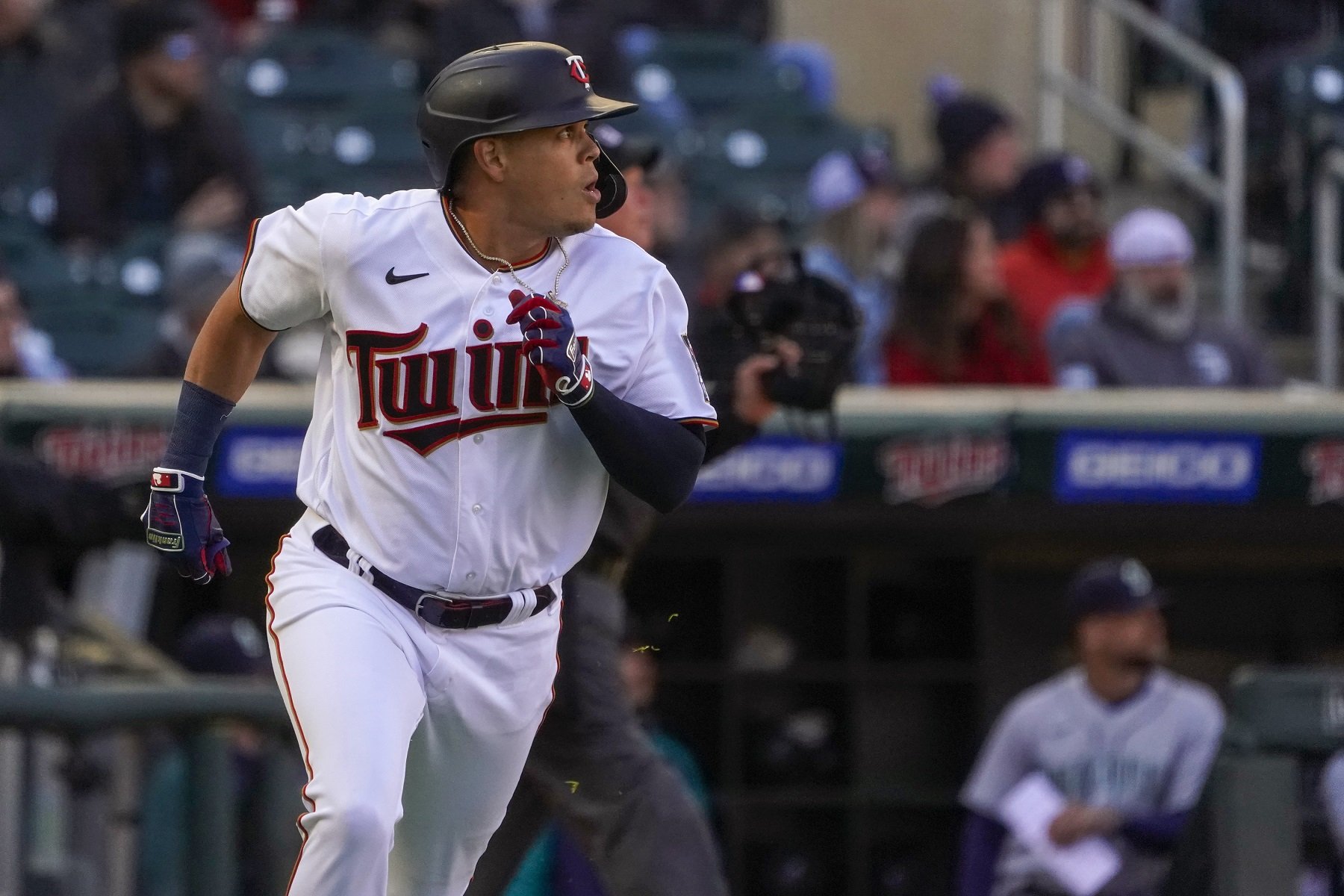 Minnesota's front office got a few of these decisions out of the way early by waiving Jake Cave (claimed by Baltimore), Danny Coulombe, and Cody Stashak. All would have been eligible for arbitration, albeit with fairly modest projected salaries. They also took care of business already with Kyle Garlick, agreeing on a one-year, $750,000 contract. It's barely above the league minimum, but the move to strike an early deal does signal at least some level of intent for the Twins to stick with Garlick as a right-handed complement to their LH-heavy corner outfield mix. Eight players remain who are in the designated service-time range – between three and six years – where they can start to negotiate their own salary. On Friday the Twins will need to commit to tendering a contract and keeping them for 2023 (barring a trade) or letting them go. Here's a case-by-case breakdown, starting with the easiest of easy decisions. (Salary projections courtesy of MLB Trade Rumors.) 8. Luis Arraez, 1B Year 2 of 4 in arbitration Projected 2023 Salary: $5 million The reigning All-Star and batting champ is a lovely bargain in the $5 million range. He still has three years of team control remaining so the Twins do have some leverage for extension talks, but there's not a ton of incentive to pursue one for a 25-year-old with bad knees. 7. Jorge Alcalá, RHP Year 1 of 3 in arbitration Projected 2023 Salary: $800K The right-hander technically accrued a year of service in 2022 while making only two appearances due to an elbow issue that never got right. He didn't need surgery and is expected back at full strength next spring, so there's no reason to think twice about bringing back Alcalá, owner of a career 3.39 ERA and 1.06 WHIP through 87 ⅔ MLB innings, at essentially the league minimum. 6. Caleb Thielbar, LHP Year 2 of 3 in arbitration Projected 2023 Salary: $2.4 million You don't see many guys entering their second year of arbitration at the age of 35. But then, you don't see many stories like Caleb Thielbar. His mildly escalating cost is the only reason you'd have slight pause in extending a contract, but $2.4 million is a paltry sum for the kind of performance Thielbar provided last year. He'll be a cost-efficient centerpiece of bullpen planning. 5. Jorge López, RHP Year 2 of 3 in arbitration Projected 2023 Salary: $3.7 million Here's where the decisions start to get a little thornier. I'm not going to say keeping López is a tough call, because they'll do it without hesitation, but nearly $4 million could be viewed as a hefty price tag based on what he did for the Twins (4.37 ERA) and in his career prior to 2022 (6.04 ERA). Alas, his first spectacular four months in Baltimore compelled the Twins to part with three prospects for him at the deadline, and will compel them to tender a contract – especially since he has another year of team control in 2024. 4. Tyler Mahle, RHP Year 3 of 3 in arbitration Projected 2023 Salary: $7.2 million It's hard to imagine how Mahle's post-trade time with the Twins could've gone worse in 2022. If he merely performed badly, you'd chalk it up as a rough second half or adjustment to new scenery, and hope for a rebound to previous form. If he tore a labrum in his shoulder or elbow ligament, you'd non-tender without a second thought. Instead, his mysterious recurring shoulder fatigue kept him from being able to pitch at all, leaving the front office with no choice but to gamble $7 million on this issue disappearing in the offseason. They'll do it, especially because of what they gave up to get him, but it's really hard to plan confidently around him at this point. 3. Emilio Pagán, RHP Year 3 of 3 in arbitration Projected 2023 Salary: $3.7 million I'm not saying this decision should be remotely difficult. But ... there's a reason the Twins kept Pagán around all year despite having ample reason to jettison him. The guy has legitimately excellent stuff. He averaged 12 K/9 with a 14% swinging strike rate. But he also got crushed, for a third straight season, because he has shown no ability to consistently execute. With such a long-running sample of failure, the choice to move on at almost $4 million should be obvious. But I don't get the sense it's viewed that way. 2. Chris Paddack, RHP Year 2 of 3 in arbitration Projected 2023 Salary: $2.4 million The righty's past standing as one of the game's better young pitchers, and his three remaining seasons of team control, were key reasons the Twins pulled the trigger on a deal that brought him over alongside Pagan in exchange for Taylor Rogers just ahead of Opening Day. Paddack only lasted five starts before his partially torn UCL gave way, requiring a second Tommy John surgery that will knock him out for almost all of next year. Essentially, the Twins would be paying about $2.5 million for the opportunity to try and get one more season out of Paddack, in 2024 when he'll be in his final year of arbitration. That's probably worth it, but hardly a lock, especially when you consider the opportunity cost of needing to dedicate a 40-man roster spot all winter before you can move him to the 60-day IL next spring. While the upside was once easy to see, you now really have to squint: he's got a 97 career ERA+ and in 2024 he'll be a 28-year-old coming off his second TJ surgery. The track record for pitchers who've undergone it twice is not promising. 1. Gio Urshela, 3B Year 3 of 3 in arbitration Projected 2023 Salary: $9.2 million A funny story: In mid-September I tweeted a 2023 roster projection that didn't include Urshela, and Athletic beat writer Dan Hayes challenged me by saying the veteran third baseman should be considered a lock for at least a tender. Dan tends to be pretty plugged into what's going on and instinctually sound, so I started to adjust my thinking. I even came around on the idea as Urshela finished strong with a .333/.404/.425 slash line in the final month while Jose Miranda failed to impress much at third base. Then, after the season ended, Dan informed me he'd softened his stance and was no longer so sure Urshela would be tendered. (He expressed this view on a recent Gleeman and the Geek appearance.) It seems the consensus on Urshela is that while he's a good and desirable player, that price tag is a tad more than you'd like to pay when you've already got some options. For the Twins, this decision hinges on a few factors. Are they confident enough in Miranda and his defense (or the depth behind him) to commit as a full-time third baseman? Do they have other offseason plans, like signing Brandon Drury or Jose Abreu, that would negate any need for Urshela on the roster? Does the front office believe they could tender and trade him, to keep their options open? I lean toward the last one, so I do think he'll be tendered. But it's far from a lock.
-
In 2015, Miguel Sanó arrived to great fanfare – the top prospect and heralded young slugging star who would help carry the Twins franchise into a new era. In 2022, he exited to no fanfare, with Minnesota procedurally declining his 2023 option and paying millions to move on, as onlookers barely paid notice. Sanó's fall from mighty heights will go down as a sad, but significant, note in franchise history. Image courtesy of Kim Klement, USA Today Sports Miguel Sanó is one of the biggest young stars to ever come through the Minnesota Twins franchise – figuratively and literally. Both these qualities would ultimately come to play against him, in terms of expectation and perception. A Rising Prodigy His emergence as a youth in the Dominican Republic drew the attention of filmmakers, who produced a documentary detailing Sanó's courtship from major-league teams. Amid controversy swirling around his actual age, Minnesota was able to swoop in and sign him for a franchise-record $3.15 million bonus. From there, Sanó began a rapid pro ascent. The third baseman flashed his immense slugging prowess in the low minors and quickly established himself as a premier prospect, ranking #4 overall on MLB.com's rankings after 2013. Then, in spring of 2014, he tore the UCL in his right elbow, requiring Tommy John surgery and wiping out his age-21 season. It was sadly the beginning of a nonstop cycle of physical setbacks that would keep Sanó from ever settling into any sustained healthy groove in his career. He came back in 2015 and quickly reached the majors. He was as advertised, slashing .269/.385/.531 as a 22-year-old against major-league pitching. Sanó consistently worked counts and capitalized, looking every bit the part of a premier cleanup man for years to come. He finished third in AL Rookie of the Year voting behind Carlos Correa and Francisco Lindor. From Odd Fit to All-Star The following year, Terry Ryan's effort to shoehorn both Sanó and Trevor Plouffe onto the roster led to the ill-advised experiment of shifting Sanó to right field. As a fast-growing hulk who seemed clearly destined to move down the defensive spectrum rather than up it, this assignment did not suit Sanó. He struggled in 2016, at the plate and in the field, contributing to an all-around total system failure that prompted Ryan's dismissal. In 2017, the Twins rebounded, and Sanó was a driving force. Posting a .902 OPS with 21 homers and 62 RBIs in the first half, he made the All-Star team and finished runner-up to Aaron Judge in the Home Run Derby. At age 24, Sanó was without question one of the true rising stars in Major League Baseball, his presence registering on the national scale. In all the talk of what a disappointment and bust he's been, people seem to forget this. For a while, it really was all coming together for him. And then... The Leg Injury About a month after his All-Star experience, Sanó suffered an injury that would permanently alter the course of his meteoric career. On August 18th, he fouled a ball hard into his left shin that did serious damage. Diagnosed as a stress reaction, it never really healed, and Sanó had a titanium rod inserted during the offseason, which prevented him from being able to condition and prepare as normal for the following year. This cascading series of events contributed to a completely disastrous 2018 campaign, during which Minnesota took the drastic step of demoting a broken Sanó from the majors to Single-A, merely so he could go to the team's facility in Fort Myers and try to physically get right. He finished the season with a .199 average and .679 OPS in 71 MLB games. Bomba Squad Revival In 2019, we got one last burst of brilliance from Sanó, but it was a worthy final glimpse, offering everything we hoped he could be. Following a late start due to an offseason incident, he stepped in as a spiritual leader of the Bomba Squad, launching 34 homers in 105 games en route to a .934 OPS. Reigniting his dominant offensive game, Sanó provided many of the season's most memorable highlights, including the grand slam in Cleveland that effectively sealed a division title. By this point, Sanó was a 26-year-old with 118 career home runs and a 122 OPS+, coming off a monster campaign and seemingly ready to enter into a prodigious slugging prime. The sky was the limit, and Minnesota's front office attempted to capitalize with a three-year extension. But from there, the sky started falling and it didn't stop. Miguel's Mighty Collapse It's easy to forget, but for most of the shortened 2020 season, Sanó actually looked the part. Through 42 games he was slashing .236/.321/.549 with 11 homers and 22 RBIs. Then he cratered in the final two weeks, going 4-for-42 with 22 strikeouts, and carried it over to the playoffs where he was 1-for-8. Sanó's offensive production was solid but unspectacular in 2021, where he slashed .223/.312/.466 with poor defensive ratings at first base to produce a modest 0.9 fWAR. Nearly his entire 2022 season was wiped out by a knee injury, and now, here we are. A Mixed, But Largely Misunderstood, Legacy No one can deny that by the end of his tenure in Minnesota, Sanó was of little use. Framing his legacy within that narrow scope, however, tells a very incomplete and misleading story. Yet many people are oddly obsessed with doing so and always have been. All the way back in 2017 I wrote about the implicit negativity bias that threatened to forever tarnish Sanó's perception in the eyes of fans. For whatever reason, there's always been a compulsion to myopically focus on the negatives of his game, even in the face of overwhelming positives and legitimately exhilarating moments on the field. Ax-grinding columnists and pandering media snobs have been relentless in hurling lopsided critiques at the slugger even during his best moments, playing off the most base tropes: that because he's big and strikes out a lot, he must therefore be lazy and bad. During his All-Star 2017, Jim Souhan penned a column for the Star Tribune titled "Pounds sneak up on injured Miguel Sano as Twins get back in race," directing blame for the stress reaction in his leg to his ... diet? At the beginning of Sanó's amazing 2019 season, a local outlet blasted out headlines about how Sanó was not "good at baseball," amidst an endless volley of derision, because – you guessed it – he was big and struck out a lot. As I wrote in 2017, "Sano's historic power is enabled by his size and strength, his ferocious cuts – the very same things criticized by anyone who's looking for a grievance to air." Would it have been nice if he remained a bit more svelte and made more contact? Sure, but Sanó is who he is and was always destined to be: a massive human being who swings obscenely hard and generates ridiculous power. By singling out the negative aspects of his size and swing, you miss out on the historically rare things they enabled him to do. Sanó ranks fifth among all Twins, ever, in slugging percentage. He has hit 162 career home runs before the age of 30. Over the course of his career, he has consistently hit the ball harder than almost anyone in the world. Just look at all the red in those max/average exit velocity columns, indicating he was at or near the top percentile of all MLB hitters: His tremendous raw power produced some of the most memorable moonshots of the Target Field era. He hit the longest measured home run in the ballpark's history, a 496-foot tank off the White Sox in September of 2019. He nearly matched that distance at Fenway in 2021, where his 495-foot nuke off Nick Pivetta became the longest home run hit by anyone all season. The man put forth some of the most dazzling power-hitting highlights Major League Baseball has ever seen, which makes the pervasive compulsion to diminish him especially weird to me. To be clear, Sanó also had some notable off-the-field issues, and was subject of multiple investigations. I don't begrudge anyone for disliking him based on these factors. In fact I can't say I care much for the person, based on all I know. But from a purely baseball vantage, the general conversation on Sanó has been extremely skewed, as any honest look at the facts and statistics will show. Was he a disappointment? Certainly fair to say, especially in light of the expectations set by his own talent and his excellent early MLB output. But to say he was a bust, or bad at baseball, or "never lived up to expectations," is out of touch with reality. Sanó was well on his way to fulfilling his promise, but in a twist uniquely on-brand for Minnesota sports, his ascent was halted and forever reversed just as he was rising to his peak. It's something to be lamented, not celebrated. Especially if the ending of this story follows script and he goes elsewhere to recapture his peak slugging form. View full article
-
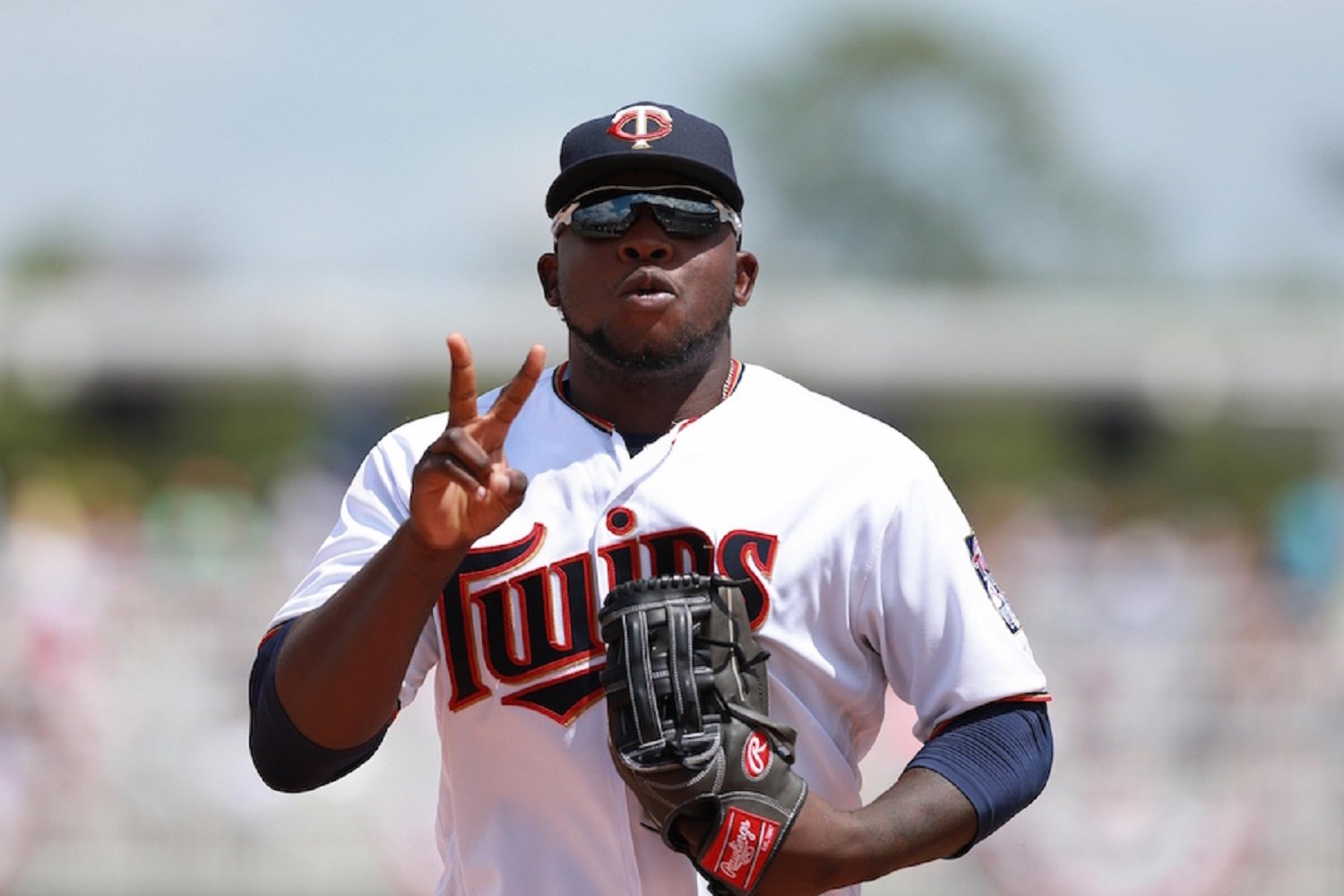 Miguel Sanó is one of the biggest young stars to ever come through the Minnesota Twins franchise – figuratively and literally. Both these qualities would ultimately come to play against him, in terms of expectation and perception. A Rising Prodigy His emergence as a youth in the Dominican Republic drew the attention of filmmakers, who produced a documentary detailing Sanó's courtship from major-league teams. Amid controversy swirling around his actual age, Minnesota was able to swoop in and sign him for a franchise-record $3.15 million bonus. From there, Sanó began a rapid pro ascent. The third baseman flashed his immense slugging prowess in the low minors and quickly established himself as a premier prospect, ranking #4 overall on MLB.com's rankings after 2013. Then, in spring of 2014, he tore the UCL in his right elbow, requiring Tommy John surgery and wiping out his age-21 season. It was sadly the beginning of a nonstop cycle of physical setbacks that would keep Sanó from ever settling into any sustained healthy groove in his career. He came back in 2015 and quickly reached the majors. He was as advertised, slashing .269/.385/.531 as a 22-year-old against major-league pitching. Sanó consistently worked counts and capitalized, looking every bit the part of a premier cleanup man for years to come. He finished third in AL Rookie of the Year voting behind Carlos Correa and Francisco Lindor. From Odd Fit to All-Star The following year, Terry Ryan's effort to shoehorn both Sanó and Trevor Plouffe onto the roster led to the ill-advised experiment of shifting Sanó to right field. As a fast-growing hulk who seemed clearly destined to move down the defensive spectrum rather than up it, this assignment did not suit Sanó. He struggled in 2016, at the plate and in the field, contributing to an all-around total system failure that prompted Ryan's dismissal. In 2017, the Twins rebounded, and Sanó was a driving force. Posting a .902 OPS with 21 homers and 62 RBIs in the first half, he made the All-Star team and finished runner-up to Aaron Judge in the Home Run Derby. At age 24, Sanó was without question one of the true rising stars in Major League Baseball, his presence registering on the national scale. In all the talk of what a disappointment and bust he's been, people seem to forget this. For a while, it really was all coming together for him. And then... The Leg Injury About a month after his All-Star experience, Sanó suffered an injury that would permanently alter the course of his meteoric career. On August 18th, he fouled a ball hard into his left shin that did serious damage. Diagnosed as a stress reaction, it never really healed, and Sanó had a titanium rod inserted during the offseason, which prevented him from being able to condition and prepare as normal for the following year. This cascading series of events contributed to a completely disastrous 2018 campaign, during which Minnesota took the drastic step of demoting a broken Sanó from the majors to Single-A, merely so he could go to the team's facility in Fort Myers and try to physically get right. He finished the season with a .199 average and .679 OPS in 71 MLB games. Bomba Squad Revival In 2019, we got one last burst of brilliance from Sanó, but it was a worthy final glimpse, offering everything we hoped he could be. Following a late start due to an offseason incident, he stepped in as a spiritual leader of the Bomba Squad, launching 34 homers in 105 games en route to a .934 OPS. Reigniting his dominant offensive game, Sanó provided many of the season's most memorable highlights, including the grand slam in Cleveland that effectively sealed a division title. By this point, Sanó was a 26-year-old with 118 career home runs and a 122 OPS+, coming off a monster campaign and seemingly ready to enter into a prodigious slugging prime. The sky was the limit, and Minnesota's front office attempted to capitalize with a three-year extension. But from there, the sky started falling and it didn't stop. Miguel's Mighty Collapse It's easy to forget, but for most of the shortened 2020 season, Sanó actually looked the part. Through 42 games he was slashing .236/.321/.549 with 11 homers and 22 RBIs. Then he cratered in the final two weeks, going 4-for-42 with 22 strikeouts, and carried it over to the playoffs where he was 1-for-8. Sanó's offensive production was solid but unspectacular in 2021, where he slashed .223/.312/.466 with poor defensive ratings at first base to produce a modest 0.9 fWAR. Nearly his entire 2022 season was wiped out by a knee injury, and now, here we are. A Mixed, But Largely Misunderstood, Legacy No one can deny that by the end of his tenure in Minnesota, Sanó was of little use. Framing his legacy within that narrow scope, however, tells a very incomplete and misleading story. Yet many people are oddly obsessed with doing so and always have been. All the way back in 2017 I wrote about the implicit negativity bias that threatened to forever tarnish Sanó's perception in the eyes of fans. For whatever reason, there's always been a compulsion to myopically focus on the negatives of his game, even in the face of overwhelming positives and legitimately exhilarating moments on the field. Ax-grinding columnists and pandering media snobs have been relentless in hurling lopsided critiques at the slugger even during his best moments, playing off the most base tropes: that because he's big and strikes out a lot, he must therefore be lazy and bad. During his All-Star 2017, Jim Souhan penned a column for the Star Tribune titled "Pounds sneak up on injured Miguel Sano as Twins get back in race," directing blame for the stress reaction in his leg to his ... diet? At the beginning of Sanó's amazing 2019 season, a local outlet blasted out headlines about how Sanó was not "good at baseball," amidst an endless volley of derision, because – you guessed it – he was big and struck out a lot. As I wrote in 2017, "Sano's historic power is enabled by his size and strength, his ferocious cuts – the very same things criticized by anyone who's looking for a grievance to air." Would it have been nice if he remained a bit more svelte and made more contact? Sure, but Sanó is who he is and was always destined to be: a massive human being who swings obscenely hard and generates ridiculous power. By singling out the negative aspects of his size and swing, you miss out on the historically rare things they enabled him to do. Sanó ranks fifth among all Twins, ever, in slugging percentage. He has hit 162 career home runs before the age of 30. Over the course of his career, he has consistently hit the ball harder than almost anyone in the world. Just look at all the red in those max/average exit velocity columns, indicating he was at or near the top percentile of all MLB hitters: His tremendous raw power produced some of the most memorable moonshots of the Target Field era. He hit the longest measured home run in the ballpark's history, a 496-foot tank off the White Sox in September of 2019. He nearly matched that distance at Fenway in 2021, where his 495-foot nuke off Nick Pivetta became the longest home run hit by anyone all season. The man put forth some of the most dazzling power-hitting highlights Major League Baseball has ever seen, which makes the pervasive compulsion to diminish him especially weird to me. To be clear, Sanó also had some notable off-the-field issues, and was subject of multiple investigations. I don't begrudge anyone for disliking him based on these factors. In fact I can't say I care much for the person, based on all I know. But from a purely baseball vantage, the general conversation on Sanó has been extremely skewed, as any honest look at the facts and statistics will show. Was he a disappointment? Certainly fair to say, especially in light of the expectations set by his own talent and his excellent early MLB output. But to say he was a bust, or bad at baseball, or "never lived up to expectations," is out of touch with reality. Sanó was well on his way to fulfilling his promise, but in a twist uniquely on-brand for Minnesota sports, his ascent was halted and forever reversed just as he was rising to his peak. It's something to be lamented, not celebrated. Especially if the ending of this story follows script and he goes elsewhere to recapture his peak slugging form.
-
Martinez has made 4 straight All-Star teams and has hit 90 doubles the past two seasons. Haniger had 40 HR and 100 RBI in 2021. Drury just had a career year. ?♂️
-
They got Donaldson late in the offseason. They waited out Cruz's limited market. I don't think it's quite accurate to say this hasn't been an effective strategy for a team trying to make the most of its resources. The alternative is to pay a huge premium up front and win them over. I'm down for that if it's like Correa or Rodon but guys like that in Minnesota's realistic scope are in short supply.
-
Young players don't really exist in free agency, by virtue of needing 6 seasons of service to get there.
-
It didn't? They signed Correa as the "scraps" of last offseason and he was literally their best player.
-
I was thinking about this particular question yesterday. I think I'd prefer Drury because of the defensive versatility.
-
At Twins Daily, we've spent the past several weeks highlighting all of the top options at Minnesota's clearest positions of need. But we've also emphasized that it's important to expect the unexpected with this front office. If they characteristically pivot and aim for the best value they can find later in the offseason, these three impact bats figure as very likely targets. Image courtesy of Troy Taormina, Paul Rutherford, Bill Streicher-USA TODAY Sports I'm not saying they can't (or shouldn't) break their trend this year, but the current Twins leadership has developed a pretty consistent pattern when it comes to approaching the offseason. With rare exception, they have stood pat and preserved available resources, opting to spend their dollars on the values that remain after the early aggressive splurging subsides. This path led the Twins to sign Lance Lynn and Logan Morrison in 2018. It led them to Marwin Gonzalez in 2019, Josh Donaldson in 2020, and Carlos Correa in 2022. Where might it lead them in 2023? To answer this question, I reviewed our latest chapter of the Offseason Handbook, "Hunting for a Big Bat," seeking players who not only would be good fits for the Twins, but who – for various reasons – might see their markets drift and dwindle into the later stages of the offseason. These three names stood out. Mitch Haniger, OF Age: 31 (12/23/90) Former Team: Mariners Career fWAR: 11.8 Why He's a Fit for the Twins: Minnesota could obviously use a right-handed corner outfield bat – ideally one capable of stepping in as an everyday regular, if not opening the season as one. Haniger fits that bill perfectly. As a .261/.335/.476 career hitter, he's overqualified for the Kyle Garlick role, but if Max Kepler were traded, Haniger could step in as the new right fielder, thus allowing Alex Kirilloff, Trevor Larnach, Matt Wallner and Nick Gordon to vie for at-bats in left (while reducing the dependence on any of them individually). Why He Still Might Be Available in January: Haniger enters free agency at a tough time, coming off an injury-ravaged season that saw him produce just 0.9 fWAR in 57 games. He'll likely want to get paid based on his bona fides: a 39-HR, 100-RBI season in 2021, and an All-Star campaign in 2018 where he was worth 4.8 fWAR. The problem is he hasn't played 100 games in a season outside of those two, and he turns 32 in December. On top of that, the market in general for low-OBP, high-power corner outfield types is usually very tepid. Haniger figures to be disappointed with the caliber of his early offers, which could lead him into the Twins' wheelhouse as they measure up the post-holiday pool. J.D. Martinez, DH Age: 35 (DOB: 8/21/87) Former Team: Red Sox Career fWAR: 26.5 Why He's a Fit for the Twins: When you set aside all of the positional considerations, what the Twins really need this offseason is a premium bat to replace Correa in the heart of their lineup. Martinez can be that. He's been one of the league's premier sluggers for a decade, named to the past four consecutive All-Star teams. With two 40-homer seasons and four 100-RBI campaigns under his belt, Martinez would bring a prestigious pedigree and some serious veteran firepower to a lineup that is lacking for it. Why He Still Might Be Available in January: With universal DH in place, dynamics have changed since the Twins were able to leverage Nelson Cruz's limited market into a team-friendly deal (twice). But regardless, it remains tough to sell the services of an aging, plodding power hitter who is not even an occasional option to play in the field. Martinez also has a couple of specific things working against him: his home-run power has dropped off over the past few years (though it's translated to a big jump in doubles), and he's coming off his worst overall season since 2013. Martinez is represented by Scott Boras, which is – odd as it feels to say – a big point in the Twins' favor. There's lots of history here. Correa and Gonzalez are both examples of Boras clients who signed with Minnesota late in the offseason previously. Brandon Drury, UTIL Age: 30 (DOB: 8/21/92) Former Team: Padres Career fWAR: 3.6 Why He's a Fit for the Twins: Speaking of Marwin, Drury's appeal to the Twins is very similar. He's a versatile defender who can plug in all around the field and actually make some noise at the plate. His 131 starts for the Reds and Padres last year came at six different positions, including 67 at third base. The righty-swinging Drury posted an .813 OPS with 28 home runs in 2022, and he mauled lefties to the tune of a .950 OPS. The 30-year-old would bring flexibility the Twins tend to prize: he could replace Gio Urshela as regular third baseman, platoon with Luis Arraez or Alex Kirilloff at first, and maybe even spell the lefty outfielders occasionally. Why He Still Might Be Available in January: Drury was worth 3.0 fWAR this past year. In a career spanning eight MLB seasons, he has been worth 3.6 fWAR total. That tells you a whole lot about his pre-2022 track record. There's a reason he had to settle for a minor-league deal with the non-contending Reds, and made only a $700K salary during his breakout season. Understandably, he'll be looking to maximize his earnings, having made only around $5 million in his entire career. But teams might be leary of making a big commitment to a possible flash-in-the-pan. If Drury is seeking the security of a multi-year deal with a lower AAV, he'd fit nicely into the Twins' planning. Want to read about more lineup-boosting targets in free agency, including Aaron Judge, Jose Abreu, and Brandon Nimmo? Check out the full Offseason Handbook chapter, Hunting for a Big Bat, now available to all Twins Daily Caretakers. You can also check out this hub page to find all previously released chapters and editions. View full article
-
 I'm not saying they can't (or shouldn't) break their trend this year, but the current Twins leadership has developed a pretty consistent pattern when it comes to approaching the offseason. With rare exception, they have stood pat and preserved available resources, opting to spend their dollars on the values that remain after the early aggressive splurging subsides. This path led the Twins to sign Lance Lynn and Logan Morrison in 2018. It led them to Marwin Gonzalez in 2019, Josh Donaldson in 2020, and Carlos Correa in 2022. Where might it lead them in 2023? To answer this question, I reviewed our latest chapter of the Offseason Handbook, "Hunting for a Big Bat," seeking players who not only would be good fits for the Twins, but who – for various reasons – might see their markets drift and dwindle into the later stages of the offseason. These three names stood out. Mitch Haniger, OF Age: 31 (12/23/90) Former Team: Mariners Career fWAR: 11.8 Why He's a Fit for the Twins: Minnesota could obviously use a right-handed corner outfield bat – ideally one capable of stepping in as an everyday regular, if not opening the season as one. Haniger fits that bill perfectly. As a .261/.335/.476 career hitter, he's overqualified for the Kyle Garlick role, but if Max Kepler were traded, Haniger could step in as the new right fielder, thus allowing Alex Kirilloff, Trevor Larnach, Matt Wallner and Nick Gordon to vie for at-bats in left (while reducing the dependence on any of them individually). Why He Still Might Be Available in January: Haniger enters free agency at a tough time, coming off an injury-ravaged season that saw him produce just 0.9 fWAR in 57 games. He'll likely want to get paid based on his bona fides: a 39-HR, 100-RBI season in 2021, and an All-Star campaign in 2018 where he was worth 4.8 fWAR. The problem is he hasn't played 100 games in a season outside of those two, and he turns 32 in December. On top of that, the market in general for low-OBP, high-power corner outfield types is usually very tepid. Haniger figures to be disappointed with the caliber of his early offers, which could lead him into the Twins' wheelhouse as they measure up the post-holiday pool. J.D. Martinez, DH Age: 35 (DOB: 8/21/87) Former Team: Red Sox Career fWAR: 26.5 Why He's a Fit for the Twins: When you set aside all of the positional considerations, what the Twins really need this offseason is a premium bat to replace Correa in the heart of their lineup. Martinez can be that. He's been one of the league's premier sluggers for a decade, named to the past four consecutive All-Star teams. With two 40-homer seasons and four 100-RBI campaigns under his belt, Martinez would bring a prestigious pedigree and some serious veteran firepower to a lineup that is lacking for it. Why He Still Might Be Available in January: With universal DH in place, dynamics have changed since the Twins were able to leverage Nelson Cruz's limited market into a team-friendly deal (twice). But regardless, it remains tough to sell the services of an aging, plodding power hitter who is not even an occasional option to play in the field. Martinez also has a couple of specific things working against him: his home-run power has dropped off over the past few years (though it's translated to a big jump in doubles), and he's coming off his worst overall season since 2013. Martinez is represented by Scott Boras, which is – odd as it feels to say – a big point in the Twins' favor. There's lots of history here. Correa and Gonzalez are both examples of Boras clients who signed with Minnesota late in the offseason previously. Brandon Drury, UTIL Age: 30 (DOB: 8/21/92) Former Team: Padres Career fWAR: 3.6 Why He's a Fit for the Twins: Speaking of Marwin, Drury's appeal to the Twins is very similar. He's a versatile defender who can plug in all around the field and actually make some noise at the plate. His 131 starts for the Reds and Padres last year came at six different positions, including 67 at third base. The righty-swinging Drury posted an .813 OPS with 28 home runs in 2022, and he mauled lefties to the tune of a .950 OPS. The 30-year-old would bring flexibility the Twins tend to prize: he could replace Gio Urshela as regular third baseman, platoon with Luis Arraez or Alex Kirilloff at first, and maybe even spell the lefty outfielders occasionally. Why He Still Might Be Available in January: Drury was worth 3.0 fWAR this past year. In a career spanning eight MLB seasons, he has been worth 3.6 fWAR total. That tells you a whole lot about his pre-2022 track record. There's a reason he had to settle for a minor-league deal with the non-contending Reds, and made only a $700K salary during his breakout season. Understandably, he'll be looking to maximize his earnings, having made only around $5 million in his entire career. But teams might be leary of making a big commitment to a possible flash-in-the-pan. If Drury is seeking the security of a multi-year deal with a lower AAV, he'd fit nicely into the Twins' planning. Want to read about more lineup-boosting targets in free agency, including Aaron Judge, Jose Abreu, and Brandon Nimmo? Check out the full Offseason Handbook chapter, Hunting for a Big Bat, now available to all Twins Daily Caretakers. You can also check out this hub page to find all previously released chapters and editions.
-
The Minnesota Twins' stark aversion to handing out large contracts has historically been limited to the pitching side. From Kirby Puckett to Joe Mauer, Josh Donaldson, Byron Buxton and Carlos Correa, the Twins have shown a willingness to shell out big-money deals for everyday players who can make a special impact offensively. So this week we turn our attention to difference-making bats on the market. Image courtesy of Ken Blaze-USA TODAY Sports There was much vitriol directed at the pitching staff this year, which is understandable because it wasn't very good. At the same time, though, it wasn't expected to be very good. The 2022 club wasn't built around the strength of its pitching, but rather a deep and star-studded lineup, which really failed to click and sustainably produce at any point all year. Even within the wreckage of the rotation and bullpen, you could find some legitimate sources of promise going forward: Joe Ryan, Jhoan Durán, Griffin Jax, and Bailey Ober, not to mention a couple impressive late debuts. Such silver linings were harder to find on offense. Aside from Carlos Correa and Luis Arraez, there really weren't any resoundingly positive performances to be found. Jorge Polanco was unspectacular and had his most injury-plagued season. Alex Kirilloff, Trevor Larnach, and Ryan Jeffers missed huge chunks of the campaign. So did Byron Buxton, who faded considerably after a brilliant start. Max Kepler was terrible. While they do have some good upcoming position-player talent, the Twins don't necessarily have any clear high-end hitters in the wings. As such, it's very possible they view an impact veteran bat as the best way to flex their ample spending flexibility, especially since that market figures to be in lower demand than frontline starters and All-Star shortstops – thus potentially allowing their dollars to stretch farther. We explore many of these possibilities and scenarios in the newest chapter of the Offseason Handbook, "Hunting for a Big Bat," which is now available to download for all Caretakers. In it we profile an assortment of potential targets who could upgrade the heart of the Twins lineup, ranging in splashiness and plausibility from A(aron Judge) to Y(uli Gurriel). Hot Stove Season is about to kick into high gear, with the arbitration tender deadline coming up this week and the Winter Meetings fast approaching. Get yourself up to speed by reading all available chapters of the Offseason Handbook! If you're not yet a Twins Daily Caretaker, it's a great time to sign up! (Whispers: due to supply limitations, it might be the only way to get a ticket for the Winter Meltdown ... details coming soon.) Otherwise, stay tuned to the site this week as our writers will be highlighting a variety of possibilities on the big bats front. View full article
-
 There was much vitriol directed at the pitching staff this year, which is understandable because it wasn't very good. At the same time, though, it wasn't expected to be very good. The 2022 club wasn't built around the strength of its pitching, but rather a deep and star-studded lineup, which really failed to click and sustainably produce at any point all year. Even within the wreckage of the rotation and bullpen, you could find some legitimate sources of promise going forward: Joe Ryan, Jhoan Durán, Griffin Jax, and Bailey Ober, not to mention a couple impressive late debuts. Such silver linings were harder to find on offense. Aside from Carlos Correa and Luis Arraez, there really weren't any resoundingly positive performances to be found. Jorge Polanco was unspectacular and had his most injury-plagued season. Alex Kirilloff, Trevor Larnach, and Ryan Jeffers missed huge chunks of the campaign. So did Byron Buxton, who faded considerably after a brilliant start. Max Kepler was terrible. While they do have some good upcoming position-player talent, the Twins don't necessarily have any clear high-end hitters in the wings. As such, it's very possible they view an impact veteran bat as the best way to flex their ample spending flexibility, especially since that market figures to be in lower demand than frontline starters and All-Star shortstops – thus potentially allowing their dollars to stretch farther. We explore many of these possibilities and scenarios in the newest chapter of the Offseason Handbook, "Hunting for a Big Bat," which is now available to download for all Caretakers. In it we profile an assortment of potential targets who could upgrade the heart of the Twins lineup, ranging in splashiness and plausibility from A(aron Judge) to Y(uli Gurriel). Hot Stove Season is about to kick into high gear, with the arbitration tender deadline coming up this week and the Winter Meetings fast approaching. Get yourself up to speed by reading all available chapters of the Offseason Handbook! If you're not yet a Twins Daily Caretaker, it's a great time to sign up! (Whispers: due to supply limitations, it might be the only way to get a ticket for the Winter Meltdown ... details coming soon.) Otherwise, stay tuned to the site this week as our writers will be highlighting a variety of possibilities on the big bats front.
-
-
The Twins parted ways with free agents, cleared space on the 40-man roster, and set the stage for an offseason primed with ample flexibility and a wide range of possibilities. Here's where things stand as we get started. Eight Twins Players Become Free Agents The end of the World Series triggered the official commencement of the offseason, meaning that the following players automatically entered the free agent market: Michael Fulmer, RHP Gary Sánchez, C Sandy León, C Billy Hamilton, OF Aaron Sanchez, RHP Aside from Fulmer, a solid deadline pickup for the bullpen, and Sánchez, who ended up being the team's primary catcher, these are all random midseason veteran pickups who played roles for the team out of sheer desperation. No big losses, although Fulmer will be an interesting target to pursue. Elsewhere, Carlos Correa opted out of his contract as expected. He'll hit free agency once again in search of a monster deal eclipsing $300 million. I wrote about what it will take to re-sign him as part of a three-part "Future of Shortstop" chapter of the Offseason Handbook. Anyone with a Twins Daily account can download that chapter for free. Finally, there were three players whose team options the club elected to decline, all as expected: Miguel Sanó, 1B ($2.75M buyout) Dylan Bundy, RHP ($1M buyout) Chris Archer, RHP ($750K buyout) Bundy and Archer were underwhelming bargain-bin free agent signings for the back of the rotation. Sanó's legacy with the Twins is, of course, much more lengthy and complicated. Probably worthy of a deeper examination in time. But for now, what matters for now is the way it ended: with the Twins paying $2.75 million to be done with him. Twins Pick Up Sonny Gray's Option There was one team option that the Twins were more than happy to pick up: Gray will be back next year at a $12.7 million salary. This was a no-brainer and a big part of the reason Minnesota was willing to give up Chase Petty for the veteran right-hander. Gray currently projects as the standalone #1 starter on the 2023 staff. Improving upon that situation should be a top priority for the front office this winter. Will they make an offseason addition who surpasses the Sonny Gray Threshold? We explored free agents and trade targets who could provide a legitimate top-of-rotation upgrade in the Starting Pitchers chapter of the Offseason Handbook, available to Caretakers. 40-Man Roster Shuffling Clears Room In addition to letting several players loose into free agency, the Twins also cleared up some 40-man roster room through waivers and outrights. Here's a quick rundown to catch you up: LHP Danny Coulombe was outrighted from the 40-man roster and assigned to the Saints. So were LHP Devin Smeltzer and RHP Jhon Romero. C Caleb Hamilton was claimed off waivers by Boston. SS Jermaine Palacios was claimed off waivers by Detroit. OF Jake Cave was claimed off waivers by Baltimore. All of these many removals from the 40-man were offset by a litany of players being removed from the injured list at year's end, so the Twins end up with 37 players currently rostered as illustrated in the grid below. Highlighted in red are eight clear candidates for removal, via non-tender or waiving, so the Twins will have no trouble finding room for new additions. The deadline to make contract tender decisions on arbitration-eligible players falls on November 18th – next Thursday. On that date we'll learn whether we can lock in or remove a few of those red-shaded names above, including Gio Urshela, Kyle Garlick, Emilio Pagan and Cody Stashak. Internal Promotions Impact MLB Coaching Staff As a result of a series of internal personnel shifts announced by the team this past week, a new member has been added to the major-league coaching staff for 2023: Derek Shohon, who served as the hitting coach for Class-AA Wichita last year – overseeing the breakouts of prospects Matt Wallner and Edouard Julien, among others – will join the Twins as an assistant hitting coach alongside incumbents David Popkins and Rudy Hernandez. Some other moves of note: Drew MacPhail, son of former Twins GM Andy MacPhail, takes over as farm director. Alex Hassan, previously in that role, is now vice president of hitting development and procurement. Former run creation coordinator Frankie Padulo transitions into the assistant director of player development role formerly held by MacPhail. Brian Maloney was promoted to director of minor league and high performance operations, and Amanda Daley was promoted to director of player education. Roster and Payroll Projection: v1 Here's an overview of where the projected roster and payroll currently stand, under the assumption that Urshela and Garlick are tendered, and Pagan is not. (Far from guaranteed on any count.) The biggest existential priorities, as you can see, are finding a starting shortstop (and his backup), filling the catcher vacancy, and adding impact arms. They've got nearly $50 million to spend merely to get back to the 2022 payroll level, so needless to say there's a world of possibilities ahead. As a reminder, you can explore options at these key positions of need by downloading available chapters of the Offseason Handbook, and you can use our roster-building tool to forge your own Twins blueprint. View full article
-
 Eight Twins Players Become Free Agents The end of the World Series triggered the official commencement of the offseason, meaning that the following players automatically entered the free agent market: Michael Fulmer, RHP Gary Sánchez, C Sandy León, C Billy Hamilton, OF Aaron Sanchez, RHP Aside from Fulmer, a solid deadline pickup for the bullpen, and Sánchez, who ended up being the team's primary catcher, these are all random midseason veteran pickups who played roles for the team out of sheer desperation. No big losses, although Fulmer will be an interesting target to pursue. Elsewhere, Carlos Correa opted out of his contract as expected. He'll hit free agency once again in search of a monster deal eclipsing $300 million. I wrote about what it will take to re-sign him as part of a three-part "Future of Shortstop" chapter of the Offseason Handbook. Anyone with a Twins Daily account can download that chapter for free. Finally, there were three players whose team options the club elected to decline, all as expected: Miguel Sanó, 1B ($2.75M buyout) Dylan Bundy, RHP ($1M buyout) Chris Archer, RHP ($750K buyout) Bundy and Archer were underwhelming bargain-bin free agent signings for the back of the rotation. Sanó's legacy with the Twins is, of course, much more lengthy and complicated. Probably worthy of a deeper examination in time. But for now, what matters for now is the way it ended: with the Twins paying $2.75 million to be done with him. Twins Pick Up Sonny Gray's Option There was one team option that the Twins were more than happy to pick up: Gray will be back next year at a $12.7 million salary. This was a no-brainer and a big part of the reason Minnesota was willing to give up Chase Petty for the veteran right-hander. Gray currently projects as the standalone #1 starter on the 2023 staff. Improving upon that situation should be a top priority for the front office this winter. Will they make an offseason addition who surpasses the Sonny Gray Threshold? We explored free agents and trade targets who could provide a legitimate top-of-rotation upgrade in the Starting Pitchers chapter of the Offseason Handbook, available to Caretakers. 40-Man Roster Shuffling Clears Room In addition to letting several players loose into free agency, the Twins also cleared up some 40-man roster room through waivers and outrights. Here's a quick rundown to catch you up: LHP Danny Coulombe was outrighted from the 40-man roster and assigned to the Saints. So were LHP Devin Smeltzer and RHP Jhon Romero. C Caleb Hamilton was claimed off waivers by Boston. SS Jermaine Palacios was claimed off waivers by Detroit. OF Jake Cave was claimed off waivers by Baltimore. All of these many removals from the 40-man were offset by a litany of players being removed from the injured list at year's end, so the Twins end up with 37 players currently rostered as illustrated in the grid below. Highlighted in red are eight clear candidates for removal, via non-tender or waiving, so the Twins will have no trouble finding room for new additions. The deadline to make contract tender decisions on arbitration-eligible players falls on November 18th – next Thursday. On that date we'll learn whether we can lock in or remove a few of those red-shaded names above, including Gio Urshela, Kyle Garlick, Emilio Pagan and Cody Stashak. Internal Promotions Impact MLB Coaching Staff As a result of a series of internal personnel shifts announced by the team this past week, a new member has been added to the major-league coaching staff for 2023: Derek Shohon, who served as the hitting coach for Class-AA Wichita last year – overseeing the breakouts of prospects Matt Wallner and Edouard Julien, among others – will join the Twins as an assistant hitting coach alongside incumbents David Popkins and Rudy Hernandez. Some other moves of note: Drew MacPhail, son of former Twins GM Andy MacPhail, takes over as farm director. Alex Hassan, previously in that role, is now vice president of hitting development and procurement. Former run creation coordinator Frankie Padulo transitions into the assistant director of player development role formerly held by MacPhail. Brian Maloney was promoted to director of minor league and high performance operations, and Amanda Daley was promoted to director of player education. Roster and Payroll Projection: v1 Here's an overview of where the projected roster and payroll currently stand, under the assumption that Urshela and Garlick are tendered, and Pagan is not. (Far from guaranteed on any count.) The biggest existential priorities, as you can see, are finding a starting shortstop (and his backup), filling the catcher vacancy, and adding impact arms. They've got nearly $50 million to spend merely to get back to the 2022 payroll level, so needless to say there's a world of possibilities ahead. As a reminder, you can explore options at these key positions of need by downloading available chapters of the Offseason Handbook, and you can use our roster-building tool to forge your own Twins blueprint.
-
Right. I think the way this model is supposed to look is how Tampa Bay did it. Here are the inning totals for their starters: McClanahan: 166 IP Kluber: 164 IP Rasmussen: 146 IP Springs: 135 IP No one was a "workhorse" and they were similarly averse to 3rd trips through the order but these guys at least lived up to the modified billing for a full starter workload.
-
-
With huge gaps to fill on a staff facing the losses of José Berríos and Kenta Maeda, Minnesota's front office took an unconventional approach to pitching this year. Did it work? I think we can safely say: not really! But a dissection of what went wrong reveals some worthwhile nuggets to take forward. Image courtesy of Richard Mackson-USA TODAY Sports Having lost their top two starters to a deadline sell-off trade and Tommy John surgery, the Twins headed into last offseason with a barren rotation outlook. It was unclear exactly how Derek Falvey and Thad Levine would realistically be able to offset these big losses. Yes, they had money to spend. But the next premier frontline starting pitcher to choose Minnesota in free agency would be the first. Some creativity was gonna be needed to field a contending staff, and Levine hinted as much early on. The general manager's quotes led me to write a column around this time last year: Are the Twins About to Build a Radically Unconventional Pitching Staff? “I think with the challenge comes opportunity,” Levine had said. “We’re going to be as creative as we can be in terms of not being necessarily hemmed into the notion of it has to look exactly the way it has always looked. We may end up looking at this from the lens of how many multi-inning guys can we add to a staff and how far does that take us?” The Twins followed through on their foreshadowing ... to an extent. With their only stable veteran workhorses – José Berríos, Kenta Maeda, and Michael Pineda – out of the picture for 2022, the team didn't acquire proven inning-eaters to replace them. Instead, their pickups were Sonny Gray, Dylan Bundy, Chris Archer and Chris Paddack, none of whom had thrown even 140 innings the prior season. Meanwhile, the only rotation incumbents were Joe Ryan and Bailey Ober, who had thrown a collective 120 innings in the big leagues. The front office assembled a staff full of pretty good pitchers who were – almost uniformly – unequipped to provide any length, and so we saw Levine's vision more or less come to life: vast numbers of different arms rotating in and out to cobble together nine-inning games. The Twins used a franchise-record 38 different pitchers. Their starters averaged 4.8 innings, second-fewest in the American League. They used six or more different pitchers in a game 31 times. Radically unconventional indeed. And, had this approach been successful, you wouldn't hear me complaining. But clearly it was not. The Twins ranked 19th in ERA, 19th in FIP, 20th in fWAR. Even for a club that was built around the strength of its lineup, that's not nearly good enough. The plan, at its core, was not a terrible one: maximize the stuff of your pitchers in shorter stints, shield them from multiple trips through the order, and possibly reduce injuries from overuse. Alas, none of those supposed benefits came to fruition. So what went wrong, and what can we learn? Was the entire philosophy bunk, or was the execution botched? I would argue, probably more of the latter. There might be some merit to the concept, provided the Twins heed these lessons learned: The starters weren't good enough, or healthy enough, even in shortened starts. I don't dislike the idea of signing a cheap pitcher – who doesn't have the repertoire or durability to go deep – for the back of your rotation and unleashing him in highly effective 4-5 inning bursts. The problem is that this group lacked the capacity to be highly effective even with this usage. Bundy held his own the first time through the lineup, then got mashed the second time through (.291/.327/.534), often making the third time a moot point. Archer posted an 85 ERA+ despite almost never pitching past the fourth. He placed a heavy weight on the bullpen every fifth day, and rarely left them in a good spot. Meanwhile, the cautious management wasn't enough to prevent Ober, who only once threw even 90 pitches in a start, from being derailed by a season-ruining groin injury. It wasn't enough to prevent Gray, who grumbled about Rocco Baldelli's early hooks, from multiple significant hamstring injuries. If the Twins want an approach like this to pay dividends, they need to find pitchers who are actually capable of excelling in shorter starts (a la Andrew Heaney) and they need to better help their players physically adapt to the altered routines. You've got to have at least one starter who can be the workhorse. Even with all of the above being addressed, I still think you've got to have at least one starting pitcher in your rotation who you can count on to give you some length. This strategy built around five-and-flies, piggybacking and the like becomes a lot more palatable when there is a fixture like Berríos routinely firing 6-7 innings each time through the rotation. That likely contributed to the decision to acquire Tyler Mahle at the deadline. He threw 180 innings in 2021 (would've led the Twins by 60), and had completed six or more frames in eight of nine starts for the Reds leading up the trade. Of course, Mahle proved to be the opposite of a remedy for Minnesota, and now only adds to the uncertainty of a 2023 rotation in desperate need of stable and dependable durability. Their bullpen wasn't built adequately to handle the burden. This is what really gets me. Levine talked about "looking at this from the lens of how many multi-inning guys can we add to a staff," and then their only bullpen addition of the offseason was Joe Smith, who could barely be counted on for one inning. The Twins rarely carried anything resembling a long man on the staff, and would typically just march out endless one-inning relievers after short starts. This led to them frequently burning through all of their high-leverage arms on one night and burning out the back end of their bullpen for the next. To make a system like this work, you've got to have an array of arms capable of getting more than three outs on a regular basis. The routine of four-inning starts followed by 5-6 relievers is not a workable formula as we saw. Losing your pitching coach mid-season doesn't help. This one can't so much be blamed on the front office and their planning. It's difficult to anticipate such a disruptive event in the heart of your season, and Wes Johnson's abrupt departure made matters tougher as the Twins tried to hold together their experimental pitching staff through the second half. Pete Maki undoubtedly played a significant role in architecting this year's plan, and now, as the apparent choice going forward at pitching coach, he'll be able to more directly pull the strings and execute to his preferences. So, to summarize... The model of building a pitching staff with reduced emphasis on traditional 6-7 inning starters isn't bad in theory. Indeed, there's plenty of evidence that it is the inexorable direction of baseball at large. But if the Twins want to lean into this movement as they did in 2022, they need to get better at. That means: Filling the rotation with starters who can at least stay healthy and excel in 4-5 inning starts. Finding at least one workhorse type starter who can reliably give you 6+ innings each turn. Equipping the bullpen with enough firepower and multi-inning relievers to shoulder the load. Having one central mastermind oversee the operation (and if it's not working, find someone new). As you're looking through the options available in our bullpen chapter of the Offseason Handbook, these are lessons worth keeping in mind. View full article
-
 Having lost their top two starters to a deadline sell-off trade and Tommy John surgery, the Twins headed into last offseason with a barren rotation outlook. It was unclear exactly how Derek Falvey and Thad Levine would realistically be able to offset these big losses. Yes, they had money to spend. But the next premier frontline starting pitcher to choose Minnesota in free agency would be the first. Some creativity was gonna be needed to field a contending staff, and Levine hinted as much early on. The general manager's quotes led me to write a column around this time last year: Are the Twins About to Build a Radically Unconventional Pitching Staff? “I think with the challenge comes opportunity,” Levine had said. “We’re going to be as creative as we can be in terms of not being necessarily hemmed into the notion of it has to look exactly the way it has always looked. We may end up looking at this from the lens of how many multi-inning guys can we add to a staff and how far does that take us?” The Twins followed through on their foreshadowing ... to an extent. With their only stable veteran workhorses – José Berríos, Kenta Maeda, and Michael Pineda – out of the picture for 2022, the team didn't acquire proven inning-eaters to replace them. Instead, their pickups were Sonny Gray, Dylan Bundy, Chris Archer and Chris Paddack, none of whom had thrown even 140 innings the prior season. Meanwhile, the only rotation incumbents were Joe Ryan and Bailey Ober, who had thrown a collective 120 innings in the big leagues. The front office assembled a staff full of pretty good pitchers who were – almost uniformly – unequipped to provide any length, and so we saw Levine's vision more or less come to life: vast numbers of different arms rotating in and out to cobble together nine-inning games. The Twins used a franchise-record 38 different pitchers. Their starters averaged 4.8 innings, second-fewest in the American League. They used six or more different pitchers in a game 31 times. Radically unconventional indeed. And, had this approach been successful, you wouldn't hear me complaining. But clearly it was not. The Twins ranked 19th in ERA, 19th in FIP, 20th in fWAR. Even for a club that was built around the strength of its lineup, that's not nearly good enough. The plan, at its core, was not a terrible one: maximize the stuff of your pitchers in shorter stints, shield them from multiple trips through the order, and possibly reduce injuries from overuse. Alas, none of those supposed benefits came to fruition. So what went wrong, and what can we learn? Was the entire philosophy bunk, or was the execution botched? I would argue, probably more of the latter. There might be some merit to the concept, provided the Twins heed these lessons learned: The starters weren't good enough, or healthy enough, even in shortened starts. I don't dislike the idea of signing a cheap pitcher – who doesn't have the repertoire or durability to go deep – for the back of your rotation and unleashing him in highly effective 4-5 inning bursts. The problem is that this group lacked the capacity to be highly effective even with this usage. Bundy held his own the first time through the lineup, then got mashed the second time through (.291/.327/.534), often making the third time a moot point. Archer posted an 85 ERA+ despite almost never pitching past the fourth. He placed a heavy weight on the bullpen every fifth day, and rarely left them in a good spot. Meanwhile, the cautious management wasn't enough to prevent Ober, who only once threw even 90 pitches in a start, from being derailed by a season-ruining groin injury. It wasn't enough to prevent Gray, who grumbled about Rocco Baldelli's early hooks, from multiple significant hamstring injuries. If the Twins want an approach like this to pay dividends, they need to find pitchers who are actually capable of excelling in shorter starts (a la Andrew Heaney) and they need to better help their players physically adapt to the altered routines. You've got to have at least one starter who can be the workhorse. Even with all of the above being addressed, I still think you've got to have at least one starting pitcher in your rotation who you can count on to give you some length. This strategy built around five-and-flies, piggybacking and the like becomes a lot more palatable when there is a fixture like Berríos routinely firing 6-7 innings each time through the rotation. That likely contributed to the decision to acquire Tyler Mahle at the deadline. He threw 180 innings in 2021 (would've led the Twins by 60), and had completed six or more frames in eight of nine starts for the Reds leading up the trade. Of course, Mahle proved to be the opposite of a remedy for Minnesota, and now only adds to the uncertainty of a 2023 rotation in desperate need of stable and dependable durability. Their bullpen wasn't built adequately to handle the burden. This is what really gets me. Levine talked about "looking at this from the lens of how many multi-inning guys can we add to a staff," and then their only bullpen addition of the offseason was Joe Smith, who could barely be counted on for one inning. The Twins rarely carried anything resembling a long man on the staff, and would typically just march out endless one-inning relievers after short starts. This led to them frequently burning through all of their high-leverage arms on one night and burning out the back end of their bullpen for the next. To make a system like this work, you've got to have an array of arms capable of getting more than three outs on a regular basis. The routine of four-inning starts followed by 5-6 relievers is not a workable formula as we saw. Losing your pitching coach mid-season doesn't help. This one can't so much be blamed on the front office and their planning. It's difficult to anticipate such a disruptive event in the heart of your season, and Wes Johnson's abrupt departure made matters tougher as the Twins tried to hold together their experimental pitching staff through the second half. Pete Maki undoubtedly played a significant role in architecting this year's plan, and now, as the apparent choice going forward at pitching coach, he'll be able to more directly pull the strings and execute to his preferences. So, to summarize... The model of building a pitching staff with reduced emphasis on traditional 6-7 inning starters isn't bad in theory. Indeed, there's plenty of evidence that it is the inexorable direction of baseball at large. But if the Twins want to lean into this movement as they did in 2022, they need to get better at. That means: Filling the rotation with starters who can at least stay healthy and excel in 4-5 inning starts. Finding at least one workhorse type starter who can reliably give you 6+ innings each turn. Equipping the bullpen with enough firepower and multi-inning relievers to shoulder the load. Having one central mastermind oversee the operation (and if it's not working, find someone new). As you're looking through the options available in our bullpen chapter of the Offseason Handbook, these are lessons worth keeping in mind.
-
Since the 2019 season, the bullpen has been one pervasive factor holding back the Minnesota Twins in their quest for contention. Ironically, during the same span, the two major-league leaders among relief pitchers in fWAR are former Twins Liam Hendriks and Ryan Pressly, the latter of whom just got done starring in the World Series (again). Image courtesy of Troy Taormina-USA TODAY Sports Liam Hendriks and Ryan Pressly spent one season pitching together on the Twins staff. It was 2013, when Pressly had just joined the club as a Rule 5 pick, and Hendriks was playing out the string with the organization that first signed him. At the time there was no indication we were looking at two of the future biggest relief stars in baseball. Hendriks posted a 6.85 ERA in 47 ⅓ innings and was waived in December, owner of a 5.31 FIP and 5.8 K/9 rate through 156 big-league frames. Pressly was moderately effective as a rookie long reliever, tossing 76 ⅔ innings at a 3.87 ERA but with an underwhelming 49-to-27 K/BB ratio. He might not have hung around the majors all season if the team were not compelled to do so by his Rule 5 status. I don't really blame the Twins for moving on from Hendriks, though it would've been nice to see him at least audition in a short-burst relief role first. When they waived him, he was claimed by the Cubs, who themselves waived him 10 days later. The Orioles, who claimed him from Chicago, followed suit by waiving Hendriks in February. Hendriks landed with the Blue Jays, who traded him to Kansas City in July. The Royals then traded him back to Toronto in October. Three weeks later, the Jays turned around and traded him to Oakland. You still keeping track? Me neither. Needless to say, it took a lot of scenery changes for Hendriks, and a lot of teams had him in their grasp (however briefly) before he finally settled in for the A's and began reaching his full form as the best reliever in baseball. Pressly, on the other hand, was already reaching his full form when the Twins decided to trade him to Houston at the 2018 deadline. This was a very different situation and one much more worthy of dissection. There seems to be a misperception that Pressly was a poor performer in Minnesota who instantly flipped a switch to become elite with the Astros, but that's not really the truth. Pressly's development with the Twins was a slow and gradual process. With each passing season, his velocity would nudge upward a bit, along with his strikeout rate. Under two different managers and three different pitching coaches, Minnesota stuck with Pressly through some fairly uninspiring seasons, all in the hope he'd eventually reach the dominant peak they long envisioned. In 2018, he did it. All that time and work finally paid off. By now Pressly was averaging 96 MPH with his fastball and decimating opposing hitters. In 47 ⅔ innings with the Twins he had a 13.0 K.9 rate and a 17.9% swinging strike rate. Those numbers ranked ninth and fifth in all of baseball, respectively. He had a 2.95 FIP at the time they traded him. His spin rates were off the charts. It's easy to see why the Astros came calling. Unlike the rest of their deadline sell-offs in 2018 – including the Eduardo Escobar trade that brought in Jhoan Durán – the Twins were not motivated to move Pressly, who still had another year of team control remaining. But they liked Houston's offer of Jorge Alcalá and Gilberto Celestino enough to pull the trigger. A reasonable decision at the time, especially considering the general volatility of relief pitchers. But with the benefit of hindsight, we can say that this trade has been an abject disaster for the Twins thus far. Alcalá and Celestino, to their credit, have both reached the majors, and the book is far from written on them. But neither has proven to be a major impact player yet, while Pressly has gone on to become one of the most impactful relievers in the league – and one the Twins could've desperately used over these past four years. Late-inning relief has been perpetual thorn in the organization's side. Thrust back into championship contention sooner than expected in 2019, the Twins found themselves short-handed in the bullpen, and traded for Sergio Romo and Sam Dyson at the deadline. Minnesota still got swept out of the postseason, with relievers taking the brunt of the negative WPA. In 2020, the bullpen was actually a big asset through the 60-game regular season, but again it was the relief corps (namely Romo) lapsing severely in the playoffs. I'll never waver that Minnesota's offense bears most responsibility for that miserable 0-5 stretch in October of 2019-20 (and the team's long-running playoff woes at large) but the fact remains: they ran out of guns in crunch time. Meanwhile Pressly was emerging as an All-Star annihilator for the Astros – not to mention a big-time postseason performer. The 2021 and 2022 Twins seasons were tanked largely by dreadful bullpens, with the main culprits being veteran pitchers targeted as late-inning replacements to fill Pressly's void. By now it seemed no matter which route the front office went in seeking bullpen help – signing a steady established name (Alex Colomé), trading for a buy-low candidate (Emilio Pagán), trading for a buy-high candidate (Jorge López), sticking with their staples (Tyler Duffey), moving on from their staples (Taylor Rogers) – they could do no right. Their lack of late-inning dependability became a major hindrance, a chronic momentum-killer and source of angst for fans. Through it all, Pressly just kept on dominating for the Astros, like almost no other reliever in baseball. With his help, Houston went to the World Series three times in four years, and just won it. Now, there are a number of counterarguments people could make (and have made) to refute the idea that Minnesota blundered with this move. To me, they all ring a bit hollow: They didn't have the coaching staff to unlock Pressly at the time. It's not exactly a big secret that manager Paul Molitor and bullpen coach Eddie Guardado were widely viewed as ineffective at translating and embedding analytics principles for players. I would respond that while these coaches might have been inherited by the current regime, baseball ops still controls who is on the staff. And, four months after Pressly was traded, Falvey would install his own new group led by the analytically-inclined Rocco Baldelli and Wes Johnson. If the Twins recognized what they had in Pressly, they could've held him and brought in the right people to bring it out. He wouldn't have thrived here like he did in Houston. One might argue that, even with new coaches, Pressly would've never reached the heights he did in Houston, where his ERA dropped from 3.40 in the first half with the Twins to 0.77 post-trade. Astros pitching coach Brent Strom is regarded as one of the best in the biz. Fair point. But in reality, Pressly only needed to stay the course to be a massive asset in the Twins bullpen. As mentioned, he was statistically one of the most dominant relievers in the league BEFORE they dealt him. They weren't going to sign him to the contract extension Houston did. The reason Pressly is still on the Astros is because they quickly signed him to a two-year extension, buying out his first two years of free agency with a two-year, $17.5 million option. (They recently re-upped with another two-year deal.) This Twins front office hasn't shown any willingness to extend relievers, or really even to shell out multi-year contracts to them. But ... there's no reason they COULDN'T have extended Pressly, other than their own volition. I think we're past the point of deferring to this front office's stubborn adherence to a status quo that hasn't gotten the job done. Ultimately, any counterargument that tries to absolve the Twins of blame in ends up directing it back to them in some different way. The bottom line is that they took a measured risk in trading Pressly and, like many they've taken, this one blew up in their faces. I'm not saying it's some unforgivable offense. One thing I like about this front office is their threshold for risk in the name of upside. It's possible we'll rue this particular decision less one day, because Alcalá and Celestino have years of control remaining and potential left to tap. Also, while the overall tone of this column may be critical, it should be emphasized that the Twins deserve credit for identifying and acquiring these talents to begin with: They found Hendriks as an unknown teenager in the barely-scouted continent of Australia. They developed him into a legitimate prospect, who appeared in back-to-back Futures Games, and a big-leaguer. The Twins set Hendriks on the path to stardom. They identified Pressly as a seemingly unremarkable arm in the Red Sox system, one who'd barely pitched above Single-A at age 24. They developed him from solid MLB long reliever to effective middle reliever to outstanding setup man before flipping him to Houston where Pressly completed his evolution. The Twins have shown an eye for the right relief talent, but they've usually been unable to properly actualize it while in Minnesota. In order to escape their cycle of bullpen torment, they need to break the spell. Twins Daily Caretakers can now download the new chapter of the Offseason Handbook, "Scouring Free Agency for Relief Help," and learn about the options available to them as they look to break the spell. If you haven't yet, sign up as a Caretaker to access all of the Handbook content as it drops! View full article
-
 Liam Hendriks and Ryan Pressly spent one season pitching together on the Twins staff. It was 2013, when Pressly had just joined the club as a Rule 5 pick, and Hendriks was playing out the string with the organization that first signed him. At the time there was no indication we were looking at two of the future biggest relief stars in baseball. Hendriks posted a 6.85 ERA in 47 ⅓ innings and was waived in December, owner of a 5.31 FIP and 5.8 K/9 rate through 156 big-league frames. Pressly was moderately effective as a rookie long reliever, tossing 76 ⅔ innings at a 3.87 ERA but with an underwhelming 49-to-27 K/BB ratio. He might not have hung around the majors all season if the team were not compelled to do so by his Rule 5 status. I don't really blame the Twins for moving on from Hendriks, though it would've been nice to see him at least audition in a short-burst relief role first. When they waived him, he was claimed by the Cubs, who themselves waived him 10 days later. The Orioles, who claimed him from Chicago, followed suit by waiving Hendriks in February. Hendriks landed with the Blue Jays, who traded him to Kansas City in July. The Royals then traded him back to Toronto in October. Three weeks later, the Jays turned around and traded him to Oakland. You still keeping track? Me neither. Needless to say, it took a lot of scenery changes for Hendriks, and a lot of teams had him in their grasp (however briefly) before he finally settled in for the A's and began reaching his full form as the best reliever in baseball. Pressly, on the other hand, was already reaching his full form when the Twins decided to trade him to Houston at the 2018 deadline. This was a very different situation and one much more worthy of dissection. There seems to be a misperception that Pressly was a poor performer in Minnesota who instantly flipped a switch to become elite with the Astros, but that's not really the truth. Pressly's development with the Twins was a slow and gradual process. With each passing season, his velocity would nudge upward a bit, along with his strikeout rate. Under two different managers and three different pitching coaches, Minnesota stuck with Pressly through some fairly uninspiring seasons, all in the hope he'd eventually reach the dominant peak they long envisioned. In 2018, he did it. All that time and work finally paid off. By now Pressly was averaging 96 MPH with his fastball and decimating opposing hitters. In 47 ⅔ innings with the Twins he had a 13.0 K.9 rate and a 17.9% swinging strike rate. Those numbers ranked ninth and fifth in all of baseball, respectively. He had a 2.95 FIP at the time they traded him. His spin rates were off the charts. It's easy to see why the Astros came calling. Unlike the rest of their deadline sell-offs in 2018 – including the Eduardo Escobar trade that brought in Jhoan Durán – the Twins were not motivated to move Pressly, who still had another year of team control remaining. But they liked Houston's offer of Jorge Alcalá and Gilberto Celestino enough to pull the trigger. A reasonable decision at the time, especially considering the general volatility of relief pitchers. But with the benefit of hindsight, we can say that this trade has been an abject disaster for the Twins thus far. Alcalá and Celestino, to their credit, have both reached the majors, and the book is far from written on them. But neither has proven to be a major impact player yet, while Pressly has gone on to become one of the most impactful relievers in the league – and one the Twins could've desperately used over these past four years. Late-inning relief has been perpetual thorn in the organization's side. Thrust back into championship contention sooner than expected in 2019, the Twins found themselves short-handed in the bullpen, and traded for Sergio Romo and Sam Dyson at the deadline. Minnesota still got swept out of the postseason, with relievers taking the brunt of the negative WPA. In 2020, the bullpen was actually a big asset through the 60-game regular season, but again it was the relief corps (namely Romo) lapsing severely in the playoffs. I'll never waver that Minnesota's offense bears most responsibility for that miserable 0-5 stretch in October of 2019-20 (and the team's long-running playoff woes at large) but the fact remains: they ran out of guns in crunch time. Meanwhile Pressly was emerging as an All-Star annihilator for the Astros – not to mention a big-time postseason performer. The 2021 and 2022 Twins seasons were tanked largely by dreadful bullpens, with the main culprits being veteran pitchers targeted as late-inning replacements to fill Pressly's void. By now it seemed no matter which route the front office went in seeking bullpen help – signing a steady established name (Alex Colomé), trading for a buy-low candidate (Emilio Pagán), trading for a buy-high candidate (Jorge López), sticking with their staples (Tyler Duffey), moving on from their staples (Taylor Rogers) – they could do no right. Their lack of late-inning dependability became a major hindrance, a chronic momentum-killer and source of angst for fans. Through it all, Pressly just kept on dominating for the Astros, like almost no other reliever in baseball. With his help, Houston went to the World Series three times in four years, and just won it. Now, there are a number of counterarguments people could make (and have made) to refute the idea that Minnesota blundered with this move. To me, they all ring a bit hollow: They didn't have the coaching staff to unlock Pressly at the time. It's not exactly a big secret that manager Paul Molitor and bullpen coach Eddie Guardado were widely viewed as ineffective at translating and embedding analytics principles for players. I would respond that while these coaches might have been inherited by the current regime, baseball ops still controls who is on the staff. And, four months after Pressly was traded, Falvey would install his own new group led by the analytically-inclined Rocco Baldelli and Wes Johnson. If the Twins recognized what they had in Pressly, they could've held him and brought in the right people to bring it out. He wouldn't have thrived here like he did in Houston. One might argue that, even with new coaches, Pressly would've never reached the heights he did in Houston, where his ERA dropped from 3.40 in the first half with the Twins to 0.77 post-trade. Astros pitching coach Brent Strom is regarded as one of the best in the biz. Fair point. But in reality, Pressly only needed to stay the course to be a massive asset in the Twins bullpen. As mentioned, he was statistically one of the most dominant relievers in the league BEFORE they dealt him. They weren't going to sign him to the contract extension Houston did. The reason Pressly is still on the Astros is because they quickly signed him to a two-year extension, buying out his first two years of free agency with a two-year, $17.5 million option. (They recently re-upped with another two-year deal.) This Twins front office hasn't shown any willingness to extend relievers, or really even to shell out multi-year contracts to them. But ... there's no reason they COULDN'T have extended Pressly, other than their own volition. I think we're past the point of deferring to this front office's stubborn adherence to a status quo that hasn't gotten the job done. Ultimately, any counterargument that tries to absolve the Twins of blame in ends up directing it back to them in some different way. The bottom line is that they took a measured risk in trading Pressly and, like many they've taken, this one blew up in their faces. I'm not saying it's some unforgivable offense. One thing I like about this front office is their threshold for risk in the name of upside. It's possible we'll rue this particular decision less one day, because Alcalá and Celestino have years of control remaining and potential left to tap. Also, while the overall tone of this column may be critical, it should be emphasized that the Twins deserve credit for identifying and acquiring these talents to begin with: They found Hendriks as an unknown teenager in the barely-scouted continent of Australia. They developed him into a legitimate prospect, who appeared in back-to-back Futures Games, and a big-leaguer. The Twins set Hendriks on the path to stardom. They identified Pressly as a seemingly unremarkable arm in the Red Sox system, one who'd barely pitched above Single-A at age 24. They developed him from solid MLB long reliever to effective middle reliever to outstanding setup man before flipping him to Houston where Pressly completed his evolution. The Twins have shown an eye for the right relief talent, but they've usually been unable to properly actualize it while in Minnesota. In order to escape their cycle of bullpen torment, they need to break the spell. Twins Daily Caretakers can now download the new chapter of the Offseason Handbook, "Scouring Free Agency for Relief Help," and learn about the options available to them as they look to break the spell. If you haven't yet, sign up as a Caretaker to access all of the Handbook content as it drops!
-
When the Twins have looked outside for late-inning relief help, it hasn't generally gone so well. (See: Emilio Pagán, Alex Colomé, Addison Reed.) This year's free agent market presents some opportunities to reconnect with a few former Twins who represent some of the brightest moments for bullpens of years past. Image courtesy of Thomas Shea and David Berding-USA TODAY Sports In our latest chapter of the Offseason Handbook, "Scouring Free Agency for Late-Inning Relief Help," we zoomed in on a dozen different options from this year's class who could help relieve Jhoan Durán's burden in crunch time. Among them are three former Twins relievers who will be available on the open market, and could be strong fits at the right price. Caretakers can read about all 12 targets in the full chapter – now available along with our previously released Handbook installments – but here are the blurbs on three familiar names: Michael Fulmer, RHP Age: 29 (DOB: 3/15/93) Former Team: Twins Career fWAR: 10.1 An appealing target for several reasons, beginning with the fact that he pitched (well) for the Twins in the second half and has some familiarity here. Fulmer was the most low-profile of Minnesota's three deadline pitcher acquisitions, but the only one that panned out. While not at the dominance level of the above pitchers, he's been consistently good since transitioning from starter to reliever, and as a 29-year-old coming off his first full-time relief campaign, he still might have room for growth. I'd consider him a worthy top bullpen pickup. Estimated Contract: 2 years, $14 million Taylor Rogers, LHP Age: 31 (DOB: 12/17/90) Former Team: Brewers Career fWAR: 8.1 Now here's an interesting case. It's essentially an opportunity to reverse the trade from last spring, swapping Rogers back in for Emilio Pagán. That might not sound terribly enticing given that Rogers actually had a worse ERA (4.76) than Pagán (4.43) in 2022, but Rogers' secondary numbers painted a much brighter picture: 11.8 K/9, 2.7 BB/9, 3.32 FIP. Granted, Twins fans have heard that story before, but the lefty's finger seems fine and his down year could create the opportunity to bring him back at a bargain. Estimated Contract: 2 years, $12 million Trevor May, RHP Age: 33 (DOB: 9/23/89) Former Team: Mets Career fWAR: 5.5 May's two-year, $15 million deal with the Mets yielded 87.2 IP, a 4.00 ERA, and 14 home runs allowed. Not too impressive. It also yielded a 3.78 FIP and 11.6 K/9 rate as he continued to pump gas in the upper 90s. Injuries ravaged his 2022 campaign – a familiar story, as Twins fans know – so he might be had at a bargain. May's absence in Minnesota's bullpen the past two years has been noticeable; they miss his fire, his energy, his premium stuff. If he's open to returning, the hard-throwing righty would offer some nice López insurance. Estimated Contract: 1 year, $5 million Which of these reunions appeals most to you? Share your thoughts, and make sure to grab the full Handbook chapter and research all of the best available options. From there, you can build your own offseason blueprint. View full article
-
 In our latest chapter of the Offseason Handbook, "Scouring Free Agency for Late-Inning Relief Help," we zoomed in on a dozen different options from this year's class who could help relieve Jhoan Durán's burden in crunch time. Among them are three former Twins relievers who will be available on the open market, and could be strong fits at the right price. Caretakers can read about all 12 targets in the full chapter – now available along with our previously released Handbook installments – but here are the blurbs on three familiar names: Michael Fulmer, RHP Age: 29 (DOB: 3/15/93) Former Team: Twins Career fWAR: 10.1 An appealing target for several reasons, beginning with the fact that he pitched (well) for the Twins in the second half and has some familiarity here. Fulmer was the most low-profile of Minnesota's three deadline pitcher acquisitions, but the only one that panned out. While not at the dominance level of the above pitchers, he's been consistently good since transitioning from starter to reliever, and as a 29-year-old coming off his first full-time relief campaign, he still might have room for growth. I'd consider him a worthy top bullpen pickup. Estimated Contract: 2 years, $14 million Taylor Rogers, LHP Age: 31 (DOB: 12/17/90) Former Team: Brewers Career fWAR: 8.1 Now here's an interesting case. It's essentially an opportunity to reverse the trade from last spring, swapping Rogers back in for Emilio Pagán. That might not sound terribly enticing given that Rogers actually had a worse ERA (4.76) than Pagán (4.43) in 2022, but Rogers' secondary numbers painted a much brighter picture: 11.8 K/9, 2.7 BB/9, 3.32 FIP. Granted, Twins fans have heard that story before, but the lefty's finger seems fine and his down year could create the opportunity to bring him back at a bargain. Estimated Contract: 2 years, $12 million Trevor May, RHP Age: 33 (DOB: 9/23/89) Former Team: Mets Career fWAR: 5.5 May's two-year, $15 million deal with the Mets yielded 87.2 IP, a 4.00 ERA, and 14 home runs allowed. Not too impressive. It also yielded a 3.78 FIP and 11.6 K/9 rate as he continued to pump gas in the upper 90s. Injuries ravaged his 2022 campaign – a familiar story, as Twins fans know – so he might be had at a bargain. May's absence in Minnesota's bullpen the past two years has been noticeable; they miss his fire, his energy, his premium stuff. If he's open to returning, the hard-throwing righty would offer some nice López insurance. Estimated Contract: 1 year, $5 million Which of these reunions appeals most to you? Share your thoughts, and make sure to grab the full Handbook chapter and research all of the best available options. From there, you can build your own offseason blueprint.
-
A potential leak from MLB apparel partner New Era might have accidentally given fans a glimpse of the Twins rebrand that has been teased. Image courtesy of Uni-Watch.com The above image comes courtesy of the website Uni Watch, which is built around a singular obsession with sports uniforms. They note that the subtle logo redesign appeared in the Twins cap from a new "southwestern"-themed line of team hats from New Era. Twenty-nine results come up when you search the new theme, with Minnesota conspicuously excluded. However, it seems the Twins iteration was briefly featured, and "an enterprising fan got a screen shot of it before the link was disabled." Why was the Twins cap removed? The logical conclusion, and one reached by Uni Watch, is that it revealed an embargoed brand update, which can be pretty clearly distinguished in the side-by-side comparison. It's hardly a drastic overhaul, but the classic "TC" logo has been streamlined and sharpened up, with a look that hints at the more "modernized" feel that's been promised. I will emphasize that, as author Paul Lukas noted at Uni Watch, "We can’t know with 100% certainty that this logo tweak will be part of the Twins’ new uniform package, but it seems likely." In addition to having no official verification, even if legit this is likely one small element in what's being billed as a more substantial and expansive brand update. What are your inital thoughts on these tweaks to the traditonal "TC" lettering? View full article