


Nick Nelson
Administrator
-
Joined
-
Last visited
Everything posted by Nick Nelson
-
Not sure the data really backs that up. He threw 100 pitches in each of his third and fourth starts (both in April), and only reached triple-digits once the rest of the season. Circumstances came into play I'm sure, but it looks to me like maybe the Twins eased up on his early restrictions for a bit, then tightened them up again.
-
The only reason Johnson's name was brought up was to point out that tall lanky pitchers sometimes take time to develop command. Obviously it is unfair to compare the two beyond basic physical attributes. Regardless of his true expertise, he's repeating a viewpoint that, I assure you, has been expressed by many scouts.
-
When the Twins acquired Alex Meyer in exchange for Denard Span back in November of 2012, the move was widely hailed as a big win for Terry Ryan because young pitchers with legitimate ace potential are among the most valuable commodities in baseball -- all the more true for a Minnesota team that sorely lacked high-end arms in its system. As a first-round draft pick with an upper-90s fastball and quality secondary stuff to boot, Meyer had that upside. He still does, which keeps him in our Top 5, but for various reasons he now seems less likely to reach his ceiling as a No. 1 starter than he did two years ago. That's not to say he doesn't project as an excellent pitcher and a highly valuable asset.Age: 25 (DOB: 1/3/90) 2014 Stats (AAA): 130.1 IP, 7-7, 3.52 ERA, 1.38 WHIP, 153/64 K/BB ETA: 2015 2014 Ranking: 3 What's To Like Meyer has always excelled at throwing the ball past opposing hitters. During his junior year at the University of Kentucky, he led the Southeastern Conference with 110 strikeouts. The Washington Nationals took notice and selected him with the 23rd overall pick in the 2011 draft. In his first pro season, Meyer struck out 139 hitters in 129 innings between Low-A and High-A. The following year -- his first in the Twins organization -- he tallied 84 strikeouts in 70 innings (10.8 K/9) at Double-A, but was limited to 13 starts by shoulder problems. Last year, he led the International League with a 10.6 K/9 rate, piling up 153 whiffs in 130 innings. Meyer's stuff was as good as ever; he overwhelmed the opposition at the highest minor-league level with his power fastball and a nasty slider, along with a decent but inconsistent changeup. The big strikeout rates have helped enable Meyer to keep hits in check at every level. He has given up only 300 knocks (22 homers) in 363 professional innings, and last year held Triple-A batters to a .241 average and .690 OPS. What's Left To Work On Starting pitchers who average more than 95 MPH on their fastball are few and far between, and it's not hard to see why: There aren't many arms durable enough to withstand that kind of exertion over 200 innings every season. Unfortunately, Meyer's career up to this point has given little indication that he'll fall into that exclusive category. The big righty has been unable to throw more than 130 innings in any of his three pro seasons. This owes to a few different factors. First, he has struggled at times with his command. This is hardly unusual for a guy who stands nearly 6'9", and it's not something that he can't improve over time --Randy Johnson didn't figure out how to throw strikes until his 30s--but Meyer is coming off his worst season yet in that department, having averaged a walk every other inning at Rochester. Beyond the bases on balls -- which lead to more batters and higher pitch counts -- there are the long at-bats and the innings that can drag on. This, in combination with the Twins' cautious approach, led to Meyer averaging fewer than five innings per start in 2014. He never completed seven innings in an outing, and in fact has done so only once in his professional career, back in 2012. Despite the stringent restrictions on his usage -- Meyer threw 100 or more pitches only three times in 27 starts last year, and exceeded 90 pitches only seven times -- he still didn't hold up through the end of the season. Shoulder soreness had cost him a sizable chunk of his 2013 campaign, and while he was evidently healthy for most of 2014, that same shoulder began barking again in late August, forcing him out of his final start after one inning. No structural damage was found in the shoulder, but still, you can't help but be concerned about the long-term outlook for Meyer's wing, especially in light of the questions that have always surrounded his pitching mechanics. As Jeff Mans recently wrote for the Sporting News: "Meyer has issues repeating his delivery and while this makes his stuff nearly unhittable at times, it also means he cannot locate to save his life ... I strongly believe that the shoulder issues and mechanics are directly related and that once Meyer can solve his motion issues, the shoulder problems will fade away as well." Perhaps this is an area where new pitching coach Neil Allen can help straighten Meyer out, in which case it behooves the Twins to get him up as quickly as possible, even if that means pitching out of the bullpen. What's Next Meyer has some incredible things going for him -- namely an eye-popping arsenal that will make him exciting for fans to watch and dreadful for opposing hitters to face -- but he also has enough red flags that one can understand why the Twins have moved him along rather slowly, despite his relatively advanced age and gaudy strikeout numbers at all levels. I maintain that he's among the most important individuals in the entire organization, because if he comes close to fulfilling his potential Meyer can make as large an impact as any player in the system, but he has much to prove in that regard. The Twins will surely give him a long look in spring training, especially now that he's been added to the 40-man roster, but if he makes the big-league club it seems more likely he'd do so as a reliever. That might be his future role, based on what we've seen, but I'd definitely like to see him get a chance to start in the majors and I suspect we will at some point before 2015 is over. Click here to view the article
-
 Age: 25 (DOB: 1/3/90) 2014 Stats (AAA): 130.1 IP, 7-7, 3.52 ERA, 1.38 WHIP, 153/64 K/BB ETA: 2015 2014 Ranking: 3 What's To Like Meyer has always excelled at throwing the ball past opposing hitters. During his junior year at the University of Kentucky, he led the Southeastern Conference with 110 strikeouts. The Washington Nationals took notice and selected him with the 23rd overall pick in the 2011 draft. In his first pro season, Meyer struck out 139 hitters in 129 innings between Low-A and High-A. The following year -- his first in the Twins organization -- he tallied 84 strikeouts in 70 innings (10.8 K/9) at Double-A, but was limited to 13 starts by shoulder problems. Last year, he led the International League with a 10.6 K/9 rate, piling up 153 whiffs in 130 innings. Meyer's stuff was as good as ever; he overwhelmed the opposition at the highest minor-league level with his power fastball and a nasty slider, along with a decent but inconsistent changeup. The big strikeout rates have helped enable Meyer to keep hits in check at every level. He has given up only 300 knocks (22 homers) in 363 professional innings, and last year held Triple-A batters to a .241 average and .690 OPS. What's Left To Work On Starting pitchers who average more than 95 MPH on their fastball are few and far between, and it's not hard to see why: There aren't many arms durable enough to withstand that kind of exertion over 200 innings every season. Unfortunately, Meyer's career up to this point has given little indication that he'll fall into that exclusive category. The big righty has been unable to throw more than 130 innings in any of his three pro seasons. This owes to a few different factors. First, he has struggled at times with his command. This is hardly unusual for a guy who stands nearly 6'9", and it's not something that he can't improve over time --Randy Johnson didn't figure out how to throw strikes until his 30s--but Meyer is coming off his worst season yet in that department, having averaged a walk every other inning at Rochester. Beyond the bases on balls -- which lead to more batters and higher pitch counts -- there are the long at-bats and the innings that can drag on. This, in combination with the Twins' cautious approach, led to Meyer averaging fewer than five innings per start in 2014. He never completed seven innings in an outing, and in fact has done so only once in his professional career, back in 2012. Despite the stringent restrictions on his usage -- Meyer threw 100 or more pitches only three times in 27 starts last year, and exceeded 90 pitches only seven times -- he still didn't hold up through the end of the season. Shoulder soreness had cost him a sizable chunk of his 2013 campaign, and while he was evidently healthy for most of 2014, that same shoulder began barking again in late August, forcing him out of his final start after one inning. No structural damage was found in the shoulder, but still, you can't help but be concerned about the long-term outlook for Meyer's wing, especially in light of the questions that have always surrounded his pitching mechanics. As Jeff Mans recently wrote for the Sporting News: "Meyer has issues repeating his delivery and while this makes his stuff nearly unhittable at times, it also means he cannot locate to save his life ... I strongly believe that the shoulder issues and mechanics are directly related and that once Meyer can solve his motion issues, the shoulder problems will fade away as well." Perhaps this is an area where new pitching coach Neil Allen can help straighten Meyer out, in which case it behooves the Twins to get him up as quickly as possible, even if that means pitching out of the bullpen. What's Next Meyer has some incredible things going for him -- namely an eye-popping arsenal that will make him exciting for fans to watch and dreadful for opposing hitters to face -- but he also has enough red flags that one can understand why the Twins have moved him along rather slowly, despite his relatively advanced age and gaudy strikeout numbers at all levels. I maintain that he's among the most important individuals in the entire organization, because if he comes close to fulfilling his potential Meyer can make as large an impact as any player in the system, but he has much to prove in that regard. The Twins will surely give him a long look in spring training, especially now that he's been added to the 40-man roster, but if he makes the big-league club it seems more likely he'd do so as a reliever. That might be his future role, based on what we've seen, but I'd definitely like to see him get a chance to start in the majors and I suspect we will at some point before 2015 is over.
-
If he were giving up a lot of XBH I might be inclined to believe that, but 11 of the 13 hits he allowed were singles. I think it's just luck/sample static. Of course, any drop in BABIP will be offset by the fact that he's most likely not going to keep striking out half the batters he faces as he moves up.
-
-
-
You've probably heard this crazy statistic: In 2014, the Twins had one pitcher (late-season call-up Lester Oliveros) throw a pitch that was clocked at 97 MPH or above. By comparison, the American League Champion Kansas City Royals registered 2,287 such pitches. Major league baseball is trending toward pitchers -- especially relievers -- with big velocity, and while the Twins may appear far behind the curve based on the above finding, they're certainly not ignorant to this reality. The club's draft strategy in recent years has reflected an increased emphasis on power arms -- even those that are clearly slated for future roles in the bullpen -- and no one personifies this altered approach better than Nick Burdi. The Twins selected the hard-throwing righty in the second round of last year's draft, and already he has become one of the most noteworthy relief prospects in all of the minor leagues.Age: 22 (DOB: 1/19/93) 2014 Stats (A/A+): 20.1 IP, 2.66 ERA, 1.13 WHIP, 38/16 K/BB ETA: 2015 2014 Ranking: NR What's To Like Burdi's fastball has always set him apart. In high school, when he was already touching the mid-90s with the heater, his coach called him a "once-in-a-lifetime pitcher," adding "I don't expect I will get another guy who can throw 95 plus in high school." The Twins took notice of Burdi's stunning velocity early on, and selected him in the 24th round of the 2011 draft following his senior year, but he opted instead to attend college at the University of Louisville. That turned out to be a good decision. Burdi quickly developed into one of the most dominant collegiate closers in the country, proving almost unhittable while averaging nearly two strikeouts per inning. By his sophomore year, he was hitting triple-digits on the radar gun with some frequency. In his junior year, he posted a 0.49 ERA while piling up 65 strikeouts in 37 innings and holding opponents to a .135 batting average. The Twins once again drafted him, with the No. 46 overall pick last June, and this time Burdi signed for a $1.2 million bonus. As a polished college closer, Burdi skipped rookie ball and reported straight to Class-A Cedar Rapids after signing. He struggled badly in his pro debut, walking all four batters he faced, but from that point forward he looked very much like the overpowering force that he'd been at Louisville, putting up a 0.89 ERA while limiting the opposition to a .186/.260/.214 line between Cedar Rapids and Ft. Myers. Oh, that was with opponents batting .406 on balls in play. Of the 82 hitters that Burdi faced between Low-A and High-A in his first taste of professional baseball, he struck out 38. That's 46 percent. What's Left To Work On With any tall, lanky pitcher who routinely works in the upper-90s, there are going to be two pre-eminent concerns: control and health. The latter has yet to become an issue for Burdi, and since he's being groomed strictly as a late-inning reliever, he may be able to avoid injuries stemming from overuse. Nevertheless, it will be worth keeping an eye on. As far as control, Burdi obviously had the major hiccup in his first pro appearance last summer, but otherwise had no issues, walking six hitters over his remaining 19 outings. Of course, when you're a 21-year-old coming out of a major college conference and firing 100-MPH fastballs at Single-A hitters, sometimes command issues can stay hidden. It'll be interesting to see how his walk rates shake out at the higher levels. What's Next There's nothing left for Burdi to prove in Single-A, so he will most likely open the season as the closer on a Class-AA Chattanooga roster that figures to be loaded with high-end prospect talent. From there, the righty will have a chance to rise very quickly if he continues to dominate with his devastating fastball/slider combo. It would be no surprise to see him in the majors setting up Glen Perkins by season's end. Click here to view the article
-
 Age: 22 (DOB: 1/19/93) 2014 Stats (A/A+): 20.1 IP, 2.66 ERA, 1.13 WHIP, 38/16 K/BB ETA: 2015 2014 Ranking: NR What's To Like Burdi's fastball has always set him apart. In high school, when he was already touching the mid-90s with the heater, his coach called him a "once-in-a-lifetime pitcher," adding "I don't expect I will get another guy who can throw 95 plus in high school." The Twins took notice of Burdi's stunning velocity early on, and selected him in the 24th round of the 2011 draft following his senior year, but he opted instead to attend college at the University of Louisville. That turned out to be a good decision. Burdi quickly developed into one of the most dominant collegiate closers in the country, proving almost unhittable while averaging nearly two strikeouts per inning. By his sophomore year, he was hitting triple-digits on the radar gun with some frequency. In his junior year, he posted a 0.49 ERA while piling up 65 strikeouts in 37 innings and holding opponents to a .135 batting average. The Twins once again drafted him, with the No. 46 overall pick last June, and this time Burdi signed for a $1.2 million bonus. As a polished college closer, Burdi skipped rookie ball and reported straight to Class-A Cedar Rapids after signing. He struggled badly in his pro debut, walking all four batters he faced, but from that point forward he looked very much like the overpowering force that he'd been at Louisville, putting up a 0.89 ERA while limiting the opposition to a .186/.260/.214 line between Cedar Rapids and Ft. Myers. Oh, that was with opponents batting .406 on balls in play. Of the 82 hitters that Burdi faced between Low-A and High-A in his first taste of professional baseball, he struck out 38. That's 46 percent. What's Left To Work On With any tall, lanky pitcher who routinely works in the upper-90s, there are going to be two pre-eminent concerns: control and health. The latter has yet to become an issue for Burdi, and since he's being groomed strictly as a late-inning reliever, he may be able to avoid injuries stemming from overuse. Nevertheless, it will be worth keeping an eye on. As far as control, Burdi obviously had the major hiccup in his first pro appearance last summer, but otherwise had no issues, walking six hitters over his remaining 19 outings. Of course, when you're a 21-year-old coming out of a major college conference and firing 100-MPH fastballs at Single-A hitters, sometimes command issues can stay hidden. It'll be interesting to see how his walk rates shake out at the higher levels. What's Next There's nothing left for Burdi to prove in Single-A, so he will most likely open the season as the closer on a Class-AA Chattanooga roster that figures to be loaded with high-end prospect talent. From there, the righty will have a chance to rise very quickly if he continues to dominate with his devastating fastball/slider combo. It would be no surprise to see him in the majors setting up Glen Perkins by season's end.
-
Last year, in a division that featured Max Scherzer, Chris Sale, James Shields and (eventually) David Price, few would have guessed that the best starting pitcher would come out of Cleveland. But the Indians did end up boasting the AL Central's best starter, and arguably its best position player too. In two years since Terry Francona took over as skipper, Cleveland has won 92 and 85 games. Led by reigning Cy Young winner Corey Kluber and breakout star Michael Brantley, they will now look to take the next step and win the AL Central, something they haven't done since 2007. Can the Tribe leapfrog the Royals and Tigers while holding off the much-improved White Sox?2014 Record: 85-77 Runs Scored/Allowed: 669 / 653 Key Additions: Gavin Floyd (SP), Brandon Moss (1B/OF) Key Departures: Asdrubal Cabrera (SS), Justin Masterson (SP) Why They'll Be Better It was a quiet offseason for general manager Chris Antonetti, but that's not such a bad thing as the Indians kept their solid young core intact. Almost everyone is returning from a pitching staff that ranked sixth in the AL with a 3.57 ERA. Masterson and his 5.51 ERA have been swapped out for Floyd, who looked excellent in limited action last year coming off Tommy John surgery. If he's fully recovered from an elbow fracture, Floyd could prove to be a very savvy pickup. He joins a group of starters that includes Kluber, Carlos Carrasco, Trevor Bauer, Josh Tomlin, Danny Salazar and T.J. House, all of whom are under 30 and capable of missing bats. That's a very favorable combination, and with Cleveland bringing back an outstanding relief corps, this club should excel at preventing runs. Run production is what can take the Indians to the next level. Brantley will be hard-pressed to repeat a spectacular 2014 campaign that landed him third in the AL MVP voting, but any regression there should be offset by contributions from prime-aged hitters like Jason Kipnis (who's due for a big rebound), Carlos Santana, Yan Gomes and Lonnie Chisenhall. Much could ride on young Francisco Lindor, the team's top prospect who is expected to eventually become the long-term shortstop. That door is now open with Cabrera gone, and although the 21-year-old Lindor is expected to open the season in Triple-A, he could wind up being a difference-maker for a team that got a .683 OPS from the shortstop position last year. Why They'll Be Worse The Indians have enough pitching to contend, but the offense needs to get better after scoring only 669 runs in 2014. While that's certainly a possibility, given the aforementioned group of capable young hitters, it's hardly a guarantee. Brantley's .890 OPS last year was the highest of his career by nearly 150 points, and if he comes crashing back to Earth while some other guys fail to progress, this team may not score enough to rise above mediocrity. In the rotation, the Indians need a few starters outside of Kluber to prove themselves. There's plenty of talent in the mix, but outside of the ace, no incumbent has come close to logging 200 innings in an MLB season, and the newly acquired Floyd is coming off two straight injury-ruined campaigns. What To Expect The Indians are counting on their two best players, Kluber and Brantley, to back up career years that were -- to some extent -- out of nowhere. That's always a risky proposition, but there are plenty of quality pieces in place around that duo, giving Cleveland the potential for an upper-echelon pitching staff and a strong offense to support it. Francona has had this team very competitive in both of his years at the helm, and I fully expect that to continue in 2015. Click here to view the article
-
 2014 Record: 85-77 Runs Scored/Allowed: 669 / 653 Key Additions: Gavin Floyd (SP), Brandon Moss (1B/OF) Key Departures: Asdrubal Cabrera (SS), Justin Masterson (SP) Why They'll Be Better It was a quiet offseason for general manager Chris Antonetti, but that's not such a bad thing as the Indians kept their solid young core intact. Almost everyone is returning from a pitching staff that ranked sixth in the AL with a 3.57 ERA. Masterson and his 5.51 ERA have been swapped out for Floyd, who looked excellent in limited action last year coming off Tommy John surgery. If he's fully recovered from an elbow fracture, Floyd could prove to be a very savvy pickup. He joins a group of starters that includes Kluber, Carlos Carrasco, Trevor Bauer, Josh Tomlin, Danny Salazar and T.J. House, all of whom are under 30 and capable of missing bats. That's a very favorable combination, and with Cleveland bringing back an outstanding relief corps, this club should excel at preventing runs. Run production is what can take the Indians to the next level. Brantley will be hard-pressed to repeat a spectacular 2014 campaign that landed him third in the AL MVP voting, but any regression there should be offset by contributions from prime-aged hitters like Jason Kipnis (who's due for a big rebound), Carlos Santana, Yan Gomes and Lonnie Chisenhall. Much could ride on young Francisco Lindor, the team's top prospect who is expected to eventually become the long-term shortstop. That door is now open with Cabrera gone, and although the 21-year-old Lindor is expected to open the season in Triple-A, he could wind up being a difference-maker for a team that got a .683 OPS from the shortstop position last year. Why They'll Be Worse The Indians have enough pitching to contend, but the offense needs to get better after scoring only 669 runs in 2014. While that's certainly a possibility, given the aforementioned group of capable young hitters, it's hardly a guarantee. Brantley's .890 OPS last year was the highest of his career by nearly 150 points, and if he comes crashing back to Earth while some other guys fail to progress, this team may not score enough to rise above mediocrity. In the rotation, the Indians need a few starters outside of Kluber to prove themselves. There's plenty of talent in the mix, but outside of the ace, no incumbent has come close to logging 200 innings in an MLB season, and the newly acquired Floyd is coming off two straight injury-ruined campaigns. What To Expect The Indians are counting on their two best players, Kluber and Brantley, to back up career years that were -- to some extent -- out of nowhere. That's always a risky proposition, but there are plenty of quality pieces in place around that duo, giving Cleveland the potential for an upper-echelon pitching staff and a strong offense to support it. Francona has had this team very competitive in both of his years at the helm, and I fully expect that to continue in 2015.
-
In the past we have annually highlighted our Top 10 Twins prospects, but because the system is currently so loaded with quality talent, we decided to expand the scope of our list this year, profiling the 20 best players on Minnesota's farm. Earlier this week, Seth ran through our choices for 16 through 20, and today I'll take a look at the players we ranked 11 through 15. These players narrowly missed out on making our Top 10, but any of them could very easily appear in that range for many other organizations throughout the league. One-by-one individual profiles for the Top 10 Prospects will kick off next week.15. Taylor Rogers - LHP Age: 24 2014 Stats (AA): 145 IP, 11-6, 3.29 ERA, 1.29 WHIP, 113/37 K/BB ETA: 2016 You won't often see Rogers mentioned among the system's most promising young arms, because he lacks the high-end velocity and gaudy strikeout numbers of some others, but if you ask folks within the organization about pitchers who can help the Twins in the near future, his name is going to come up. The lefty was an 11th-round pick out of the University of Kentucky in 2011, and he continues to advance through the minor-league ranks while showing exceptional poise and polish on the mound. Many questioned how Rogers would perform at the higher levels, but he showed a lot in the Eastern League last year by allowing only four homers in 145 innings while boosting his K-rate. The biggest question is whether his high-80s arsenal will prove too hittable in the majors, especially against right-handed batters. 14. Adam B. Walker - OF Age: 23 2014 Stats (A+): .246/.307/.436, 25 HR, 94 RBI, 78 R, 9/14 SB ETA: 2016 In terms of pure power, Walker ranks with the likes of sluggers such as Miguel Sano and Kennys Vargas. He hit some legendary moonshots last year in the pitcher-friendly Florida State League, and won the league's All-Star Home Run Derby contest in June. His father was an NFL running back and his mother was a star college athlete, so the muscular 6'4" Walker has the bloodlines and build that you love to see. Unfortunately, while stepping up to High-A ball, the outfielder saw drops in batting average, OBP and slugging, which many anticipated due to his poor strike zone control and high whiff rate. He'll need to become a more complete hitter in order to have a future as a big-league regular, but the pure power alone makes him worth tracking. 13. Stephen Gonsalves - LHP Age: 20 2014 Stats (Rk/A): 65.2 IP, 4-3, 3.02 ERA, 1.14 WHIP, 70/21 K/BB ETA: 2018 In 94 professional innings, Gonsalves has struck out 109 hitters and allowed only 72 hits. It's safe to say that the big 6'5" left-hander has been overwhelming the opposition at the lower levels of the minors, and he doesn't even turn 21 until July. There's not much to quibble about with his results so far, and as a tall southpaw with improving velocity, his projectibility is off the charts. So really, all that's holding Gonsalves back at this point is his limited sample size. If he can put in a full season and maintain his performance in High-A, he'll surely vault into the Top 10 next year and maybe even the Top 5. 12. Max Kepler - OF/1B Age: 22 2014 Stats (A+): .264/.333/.393, 5 HR, 59 RBI, 53 R, 6/8 SB ETA: 2017 When the Twins signed the Berlin native as a 16-year-old back in 2009 with an $800,000 bonus, Kepler was considered to be perhaps the best baseball talent ever to come over from Europe. But it was always known that developing him into a big-league player was going to be a long process. Kepler needed to adapt to living and playing in the United States, and sure enough, he's had his growing pains while rising through the minors. All along, though, he has managed to post solid numbers, and 2014 was another step in the right direction. Although his production was less than dazzling, his AVG/OBP/SLG were all above the Florida State League averages (.257/.325/.371), and the overall numbers mask his second-half improvement: From July 1st through the end of the season, Kepler hit .303/.359/.442 with 19 of his 31 extra-base hits. The biggest stride for the young outfielder was his success against lefty pitchers -- after hitting .117 with a hideous .365 OPS versus southpaws in 2013, he improved to .273 and .691 last year. 11. Lewis Thorpe - LHP Age: 19 2014 Stats (A): 71.2 IP, 3-2, 3.52 ERA, 1.37 WHIP, 80/36 K/BB ETA: 2018 Thorpe sneaked into our Top 10 last year, and based solely on performance, he would have found himself there again this time around. Thorpe had already established himself as a rare commodity with a mid-90s fastball whizzing in from the left side, and he further solidified his legitimacy last year by heading to the Midwest League -- where at 18 he was the youngest player to throw a pitch -- and piling up 80 strikeouts over 71 innings. Thorpe struggled a bit with his control, issuing 4.5 BB/9 to go along with five hit batsmen and eight wild pitches, but the bigger concern is his health. Thorpe felt some pain in his elbow late in the season, and an MRI revealed a UCL sprain. For now, the Twins are taking a "wait and hope for the best" approach, but as we all know, that doesn't always work out. If the young southpaw ends up needing Tommy John surgery, it would obviously set him back substantially. Click here to view the article
-
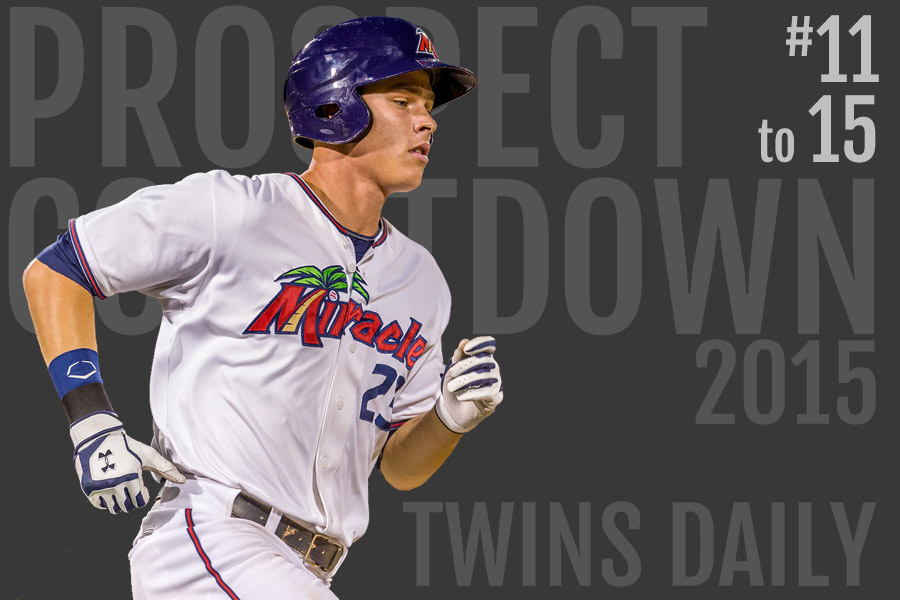 15. Taylor Rogers - LHP Age: 24 2014 Stats (AA): 145 IP, 11-6, 3.29 ERA, 1.29 WHIP, 113/37 K/BB ETA: 2016 You won't often see Rogers mentioned among the system's most promising young arms, because he lacks the high-end velocity and gaudy strikeout numbers of some others, but if you ask folks within the organization about pitchers who can help the Twins in the near future, his name is going to come up. The lefty was an 11th-round pick out of the University of Kentucky in 2011, and he continues to advance through the minor-league ranks while showing exceptional poise and polish on the mound. Many questioned how Rogers would perform at the higher levels, but he showed a lot in the Eastern League last year by allowing only four homers in 145 innings while boosting his K-rate. The biggest question is whether his high-80s arsenal will prove too hittable in the majors, especially against right-handed batters. 14. Adam B. Walker - OF Age: 23 2014 Stats (A+): .246/.307/.436, 25 HR, 94 RBI, 78 R, 9/14 SB ETA: 2016 In terms of pure power, Walker ranks with the likes of sluggers such as Miguel Sano and Kennys Vargas. He hit some legendary moonshots last year in the pitcher-friendly Florida State League, and won the league's All-Star Home Run Derby contest in June. His father was an NFL running back and his mother was a star college athlete, so the muscular 6'4" Walker has the bloodlines and build that you love to see. Unfortunately, while stepping up to High-A ball, the outfielder saw drops in batting average, OBP and slugging, which many anticipated due to his poor strike zone control and high whiff rate. He'll need to become a more complete hitter in order to have a future as a big-league regular, but the pure power alone makes him worth tracking. 13. Stephen Gonsalves - LHP Age: 20 2014 Stats (Rk/A): 65.2 IP, 4-3, 3.02 ERA, 1.14 WHIP, 70/21 K/BB ETA: 2018 In 94 professional innings, Gonsalves has struck out 109 hitters and allowed only 72 hits. It's safe to say that the big 6'5" left-hander has been overwhelming the opposition at the lower levels of the minors, and he doesn't even turn 21 until July. There's not much to quibble about with his results so far, and as a tall southpaw with improving velocity, his projectibility is off the charts. So really, all that's holding Gonsalves back at this point is his limited sample size. If he can put in a full season and maintain his performance in High-A, he'll surely vault into the Top 10 next year and maybe even the Top 5. 12. Max Kepler - OF/1B Age: 22 2014 Stats (A+): .264/.333/.393, 5 HR, 59 RBI, 53 R, 6/8 SB ETA: 2017 When the Twins signed the Berlin native as a 16-year-old back in 2009 with an $800,000 bonus, Kepler was considered to be perhaps the best baseball talent ever to come over from Europe. But it was always known that developing him into a big-league player was going to be a long process. Kepler needed to adapt to living and playing in the United States, and sure enough, he's had his growing pains while rising through the minors. All along, though, he has managed to post solid numbers, and 2014 was another step in the right direction. Although his production was less than dazzling, his AVG/OBP/SLG were all above the Florida State League averages (.257/.325/.371), and the overall numbers mask his second-half improvement: From July 1st through the end of the season, Kepler hit .303/.359/.442 with 19 of his 31 extra-base hits. The biggest stride for the young outfielder was his success against lefty pitchers -- after hitting .117 with a hideous .365 OPS versus southpaws in 2013, he improved to .273 and .691 last year. 11. Lewis Thorpe - LHP Age: 19 2014 Stats (A): 71.2 IP, 3-2, 3.52 ERA, 1.37 WHIP, 80/36 K/BB ETA: 2018 Thorpe sneaked into our Top 10 last year, and based solely on performance, he would have found himself there again this time around. Thorpe had already established himself as a rare commodity with a mid-90s fastball whizzing in from the left side, and he further solidified his legitimacy last year by heading to the Midwest League -- where at 18 he was the youngest player to throw a pitch -- and piling up 80 strikeouts over 71 innings. Thorpe struggled a bit with his control, issuing 4.5 BB/9 to go along with five hit batsmen and eight wild pitches, but the bigger concern is his health. Thorpe felt some pain in his elbow late in the season, and an MRI revealed a UCL sprain. For now, the Twins are taking a "wait and hope for the best" approach, but as we all know, that doesn't always work out. If the young southpaw ends up needing Tommy John surgery, it would obviously set him back substantially.
-
? He has an 804 OPS with 79 homers over the past three seasons. Sure, but he has a 2.79 career ERA and has never been above 3.07 so it's not likely to get a whole lot higher. He's a stud.
-
"They've made a real statement with what they're doing," said an anonymous AL Central official. "It's apparent they're better. They're a good club," said Tigers GM Dave Dombrowski. "Rarely has a team so successfully and systematically answered so many of its major questions" in an offseason, wrote Jon Heyman of CBS Sports. With the possible exception of the crosstown Cubs, no team has drawn more attention and praise for its offseason moves than the Chicago White Sox. General manager Rick Hahn's pick-ups included a front-line starter, an elite closer, an All-Star caliber outfielder and more. How big of a leap can the revamped Sox make after finishing fourth in 2014?2014 Record: 73-89 Runs Scored/Allowed: 660 / 758 Key Additions: Jeff Samardzija (SP), Melky Cabrera (OF), David Robertson (RP), Adam LaRoche (1B), Zach Duke (RP) Key Departures: Paul Konerko (1B), Marcus Semien (IF) Why They'll Be Better Chicago lost 89 games last year despite boasting the Rookie of the Year in its lineup and the No. 3 Cy Young finisher in its rotation. There simply wasn't enough talent surrounding Jose Abreu and Chris Sale, but the White Sox have done plenty to address that over the past few months. LaRoche and Cabrera should re-energize an offensive unit that had grown stagnant with Paul Konerko and Adam Dunn running out the thread. Samardzija joins Sale and Jose Quintana to form a potent trio of starters. The Sox spent a whopping $60 million to upgrade their bullpen with the additions of Robertson and Duke. There's also a dynamic wild card in the mix here -- that being left-hander Carlos Rodon. Considered by many to be the best player in the 2014 draft, Rodon fell to Chicago at the third pick. He signed in July and was pitching in Triple-A by late August. Leaning on an absolutely filthy slider, he struck out 38 hitters in his first 24 professional innings. The 22-year-old was considered extremely polished coming out of North Carolina State University and could make an impact in the majors this year as a dominant arm slotting into either the bullpen or rotation. That's a nice weapon to have on deck. Why They'll Be Worse It's tough to imagine the White Sox not getting better in 2015, barring a rash of bad injuries. They do have some question marks around the infield and at the back end of the rotation, and of course there's no guarantee that all (or any) of their new acquisitions will work out, but manager Rob Ventura enters this season equipped with everything he should need to field a winner. The widespread adulation that Hahn has received is well warranted. What To Expect Driven by the likes of Abreu, Quintana, Adam Eaton and Avisail Garcia, the White Sox were already a young team on an upward trajectory. The bevy of substantial offseason additions will only hasten their rise, and should put them right in the thick of the division race. Unless they have major health issues, the Sox strike me as a team with a floor around .500 and a win ceiling in the 90s. ~~~ This is the third installment in a series at Twins Daily previewing the rest of the AL Central. You can read our write-ups on the Royals and Tigers, and check back in later this week for our take on the Indians. Click here to view the article
-
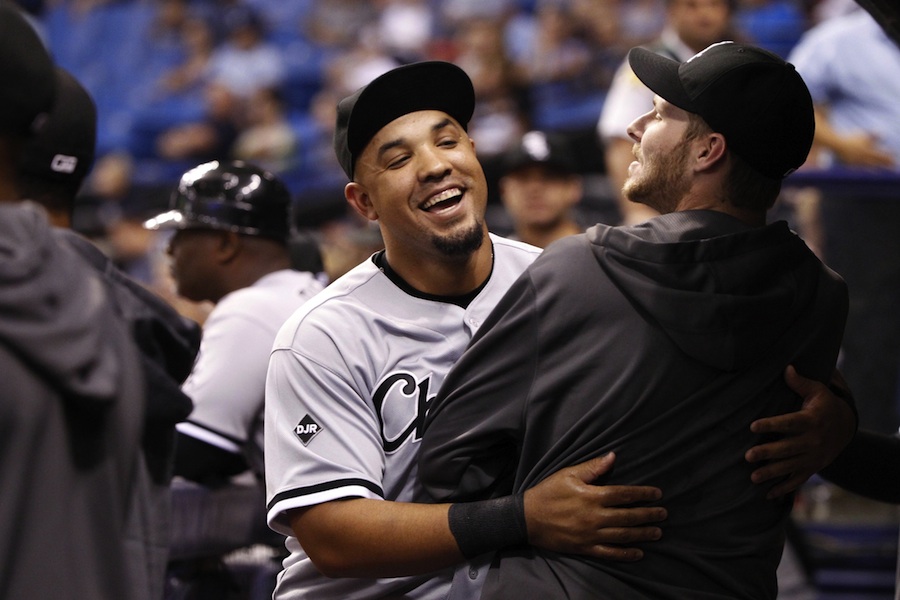 2014 Record: 73-89 Runs Scored/Allowed: 660 / 758 Key Additions: Jeff Samardzija (SP), Melky Cabrera (OF), David Robertson (RP), Adam LaRoche (1B), Zach Duke (RP) Key Departures: Paul Konerko (1B), Marcus Semien (IF) Why They'll Be Better Chicago lost 89 games last year despite boasting the Rookie of the Year in its lineup and the No. 3 Cy Young finisher in its rotation. There simply wasn't enough talent surrounding Jose Abreu and Chris Sale, but the White Sox have done plenty to address that over the past few months. LaRoche and Cabrera should re-energize an offensive unit that had grown stagnant with Paul Konerko and Adam Dunn running out the thread. Samardzija joins Sale and Jose Quintana to form a potent trio of starters. The Sox spent a whopping $60 million to upgrade their bullpen with the additions of Robertson and Duke. There's also a dynamic wild card in the mix here -- that being left-hander Carlos Rodon. Considered by many to be the best player in the 2014 draft, Rodon fell to Chicago at the third pick. He signed in July and was pitching in Triple-A by late August. Leaning on an absolutely filthy slider, he struck out 38 hitters in his first 24 professional innings. The 22-year-old was considered extremely polished coming out of North Carolina State University and could make an impact in the majors this year as a dominant arm slotting into either the bullpen or rotation. That's a nice weapon to have on deck. Why They'll Be Worse It's tough to imagine the White Sox not getting better in 2015, barring a rash of bad injuries. They do have some question marks around the infield and at the back end of the rotation, and of course there's no guarantee that all (or any) of their new acquisitions will work out, but manager Rob Ventura enters this season equipped with everything he should need to field a winner. The widespread adulation that Hahn has received is well warranted. What To Expect Driven by the likes of Abreu, Quintana, Adam Eaton and Avisail Garcia, the White Sox were already a young team on an upward trajectory. The bevy of substantial offseason additions will only hasten their rise, and should put them right in the thick of the division race. Unless they have major health issues, the Sox strike me as a team with a floor around .500 and a win ceiling in the 90s. ~~~ This is the third installment in a series at Twins Daily previewing the rest of the AL Central. You can read our write-ups on the Royals and Tigers, and check back in later this week for our take on the Indians.
-
It wasn't so long ago that the Tigers were the laughing stock of baseball. From 1998 through 2005 they lost an average of 97 games, including a 119-loss season in 2003 that was among the worst in major-league history. To say that Detroit has come a long way would be an understatement, as the Motor City Kitties have now won the American League Central four years running. But times are changing at Comerica; erstwhile ace Justin Verlander ain't what he used to be, and the stud who replaced him in that role, Max Scherzer, recently signed a monster contract with the Nationals. Can these restructured Tigers retain their roar?2014 Record: 90-72 Runs Scored/Allowed: 757 / 705 Key Additions: Yoenis Cespedes (OF), Anthony Gose (OF), Alfredo Simon (SP), Shane Greene (SP) Key Departures: Max Scherzer (SP), Rick Porcello (SP), Torii Hunter (OF) Why They'll Be Better The Tigers have been one of the American League's best offensive teams for quite a while, and that should remain true, even with question marks surrounding their two best hitters. Miguel Cabrera is recovering back from a significant ankle surgery and Victor Martinez, coming off a career year, is now 36. But those are still two guys you want to build your lineup around, and there's plenty to like elsewhere. Detroit replaced the aging Hunter with Cespedes, which figures to be an upgrade and maybe a big one. Right fielder J.D. Martinez enjoyed a breakout season in 2014, and talented young hitters like Jose Iglesias and Nick Castellanos have the potential to do so this year. Why They'll Be Worse Power pitching has been foundational to Detroit's success, but with Scherzer gone and Verlander evidently on the downslope, is their pitching really that powerful anymore? Sure, the Tigers still have David Price and Anibal Sanchez leading the way, but the back half of their rotation looks as weak as it has in years, and their bullpen -- which struggled frequently last year -- is none too intimidating. This is an aging team, and a farm system that has been gutted through GM Dave Dombrowski's aggressive maneuvering was ranked last week by ESPN.com's prospect guru Keith Law as the worst in all of baseball, so little help is on the way. What To Expect The Tigers allowed 705 runs last year -- most by far of any playoff team -- and it's tough to see how they're going to reduce that number with Scherzer and Porcello gone. If some young guys can step up, and closer Joe Nathan can rebound at age 40, Detroit might get enough from the staff to hang on atop the division, but I think it's more likely that the Tigers' reign over the AL Central is going to come to an end. They look as vulnerable as they have in many years. Click here to view the article
-
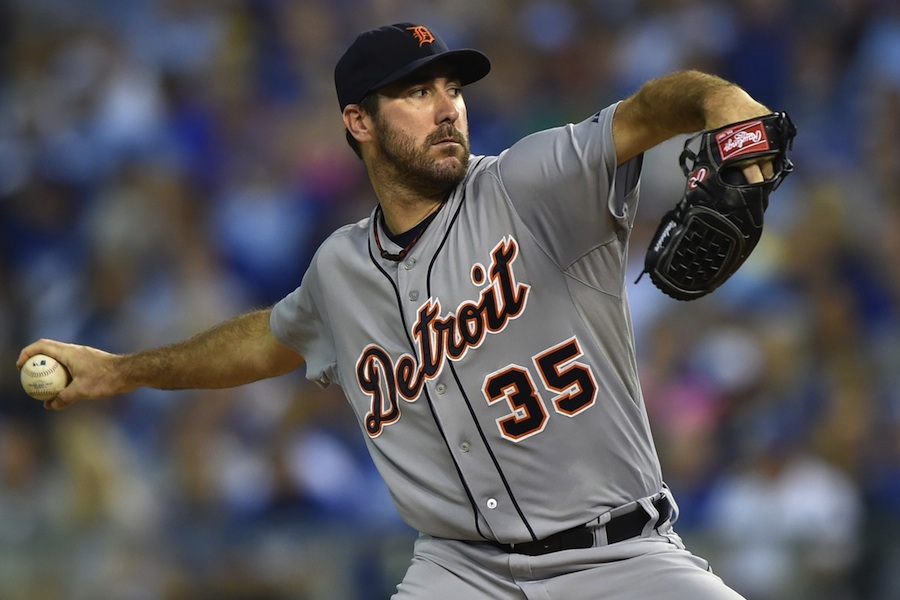 2014 Record: 90-72 Runs Scored/Allowed: 757 / 705 Key Additions: Yoenis Cespedes (OF), Anthony Gose (OF), Alfredo Simon (SP), Shane Greene (SP) Key Departures: Max Scherzer (SP), Rick Porcello (SP), Torii Hunter (OF) Why They'll Be Better The Tigers have been one of the American League's best offensive teams for quite a while, and that should remain true, even with question marks surrounding their two best hitters. Miguel Cabrera is recovering back from a significant ankle surgery and Victor Martinez, coming off a career year, is now 36. But those are still two guys you want to build your lineup around, and there's plenty to like elsewhere. Detroit replaced the aging Hunter with Cespedes, which figures to be an upgrade and maybe a big one. Right fielder J.D. Martinez enjoyed a breakout season in 2014, and talented young hitters like Jose Iglesias and Nick Castellanos have the potential to do so this year. Why They'll Be Worse Power pitching has been foundational to Detroit's success, but with Scherzer gone and Verlander evidently on the downslope, is their pitching really that powerful anymore? Sure, the Tigers still have David Price and Anibal Sanchez leading the way, but the back half of their rotation looks as weak as it has in years, and their bullpen -- which struggled frequently last year -- is none too intimidating. This is an aging team, and a farm system that has been gutted through GM Dave Dombrowski's aggressive maneuvering was ranked last week by ESPN.com's prospect guru Keith Law as the worst in all of baseball, so little help is on the way. What To Expect The Tigers allowed 705 runs last year -- most by far of any playoff team -- and it's tough to see how they're going to reduce that number with Scherzer and Porcello gone. If some young guys can step up, and closer Joe Nathan can rebound at age 40, Detroit might get enough from the staff to hang on atop the division, but I think it's more likely that the Tigers' reign over the AL Central is going to come to an end. They look as vulnerable as they have in many years.
-
I watched it all unfold, but I still have a hard time comprehending it. It feels weird -- almost oxymoronic -- to utter the phrase "American League Champion Kansas City Royals." This is a franchise that had been mired in a losing culture for nearly my entire life. Throughout most of the 2014 season, the Royals were very ordinary, lacking star power. Yet, there they were in October, rattling off victories and completing a pair of impressive sweeps on their way to the World Series. Now, the Royals enter the 2015 campaign as reigning league champs, seeking to prove that last year's success was no fluke. Can they do it?2014 Record: 89-73 Runs Scored/Allowed: 651 / 624 Key Additions: Edinson Volquez (SP), Kris Medlen (SP), Alex Rios (OF), Kendrys Morales (DH) Key Departures: James Shields (SP), Nori Aoki (OF), Billy Butler (DH) Why They'll Be Better The Royals have a fairly young roster, with a number of players still potentially on the rise. While it's hard to view any of their offseason personnel swaps as major talent upgrades, they have plenty of returning pieces that could take significant steps forward. Specifically, I'm thinking of Salvador Perez (24), who has the ability to be one of the top catchers in the game, and 23-year-old fireballer Yordano Ventura, who might be the de facto No. 1 with Shields gone. The Royals have also kept their tremendous bullpen mostly intact, and if that group can pick up where it left off, they'll help the club win a lot of games. Last year Kansas City went 65-4 when leading after six innings. Why They'll Be Worse Frankly, there are a lot of reasons to believe the Royals are headed for a drop-off, and perhaps a substantial one. The biggest thing is that they played way over their heads in 2014. Based on runs scored and allowed, they profiled more like a .500 team (their Pythagerean W/L record was 84-78). Their offense had no real firepower; only two regulars (Alex Gordon and Lorenzo Cain) finished with an OPS+ above 100, and the team ranked last in the majors in home runs. It's hard to imagine the Royals repeating -- much less building upon -- their success without becoming more of a run-scoring threat. Their offseason moves, which included replacing Billy Butler and Nori Aoki with Kendrys Morales and Alex Rios, were more lateral than forward. If someone like Eric Hosmer or Mike Moustakas finally had a breakout year, that could be a game-changer, but how long have we been waiting for that to happen? Removing Shields from the front of the rotation severely downgrades that unit, and the starters that GM Dayton Moore added in the departed ace's stead -- Volquez and Medlen -- are question marks at best. This looks to me like a fairly average starting corps that will struggle to consistently hand leads over to that powerful bullpen, especially if the lineup can't increase its output. What To Expect The Royals are perhaps the biggest regression candidate among all MLB clubs. That's not meant to take anything away from their charmed run last autumn -- it was nothing short of magical -- but those types of streaks are hard to repeat and I just don't see the infrastructure in place to sustain as a contender. Honestly, it wouldn't surprise me a bit to see Kansas City drop back to fourth or fifth place this year. Click here to view the article
-
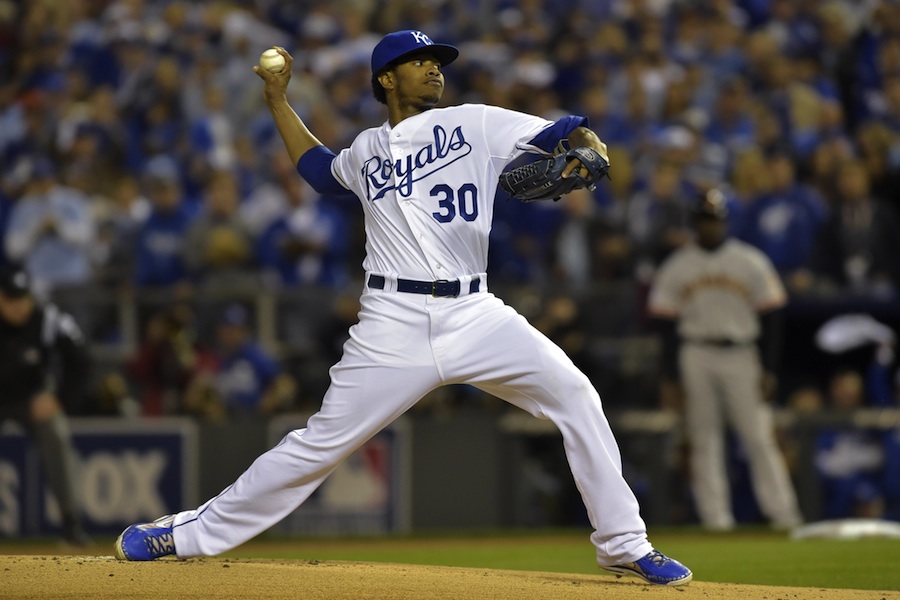 2014 Record: 89-73 Runs Scored/Allowed: 651 / 624 Key Additions: Edinson Volquez (SP), Kris Medlen (SP), Alex Rios (OF), Kendrys Morales (DH) Key Departures: James Shields (SP), Nori Aoki (OF), Billy Butler (DH) Why They'll Be Better The Royals have a fairly young roster, with a number of players still potentially on the rise. While it's hard to view any of their offseason personnel swaps as major talent upgrades, they have plenty of returning pieces that could take significant steps forward. Specifically, I'm thinking of Salvador Perez (24), who has the ability to be one of the top catchers in the game, and 23-year-old fireballer Yordano Ventura, who might be the de facto No. 1 with Shields gone. The Royals have also kept their tremendous bullpen mostly intact, and if that group can pick up where it left off, they'll help the club win a lot of games. Last year Kansas City went 65-4 when leading after six innings. Why They'll Be Worse Frankly, there are a lot of reasons to believe the Royals are headed for a drop-off, and perhaps a substantial one. The biggest thing is that they played way over their heads in 2014. Based on runs scored and allowed, they profiled more like a .500 team (their Pythagerean W/L record was 84-78). Their offense had no real firepower; only two regulars (Alex Gordon and Lorenzo Cain) finished with an OPS+ above 100, and the team ranked last in the majors in home runs. It's hard to imagine the Royals repeating -- much less building upon -- their success without becoming more of a run-scoring threat. Their offseason moves, which included replacing Billy Butler and Nori Aoki with Kendrys Morales and Alex Rios, were more lateral than forward. If someone like Eric Hosmer or Mike Moustakas finally had a breakout year, that could be a game-changer, but how long have we been waiting for that to happen? Removing Shields from the front of the rotation severely downgrades that unit, and the starters that GM Dayton Moore added in the departed ace's stead -- Volquez and Medlen -- are question marks at best. This looks to me like a fairly average starting corps that will struggle to consistently hand leads over to that powerful bullpen, especially if the lineup can't increase its output. What To Expect The Royals are perhaps the biggest regression candidate among all MLB clubs. That's not meant to take anything away from their charmed run last autumn -- it was nothing short of magical -- but those types of streaks are hard to repeat and I just don't see the infrastructure in place to sustain as a contender. Honestly, it wouldn't surprise me a bit to see Kansas City drop back to fourth or fifth place this year.
-
Sounds like Vargas has a good idea of what he needs to do to succeed. He's got a big and colorful personality so it'd be awesome to see him become a fixture in the lineup for years.
-
Not surprised to see Berrios so low. Many prospect gurus still not buying into his size and pitchability. But based on results and age it seems crazy to have him 67 spots below Meyer.
-
In his first full season as manager of the Minnesota Twins, Tom Kelly guided to the team to the first World Series title in franchise history. After Kelly retired in 2001, Ron Gardenhire took the helm, and in his first season he led the Twins to the American League Championship Series. Your move, Paul Molitor.The Twins have been in a losing funk for such a long time that it can be difficult for fans to remember just how quickly fortunes sometimes turn. But it can happen, and it has. The dramatic shifts that have coincided with the last two managerial changes provide evidence enough of that. Kelly originally stepped in midway through the 1986 season, with the Twins on their way to 91 losses. At the time, they had not finished above .500 in eight years, but the club experienced a renaissance under Kelly, capturing two championships in his first five seasons. After this successful stretch, they fell back into a rut, and by the end of the 90s they were caught in an extended losing spell similar to the one they are presently trying to escape. The Twins lost 90 or more games every year from 1997 through 2000, and while it appeared they were headed for a division title in 2001, they collapsed in the second half and fell short. Gardenhire took over the following year, and we all know the rest of that story. In light of this history, Molitor shouldn't feel too intimidated as he takes the reigns and seeks to steer the Twins out of the darkness. Despite the timing, it likely wasn't the changes in leadership that primarily drove these last two turnarounds, but rather influxes of prospect talent and emergences of young star players, as well as savvy veteran additions. The team is in a comparable position now as Molitor embarks on his journey, so it's not hard to draw a parallel and envision a similar outcome. It stands to reason that the new skipper himself -- uninterested in sitting through multiple years of stagnation -- is doing so. Will the resurgence be as abrupt as it was in those aforementioned instances? Of course, the answer is 'probably not.' The Twins need to get back to the .500 range before a deep postseason run becomes a consideration. Talk of a worst-to-first swing in the Central is mostly just rosy optimism that always tends to manifest at this time of year. Mostly. It's hardly unthinkable that the Twins could find themselves in contention for the division late in the season. Obviously they need to stay healthy and get a lot of good individual performances. But, in a broader sense, two things need to happen: 1) Fast start. The team needs to put itself in a competitive mindset with a surprisingly strong start, and a record at or above .500 heading into July. This would set them up as "buyers" at the deadline, allowing them to upgrade in areas of need midway through the season. It would also make more urgent the calling up of prospects who could make a positive impact (e.g., Byron Buxton and Miguel Sano). 2) Weak division. This part, unfortunately, isn't really in the Twins' control. During his Q&A at the Winter Meltdown event, team president Dave St. Peter opined that the AL Central might be the strongest division in baseball. Well... that needs to be not the case. Not so much because the Twins need to be able to come out on top -- the addition of an extra wild-card spot somewhat negates that aspect -- but because they need a team or two they can beat up on and pile up wins against. In 2010, when the Twins won the division, they went a combined 26-10 against Chicago and Kansas City. In 2009 they went 24-12 against those same two clubs. Between '02 and '03 they won 29 of 38 games against the Tigers. With baseball's unbalanced schedule, taking care of business against the division's bottom-feeders is critical to contending for October. For the last few years, the Twins have been that bottom-feeder; they need to swap out of that role. It's a little difficult to envision such a scenario this year -- the Royals and Tigers ain't what they used to be, and the White Sox and Indians both look pretty good on paper -- but you never know. What do you think? What will it take for the Twins to be competitive in the division and in the American League this year? Click here to view the article
-
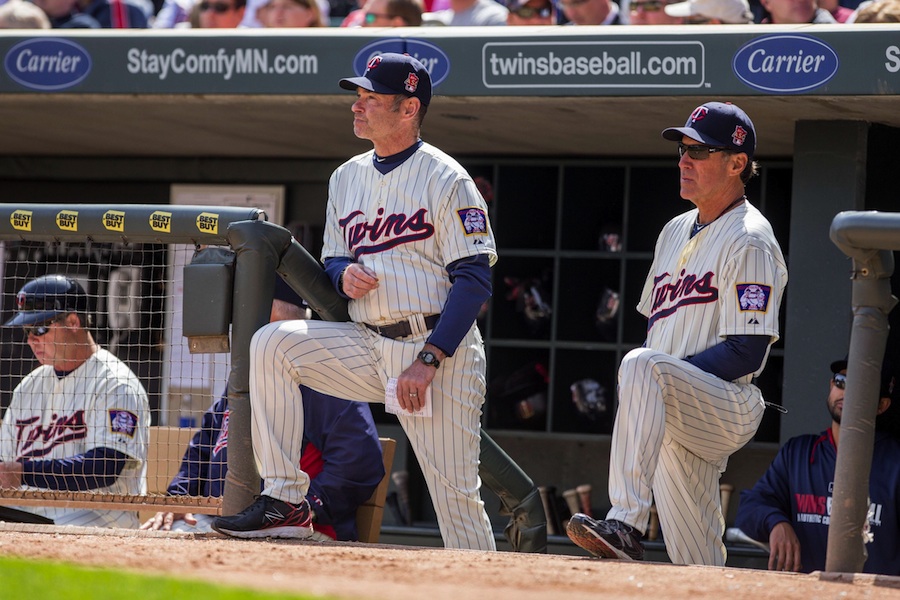 The Twins have been in a losing funk for such a long time that it can be difficult for fans to remember just how quickly fortunes sometimes turn. But it can happen, and it has. The dramatic shifts that have coincided with the last two managerial changes provide evidence enough of that. Kelly originally stepped in midway through the 1986 season, with the Twins on their way to 91 losses. At the time, they had not finished above .500 in eight years, but the club experienced a renaissance under Kelly, capturing two championships in his first five seasons. After this successful stretch, they fell back into a rut, and by the end of the 90s they were caught in an extended losing spell similar to the one they are presently trying to escape. The Twins lost 90 or more games every year from 1997 through 2000, and while it appeared they were headed for a division title in 2001, they collapsed in the second half and fell short. Gardenhire took over the following year, and we all know the rest of that story. In light of this history, Molitor shouldn't feel too intimidated as he takes the reigns and seeks to steer the Twins out of the darkness. Despite the timing, it likely wasn't the changes in leadership that primarily drove these last two turnarounds, but rather influxes of prospect talent and emergences of young star players, as well as savvy veteran additions. The team is in a comparable position now as Molitor embarks on his journey, so it's not hard to draw a parallel and envision a similar outcome. It stands to reason that the new skipper himself -- uninterested in sitting through multiple years of stagnation -- is doing so. Will the resurgence be as abrupt as it was in those aforementioned instances? Of course, the answer is 'probably not.' The Twins need to get back to the .500 range before a deep postseason run becomes a consideration. Talk of a worst-to-first swing in the Central is mostly just rosy optimism that always tends to manifest at this time of year. Mostly. It's hardly unthinkable that the Twins could find themselves in contention for the division late in the season. Obviously they need to stay healthy and get a lot of good individual performances. But, in a broader sense, two things need to happen: 1) Fast start. The team needs to put itself in a competitive mindset with a surprisingly strong start, and a record at or above .500 heading into July. This would set them up as "buyers" at the deadline, allowing them to upgrade in areas of need midway through the season. It would also make more urgent the calling up of prospects who could make a positive impact (e.g., Byron Buxton and Miguel Sano). 2) Weak division. This part, unfortunately, isn't really in the Twins' control. During his Q&A at the Winter Meltdown event, team president Dave St. Peter opined that the AL Central might be the strongest division in baseball. Well... that needs to be not the case. Not so much because the Twins need to be able to come out on top -- the addition of an extra wild-card spot somewhat negates that aspect -- but because they need a team or two they can beat up on and pile up wins against. In 2010, when the Twins won the division, they went a combined 26-10 against Chicago and Kansas City. In 2009 they went 24-12 against those same two clubs. Between '02 and '03 they won 29 of 38 games against the Tigers. With baseball's unbalanced schedule, taking care of business against the division's bottom-feeders is critical to contending for October. For the last few years, the Twins have been that bottom-feeder; they need to swap out of that role. It's a little difficult to envision such a scenario this year -- the Royals and Tigers ain't what they used to be, and the White Sox and Indians both look pretty good on paper -- but you never know. What do you think? What will it take for the Twins to be competitive in the division and in the American League this year?
-
Is anyone saying that? The question is who should be in line for the fifth starter spot. As noted in the article, if May is a mess in spring training then you make adjustments (same goes for Nolasco, and anyone, really), but based on everything at play he looks like the best option going in. It's not a scholarship, it's an evaluation based on the evidence at hand. Obviously more evidence comes into play during the month of March, I just don't think what happens in Ft. Myers should be the overriding factor in the decision. Their plan should be to have May in the rotation. Plans can change.



