


Matt Johnson
Verified Member
-
Joined
-
Last visited
Everything posted by Matt Johnson
-
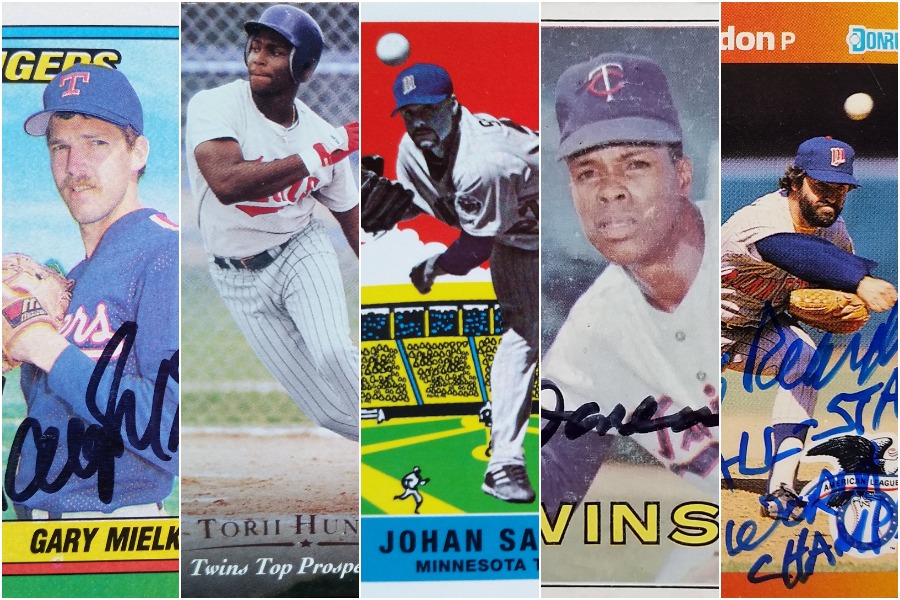 January 28 Happy 55th Birthday, Gary Mielke It’s the birthday of former Rangers reliever Gary Mielke, born in St. James, MN in 1963. The sidearmer made three appearances with the Rangers in 1987, and another 76 between 1989 and ‘90. David Greisen contributed a thorough entry on Mielke to the SABR BioProject (click here). I’ll paraphrase. Gary went to school in St. James through eighth grade, after which the Mielkes moved to North Mankato, and Gary enrolled in Mankato West High School. He earned three letters in baseball at West, and was All-State his senior season (1981). He was also a starting forward on the basketball team his junior and senior seasons. Despite his success in high school, he received zero scholarship offers. He wound up attending local Division II Mankato State, and even there he didn’t make varsity until the middle of his sophomore season (1983). Greisen’s SABR BioProject entry includes a badass anecdote from Mielke’s junior season. He was hit by a liner in Grand Forks, breaking his nose and fracturing his cheekbone. Nonetheless, he made his next scheduled start five days later vs. the rival Gophers, earning a suspenseful complete-game 3-2 win. He was sensational his senior season, not allowing a single run in North Central Conference play, and putting together a 27-inning scoreless streak overall. The Rangers selected Mielke in the 26th round of the 1985 draft. He made his major league debut on August 19, 1987 at age 24, starting the top of the seventh with the Royals beating the Rangers 10-6 in Texas. The first batter he faced, Frank White, homered. Mielke went on to induce ground outs from the next four Royals hitters. Three of Mielke’s favorite major league memories are being on hand for Nolan Ryan’s 5,000th strikeout in 1989, and his sixth no-hitter and 300th win in 1990. Mielke was such a Ryan fan, in fact, that his son, born three days after Gary’s first major league win, is named Tyler Ryan Mielke. The Mielkes later had a daughter, Chelsea. Gary threw his final major league pitch on September 30, 1990, inducing an inning-ending double play from Mark McGwire. Gary Mielke still lives in North Mankato. He has even done some umpiring there over the years. He was inducted into the Minnesota State Mavericks Hall of Fame in 1999. January 28, 1985 Met Stadium Demolished Bloomington’s Metropolitan Stadium, home of the Twins and Vikings from 1961 to 1981, is demolished. The stadium originally opened in 1956 as the home of the Minneapolis Millers. The final game at Met Stadium was played on December 20, 1981, a 10-6 Vikings loss vs. Kansas City. The game time temperature was 10 degrees with a -8 windchill. Twins official scorer and prolific baseball historian Stew Thornley wrote about Met Stadium for the 2015 book A Pennant for the Twin Cities: The 1965 Minnesota Twins. The book is available on Amazon, but you can read Thornley’s article on the SABR (Society for American Baseball Research) website (here). January 29, 2016 Hunter and Gordon Elected to Twins Hall of Fame Twins President Dave St. Peter announces that Torii Hunter and John Gordon will be the 27th and 28th members of the Twins Hall of Fame. Gordon spent 25 years in the Twins radio broadcast booth, originally joining Herb Carneal in 1987, and retiring at the end of the 2011 season. Torii Hunter spent 12 of his 19 major league seasons with the Twins, originally coming up in August 1997 at age 22. While in a Twins uniform Hunter won seven of his nine career Gold Gloves, made two of his five All-Star appearances, and hit 214 of his 353 home runs (sixth-most in Twins history). Hunter’s three grand slams in 2007 tied the team’s single-season record (Bob Allison '61, Rod Carew '76, Kent Hrbek '85, Kirby Puckett '92). Hrbek and Hunter, incidentally, both hit their third on August 15. Don Mattingly set the MLB record with six grand slams in 1987. January 31 Happy 31st Birthday, Caleb Thielbar It’s the birthday of 2005 Randolph High School graduate and former Twins pitcher Caleb Thielbar, born in 1987. Both of Caleb’s parents lettered in baseball at Randolph HS. His mom, Janet (Johnston), was the Rockets’ starting shortstop in 1976. His dad Calvin was the assistant coach of that team. In addition to baseball, Caleb Thielbar excelled in basketball at Randolph HS. He was the second-leading scorer in school history, and number one in three-pointers and free-throw percentage at the time of his graduation. He went on to pitch four season at South Dakota State University, and was drafted by the Milwaukee Brewers in the 18th round of the 2009 draft. He was released by Milwaukee in December 2010. He pitched for the St. Paul Saints in 2011, striking out 62 batters in just 49 ⅔ innings (43 appearances). On August 18 he became the first-ever Saints player signed by the Minnesota Twins. Thielbar rose rapidly through the Twins system, and made his major league debut on May 5, 2013 at age 26, beginning a historically successful rookie season. He did not allow a run in his first 17 big league appearances. He earned his first win on June 1, pitching a 1-2-3 top of the ninth with the Twins trailing the Mariners 4-2. The Twins mounted a comeback in the bottom of the inning, culminating in Joe Mauer scoring from first on a Ryan Doumit walk-off triple. Thielbar finally allowed his first run on July 8, giving up a solo homer to Tampa Bay’s Ben Zobrist. He finished the season 3-2 with a 1.76 ERA and 0.826 WHIP over 48 appearances (46 innings pitched). He appeared in 54 ballgames in 2014, posting a 3.40 ERA. He appeared in just 6 games in 2015 before being claimed off waivers by the Padres on August 8. He has not pitched in the majors since. Thielbar returned to the St. Paul Saints in 2016, going 5-2 with a 2.39 ERA over 64 innings (42 appearances). He went 2-1 with a 2.01 ERA and 0.761 WHIP in 22.1 innings (17 appearances) with the Saints in 2017. His contract was purchased by the Detroit Tigers on January 23, 2018. Patrick Reusse wrote a great article about Thielbar prior to his rookie season with the Twins (here). February 2 Happy 50th Birthday, Scott Erickson It’s the birthday of former Twins pitcher Scott Erickson, born in Long Beach, CA in 1968. The Twins drafted Erickson out of Arizona State in the fourth round of the 1989 draft. It was the fourth time he had been drafted. Erickson made it to the majors midway through the 1990 season, finishing strong with a 5-0 record in September. He went 12-2 with a 1.39 ERA in the first half off the 1991 season, and was named starting pitcher of the All-Star Game. Erickson, however, was unable to pitch due to injury, so manager Tony LaRussa handed the ball to fellow Twin Jack Morris in his stead. Morris wore black socks and his pants low in the style of Erickson. Erickson wound up going 20-8 for the ‘91 World Series Champion Twins, tying for the major league lead in wins and finishing second to Roger Clemens for the American League Cy Young Award. After a solid ‘92 season, Erickson lost a major league-worst 19 games in 1993. ‘94 was arguably an even worse season for Erickson, though he did no-hit the Brewers at the Metrodome on April 27th. He rebounded after being traded to the Orioles during the ‘95 season, and would ultimately prove to be one of the more durable pitchers of the ‘90s, pitching an American League-leading 251.1 innings in 1998, and winning 73 games between 1995 and ’99. February 2, 2008 Twins Trade Santana The Twins do the prudent thing and trade 2004 and 2006 Cy Young Award winner Johan Santana to the Mets for outfielder Carlos Gomez and three pitchers, all of whom were duds. Gomez showed sparks but never lived up to his potential in Minnesota, though he did score one of the most exciting runs in team history on October 6, 2009. Less than a month later he was traded to Milwaukee for former and future All-Star J.J. Hardy. Gomez, for his part, would go on to consecutive All-Star seasons for Milwaukee in 2013 and ‘14. After three very good seasons in New York, Santana missed all of the 2011 season. He went 6-9 in 21 starts in 2012, pitching his final major league game on August 17, 2012 at age 33. The Twins announced that Santana had been elected to the team Hall of Fame on January 19, 2018. February 2, 1996 Coldest Day in State History The state record low temperature of -60 is recorded near the town of Tower. I was on a sixth-grade class field trip, staying in pretty rustic cabins just a few miles away at the Laurentian Environmental Center in Britt. Former Pioneer Press sportswriter Jim Caple got married that day in Eagan! Don’t feel too bad for the couple, though; it was only -32 in the Twin Cities, a full two degrees warmer than the metro record of -34 set in January 1936. Caple wrote for the Pioneer Press from June 1989 to February 2000. The temperature in Tower on February 8—six days later—was 48; a swing of 108 degrees! February 3, 1979 Twins Trade Carew The Twins trade seven-time American League batting champ Rod Carew to the Angels for Ken Landreaux, Dave Engle, Brad Havens, and Paul Hartzell. It had become increasingly clear that team owner Calvin Griffith had no intention of ponying up for the future Hall of Famer. And even if Griffith could have afforded him, it was unlikely that Carew would have played for Griffith again after the owner's infamous, off-the-rails ramblings at a Lion’s Club dinner in Waseca on September 28. Griffith was quoted in the Star Tribune as having said "I'll tell you why we came to Minnesota. It was when we found out you only had 15,000 blacks here ... We came here because you've got good, hardworking white people here." Read Nick Coleman's original October 1, 1978 article (click here). February 3, 1987 Twins Acquire Terminator The Twins trade pitcher Neal Heaton, 1980 first-round draft pick catcher Jeff Reed, 19-year-old future major league pitcher Yorkis Perez, and career minor league pitcher Afredo Cardwood to the Expos for backup catcher Tom Nieto and 1985 and ‘86 All-Star closer Jeff Reardon. Reardon would save 31 regular season games for the ‘87 Twins, plus three postseason games, including Game 7 of the World Series. Reardon surpassed Rollie Fingers as major league baseball’s all-time saves leader in 1992 with his 342nd save. His 367 career saves currently rank 10th all-time. Stupid Jonathan Papelbon passed him in 2016. Joe Nathan is eighth on the list with 377. Heaton, for his part, won a career-high 13 games for the Expos in 1987. The Twins career save leaders are Nathan (260), Rick Aguilera (254), Glen Perkins (120), Eddie Guardado (116), Ron Davis (108), and Reardon (104). Bonus Thome Tidbits Here is some Jim Thome trivia on the occasion of his first-ballot election to the Hall of Fame last week. These are just the nuggets that turn up in my Twins Almanac spreadsheet. Contribute your own Thome trivia in the comments below. Jim Thome hit .314 with 218 hits, 61 home runs, and 156 RBI in 196 career games vs. the Twins. That’s his highest average vs. any team he played at least 30 games against, second-most home runs (66 vs. Detroit), and the most hits and RBI he had against any team. He hit .321 with 28 home runs at the Metrodome, the most he hit at any visiting ballpark. He hit .365 with 11 home runs in 19 games vs. the Twins in 2002. An astonishing seven of those home runs came off Rick Reed. He hit two homers off Reed in 2001, for a total of nine, the most he hit against any pitcher. Next on the list is Roger Clemens (8), and Justin Verlander (7). He hit six off several pitchers, including Eric Milton. The Twins set a club record for margin of victory, beating Cleveland 23-2 on June 4, 2002. Cleveland’s two runs came on solo home runs by Jim Thome in the fourth and seventh innings off none other than Rick Reed. Reed only allowed three hits and no walks in seven innings pitched, improving to 6-2 on the season. He would end up leading the team with a 15-7 record. Thome homered in seven straight games for Cleveland in 2002. The Twins record is five games: Harmon Killebrew (twice in 1970), Marty Cordova (1995, in just his 23rd MLB game), and Brian Dozier (2016). The major league record is eight (Dale Long 1956, Mattingly ‘87, and Griffey Jr. ‘93). Tony Oliva, Bob Allison, Jimmie Hall and Harmon Killebrew went back-to-back-to-back-to-back in the eleventh inning in Kansas City on May 2, 1964. Eight teams in major league history have hit four consecutive home runs, most recently the Nationals on July 27, 2017. The last American League team to do so was the White Sox in 2008 when Jim Thome, Paul Konerko, Alexei Ramirez, and Juan Uribe went back-to-back-to-back-to-back. Twins five-hitter Bob Allison struck out five times in five at-bats on September 2, 1965, still tied for the major league record in a nine-inning game. Jim Thome tied that record on April 9, 2000. Thome had 20 four-strikeout games, third most in major league history behind Reggie Jackson (23), and Ryan Howard (27). I suspect that includes extra-inning games, but I’m not sure. Who remembers Game 163? No, not that one; the year before that, when the White Sox beat the Twins 1-0 on September 30, 2008. Chicago’s only run came on a Jim Thome solo home run off Nick Blackburn leading off the seventh. That game was in Chicago by virtue of a coin flip, despite the Twins having the better head-to-head record. Major League Baseball changed the rule, and the very next season the Twins hosted the Tigers in a Game 163 for the ages. Fun Fact: The Twins also played 163 games in 1962. Camilo Pascual pitched a three-hit shutout to become the first 20-game winner in Twins history. Thome had already hit 564 home runs when signed with the Twins on January 26, 2010 at age 39. Thome had the first walk-off hit in Target Field history on August 17, 2010. Obviously it was a home run. It was the first of a three-game series vs. the Chicago White Sox, over whom the Twins held a three-game lead in the Central Division. With the Twins trailing 5-6 in the bottom of the tenth, Delmon Young led off with a single off Matt Thornton. Thome then deposited the All-Star closer’s 1-0 offering, a belt-high fastball, onto the plaza. It was Thome's 12th career walk-off homer, tying Babe Ruth, Jimmie Foxx, Stan Musial, Mickey Mantle and Frank Robinson for the major league record. He broke that record on June 24, 2012 while playing for the Phillies. September 4, 2010 was a day Greg Gagne will never forget. He was inducted as the 22nd member of the team Hall of Fame before a game between the first-place Twins and Rangers. Carl Pavano picked up his 16th win in the 12-4 Twins victory. Matt Tolbert had two triples (very Gagne-esque) and drove in five runs, while Thome hit a pair of homers, passing Mark McGwire for ninth on the all-time list. Just two days later—Labor Day—Thome hit a memorable blast off the flagpole, eventually estimated at 480 feet. On July 17, 2011, Thome hit a staggering three-run 490-foot bomb, still the longest ever hit at Target Field. His 596th career home run helped the Twins to a 4-3 win over Kansas City. Thome hit his 599th and 600th home runs in Detroit on August 15, 2011. Pay attention to this, kids: both were to the opposite field. The Twins sold Thome’s contract to Cleveland 10 days later. In total he hit 37 home runs in a Twins uniform. Thome, whose final season was 2012, officially retired on August 2, 2014 with 612 home runs, eighth-most in major league history. Keep in touch with @TwinsAlmanac on Twitter and Facebook.
-
This week's Almanac features former Twins Harmon Killebrew, Camilo Pascual, Tom Mee, Sam Mele, Tom Kelly, Andy MacPhail, Mike Pagliarulo, Eddie Guardado, and Michael Cuddyer, as well as Minnesotan major leaguers Hank Gehring, Blix Donnelly, Dick Stigman, and Kerry Taylor. January 21, 1914 Birthdate of Blix Donnelly It’s the birthdate of 1932 Olivia High School graduate and 1944 World Series hero Sylvester “Blix” Donnelly. He spent his first two years out of high school working and playing townball. He caught a break in 1934, receiving an invitation to a three-day baseball school at Nicollet Park in Minneapolis, and began his pro career the following season in Superior, WI. He was traded to Duluth for the ‘36 season where he went 11–19 with 232 strikeouts in 214 innings. Donnelly’s minor league exploits, including a 19-K game and three no-hitters, are thoroughly laid out in Gregg Omoth’s essay in the Stew Thornley-edited Minnesotans in Baseball. Perhaps his best minor league season was 1941 when he went 28-6 with Class C Springfield, setting a Western Association record with 304 strikeouts. He also led the league in innings pitched, complete games, and wins despite being traded late in the season to Sacramento of the Pacific Coast League, where he pitched another three games. After nine minor league seasons, Donnelly made the Cardinals out of Spring Training in 1944. He came up big for the Cards in an all-St. Louis World Series, pitching perfect eighth and ninth innings in Game 1, and holding the Browns scoreless while striking out seven in the eighth, ninth, tenth, and eleventh innings of Game 2 to earn the win. The Cardinals won the Series in six games. Over 1,000 people crammed into the Olivia Armory to honor the World Series hero on October 24, 1944 at an event broadcast by WCCO’s Halsey Hall and Cedric Adams. Donnelly went on to pitch eight seasons in the majors, including 14 appearances with the 1950 National League Champion Phillies. He passed away in 1976 at age 62. January 21, 1922 Birthdate of Sam Mele It’s the birthdate of Sam Mele, born in Astoria, NY in 1922. Mele played 10 major league seasons, including 1949–’52 with Calvin Griffith’s Washington Senators. In 1961, the Twins’ first season, Griffith made Mele the second manager in team history, succeeding Cookie Lavagetto. Mele led the Twins to the 1965 World Series, which they lost in a thrilling seven-game series vs. Sandy Koufax and the Los Angeles Dodgers. Overall the team went 524-436 under Mele before he was succeeded by Cal Ermer during the 1967 season. Mele’s year of birth was listed as 1923 during his playing days, a trick that was suggested by his major league uncles Tony and Al Cuccinello. These days we associate fibbing about one’s age with Dominican players like Roberto Hernández (Fausto Carmona). Miguel Sanó’s true age was a huge source of controversy prior to the Twins signing him, as documented in Ballplayer: Pelotero (2011). But it’s hardly a new trick. Other than Sam Mele, Hall of Famers Rube Marquard, Phil Rizzuto, and Pee Wee Reese also lied about their age, as did 3x All-Star Hal McRae, who finally came clean in 1987 at age 41 (not 40). Sam Mele passed away May 1, 2017. He was 95 years old. January 24 Happy Birthday, Dick Stigman It’s the birthday of 1954 Sebeka High School graduate and seven-year major leaguer Dick Stigman, born in Nimrod, MN in 1936. Stigman signed with Cleveland out of high school. He was an All-Star during his 1960 rookie season. On April 2, 1962, the Twins acquired Stigman from Cleveland for Pedro Ramos in the first major trade in team history. Pedro Ramos started the first regular season game in Twins history, pitching a complete-game three-hit shutout vs. Whitey Ford at Yankee Stadium on April 11, 1961. Stigman won 27 games in his first two seasons with the Twins, including a three-hit shutout on April 18, 1963. His 15 complete games and 193 strikeouts that year were third in the AL. His teammate Camilo Pascual led the league in both categories. Stigman’s production declined by 1965, and he did not pitch in the seven-game World Series vs. Los Angeles. The Twins traded Stigman to the Red Sox on April 6, 1966. It would be his final major league season. Stigman spoke at the Halsey Hall SABR Fall Chapter Meeting on November 4, 2017. The Spring Chapter Meeting is scheduled for April 21 in Minneapolis. January 24, 1881 Birthdate of Hank Gehring It’s the birthdate of former professional spitballer Hank Gehring, born in St. Paul in 1881. His parents had immigrated from Switzerland with six children just a few years earlier. Hank was the second of three Gehring kids born in St. Paul. The family lived in the Dayton’s Bluff neighborhood. Hank played 11 seasons of professional baseball. The spitball specialist was a pretty good hitter, too, often playing the outfield on days he wasnt pitching, and other times being used a pinch-hitter. He got his start in pro ball with the St. Paul Saints in 1901. Pitching for the Duluth White Sox, he no-hit the Superior Longshoremen on June 21, 1904. Playing for the Wichita Jobbers in 1905, he led the Class C Western Association with 32 wins, 10 shutouts, and 264 strikeouts. At the plate he led the league with nine home runs. He played with the Minneapolis Millers in 1906, and began the 1907 season with the Des Moines champs before being called up to the Washington Senators, where the 26-year-old pitcher made his major league debut as a pinch-hitter on July 16. He pitched in 15 games for the Senators that season. He was there to witness the major league debut of a 19-year-old kid named Walter Johnson, who Senators scouts had discovered pitching in the semipro Southern Idaho League. Gehrings numbers were respectable during his first big league season, but what really impressed people was his veteran-like composure. He earned a spot on the 1908 team, but after pitching just five innings over three games, he returned home to the St. Paul Saints where he remained through 1911. Gehrig was set to pitch for the Kansas City Blues in 1912, but tragically died of kidney failure (uremia) on April 18. He was just 31 years old. Though his death was strongly felt throughout the midwest, newspaper coverage was scant on account of the Titanic having sunk in the North Atlantic just three days earlier. He was eulogized in Sporting Life, and the St. Paul Saints and Kansas City Blues held a benefit game on May 27, donating the entire Lexington Park gate proceeds to Gehrings widow and eight-year-old daughter. The game drew the largest weekday crowd of the season. Gehring is buried at Forest Lawn Memorial Park in St. Paul. January 24, 1975 Royals Sign Killebrew The Kansas City Royals sign free agent slugger Harmon Killebrew, eight days after he was released by Minnesota. The Twins retired Harmon’s #3 when the Royals were in town on May 4, 1975. Harmon homered in the first inning of that game. On September 18 he took the Twins’ Eddie Bane deep for his 573rd and final career home run, fifth-most in major league history at the time. He hit 14 in a Royals uniform. January 25 Happy 47th Birthday, Kerry Taylor It’s the birthday of 1989 Roseau grad Kerry Taylor, born in Bemidji, MN in 1971. The Twins signed Taylor as a free agent out of high school. He was taken by San Diego in the 1992 Rule 5 Draft, and made his major league debut with the Padres on April 13, 1993 at age 22. He pitched 68 1/3 innings over 36 games that season, including seven starts, compiling an 0-5 record, 6.45 ERA, 1.77 WHIP, and averaging 5.9 strikeouts and 6.5 walks per nine innings. He made one start in the middle of the ‘94 season, giving up four runs on nine hits in 4 1/3 innings. At the plate, he went 0-for-14 with nine strikeouts. Taylor continued to pitch in the Padres organization through the 1997 season, in the Tigers organization in ‘98, for independent Atlantic City in ‘99, and in the Blue Jays organization in 2000. He did manage to connect for seven hits over three seasons with Triple-A Las Vegas. These days Taylor is a regional sales manager at Ziegler Caterpillar in Fergus Falls. January 25, 1991 Twins Sign Pagliarulo In a move that manager Tom Kelly had lobbied hard for, the Twins sign free agent third baseman Mike Pagliarulo. The signing was made possible by Gary Gaetti opting out of his contract on November 7, 1990. Gaetti’s production was on the decline, hitting .259 in 1989, and .229 in 1990. Gaetti stuck around the majors, however, hitting 35 home runs with Kansas City in 1995, and playing his final game in 2000 at age 41. Pagliarulo started 112 games at third base for the ‘91 Twins, with Scott Leius starting most of the rest. Leius played in 109 regular season games total, entering many as a late-inning defensive replacement for Pagliarulo. Pags homered in the ‘91 ALCS, while Leius homered in the World Series. January 25, 2013 Guardado and Mee Elected to Twins Hall of Fame The Twins announce that “Everyday” Eddie Guardado and longtime public relations man Tom Mee have been elected to the team Hall of Fame. Guardado pitched for the Twins from 1993-2003, and briefly in 2008 after being re-acquired from Texas in exchange for Mounds View grad and current St. Paul Saints pitcher Mark Hamburger. Guardado pitched in 648 games in a Twins uniform. That’s the most in team history, and it’s not even close. Rick Aguilera is next on the list, 158 games back. Guardado tied for the major league lead with 83 appearances in 1996. He led the American League with 45 saves in 2002. Calvin Griffith hired St. Paul Saints PR man Tom Mee in 1960, before the team had even moved to Minnesota. Mee served as the Twins’ director of media relations for 30 years, retiring from that post on May 31, 1991, and succeeding current Star Tribune digital sports editor Howard Sinker as the Twins’ official scorer. Baseball historian Stew Thornley is the current official scorer. January 26, 2012 Dave St. Peter announces that the Twins will retire Tom Kelly’s number 10. January 27, 2012 Pascual Elected to Team Hall of Fame Legendary Cuban pitcher Camilo Pascual is elected as the 24th member of the Twins Hall of Fame. Pascual came up with the Washington Senators in 1954. He was sensational in the Twins’ first few seasons in Minnesota, leading the majors in shutouts in 1961 and ‘62, and leading the American League in complete games in 1962 and ‘63, and in strikeouts from 1961 to ‘63. Pascual pitched back-to-back shutouts three separate times during the Twins’ inaugural 1961 season, and once again in 1962. Also in 1962, he became the first 20-game winner in Twins history. He won 21 games in 1963. In 1965 he hit the only grand slam by a pitcher in Twins history. He had also hit a grand slam during the Senators’ final season in Washington. Pascual was inducted into the Twins Hall of Fame during a ceremony on July 14, 2012. January 27, 2017 MacPhail and Cuddyer Elected to Twins Hall of Fame Andy MacPhail and Michael Cuddyer are elected as the 29th and 30th members of the Twins Hall of Fame. MacPhail began his career as a baseball executive in the Cubs organization in 1976. The Twins hired his as vice president of player development in 1984, and promoted him to general manager in 1985. He led the Twins to World Series championships in 1987 and 1991, and was named Executive of the Year by the Sporting News in 1991. Following the strike-shortened 1994 season, MacPhail became president and CEO of the Chicago Cubs, with whom he remained for 12 seasons. He succeeded Hall of Famer Pat Gillick as Phillies president following the 2015 season. Andy’s dad and grandpa are both enshrined in Cooperstown. Larry was inducted into the Hall of Fame in 1978. Lee was inducted in 1978. The Twins drafted Michael Cuddyer out of high school with the ninth overall pick in the first round of the 1997 draft. He made his major league debut as a September call-up in 2001. Cuddyer was the tenth and most recent Twin to hit for the cycle, doing so on May 22, 2009. On August 23, 2009 he became the only player in Twins history to homer twice in the same inning. Michael Cuddyer was inducted into the Twins Hall of Fame on August 19, 2009. Andy MacPhail was inducted on August 20. Keep in touch with @TwinsAlmanac on Twitter and Facebook. Click here to view the article
-
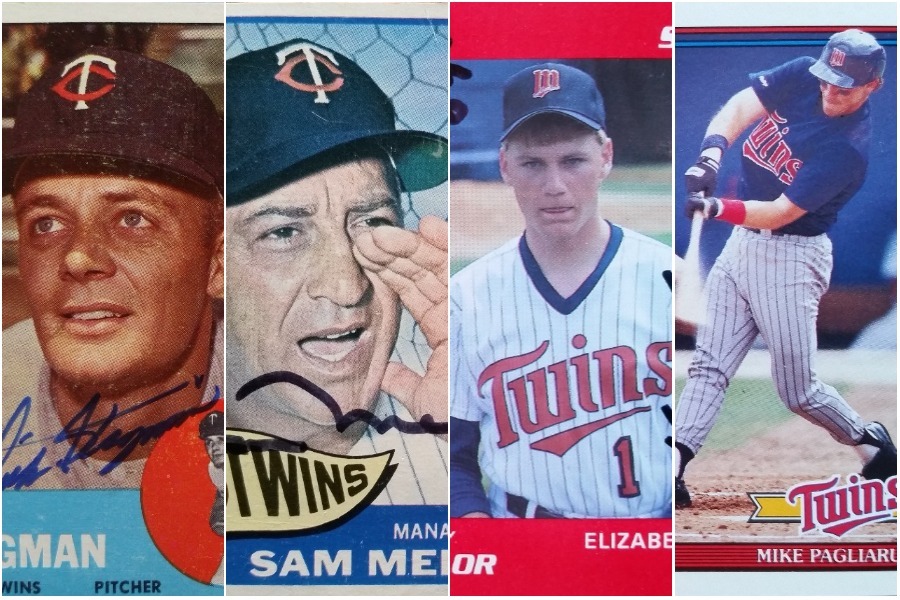 January 21, 1914 Birthdate of Blix Donnelly It’s the birthdate of 1932 Olivia High School graduate and 1944 World Series hero Sylvester “Blix” Donnelly. He spent his first two years out of high school working and playing townball. He caught a break in 1934, receiving an invitation to a three-day baseball school at Nicollet Park in Minneapolis, and began his pro career the following season in Superior, WI. He was traded to Duluth for the ‘36 season where he went 11–19 with 232 strikeouts in 214 innings. Donnelly’s minor league exploits, including a 19-K game and three no-hitters, are thoroughly laid out in Gregg Omoth’s essay in the Stew Thornley-edited Minnesotans in Baseball. Perhaps his best minor league season was 1941 when he went 28-6 with Class C Springfield, setting a Western Association record with 304 strikeouts. He also led the league in innings pitched, complete games, and wins despite being traded late in the season to Sacramento of the Pacific Coast League, where he pitched another three games. After nine minor league seasons, Donnelly made the Cardinals out of Spring Training in 1944. He came up big for the Cards in an all-St. Louis World Series, pitching perfect eighth and ninth innings in Game 1, and holding the Browns scoreless while striking out seven in the eighth, ninth, tenth, and eleventh innings of Game 2 to earn the win. The Cardinals won the Series in six games. Over 1,000 people crammed into the Olivia Armory to honor the World Series hero on October 24, 1944 at an event broadcast by WCCO’s Halsey Hall and Cedric Adams. Donnelly went on to pitch eight seasons in the majors, including 14 appearances with the 1950 National League Champion Phillies. He passed away in 1976 at age 62. January 21, 1922 Birthdate of Sam Mele It’s the birthdate of Sam Mele, born in Astoria, NY in 1922. Mele played 10 major league seasons, including 1949–’52 with Calvin Griffith’s Washington Senators. In 1961, the Twins’ first season, Griffith made Mele the second manager in team history, succeeding Cookie Lavagetto. Mele led the Twins to the 1965 World Series, which they lost in a thrilling seven-game series vs. Sandy Koufax and the Los Angeles Dodgers. Overall the team went 524-436 under Mele before he was succeeded by Cal Ermer during the 1967 season. Mele’s year of birth was listed as 1923 during his playing days, a trick that was suggested by his major league uncles Tony and Al Cuccinello. These days we associate fibbing about one’s age with Dominican players like Roberto Hernández (Fausto Carmona). Miguel Sanó’s true age was a huge source of controversy prior to the Twins signing him, as documented in Ballplayer: Pelotero (2011). But it’s hardly a new trick. Other than Sam Mele, Hall of Famers Rube Marquard, Phil Rizzuto, and Pee Wee Reese also lied about their age, as did 3x All-Star Hal McRae, who finally came clean in 1987 at age 41 (not 40). Sam Mele passed away May 1, 2017. He was 95 years old. January 24 Happy Birthday, Dick Stigman It’s the birthday of 1954 Sebeka High School graduate and seven-year major leaguer Dick Stigman, born in Nimrod, MN in 1936. Stigman signed with Cleveland out of high school. He was an All-Star during his 1960 rookie season. On April 2, 1962, the Twins acquired Stigman from Cleveland for Pedro Ramos in the first major trade in team history. Pedro Ramos started the first regular season game in Twins history, pitching a complete-game three-hit shutout vs. Whitey Ford at Yankee Stadium on April 11, 1961. Stigman won 27 games in his first two seasons with the Twins, including a three-hit shutout on April 18, 1963. His 15 complete games and 193 strikeouts that year were third in the AL. His teammate Camilo Pascual led the league in both categories. Stigman’s production declined by 1965, and he did not pitch in the seven-game World Series vs. Los Angeles. The Twins traded Stigman to the Red Sox on April 6, 1966. It would be his final major league season. Stigman spoke at the Halsey Hall SABR Fall Chapter Meeting on November 4, 2017. The Spring Chapter Meeting is scheduled for April 21 in Minneapolis. January 24, 1881 Birthdate of Hank Gehring It’s the birthdate of former professional spitballer Hank Gehring, born in St. Paul in 1881. His parents had immigrated from Switzerland with six children just a few years earlier. Hank was the second of three Gehring kids born in St. Paul. The family lived in the Dayton’s Bluff neighborhood. Hank played 11 seasons of professional baseball. The spitball specialist was a pretty good hitter, too, often playing the outfield on days he wasnt pitching, and other times being used a pinch-hitter. He got his start in pro ball with the St. Paul Saints in 1901. Pitching for the Duluth White Sox, he no-hit the Superior Longshoremen on June 21, 1904. Playing for the Wichita Jobbers in 1905, he led the Class C Western Association with 32 wins, 10 shutouts, and 264 strikeouts. At the plate he led the league with nine home runs. He played with the Minneapolis Millers in 1906, and began the 1907 season with the Des Moines champs before being called up to the Washington Senators, where the 26-year-old pitcher made his major league debut as a pinch-hitter on July 16. He pitched in 15 games for the Senators that season. He was there to witness the major league debut of a 19-year-old kid named Walter Johnson, who Senators scouts had discovered pitching in the semipro Southern Idaho League. Gehrings numbers were respectable during his first big league season, but what really impressed people was his veteran-like composure. He earned a spot on the 1908 team, but after pitching just five innings over three games, he returned home to the St. Paul Saints where he remained through 1911. Gehrig was set to pitch for the Kansas City Blues in 1912, but tragically died of kidney failure (uremia) on April 18. He was just 31 years old. Though his death was strongly felt throughout the midwest, newspaper coverage was scant on account of the Titanic having sunk in the North Atlantic just three days earlier. He was eulogized in Sporting Life, and the St. Paul Saints and Kansas City Blues held a benefit game on May 27, donating the entire Lexington Park gate proceeds to Gehrings widow and eight-year-old daughter. The game drew the largest weekday crowd of the season. Gehring is buried at Forest Lawn Memorial Park in St. Paul. January 24, 1975 Royals Sign Killebrew The Kansas City Royals sign free agent slugger Harmon Killebrew, eight days after he was released by Minnesota. The Twins retired Harmon’s #3 when the Royals were in town on May 4, 1975. Harmon homered in the first inning of that game. On September 18 he took the Twins’ Eddie Bane deep for his 573rd and final career home run, fifth-most in major league history at the time. He hit 14 in a Royals uniform. January 25 Happy 47th Birthday, Kerry Taylor It’s the birthday of 1989 Roseau grad Kerry Taylor, born in Bemidji, MN in 1971. The Twins signed Taylor as a free agent out of high school. He was taken by San Diego in the 1992 Rule 5 Draft, and made his major league debut with the Padres on April 13, 1993 at age 22. He pitched 68 1/3 innings over 36 games that season, including seven starts, compiling an 0-5 record, 6.45 ERA, 1.77 WHIP, and averaging 5.9 strikeouts and 6.5 walks per nine innings. He made one start in the middle of the ‘94 season, giving up four runs on nine hits in 4 1/3 innings. At the plate, he went 0-for-14 with nine strikeouts. Taylor continued to pitch in the Padres organization through the 1997 season, in the Tigers organization in ‘98, for independent Atlantic City in ‘99, and in the Blue Jays organization in 2000. He did manage to connect for seven hits over three seasons with Triple-A Las Vegas. These days Taylor is a regional sales manager at Ziegler Caterpillar in Fergus Falls. January 25, 1991 Twins Sign Pagliarulo In a move that manager Tom Kelly had lobbied hard for, the Twins sign free agent third baseman Mike Pagliarulo. The signing was made possible by Gary Gaetti opting out of his contract on November 7, 1990. Gaetti’s production was on the decline, hitting .259 in 1989, and .229 in 1990. Gaetti stuck around the majors, however, hitting 35 home runs with Kansas City in 1995, and playing his final game in 2000 at age 41. Pagliarulo started 112 games at third base for the ‘91 Twins, with Scott Leius starting most of the rest. Leius played in 109 regular season games total, entering many as a late-inning defensive replacement for Pagliarulo. Pags homered in the ‘91 ALCS, while Leius homered in the World Series. January 25, 2013 Guardado and Mee Elected to Twins Hall of Fame The Twins announce that “Everyday” Eddie Guardado and longtime public relations man Tom Mee have been elected to the team Hall of Fame. Guardado pitched for the Twins from 1993-2003, and briefly in 2008 after being re-acquired from Texas in exchange for Mounds View grad and current St. Paul Saints pitcher Mark Hamburger. Guardado pitched in 648 games in a Twins uniform. That’s the most in team history, and it’s not even close. Rick Aguilera is next on the list, 158 games back. Guardado tied for the major league lead with 83 appearances in 1996. He led the American League with 45 saves in 2002. Calvin Griffith hired St. Paul Saints PR man Tom Mee in 1960, before the team had even moved to Minnesota. Mee served as the Twins’ director of media relations for 30 years, retiring from that post on May 31, 1991, and succeeding current Star Tribune digital sports editor Howard Sinker as the Twins’ official scorer. Baseball historian Stew Thornley is the current official scorer. January 26, 2012 Dave St. Peter announces that the Twins will retire Tom Kelly’s number 10. January 27, 2012 Pascual Elected to Team Hall of Fame Legendary Cuban pitcher Camilo Pascual is elected as the 24th member of the Twins Hall of Fame. Pascual came up with the Washington Senators in 1954. He was sensational in the Twins’ first few seasons in Minnesota, leading the majors in shutouts in 1961 and ‘62, and leading the American League in complete games in 1962 and ‘63, and in strikeouts from 1961 to ‘63. Pascual pitched back-to-back shutouts three separate times during the Twins’ inaugural 1961 season, and once again in 1962. Also in 1962, he became the first 20-game winner in Twins history. He won 21 games in 1963. In 1965 he hit the only grand slam by a pitcher in Twins history. He had also hit a grand slam during the Senators’ final season in Washington. Pascual was inducted into the Twins Hall of Fame during a ceremony on July 14, 2012. January 27, 2017 MacPhail and Cuddyer Elected to Twins Hall of Fame Andy MacPhail and Michael Cuddyer are elected as the 29th and 30th members of the Twins Hall of Fame. MacPhail began his career as a baseball executive in the Cubs organization in 1976. The Twins hired his as vice president of player development in 1984, and promoted him to general manager in 1985. He led the Twins to World Series championships in 1987 and 1991, and was named Executive of the Year by the Sporting News in 1991. Following the strike-shortened 1994 season, MacPhail became president and CEO of the Chicago Cubs, with whom he remained for 12 seasons. He succeeded Hall of Famer Pat Gillick as Phillies president following the 2015 season. Andy’s dad and grandpa are both enshrined in Cooperstown. Larry was inducted into the Hall of Fame in 1978. Lee was inducted in 1978. The Twins drafted Michael Cuddyer out of high school with the ninth overall pick in the first round of the 1997 draft. He made his major league debut as a September call-up in 2001. Cuddyer was the tenth and most recent Twin to hit for the cycle, doing so on May 22, 2009. On August 23, 2009 he became the only player in Twins history to homer twice in the same inning. Michael Cuddyer was inducted into the Twins Hall of Fame on August 19, 2009. Andy MacPhail was inducted on August 20. Keep in touch with @TwinsAlmanac on Twitter and Facebook.
-
Cool video of Mudcat. Particularly pertinent as he got the shaft again this week, not being elected to the team Hall of Fame. The guy who caught that home run, by the way, is a customer of ours at the hardware store up here in Zimmerman.
-

From the album: Twins Almanac
-

From the album: Twins Almanac
-

From the album: Twins Almanac
-

From the album: Twins Almanac
-
Very cool! I always tried to get #9 for Ted Williams. Otherwise #14 for Kent Hrbek, especially in elementary school when I was generally the fattest kid on the team. When I joined up with a team in Seattle at age 31, I decided I wanted Jack Morris's number. What were the odds, but somebody already had #47, and for no apparent reason! How random. Even more inexplicable, though, nobody had #34 (Felix Hernandez out there). These days I wear #11 because that's what the Nowthen coach handed me, and I'm just lucky to still be playing.
-
Thanks. I appreciate you saying so. I just keep chipping away and compiling notes.
-
Thanks! A nice quick coffee break read is exactly what I have in mind when I work on these. The week as a whole—particularly once we get into the season—gets a little verbose, but each item should be a nice quick little read.
-
Thanks. I've been compiling this stuff for about two years, so now it's mostly just a matter of piecing it into paragraphs. Probably not the best use of my time, but it's the choice I've made
-
This week’s Almanac marks the birthdates of Showboat Fisher, T.J. Bohn, and Camilo Pascual, and remembers the inaugural class of the West Central Baseball Hall of Fame in Willmar. It was also this week in history that the Twins released Harmon Killebrew, acquired Billy Beane, and Dave Winfield and Kirby Puckett received their calls to the Hall. January 14 Nothing happened today (unless you count the births of Mike Pelfrey and J.R. Graham), so I went looking for a Minnesota/New Orleans connection in honor of the big game today. The Twins selected Randy Bush out of the University of New Orleans in the second round of the 1979 draft. Bush played for the Twins from 1982 to 1993. He is one of eight men to play for both the 1987 and 1991 Twins, and one of seven to play in both World Series. He tied Glenn Adams' team record with eight RBI on May 20, 1989. He tied the American League record with his seventh consecutive pinch-hit on August 19, 1991. He received his third World Series ring as an assistant general manager of the 2016 Cubs. January 15, 2014 West Central HOF Inaugural Class Announced The Kandiyohi County Historical Society and Willmar Rails announce the seven-member inaugural class of the West Central Baseball Hall of Fame, headlined by Mike Kingery and Blix Donnelly. Also included was St. Paul Central grad Howie Schultz, who played for the Willmar Rails from 1950 to ’54 following a six-year major league career. Schultz played first base for the Brooklyn Dodgers from 1943 until being traded to the Phillies early in the ‘47 season after it became abundantly clear that a young man named Jackie Robinson was more than capable of holding down the position. Fun Fact: The 6’6” Schultz was rejected for military service during World War II because he was too tall. Mike Kingery graduated from Atwater High School in 1979, and was signed by the Royals that summer. He made his major league debut seven years later on July 7, 1986 and went on to play 819 major league games over parts of 10 seasons with Kansas City, Seattle, San Francisco, Oakland, Colorado, and Pittsburgh. A career .268 hitter, Kingery’s best year by far was the strike-shortened ‘94 season when, at age 33, he hit .349 over 105 games with the Rockies. Kingery hit .290 in 24 games vs. the Minnesota Twins, including a home run off Les Straker on July 29, 1987. That same season he hit two home runs off 1973 Highland Park High School graduate Jack Morris. Sylvester “Blix” Donnelly graduated from Olivia High School in 1932. He spent the next two years working and playing townball. He caught a break in ‘34, receiving an invitation to a three-day baseball school at Nicollet Park in Minneapolis, and began his pro career the following season in Superior, WI. He was traded to Duluth for the ‘36 season where he went 11-19 with 232 strikeouts in 214 innings. Donnelly’s minor league exploits, including a 19-K game and three no-hitters, are thoroughly laid out in Gregg Omoth’s essay in the Stew Thornley-edited Minnesotans in Baseball. Perhaps his best minor league season was 1941 when he went 28-6 with Class C Springfield, setting a Western Association record with 304 strikeouts. After nine minor league seasons, Donnelly made the Cardinals out of spring training in 1944. He came up big for the Cards in an all-St. Louis World Series, pitching perfect eighth and ninth innings in Game 1, and holding the Browns scoreless while striking out seven in the eighth, ninth, tenth and eleventh innings of Game 2 to earn the win. The Cardinals won the Series in six games. Over 1,000 people crammed into the Olivia Armory to honor the World Series hero on October 24, 1944 at an event broadcast by WCCO’s Halsey Hall and Cedric Adams. Donnelly went on to pitch eight seasons in the majors, including 14 appearances with the 1950 National League Champion Phillies. He passed away in 1976 at age 62. Cancer sucks. January 16, 1899 Birthdate of Showboat Fisher It’s the birthday of Albany (MN) High School alumnus and 15-year pro ballplayer George “Showboat” Fisher, born in Wesley, IA (maybe) in 1899. The Fishers moved to a farm near St. Anna, MN when George was just a few months old. After gaining notoriety with area townball teams, Fisher began a 15-year professional career with the Minneapolis Millers in 1919. He made it to the majors with the Senators in 1923, getting into 18 games over two seasons. He didn’t make it back to the big leagues until 1930, when he had a career-year, hitting .374 with the National League champion St. Louis Cardinals. Despite the breakout season, he was back in the minors the following year. He made one more trip to the show, getting into 18 games (one start) with the 1932 St. Louis Browns. Stew Thornley biographed Showboat Fisher for the 2009 book Minnesotans in Baseball. His essay includes an anecdote about Fisher being beaned by Hartford pitcher Lou Gehrig in 1932. Fisher opened a tavern on the shore of Middle Spunk Lake in Avon, MN in 1932. Garrison Keillor was a co-owner of Fisher’s Club from 2005-2012. I’ve never been there, but I’ve never met a fried walleye I didn’t like. January 16, 1975 Twins Release Killebrew Unable to agree to terms on a new contract, the Twins release 38-year-old slugger Harmon Killebrew. To this day nobody has played more games in a Twins uniform. The Kansas City Royals quickly signed the Killer eight days later. The Twins officially retired his #3 while the Royals were in town on May 4, 1975. Harmon homered in the first inning of that game. On September 18, he hit his 573rd and final home run off the Twins’ Eddie Bane. His 573 homer ranked fifth-most in baseball history at the time of his retirement, behind only Hank Aaron, Babe Ruth, Willie Mays, and Frank Robinson. He hit 84 with the Washington Senators, 475 in a Twins uniform, and 14 in his only season as a Kansas City Royal. Killebrew was elected to the Hall of Fame on January 10, 1984. He was the first of eight former Twins players elected. Can you name the other seven? January 16, 1986 Twins Acquire Billy Beane The Twins trade career minor leaguer Pat Crosby and rising star Tim Teufel to the Mets for Joe Klink, Bill Latham, and 1980 first-round draft pick Billy Beane. Beane played in 80 games (47 starts) for the Twins in ‘86, going 39-for-183 (.213), with three home runs and 15 RBI. He was a September call-up in 1987, getting into 12 games, all but two of which he entered in the seventh inning or later. Beane was traded to Detroit at the end of spring training in 1988 for pitcher Balvino Galvez, who never made it back to the majors. Joe Klink made his major league debut with the Twins on April 9, 1987, getting into 12 games before being sent down to Double-A Orlando. Junk Wax Era card collectors will be most familiar with Klink as a member of the ‘90–’91 Athletics. Tim Teufel, who finished fourth in ‘84 AL Rookie of the Year balloting, one place behind teammate Kirby Puckett, went on to play nine more seasons with the Mets and Padres. He went 4-for-9 with a home run in the 1986 World Series in which the Mets beat Buckner’s Boston Red Sox in seven games. January 16, 2001 Winfield & Puckett Elected to Hall of Fame Former Twins Kirby Puckett and Dave Winfield are elected to the Hall of Fame, both on their first ballot. Winfield appeared on 84.47% of ballots (435 of 512). Puckett appeared on 82.14% of ballots (423). It was the fourth time that former teammates were elected by the writers in the same year. The previous occurrences were Lefty Grove and Mickey Cochrane (1947), Mickey Mantle and Whitey Ford (1974), and Carlton Fisk and Tony Perez (2000). Subsequent occurrences are Gary Carter and Eddie Murray (2002), Tom Glavine and Greg Maddux (2014), and Craig Biggio and Randy Johnson (2015). Former teammates Jack Morris and Alan Trammell will be inducted together with the class of 2018, but they were elected by the Veterans Committee, not the writers. Winfield was the first of three Hall of Famers to graduate from St. Paul high schools over a six year span. Each played briefly for the Twins. Winfield graduated from St. Paul Central in 1969, Jack Morris from Highland Park in 1973, and Paul Molitor from Cretin in ‘74. Winfield and Molitor both played at the University of Minnesota. Eight former Twins players have been elected to the Hall of Fame, five on their first ballot: Rod Carew (1991), Steve Carlton (1994), Winfield and Puckett (2001), and Paul Molitor (2004). Harmon Killebrew was elected his fourth ballot in 1984, Bert Blyleven on his 14th ballot in 2011, and Jack Morris by the Veterans Committee this year. Kirby Puckett is the only Hall of Famer to play his entire career with the Twins. Carew, Killebrew, and Blyleven played more games with the Twins than any other team. January 17 Happy 38th Birthday, T.J. Bohn It’s the birthday of 1998 St. Louis Park graduate and former major league outfielder T.J. Bohn, born in St. Louis Park in 1980. After stints at Hutchinson Community College in Kansas, Iowa State, and Bellevue University in Nebraska, Bohn was taken by the Mariners in the 30th round of 2002 draft. He made his major league debut with the Mariners at age 26 on August 22, 2006. He got into 18 games with the Mariners that season, going 2-for-14 (.143) with two walks. . Two years later he made it back to the majors with the Phillies, getting into 14 games early in ‘08 season, mostly as a late-inning defensive replacement. He made only five plate appearances, but his two hits gave him a .400 AVG. T.J. Bohn joined the Macalester College (St. Paul) baseball coaching staff in 2014. January 20 Happy 84th Birthday, Camilo Pascual It’s the birthday of Twins all-time great Camilo Pascual, born in Havana in 1934. Pascual’s curveball is legendary. Ted Williams once said he had the “most feared curveball in the American League for 18 years.” Pascual came up with the Senators in 1954. He led the majors in shutouts in 1959, ‘61, and ‘62. He led the AL in complete games in 1959, ‘62, and ‘63, and in strikeouts each season from 1961-’63. Pascual’s teammate and 1954 Sebeka High School grad Dick Stigman, incidentally, was third in the AL in complete games and strikeouts in ‘63. Pascual was sensational in the Twins’ first four seasons in Minnesota. He pitched back-to-back shutouts three separate times during the Twins’ inaugural 1961 season, and once again in ‘62. On July 19, 1961 he struck out 15 Angels in a five-hit shutout at L.A.’s Wrigley Field. Pascual pitched a three-hit shutout on September 30, 1962 (Game 163) to become the first 20-game winner in Twins history. He won 21 games in 1963. On April 27, 1965 he hit the only grand slam by a pitcher in Twins history. He had also hit a grand slam on August 14, 1960, the Senators’ last season in Washington. The Twins traded Pascual to the new Senators for second baseman Bernie Allen on December 3, 1966. He would stick around the big leagues for five more seasons with the Senators, Reds, Dodgers, and Cleveland, pitching his last game on May 5, 1971 at age 37. Following his playing career, Pascual became a scout. Perhaps his most prominent signing was Jose Canseco. Working for the Dodgers in 1996, he signed new Red Sox manager Alex Cora. Camilo Pascual was inducted as the 24th member of the Minnesota Twins Hall of Fame on July 14, 2012. Camilo’s brother Carlos pitched two games for the Washington Senators in 1950. Keep in touch with @TwinsAlmanac on Twitter and Facebook. Click here to view the article
-
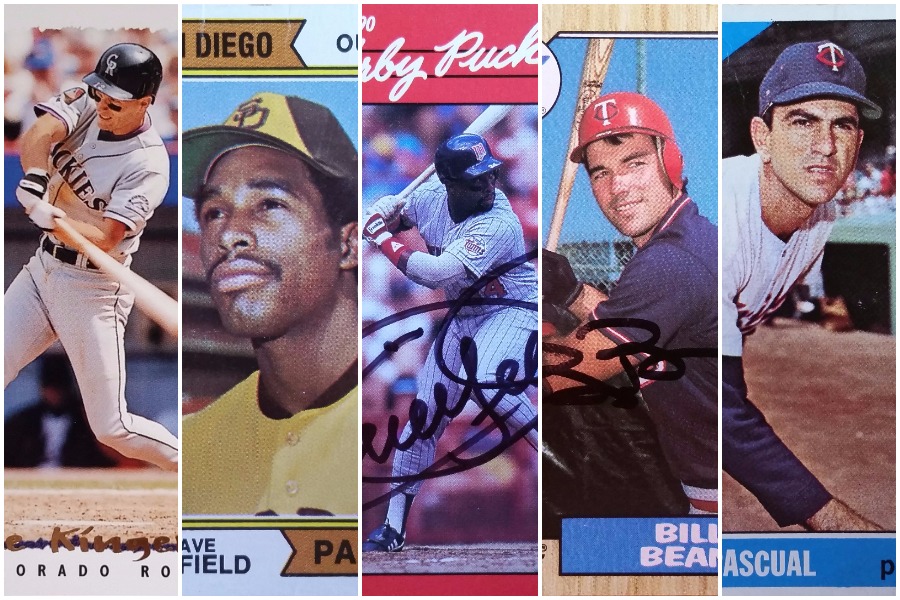 January 14 Nothing happened today (unless you count the births of Mike Pelfrey and J.R. Graham), so I went looking for a Minnesota/New Orleans connection in honor of the big game today. The Twins selected Randy Bush out of the University of New Orleans in the second round of the 1979 draft. Bush played for the Twins from 1982 to 1993. He is one of eight men to play for both the 1987 and 1991 Twins, and one of seven to play in both World Series. He tied Glenn Adams' team record with eight RBI on May 20, 1989. He tied the American League record with his seventh consecutive pinch-hit on August 19, 1991. He received his third World Series ring as an assistant general manager of the 2016 Cubs. January 15, 2014 West Central HOF Inaugural Class Announced The Kandiyohi County Historical Society and Willmar Rails announce the seven-member inaugural class of the West Central Baseball Hall of Fame, headlined by Mike Kingery and Blix Donnelly. Also included was St. Paul Central grad Howie Schultz, who played for the Willmar Rails from 1950 to ’54 following a six-year major league career. Schultz played first base for the Brooklyn Dodgers from 1943 until being traded to the Phillies early in the ‘47 season after it became abundantly clear that a young man named Jackie Robinson was more than capable of holding down the position. Fun Fact: The 6’6” Schultz was rejected for military service during World War II because he was too tall. Mike Kingery graduated from Atwater High School in 1979, and was signed by the Royals that summer. He made his major league debut seven years later on July 7, 1986 and went on to play 819 major league games over parts of 10 seasons with Kansas City, Seattle, San Francisco, Oakland, Colorado, and Pittsburgh. A career .268 hitter, Kingery’s best year by far was the strike-shortened ‘94 season when, at age 33, he hit .349 over 105 games with the Rockies. Kingery hit .290 in 24 games vs. the Minnesota Twins, including a home run off Les Straker on July 29, 1987. That same season he hit two home runs off 1973 Highland Park High School graduate Jack Morris. Sylvester “Blix” Donnelly graduated from Olivia High School in 1932. He spent the next two years working and playing townball. He caught a break in ‘34, receiving an invitation to a three-day baseball school at Nicollet Park in Minneapolis, and began his pro career the following season in Superior, WI. He was traded to Duluth for the ‘36 season where he went 11-19 with 232 strikeouts in 214 innings. Donnelly’s minor league exploits, including a 19-K game and three no-hitters, are thoroughly laid out in Gregg Omoth’s essay in the Stew Thornley-edited Minnesotans in Baseball. Perhaps his best minor league season was 1941 when he went 28-6 with Class C Springfield, setting a Western Association record with 304 strikeouts. After nine minor league seasons, Donnelly made the Cardinals out of spring training in 1944. He came up big for the Cards in an all-St. Louis World Series, pitching perfect eighth and ninth innings in Game 1, and holding the Browns scoreless while striking out seven in the eighth, ninth, tenth and eleventh innings of Game 2 to earn the win. The Cardinals won the Series in six games. Over 1,000 people crammed into the Olivia Armory to honor the World Series hero on October 24, 1944 at an event broadcast by WCCO’s Halsey Hall and Cedric Adams. Donnelly went on to pitch eight seasons in the majors, including 14 appearances with the 1950 National League Champion Phillies. He passed away in 1976 at age 62. Cancer sucks. January 16, 1899 Birthdate of Showboat Fisher It’s the birthday of Albany (MN) High School alumnus and 15-year pro ballplayer George “Showboat” Fisher, born in Wesley, IA (maybe) in 1899. The Fishers moved to a farm near St. Anna, MN when George was just a few months old. After gaining notoriety with area townball teams, Fisher began a 15-year professional career with the Minneapolis Millers in 1919. He made it to the majors with the Senators in 1923, getting into 18 games over two seasons. He didn’t make it back to the big leagues until 1930, when he had a career-year, hitting .374 with the National League champion St. Louis Cardinals. Despite the breakout season, he was back in the minors the following year. He made one more trip to the show, getting into 18 games (one start) with the 1932 St. Louis Browns. Stew Thornley biographed Showboat Fisher for the 2009 book Minnesotans in Baseball. His essay includes an anecdote about Fisher being beaned by Hartford pitcher Lou Gehrig in 1932. Fisher opened a tavern on the shore of Middle Spunk Lake in Avon, MN in 1932. Garrison Keillor was a co-owner of Fisher’s Club from 2005-2012. I’ve never been there, but I’ve never met a fried walleye I didn’t like. January 16, 1975 Twins Release Killebrew Unable to agree to terms on a new contract, the Twins release 38-year-old slugger Harmon Killebrew. To this day nobody has played more games in a Twins uniform. The Kansas City Royals quickly signed the Killer eight days later. The Twins officially retired his #3 while the Royals were in town on May 4, 1975. Harmon homered in the first inning of that game. On September 18, he hit his 573rd and final home run off the Twins’ Eddie Bane. His 573 homer ranked fifth-most in baseball history at the time of his retirement, behind only Hank Aaron, Babe Ruth, Willie Mays, and Frank Robinson. He hit 84 with the Washington Senators, 475 in a Twins uniform, and 14 in his only season as a Kansas City Royal. Killebrew was elected to the Hall of Fame on January 10, 1984. He was the first of eight former Twins players elected. Can you name the other seven? January 16, 1986 Twins Acquire Billy Beane The Twins trade career minor leaguer Pat Crosby and rising star Tim Teufel to the Mets for Joe Klink, Bill Latham, and 1980 first-round draft pick Billy Beane. Beane played in 80 games (47 starts) for the Twins in ‘86, going 39-for-183 (.213), with three home runs and 15 RBI. He was a September call-up in 1987, getting into 12 games, all but two of which he entered in the seventh inning or later. Beane was traded to Detroit at the end of spring training in 1988 for pitcher Balvino Galvez, who never made it back to the majors. Joe Klink made his major league debut with the Twins on April 9, 1987, getting into 12 games before being sent down to Double-A Orlando. Junk Wax Era card collectors will be most familiar with Klink as a member of the ‘90–’91 Athletics. Tim Teufel, who finished fourth in ‘84 AL Rookie of the Year balloting, one place behind teammate Kirby Puckett, went on to play nine more seasons with the Mets and Padres. He went 4-for-9 with a home run in the 1986 World Series in which the Mets beat Buckner’s Boston Red Sox in seven games. January 16, 2001 Winfield & Puckett Elected to Hall of Fame Former Twins Kirby Puckett and Dave Winfield are elected to the Hall of Fame, both on their first ballot. Winfield appeared on 84.47% of ballots (435 of 512). Puckett appeared on 82.14% of ballots (423). It was the fourth time that former teammates were elected by the writers in the same year. The previous occurrences were Lefty Grove and Mickey Cochrane (1947), Mickey Mantle and Whitey Ford (1974), and Carlton Fisk and Tony Perez (2000). Subsequent occurrences are Gary Carter and Eddie Murray (2002), Tom Glavine and Greg Maddux (2014), and Craig Biggio and Randy Johnson (2015). Former teammates Jack Morris and Alan Trammell will be inducted together with the class of 2018, but they were elected by the Veterans Committee, not the writers. Winfield was the first of three Hall of Famers to graduate from St. Paul high schools over a six year span. Each played briefly for the Twins. Winfield graduated from St. Paul Central in 1969, Jack Morris from Highland Park in 1973, and Paul Molitor from Cretin in ‘74. Winfield and Molitor both played at the University of Minnesota. Eight former Twins players have been elected to the Hall of Fame, five on their first ballot: Rod Carew (1991), Steve Carlton (1994), Winfield and Puckett (2001), and Paul Molitor (2004). Harmon Killebrew was elected his fourth ballot in 1984, Bert Blyleven on his 14th ballot in 2011, and Jack Morris by the Veterans Committee this year. Kirby Puckett is the only Hall of Famer to play his entire career with the Twins. Carew, Killebrew, and Blyleven played more games with the Twins than any other team. January 17 Happy 38th Birthday, T.J. Bohn It’s the birthday of 1998 St. Louis Park graduate and former major league outfielder T.J. Bohn, born in St. Louis Park in 1980. After stints at Hutchinson Community College in Kansas, Iowa State, and Bellevue University in Nebraska, Bohn was taken by the Mariners in the 30th round of 2002 draft. He made his major league debut with the Mariners at age 26 on August 22, 2006. He got into 18 games with the Mariners that season, going 2-for-14 (.143) with two walks. . Two years later he made it back to the majors with the Phillies, getting into 14 games early in ‘08 season, mostly as a late-inning defensive replacement. He made only five plate appearances, but his two hits gave him a .400 AVG. T.J. Bohn joined the Macalester College (St. Paul) baseball coaching staff in 2014. January 20 Happy 84th Birthday, Camilo Pascual It’s the birthday of Twins all-time great Camilo Pascual, born in Havana in 1934. Pascual’s curveball is legendary. Ted Williams once said he had the “most feared curveball in the American League for 18 years.” Pascual came up with the Senators in 1954. He led the majors in shutouts in 1959, ‘61, and ‘62. He led the AL in complete games in 1959, ‘62, and ‘63, and in strikeouts each season from 1961-’63. Pascual’s teammate and 1954 Sebeka High School grad Dick Stigman, incidentally, was third in the AL in complete games and strikeouts in ‘63. Pascual was sensational in the Twins’ first four seasons in Minnesota. He pitched back-to-back shutouts three separate times during the Twins’ inaugural 1961 season, and once again in ‘62. On July 19, 1961 he struck out 15 Angels in a five-hit shutout at L.A.’s Wrigley Field. Pascual pitched a three-hit shutout on September 30, 1962 (Game 163) to become the first 20-game winner in Twins history. He won 21 games in 1963. On April 27, 1965 he hit the only grand slam by a pitcher in Twins history. He had also hit a grand slam on August 14, 1960, the Senators’ last season in Washington. The Twins traded Pascual to the new Senators for second baseman Bernie Allen on December 3, 1966. He would stick around the big leagues for five more seasons with the Senators, Reds, Dodgers, and Cleveland, pitching his last game on May 5, 1971 at age 37. Following his playing career, Pascual became a scout. Perhaps his most prominent signing was Jose Canseco. Working for the Dodgers in 1996, he signed new Red Sox manager Alex Cora. Camilo Pascual was inducted as the 24th member of the Minnesota Twins Hall of Fame on July 14, 2012. Camilo’s brother Carlos pitched two games for the Washington Senators in 1950. Keep in touch with @TwinsAlmanac on Twitter and Facebook.
-

From the album: Twins Almanac
-
Here's something to add. Today (Sunday) is 1986–1991 Twins pitcher Allan Anderson's 54th birthday. Anderson's 1988 ERA of 2.45 is the lowest in Twins history. It barely led the American League that season. In fact, Anderson had not led the league the entire season, but Milwaukee's Teddy Higuera fell .008 points behind Anderson on the second-to-last night of the season. Bert Blyleven pointed this out to Tom Kelly, who gave Anderson the option of whether or not to make his scheduled start on the final day of the season. In a very un-Ted Williams-esque move, he opted to sit, thus winning the AL ERA title.
-
Just checked my spreadsheet. I found 32 players born in Minnesota that I could confidently say did not "grow up" here. Which means I found 21 who were born elsewhere but grew up here, like Showboat Fisher, Russ Ford, Tim Laudner, and Pat Neshek. It's hard to tell with the real old timers. That will take more research. For more contemporary players I look at where they went to high school.
-
Yeah, I haven't heard of most of these major leaguers who grew up in Minnesota. Major league Minnesotans are so rare, you'd think they'd be household names. Here are some numbers I posted on Twitter awhile back: 166 major leaguers have been born in Minnesota, beginning with Bill Barnes in 1858. • 65 played before World War II • 49 played just one season • 14 played just one game • 3 have career ERAs of infinity Now that's BORN in Minnesota. I've since put together a list of players who GREW UP in Minnesota. There were a good twenty or thirty born here but moved away at a young age. On the other hand, quite a few guys were born elsewhere but grew up in Minnesota. My current count of major leaguers who grew up in Minnesota is 155. A majority of them played a long, long time ago.
-
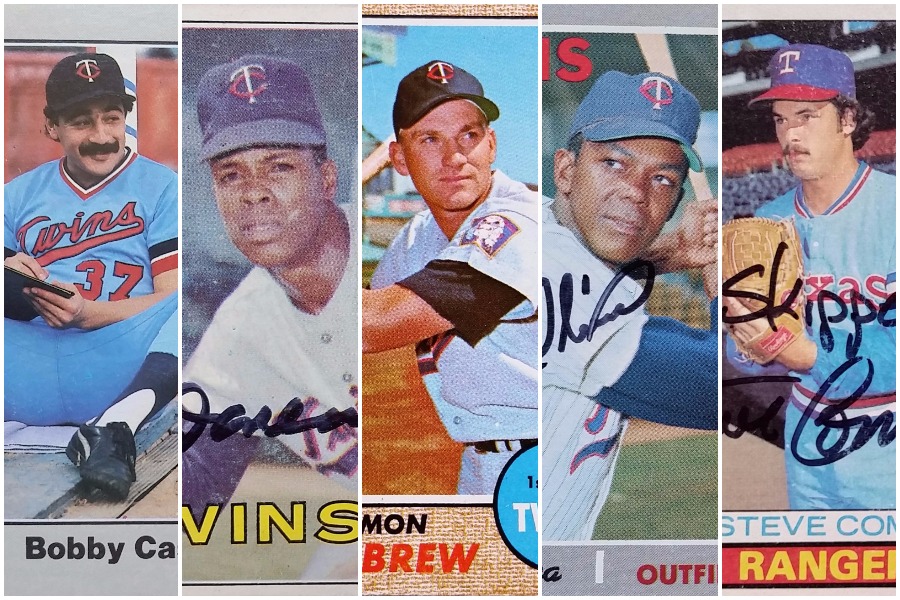 January 7, 1982 Twins Acquire Mario Look-Alike The Twins trade Class-A prospects Scotti Madison and Paul Voigt to the Dodgers for center fielder Bobby Mitchell and pitcher Bobby Castillo, owner of one of the all-time Top 5 greatest mustaches in Twins history. Castillo won 13 games for the Twins in 1982. That would have led the team in six of the past ten seasons (2008, '11–'13, and '15–'16). Who do you think had the best (or worst) mustache in Twins history? January 8, 1991 Carew Elected to Hall of Fame Seven-time AL Batting Champ Rod Carew becomes the 21st first-ballot Hall of Famer, elected alongside Gaylord Perry and Ferguson Jenkins. Despite appearing on 90.5% of ballots, a staggering 42 members of the Baseball Writers’ Association of America deemed Carew unworthy. The Veterans Committee elected former second baseman Tony Lazzeri and owner/promoter Bill Veeck, father of Mike Veeck, who in 1993 founded the current incarnation of the St. Paul Saints with Bill Murray and lawyer Marv Goldklang. Rodney Cline Carew was born on a train in the Panama Canal Zone on October 1, 1945. When he was 14 his family immigrated to New York, where he would be discovered by a Twins scout playing semi-pro ball in the Bronx rather than high school ball. The Twins signed Carew in 1964 at age 18, and he made the major league club in 1967 at age 21. Carew had the first five-hit game in Twins history on May 8, 1967, going 5-for-5 with a double. He made the AL All-Star team his rookie season, beginning a string of 18-consecutive All-Star selections. He was an All-Star every year of his career but the last, 1985. He was named the American League Rookie of the Year, receiving 19 of 20 first-place votes. There have been five AL Rookies of the Year in Twins History: Tony Oliva in 1964, Carew in ‘67, John Castino (co-winner) in 1979, Chuck Knoblauch in 1991, and Marty Cordova in 1995. Bob Allison won the award as a member of the 1959 Washington Senators. Carew was a terror on the basepaths. On May 18, 1969 he stole second, third, and home consecutively off the Tigers’ Mickey Lolich. César Tovar led off the bottom of third with a single. Then, with Carew at the plate, Tovar was balked to second and stole third. Perhaps distracted by Tovar, Lolich walked Carew. Then, with Harmon Killebrew at the plate, the Twins executed a double steal, with Carew swiping second as Tovar stole home. With Killebrew still at bat, Carew stole third and home to tie the game. Killebrew ultimately struck out, and the Twins went on to lose the game 8-2. Carew is one of just 12 players since 1940 to achieve this feat. Paul Molitor pulled it off on July 26, 1987. Carew stole home 17 times in his career. The single-season record is eight, set by Ty Cobb in 1912. Carew stole home for the seventh time of the season on July 16, 1969. American League pitchers finally got wise to his game, however, and he did not pull it off again the rest of the season. He did, however, add a tenth-inning walk-off steal of home on September 1, 1970. Current Twins manager Paul Molitor, incidentally, stole home 10 times in his career. Dan Gladden did it three times. Carew hit for the first of 10 cycles in Twins history on May 20, 1970. The others are César Tovar (1972), Larry Hisle (‘76), Lyman Bostock (‘76), Mike Cubbage (‘78), Gary Ward (‘80), Kirby Puckett (‘86), Carlos Gómez (‘08), Jason Kubel (‘09) and Michael Cuddyer (‘09). On September 9, 1976 Carew hit a pinch-hit grand slam. It was just his seventh home run of the season, but his third grand slam, tying Bob Allison’s single-season team record, set in 1961. Kent Hrbek later hit three grand slams in 1985, Puckett in ‘92, and Torii Hunter in 2007. 1977 was a magical season for Carew. On June 26 (Rod Carew Jersey Day, incidentally), he went 4-for-5 to raise his average to .403. He scored a team record five runs in the game, while Glenn Adams collected a team record eight RBI. Carew’s record of five runs would be matched by Tim Teufel in 1983, Molitor in ‘96, and Luis Rivas in 2002. Adams’ record eight RBI were matched by Randy Bush in 1989. Carew led the majors with 239 hits and a .388 AVG in 1977, and was named American League MVP. He was the third of five Twins to receive the award (Versalles ‘65, Killebrew ‘69, Morneau ‘06, Mauer ‘09). On February 3, 1979 the Twins traded Rod Carew to the Angels for Ken Landreaux, Dave Engle, Brad Havens and Paul Hartzell. It had become increasingly clear that team owner Calvin Griffith had no intention of ponying up for the future Hall of Famer. And even if Griffith could have afforded him, it was unlikely that Carew would have played for Griffith again after the owner’s Lion’s Club dinner remarks in Waseca on September 28. On August 4, 1989, Carew connected for his 3,000th hit off Twins lefty Frank Viola. He was the 16th member of the 3,000 Hit Club, and the first born outside of the United States mainland (Roberto Clemente was born in the U.S. territory of Puerto Rico). 1985 was Carew’s final season. After failing to receive a suitable contract offer for the ‘86 season, he officially announced his retirement on June 2 with a career AVG of .328. Owners had colluded against him and other free agents, essentially agreeing not to offer other teams' free agents contracts, thereby helping each other retain their own talent while keeping salaries low. In 1995 Carew was awarded $782,035.71 in damages for his lost wages. The Twins retired Rod Carew’s number 29 on July 19, 1987. The Angels had retired his number in ‘86. He was inducted as a charter member of the Twins Hall of Fame along with Harmon Killebrew, Tony Oliva, Kent Hrbek, Kirby Puckett, and Calvin Griffith on August 12, 2000. January 10, 1984 Killebrew Elected to Hall of Fame In his fourth damn year of eligibility the Baseball Writers’ Association of America finally elects Harmon Killebrew to the Hall of Fame, along with Luis Aparicio (sixth ballot), and 1965 World Series nemesis Don Drysdale (10th ballot). Veterans Committee selections Rick Ferrell and Pee Wee Reese would also be inducted with the class of ’84. The Senators signed the 17-year-old Idahoan in 1954 as a so-called “Bonus Baby,” which required them to keep the kid on the major league roster his first two seasons. He got into just 47 games during those two years, making 104 plate appearances. He did hit the first four of his 573 career home runs in 1955. He then spent the majority of the next three seasons in the minors. Washington’s patience would pay huge dividends. In 1959, his first season as a full-timer, Killebrew tied for the league lead with 42 home runs and drove in 105 runs. Killebrew collected the first regular season hit in Twins history leading off the fourth with a single off Whitey Ford at Yankee Stadium on Opening Day 1961. Bob Allison hit the Twins’ first home run later in that game, but Killebrew would have the distinction of hitting the first inside-the-park home run in Twins history vs. the White Sox at Met Stadium on July 4th. Later in the game, trailing the White Sox by two with two out in the bottom of the ninth, Julio Becquer hit a pinch-hit, walk-off grand slam. Killebrew was known throughout his career not just for the sheer quantity, but also the mammoth quality of his home runs. Facing future Hall of Famer Jim Bunning on August 3, 1962, Killebrew hit a monster home run over the roof and out of Tiger Stadium. Killer was the first of four to accomplish this feat of strength, the others being Frank Howard, Mark McGwire, and Cecil Fielder. On June 3, 1967 he hit perhaps his most famous homer, a prodigious blast at Met stadium eventually estimated by a physics professor at 522 feet. Killebrew was the 1969 American League Most Valuable Player after leading the majors with 49 home runs and 140 RBI. Not surprisingly those are both Twins single-season records. He also hit 49 in ‘64. Killebrew set another team record by homering in five consecutive games on two separate occasions during the Twins’ 1970 Division Championship season. Rookie Marty Cordova tied that record in just his 23rd major league game on May 20, 1995. Brian Dozier homered in five straight in 2016, including a three-home run game on September 5. Killebrew hit 41 homers during that 1970 season. It would be the Twins’ last 40-home run season until Dozier hit 42 in 2016, forty-frickin’-six years later. So much for the Steroid Era in Minnesota. Harmon hit his 500th and 501st home runs on August 10, 1971. All told, he would hit 573, fifth-most in baseball history at the time of his retirement, behind only Hank Aaron, Babe Ruth, Willie Mays, and Frank Robinson. He is still 12th all-time. 38-year-old Adrian Beltre, and 34-year-old Miguel Cabrera are sitting on 462. After he refused Calvin Griffith’s contract offer, the Twins released Killebrew on January 16, 1975. To this day nobody has played more games in a Twins uniform. The Kansas City Royals quickly signed the Killer on January 24. The Twins officially retired his #3 before a game vs. KC on May 4, 1975. As long as so many fans were there to honor him anyway, Harmon went ahead and homered in the first inning. On September 18, he hit his 573rd and final home run off the Minnesota Twins’ Eddie Bane. Harmon Killebrew passed away on May 17, 2011 after a brief battle with esophageal cancer. He was just 74 years old. To put a silver lining around an otherwise sucky situation, the Twins were in town to play the Diamondbacks, and able to attend Harmon’s funeral on May 20. Bert Blyleven spoke at the service, and Rod Carew, Tony Oliva, Frank Quilici, Joe Nathan, Michael Cuddyer, Justin Morneau, Ron Gardenhire, and Paul Molitor served as pallbearers. The Twins held a public memorial at Target Field six days later. In addition to an All-Star lineup of Twins past and present, the event was attended by Commissioner Selig and Hank Aaron. January 11, 1973 AL Adopts DH In an effort spearheaded by Oakland Athletics’ owner Charlie Finley, American League owners vote 8-4 in favor of adopting the designated hitter. Tony Oliva would hit the first regular season home run by a DH off Oakland’s Catfish Hunter on Opening Day (April 6, 1973). January 12, 1898 Birthdate of Rip Wade It’s the birthdate of 1916 Denfeld High School grad Richard “Rip” Wade, born in Duluth in 1898 (120 years ago). Wade played outfield in 19 games, and pinch-hit in 14 more for the 1923 Washington Senators, going 16-for-69 (.232), with 14 RBI and eight runs scored. Duluth’s Wade Stadium is named after Rip’s dad, Frank. January 12, 2013 Ryan Receives Genovese Award Twins GM Terry Ryan receives the George Genovese Lifetime Achievement Award in Scouting at the Professional Baseball Scouts Foundation’s 10th annual "In The Spirit of the Game" Sports and Entertainment Spectacular in Los Angeles. The Foundation created the award in honor of the legendary SoCal scout in 2003. Ryan’s relationship with the Twins began in 1972 when they drafted the Janesville, WI native in the 35th round. The lefty went 10-0 with a 1.70 ERA at Class A Wisconsin Rapids in ‘73. After an arm injury, however, he struggled at Double-A Orlando until being released in June 1976. Ryan joined the Mets as a scouting supervisor in 1980. In 1986 he returned to the Twins organization as scouting director. He ascended to vice president of player personnel in 1991, and became GM following Andy MacPhail’s departure to the Chicago Cubs after the ‘94 season. Ryan served as GM for 13 years before resigning on October 1, 2007. He remained with the Twins as an adviser while Bill Smith took over as GM. After Smith’s firing following the 2011 season, Ryan returned to his former post. He was fired on July 18, 2016, midway through the worst season in franchise history. Philadelphia Phillies president of baseball operations Andy MacPhail hired Terry Ryan as a special assignment scout on November 30, 2016. January 13 Happy 64th Birthday, Steve Comer It’s the birthday of 1972 Minnetonka grad, Golden Gophers all-time great, and former major league pitcher Steve Comer. Comer was a four-year starter at the University of Minnesota, and still holds school records with 30 wins and 25 complete games. He went on to pitch parts of seven major league seasons with the Rangers (‘78-’82), Phillies (‘83), and Cleveland (‘84), compiling a record of 44-37 with 13 saves, 4.13 ERA, and a 1.445 WHIP in 176 games (83 starts). He averaged 3.1 strikeouts and 3.2 walks per nine innings. Keep in touch with @TwinsAlmanac on Twitter and Facebook.
-

From the album: Twins Almanac
-

From the album: Twins Almanac
-

From the album: Twins Almanac
-
This week’s Almanac marks the birthdates of Minnesotan major leaguers Rip Wade and Steve Comer, as well as two very memorable anniversaries for Harmon Killebrew and Rod Carew. It was also this week in history that the AL adopted the DH, the Twins acquired a Mario look-alike, and Terry Ryan received a scouting award. January 7, 1982 Twins Acquire Mario Look-Alike The Twins trade Class-A prospects Scotti Madison and Paul Voigt to the Dodgers for center fielder Bobby Mitchell and pitcher Bobby Castillo, owner of one of the all-time Top 5 greatest mustaches in Twins history. Castillo won 13 games for the Twins in 1982. That would have led the team in six of the past ten seasons (2008, '11–'13, and '15–'16). Who do you think had the best (or worst) mustache in Twins history? January 8, 1991 Carew Elected to Hall of Fame Seven-time AL Batting Champ Rod Carew becomes the 21st first-ballot Hall of Famer, elected alongside Gaylord Perry and Ferguson Jenkins. Despite appearing on 90.5% of ballots, a staggering 42 members of the Baseball Writers’ Association of America deemed Carew unworthy. The Veterans Committee elected former second baseman Tony Lazzeri and owner/promoter Bill Veeck, father of Mike Veeck, who in 1993 founded the current incarnation of the St. Paul Saints with Bill Murray and lawyer Marv Goldklang. Rodney Cline Carew was born on a train in the Panama Canal Zone on October 1, 1945. When he was 14 his family immigrated to New York, where he would be discovered by a Twins scout playing semi-pro ball in the Bronx rather than high school ball. The Twins signed Carew in 1964 at age 18, and he made the major league club in 1967 at age 21. Carew had the first five-hit game in Twins history on May 8, 1967, going 5-for-5 with a double. He made the AL All-Star team his rookie season, beginning a string of 18-consecutive All-Star selections. He was an All-Star every year of his career but the last, 1985. He was named the American League Rookie of the Year, receiving 19 of 20 first-place votes. There have been five AL Rookies of the Year in Twins History: Tony Oliva in 1964, Carew in ‘67, John Castino (co-winner) in 1979, Chuck Knoblauch in 1991, and Marty Cordova in 1995. Bob Allison won the award as a member of the 1959 Washington Senators. Carew was a terror on the basepaths. On May 18, 1969 he stole second, third, and home consecutively off the Tigers’ Mickey Lolich. César Tovar led off the bottom of third with a single. Then, with Carew at the plate, Tovar was balked to second and stole third. Perhaps distracted by Tovar, Lolich walked Carew. Then, with Harmon Killebrew at the plate, the Twins executed a double steal, with Carew swiping second as Tovar stole home. With Killebrew still at bat, Carew stole third and home to tie the game. Killebrew ultimately struck out, and the Twins went on to lose the game 8-2. Carew is one of just 12 players since 1940 to achieve this feat. Paul Molitor pulled it off on July 26, 1987. Carew stole home 17 times in his career. The single-season record is eight, set by Ty Cobb in 1912. Carew stole home for the seventh time of the season on July 16, 1969. American League pitchers finally got wise to his game, however, and he did not pull it off again the rest of the season. He did, however, add a tenth-inning walk-off steal of home on September 1, 1970. Current Twins manager Paul Molitor, incidentally, stole home 10 times in his career. Dan Gladden did it three times. Carew hit for the first of 10 cycles in Twins history on May 20, 1970. The others are César Tovar (1972), Larry Hisle (‘76), Lyman Bostock (‘76), Mike Cubbage (‘78), Gary Ward (‘80), Kirby Puckett (‘86), Carlos Gómez (‘08), Jason Kubel (‘09) and Michael Cuddyer (‘09). On September 9, 1976 Carew hit a pinch-hit grand slam. It was just his seventh home run of the season, but his third grand slam, tying Bob Allison’s single-season team record, set in 1961. Kent Hrbek later hit three grand slams in 1985, Puckett in ‘92, and Torii Hunter in 2007. 1977 was a magical season for Carew. On June 26 (Rod Carew Jersey Day, incidentally), he went 4-for-5 to raise his average to .403. He scored a team record five runs in the game, while Glenn Adams collected a team record eight RBI. Carew’s record of five runs would be matched by Tim Teufel in 1983, Molitor in ‘96, and Luis Rivas in 2002. Adams’ record eight RBI were matched by Randy Bush in 1989. Carew led the majors with 239 hits and a .388 AVG in 1977, and was named American League MVP. He was the third of five Twins to receive the award (Versalles ‘65, Killebrew ‘69, Morneau ‘06, Mauer ‘09). On February 3, 1979 the Twins traded Rod Carew to the Angels for Ken Landreaux, Dave Engle, Brad Havens and Paul Hartzell. It had become increasingly clear that team owner Calvin Griffith had no intention of ponying up for the future Hall of Famer. And even if Griffith could have afforded him, it was unlikely that Carew would have played for Griffith again after the owner’s Lion’s Club dinner remarks in Waseca on September 28. On August 4, 1989, Carew connected for his 3,000th hit off Twins lefty Frank Viola. He was the 16th member of the 3,000 Hit Club, and the first born outside of the United States mainland (Roberto Clemente was born in the U.S. territory of Puerto Rico). 1985 was Carew’s final season. After failing to receive a suitable contract offer for the ‘86 season, he officially announced his retirement on June 2 with a career AVG of .328. Owners had colluded against him and other free agents, essentially agreeing not to offer other teams' free agents contracts, thereby helping each other retain their own talent while keeping salaries low. In 1995 Carew was awarded $782,035.71 in damages for his lost wages. The Twins retired Rod Carew’s number 29 on July 19, 1987. The Angels had retired his number in ‘86. He was inducted as a charter member of the Twins Hall of Fame along with Harmon Killebrew, Tony Oliva, Kent Hrbek, Kirby Puckett, and Calvin Griffith on August 12, 2000. January 10, 1984 Killebrew Elected to Hall of Fame In his fourth damn year of eligibility the Baseball Writers’ Association of America finally elects Harmon Killebrew to the Hall of Fame, along with Luis Aparicio (sixth ballot), and 1965 World Series nemesis Don Drysdale (10th ballot). Veterans Committee selections Rick Ferrell and Pee Wee Reese would also be inducted with the class of ’84. The Senators signed the 17-year-old Idahoan in 1954 as a so-called “Bonus Baby,” which required them to keep the kid on the major league roster his first two seasons. He got into just 47 games during those two years, making 104 plate appearances. He did hit the first four of his 573 career home runs in 1955. He then spent the majority of the next three seasons in the minors. Washington’s patience would pay huge dividends. In 1959, his first season as a full-timer, Killebrew tied for the league lead with 42 home runs and drove in 105 runs. Killebrew collected the first regular season hit in Twins history leading off the fourth with a single off Whitey Ford at Yankee Stadium on Opening Day 1961. Bob Allison hit the Twins’ first home run later in that game, but Killebrew would have the distinction of hitting the first inside-the-park home run in Twins history vs. the White Sox at Met Stadium on July 4th. Later in the game, trailing the White Sox by two with two out in the bottom of the ninth, Julio Becquer hit a pinch-hit, walk-off grand slam. Killebrew was known throughout his career not just for the sheer quantity, but also the mammoth quality of his home runs. Facing future Hall of Famer Jim Bunning on August 3, 1962, Killebrew hit a monster home run over the roof and out of Tiger Stadium. Killer was the first of four to accomplish this feat of strength, the others being Frank Howard, Mark McGwire, and Cecil Fielder. On June 3, 1967 he hit perhaps his most famous homer, a prodigious blast at Met stadium eventually estimated by a physics professor at 522 feet. Killebrew was the 1969 American League Most Valuable Player after leading the majors with 49 home runs and 140 RBI. Not surprisingly those are both Twins single-season records. He also hit 49 in ‘64. Killebrew set another team record by homering in five consecutive games on two separate occasions during the Twins’ 1970 Division Championship season. Rookie Marty Cordova tied that record in just his 23rd major league game on May 20, 1995. Brian Dozier homered in five straight in 2016, including a three-home run game on September 5. Killebrew hit 41 homers during that 1970 season. It would be the Twins’ last 40-home run season until Dozier hit 42 in 2016, forty-frickin’-six years later. So much for the Steroid Era in Minnesota. Harmon hit his 500th and 501st home runs on August 10, 1971. All told, he would hit 573, fifth-most in baseball history at the time of his retirement, behind only Hank Aaron, Babe Ruth, Willie Mays, and Frank Robinson. He is still 12th all-time. 38-year-old Adrian Beltre, and 34-year-old Miguel Cabrera are sitting on 462. After he refused Calvin Griffith’s contract offer, the Twins released Killebrew on January 16, 1975. To this day nobody has played more games in a Twins uniform. The Kansas City Royals quickly signed the Killer on January 24. The Twins officially retired his #3 before a game vs. KC on May 4, 1975. As long as so many fans were there to honor him anyway, Harmon went ahead and homered in the first inning. On September 18, he hit his 573rd and final home run off the Minnesota Twins’ Eddie Bane. Harmon Killebrew passed away on May 17, 2011 after a brief battle with esophageal cancer. He was just 74 years old. To put a silver lining around an otherwise sucky situation, the Twins were in town to play the Diamondbacks, and able to attend Harmon’s funeral on May 20. Bert Blyleven spoke at the service, and Rod Carew, Tony Oliva, Frank Quilici, Joe Nathan, Michael Cuddyer, Justin Morneau, Ron Gardenhire, and Paul Molitor served as pallbearers. The Twins held a public memorial at Target Field six days later. In addition to an All-Star lineup of Twins past and present, the event was attended by Commissioner Selig and Hank Aaron. January 11, 1973 AL Adopts DH In an effort spearheaded by Oakland Athletics’ owner Charlie Finley, American League owners vote 8-4 in favor of adopting the designated hitter. Tony Oliva would hit the first regular season home run by a DH off Oakland’s Catfish Hunter on Opening Day (April 6, 1973). January 12, 1898 Birthdate of Rip Wade It’s the birthdate of 1916 Denfeld High School grad Richard “Rip” Wade, born in Duluth in 1898 (120 years ago). Wade played outfield in 19 games, and pinch-hit in 14 more for the 1923 Washington Senators, going 16-for-69 (.232), with 14 RBI and eight runs scored. Duluth’s Wade Stadium is named after Rip’s dad, Frank. January 12, 2013 Ryan Receives Genovese Award Twins GM Terry Ryan receives the George Genovese Lifetime Achievement Award in Scouting at the Professional Baseball Scouts Foundation’s 10th annual "In The Spirit of the Game" Sports and Entertainment Spectacular in Los Angeles. The Foundation created the award in honor of the legendary SoCal scout in 2003. Ryan’s relationship with the Twins began in 1972 when they drafted the Janesville, WI native in the 35th round. The lefty went 10-0 with a 1.70 ERA at Class A Wisconsin Rapids in ‘73. After an arm injury, however, he struggled at Double-A Orlando until being released in June 1976. Ryan joined the Mets as a scouting supervisor in 1980. In 1986 he returned to the Twins organization as scouting director. He ascended to vice president of player personnel in 1991, and became GM following Andy MacPhail’s departure to the Chicago Cubs after the ‘94 season. Ryan served as GM for 13 years before resigning on October 1, 2007. He remained with the Twins as an adviser while Bill Smith took over as GM. After Smith’s firing following the 2011 season, Ryan returned to his former post. He was fired on July 18, 2016, midway through the worst season in franchise history. Philadelphia Phillies president of baseball operations Andy MacPhail hired Terry Ryan as a special assignment scout on November 30, 2016. January 13 Happy 64th Birthday, Steve Comer It’s the birthday of 1972 Minnetonka grad, Golden Gophers all-time great, and former major league pitcher Steve Comer. Comer was a four-year starter at the University of Minnesota, and still holds school records with 30 wins and 25 complete games. He went on to pitch parts of seven major league seasons with the Rangers (‘78-’82), Phillies (‘83), and Cleveland (‘84), compiling a record of 44-37 with 13 saves, 4.13 ERA, and a 1.445 WHIP in 176 games (83 starts). He averaged 3.1 strikeouts and 3.2 walks per nine innings. Keep in touch with @TwinsAlmanac on Twitter and Facebook. Click here to view the article
-
He made fun of me for being a substitute teacher after I made a wise ass remark about his grammar. It was pretty amusing. (For the record, I just aksed Google if "wise ass" should be hyphenated. Nerd alert)
-


