Ted Schwerzler
Twins Daily Contributor
-
Joined
-
Last visited
-
-
-
-
-
-
-
 After originally planning to play for Puerto Rico, newly re-signed superstar Carlos Correa will be out of the tournament. He will miss some time this week however as his wife Daniella is scheduled to give birth to their second son. It’s the second time Correa will have missed an opportunity to play third base alongside countryman Francisco Lindor. In his place, Jose Miranda could have been the option at the hot corner, but he too will stay with the Twins as he rehabs a sore throwing shoulder. Miranda and Correa aren't alone in stepping away from the tournament. Star reliever Jhoan Duran also opted out despite already touching 102 mph during live at bats. After signing with Minnesota, Donovan Solano decided he would take the time to acclimate with his new team rather than play in the tournament as well. It appears as though Minnesota still has seven players on rosters for the tournament, and that’s where the focus should be as the action gets underway. Jose De Leon and Edouard Julien are probably the two players least likely to be on the Opening Day roster, but they join the likes of Pablo Lopez, Jorge Lopez, Christian Vazquez, Jovani Moran, and Emilio Pagan as participants. With respect to those playing, here’s some things you should be looking for: Health First and foremost, the Twins don’t need to see injury for any of their players competing in the tournament. The expectation will be that players and managers operate with a focus on the regular season. Although there is a certain desire to win the tournament, each player knows their season ahead is most important. Having already seen Nick Gordon and Austin Martin fall injured during Spring Training, Rocco Baldelli certainly doesn’t want to see more issues for any of his potential players. With Vazquez slated to be Minnesota's Opening Day starter behind the dish, him remaining healthy throughout the tournament is paramount. Minnesota has seen Gary Sanchez be ineffective while both Mitch Garver and Jeffers have missed time in recent seasons. Vazquez isn't expected to be an offensive juggernaut, but he's a reliable talent defensively and the depth in the organization below the Major League level is not ideal. Quality of Pitching The pitchers representing Minnesota in the World Baseball Classic are a very intriguing bunch. Pablo Lopez is the headliner having just come over from the Miami Marlins, so seeing how he looks early against some real competition should be more than exciting. Depending on how De Leon is utilized, it’s Lopez that will be the only starter. From a reliever standpoint, there couldn’t be more to monitor. Pagan did not show well in his spring debut, and tightening things up is a must if he’s going to instill confidence when he takes the mound. Jorge Lopez struggled after joining Minnesota last season, and returning to an All-Star level would be more than nice to see. Moran is certainly battling for a spot in the bullpen, and while he could have an inside track as a lefty, starting strong on a big stage could certainly do wonders. Next Step for Julien Thus far we have seen no reason to suggest that Julien’s bat isn’t legit. He raked everywhere last season in the minors, and then continued to do so during the Arizona Fall League. He has started nicely for the Twins this spring, and carrying that over to elite levels of competition for Team Canada is a must. Given his lack of defensive flexibility, the quality of his bat will be what plays, and if he can showcase it during whatever action he sees now, it could help to influence the timeline he sees in 2023. Team USA is led by Mike Trout and a host of other superstars. The Dominican squad is absolutely stacked. The tournament itself should be a fun one, and there will be plenty of high intensity action to watch alongside the Spring Training games taking place down in Fort Myers.
-
This week we will see the return of the World Baseball Classic. Although certain stars have opted out of the tournament due to injury or in an effort to remain with their Major League club’s, the Minnesota Twins still have more than a few participants. While watching the games, there are a few things to key in on. Image courtesy of © Mark J. Rebilas-USA TODAY Sports After originally planning to play for Puerto Rico, newly re-signed superstar Carlos Correa will be out of the tournament. He will miss some time this week however as his wife Daniella is scheduled to give birth to their second son. It’s the second time Correa will have missed an opportunity to play third base alongside countryman Francisco Lindor. In his place, Jose Miranda could have been the option at the hot corner, but he too will stay with the Twins as he rehabs a sore throwing shoulder. Miranda and Correa aren't alone in stepping away from the tournament. Star reliever Jhoan Duran also opted out despite already touching 102 mph during live at bats. After signing with Minnesota, Donovan Solano decided he would take the time to acclimate with his new team rather than play in the tournament as well. It appears as though Minnesota still has seven players on rosters for the tournament, and that’s where the focus should be as the action gets underway. Jose De Leon and Edouard Julien are probably the two players least likely to be on the Opening Day roster, but they join the likes of Pablo Lopez, Jorge Lopez, Christian Vazquez, Jovani Moran, and Emilio Pagan as participants. With respect to those playing, here’s some things you should be looking for: Health First and foremost, the Twins don’t need to see injury for any of their players competing in the tournament. The expectation will be that players and managers operate with a focus on the regular season. Although there is a certain desire to win the tournament, each player knows their season ahead is most important. Having already seen Nick Gordon and Austin Martin fall injured during Spring Training, Rocco Baldelli certainly doesn’t want to see more issues for any of his potential players. With Vazquez slated to be Minnesota's Opening Day starter behind the dish, him remaining healthy throughout the tournament is paramount. Minnesota has seen Gary Sanchez be ineffective while both Mitch Garver and Jeffers have missed time in recent seasons. Vazquez isn't expected to be an offensive juggernaut, but he's a reliable talent defensively and the depth in the organization below the Major League level is not ideal. Quality of Pitching The pitchers representing Minnesota in the World Baseball Classic are a very intriguing bunch. Pablo Lopez is the headliner having just come over from the Miami Marlins, so seeing how he looks early against some real competition should be more than exciting. Depending on how De Leon is utilized, it’s Lopez that will be the only starter. From a reliever standpoint, there couldn’t be more to monitor. Pagan did not show well in his spring debut, and tightening things up is a must if he’s going to instill confidence when he takes the mound. Jorge Lopez struggled after joining Minnesota last season, and returning to an All-Star level would be more than nice to see. Moran is certainly battling for a spot in the bullpen, and while he could have an inside track as a lefty, starting strong on a big stage could certainly do wonders. Next Step for Julien Thus far we have seen no reason to suggest that Julien’s bat isn’t legit. He raked everywhere last season in the minors, and then continued to do so during the Arizona Fall League. He has started nicely for the Twins this spring, and carrying that over to elite levels of competition for Team Canada is a must. Given his lack of defensive flexibility, the quality of his bat will be what plays, and if he can showcase it during whatever action he sees now, it could help to influence the timeline he sees in 2023. Team USA is led by Mike Trout and a host of other superstars. The Dominican squad is absolutely stacked. The tournament itself should be a fun one, and there will be plenty of high intensity action to watch alongside the Spring Training games taking place down in Fort Myers. View full article
-
-
-
-
-
-
-
 Coming into spring training, it seemed that Trevor Larnach might serve as the Twins most regular designated hitter. With Joey Gallo looking to handle left field, Alex Kirilloff slated for first base, and Max Kepler still on the team, that was a fair thought. Things got murky when Donovan Solano was added to the mix. Kyle Farmer may take the first crack, but there will still be at-bats to go around. Is it crazy to give some of them to Canadian prospect Edouard Julien? Coming off an excellent season for Double-A Wichita, Julien went to the Arizona Fall League and continued to rake. He posted a .931 OPS across 113 games in the Texas League, and his 1.248 OPS during 21 Fall League games went on to beat it. Since being lured away from Auburn, and the Twins had to entice him plenty, all he has done is hit. That is a good thing for Julien because he leaves plenty to be desired in the field. Mainly playing second base, he’d need an injury to starter Jorge Polanco for an opportunity to open. Even then, Solano, Farmer, or the now-injured Nick Gordon could stand between him and that chance. If his bat is going to carry, though, then maybe that is all Minnesota needs to play. Rocco Baldelli’s bench should consist of backup catcher Ryan Jeffers, Farmer, Solano, and a healthy Gordon. That group gives the manager plenty of flexibility. Should Gordon miss Opening Day due to his high ankle sprain, the spot may need to be taken by an outfielder. Neither Solano nor Farmer is an ideal fit on the grass, and Gordon has all but transitioned to being one. If there is a way for the final spot to be somewhat position-less (or multi-positional), then Julien’s spring isn’t slowing his chances. Prospects aren’t expected to skip Triple-A entirely, and it usually happens with top-tier types such as Byron Buxton, Miguel Sano, or Jose Berrios. Still, with Julien’s game being somewhat one-sided, he may need less refinement than those in a traditional scenario. The power has already played this spring with the Twins, and Julien can further substantiate his results by showing well for Team Canada during the World Baseball Classic. As a high on-base guy, his 8/1 K/BB this spring seems abnormal, but we’re also dealing with a tiny sample size. When the dust settles, it’s probably too insignificant to extrapolate much from the results, but that won’t discourage Julien from putting his best foot forward. It remains unlikely that there is an avenue for Julien to break camp with the Twins and head to Kansas City for Opening Day, but plenty of crazier additions to the 26-man roster have worked their way out. Julien has already been added to the 40-man roster and wouldn't need any back-of-the-napkin gymnastics to find his way into a big-league clubhouse. Even if it doesn’t happen to start the year, betting against Julien in 2023 seems unwise. He’ll be right down the street in St. Paul, and you’d probably be best served to get your tickets early if you want to see him there. A strong start at Triple-A could force Minnesota’s decision-making process in a hurry. At some point, the Twins will need to decide how much the hit tool can carry Julien, and if it’s enough to let him do nothing more than that in their lineup, then he’ll find a great position as a consistent designated hitter this year.
-
The Minnesota Twins don’t appear to have a set designated hitter this year, and that is probably a good thing. If they wanted to add punch to the lineup from a somewhat unexpected source, there is a guy who may be ready to leap Double-A. Image courtesy of Mark J. Rebilas-USA TODAY Sports Coming into spring training, it seemed that Trevor Larnach might serve as the Twins most regular designated hitter. With Joey Gallo looking to handle left field, Alex Kirilloff slated for first base, and Max Kepler still on the team, that was a fair thought. Things got murky when Donovan Solano was added to the mix. Kyle Farmer may take the first crack, but there will still be at-bats to go around. Is it crazy to give some of them to Canadian prospect Edouard Julien? Coming off an excellent season for Double-A Wichita, Julien went to the Arizona Fall League and continued to rake. He posted a .931 OPS across 113 games in the Texas League, and his 1.248 OPS during 21 Fall League games went on to beat it. Since being lured away from Auburn, and the Twins had to entice him plenty, all he has done is hit. That is a good thing for Julien because he leaves plenty to be desired in the field. Mainly playing second base, he’d need an injury to starter Jorge Polanco for an opportunity to open. Even then, Solano, Farmer, or the now-injured Nick Gordon could stand between him and that chance. If his bat is going to carry, though, then maybe that is all Minnesota needs to play. Rocco Baldelli’s bench should consist of backup catcher Ryan Jeffers, Farmer, Solano, and a healthy Gordon. That group gives the manager plenty of flexibility. Should Gordon miss Opening Day due to his high ankle sprain, the spot may need to be taken by an outfielder. Neither Solano nor Farmer is an ideal fit on the grass, and Gordon has all but transitioned to being one. If there is a way for the final spot to be somewhat position-less (or multi-positional), then Julien’s spring isn’t slowing his chances. Prospects aren’t expected to skip Triple-A entirely, and it usually happens with top-tier types such as Byron Buxton, Miguel Sano, or Jose Berrios. Still, with Julien’s game being somewhat one-sided, he may need less refinement than those in a traditional scenario. The power has already played this spring with the Twins, and Julien can further substantiate his results by showing well for Team Canada during the World Baseball Classic. As a high on-base guy, his 8/1 K/BB this spring seems abnormal, but we’re also dealing with a tiny sample size. When the dust settles, it’s probably too insignificant to extrapolate much from the results, but that won’t discourage Julien from putting his best foot forward. It remains unlikely that there is an avenue for Julien to break camp with the Twins and head to Kansas City for Opening Day, but plenty of crazier additions to the 26-man roster have worked their way out. Julien has already been added to the 40-man roster and wouldn't need any back-of-the-napkin gymnastics to find his way into a big-league clubhouse. Even if it doesn’t happen to start the year, betting against Julien in 2023 seems unwise. He’ll be right down the street in St. Paul, and you’d probably be best served to get your tickets early if you want to see him there. A strong start at Triple-A could force Minnesota’s decision-making process in a hurry. At some point, the Twins will need to decide how much the hit tool can carry Julien, and if it’s enough to let him do nothing more than that in their lineup, then he’ll find a great position as a consistent designated hitter this year. View full article
-
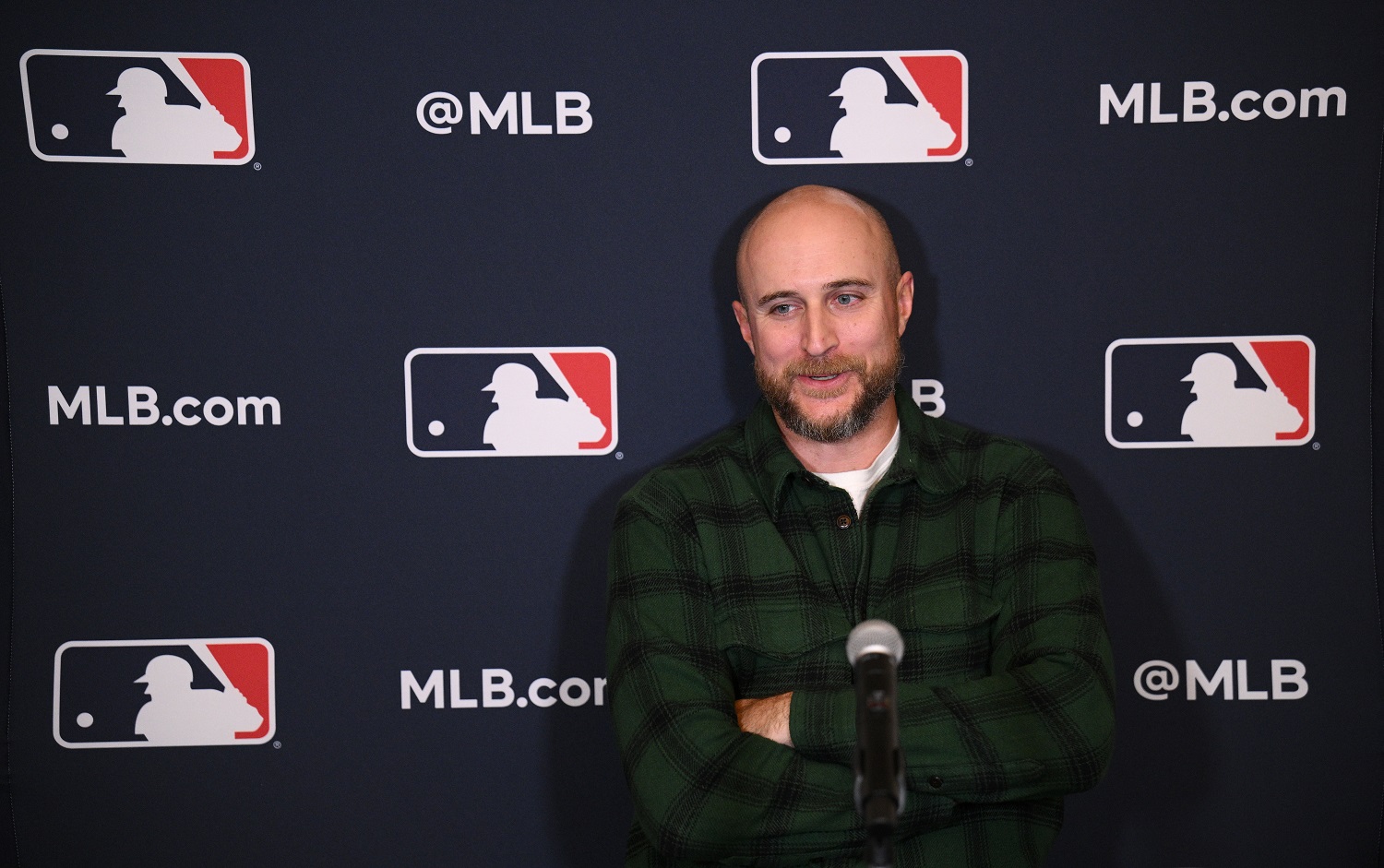 When Derek Falvey and Thad Levine took over for Terry Ryan, the Twins ownership mandated that sitting manager Paul Molitor keep that role for one year. It was always assumed that the new front office would want to make a selection of their own, and after a short period of time, it was Rocco Baldelli who was deemed the answer. They couldn’t have looked more right when early returns produced the Bomba Squad in 2019. The Twins won 101 games that season, hit a single-season record, 307 home runs, and appeared to be a team that could be a postseason juggernaut. Unfortunately, they were swept by the New York Yankees. Baldelli took the club back to the postseason during the pandemic-shortened 2020 season, but another sweep, this time at the hands of the Houston Astros, had Minnesota searching for answers yet again. Now with a pair of losing seasons and an overall winning percentage of just .527, it’s time for Baldelli to re-establish himself. When in charge of the Twins, Molitor posted just a .471 winning percentage across his four seasons. The 103-loss club during 2016 was largely what did him in, and having never experienced substantial success, there was never a record that pushed his total back close to .500. In changing out skippers, it seemed the front office wanted someone more aligned with their approach for the franchise. Using more of an analytically-driven decision-making process, finding a manager that could generate buy-in and convey principles to players on the field was a must. There was certainly a piece of that missing from Molitor, and it is something that Baldelli has been able to do seamlessly. This year, Baldelli needs to see better results follow. What is notable, even in moving on, is how well the Twins have done communicating with the Hall of Famer. Making sure to keep the relationship solid, Molitor has spent a couple of years as a roving instructor, and this season has been seen in Fort Myers working alongside Baldelli during Spring Training action. A year ago. the Twins dealt with an incredible amount of injury. By the end of the season, it wouldn’t have mattered much who was managing the club. Baldelli was needing to roll the dice on a far too consistent basis. The hope would be that a cleaner bill of health could be achieved this season, and if that’s the case, there is no reason why Baldelli can’t springboard it into a year of success. Before Molitor, Tom Kelly and Ron Gardenhire represented consistency in Minnesota. Kelly parlayed a World Series victory into a long tenure, and while Gardenhire had some truly terrible teams, he won the division with enough regularity to stay relevant. Finding some level of results in between those two outcomes is probably where Baldelli finds his safest opportunity to make this marriage a long one. I don’t think Minnesota’s front office is on the hot seat, and their manager isn’t entering the season with his chair warm either. That said, it can change quickly if another record-spending offseason doesn’t produce better results, and Baldelli making the losing stop after consecutive years would go a long way towards achieving that. Early on it looked as though the front office couldn’t have gotten their managerial hire more right. At this point, it seems Baldelli is a perfect representation of what the organization wants to do, but he’ll need to win in Year 5 if distancing himself from Molitor’s tenure is to be achieved. Through the exact same amount of time, with a few less games due to the pandemic, where do you find yourself on Baldelli having replaced Molitor? Did the Twins get it right?
-
The Minnesota Twins will have Rocco Baldelli in the dugout for his fifth season as manager on Opening Day 2023. That represents one more season than his predecessor got, and an opportunity to cement his future with the organization. Image courtesy of Orlando Ramirez-USA TODAY Sports When Derek Falvey and Thad Levine took over for Terry Ryan, the Twins ownership mandated that sitting manager Paul Molitor keep that role for one year. It was always assumed that the new front office would want to make a selection of their own, and after a short period of time, it was Rocco Baldelli who was deemed the answer. They couldn’t have looked more right when early returns produced the Bomba Squad in 2019. The Twins won 101 games that season, hit a single-season record, 307 home runs, and appeared to be a team that could be a postseason juggernaut. Unfortunately, they were swept by the New York Yankees. Baldelli took the club back to the postseason during the pandemic-shortened 2020 season, but another sweep, this time at the hands of the Houston Astros, had Minnesota searching for answers yet again. Now with a pair of losing seasons and an overall winning percentage of just .527, it’s time for Baldelli to re-establish himself. When in charge of the Twins, Molitor posted just a .471 winning percentage across his four seasons. The 103-loss club during 2016 was largely what did him in, and having never experienced substantial success, there was never a record that pushed his total back close to .500. In changing out skippers, it seemed the front office wanted someone more aligned with their approach for the franchise. Using more of an analytically-driven decision-making process, finding a manager that could generate buy-in and convey principles to players on the field was a must. There was certainly a piece of that missing from Molitor, and it is something that Baldelli has been able to do seamlessly. This year, Baldelli needs to see better results follow. What is notable, even in moving on, is how well the Twins have done communicating with the Hall of Famer. Making sure to keep the relationship solid, Molitor has spent a couple of years as a roving instructor, and this season has been seen in Fort Myers working alongside Baldelli during Spring Training action. A year ago. the Twins dealt with an incredible amount of injury. By the end of the season, it wouldn’t have mattered much who was managing the club. Baldelli was needing to roll the dice on a far too consistent basis. The hope would be that a cleaner bill of health could be achieved this season, and if that’s the case, there is no reason why Baldelli can’t springboard it into a year of success. Before Molitor, Tom Kelly and Ron Gardenhire represented consistency in Minnesota. Kelly parlayed a World Series victory into a long tenure, and while Gardenhire had some truly terrible teams, he won the division with enough regularity to stay relevant. Finding some level of results in between those two outcomes is probably where Baldelli finds his safest opportunity to make this marriage a long one. I don’t think Minnesota’s front office is on the hot seat, and their manager isn’t entering the season with his chair warm either. That said, it can change quickly if another record-spending offseason doesn’t produce better results, and Baldelli making the losing stop after consecutive years would go a long way towards achieving that. Early on it looked as though the front office couldn’t have gotten their managerial hire more right. At this point, it seems Baldelli is a perfect representation of what the organization wants to do, but he’ll need to win in Year 5 if distancing himself from Molitor’s tenure is to be achieved. Through the exact same amount of time, with a few less games due to the pandemic, where do you find yourself on Baldelli having replaced Molitor? Did the Twins get it right? View full article
-
 It’s not exactly a bad thing that the Twins will be looking to usher in a new look given they are coming off back-to-back seasons missing the postseason. Last year, the club was decimated by injuries and the year prior, performance left plenty to be desired. Neither of those teams truly had an identity, and it’s something Rocco Baldelli would probably prefer they get back to. If you’re hoping that Joey Gallo’s signing means Minnesota will blast bombas once again, you’re likely to be disappointed. Sure, the Twins are hoping he can find his swing, but there is positional flexibility and defense to fall back on for the slugger. Carlos Correa returns at shortstop, and while he can manage the lumber, his game is an all around one as well. Nelson Cruz is going to moonlight as a baseball player for the San Diego Padres, and Miguel Sano is still unemployed. The Bomba Squad was a one-time thing, and looking at this roster, the Twins want their strength to be pitching. Luis Arraez was sent to the Miami Marlins for Pablo Lopez, not because the pitcher is an ace, but because he lengthens the starting rotation. Sonny Gray has looked the part of a top arm when healthy, and Tyler Mahle could be more than ready to break out if he’s healthy. Kenta Maeda has previously competed for a Cy Young award, and last year’s Opening Day starter in Joe Ryan may be slated to bring up the rear of the rotation. For the first time in quite a while, the Twins rotation is where much of the investment has been made. Yes, there isn’t a massive free agent contract in the group, but prospect capital such as Chase Petty, Spencer Steer, and Christian Encarnacion-Strand were all utilized to acquire it. Moving on from Arraez wasn’t an easy choice, but the lineup has enough potential to withstand that sort of blow. You can bet that Baldelli is not hoping to win every game 2-1, but this shouldn’t be a Twins team that needs five runs in order to hold things down. Last season, the difference between scoring three or more runs was drastic, and the hope is that tweaks to the defense can help as well. The outfield may be able to lay claim as baseball’s best defensively, and that will only further help whoever is on the mound. Bringing back Correa at shortstop was a must, and while Jorge Polanco is not great in the field, Jose Miranda should be better at the hot corner with Alex Kirilloff possessing Gold Glove ability at first base. Fielding will continue to be an area the Twins look to improve in an effort to help the entire pitching staff. Down the stretch last season, the Twins bullpen made significant strides. Jhoan Duran got all of the praise, but Griffin Jax has emerged as a force, and Jorge Lopez returning to his All-Star form would be a massive high-leverage boost. Both in the starting rotation and the bullpen, Pete Maki is going to feel confident running arms to the mound. Derek Falvey became synonymous with pitching when working within the Cleveland Guardians organization. This may be the first time since he has been with Minnesota where he can feel confident in what the group on the mound has been built as. Not every team is going to have an ace, and although the Twins still don’t, they have as good of a group as anyone could hope for. There are different styles that will trot to the mound, but it would not be at all surprising to see that Twins have the best staff, top to bottom, in the division. Start thinking of nicknames if you must, but this group is going to rely on pitching and defense.
-
For much of the past two seasons the Minnesota Twins have been tied to something they weren’t. In 2019, the club introduced the Bomba Squad and went on a terrorizing run of punishing opposing pitchers. Power production is what became synonymous with the roster, but expect something much different in 2023. This team will pitch. Image courtesy of Michael McLoone-USA TODAY Sports It’s not exactly a bad thing that the Twins will be looking to usher in a new look given they are coming off back-to-back seasons missing the postseason. Last year, the club was decimated by injuries and the year prior, performance left plenty to be desired. Neither of those teams truly had an identity, and it’s something Rocco Baldelli would probably prefer they get back to. If you’re hoping that Joey Gallo’s signing means Minnesota will blast bombas once again, you’re likely to be disappointed. Sure, the Twins are hoping he can find his swing, but there is positional flexibility and defense to fall back on for the slugger. Carlos Correa returns at shortstop, and while he can manage the lumber, his game is an all around one as well. Nelson Cruz is going to moonlight as a baseball player for the San Diego Padres, and Miguel Sano is still unemployed. The Bomba Squad was a one-time thing, and looking at this roster, the Twins want their strength to be pitching. Luis Arraez was sent to the Miami Marlins for Pablo Lopez, not because the pitcher is an ace, but because he lengthens the starting rotation. Sonny Gray has looked the part of a top arm when healthy, and Tyler Mahle could be more than ready to break out if he’s healthy. Kenta Maeda has previously competed for a Cy Young award, and last year’s Opening Day starter in Joe Ryan may be slated to bring up the rear of the rotation. For the first time in quite a while, the Twins rotation is where much of the investment has been made. Yes, there isn’t a massive free agent contract in the group, but prospect capital such as Chase Petty, Spencer Steer, and Christian Encarnacion-Strand were all utilized to acquire it. Moving on from Arraez wasn’t an easy choice, but the lineup has enough potential to withstand that sort of blow. You can bet that Baldelli is not hoping to win every game 2-1, but this shouldn’t be a Twins team that needs five runs in order to hold things down. Last season, the difference between scoring three or more runs was drastic, and the hope is that tweaks to the defense can help as well. The outfield may be able to lay claim as baseball’s best defensively, and that will only further help whoever is on the mound. Bringing back Correa at shortstop was a must, and while Jorge Polanco is not great in the field, Jose Miranda should be better at the hot corner with Alex Kirilloff possessing Gold Glove ability at first base. Fielding will continue to be an area the Twins look to improve in an effort to help the entire pitching staff. Down the stretch last season, the Twins bullpen made significant strides. Jhoan Duran got all of the praise, but Griffin Jax has emerged as a force, and Jorge Lopez returning to his All-Star form would be a massive high-leverage boost. Both in the starting rotation and the bullpen, Pete Maki is going to feel confident running arms to the mound. Derek Falvey became synonymous with pitching when working within the Cleveland Guardians organization. This may be the first time since he has been with Minnesota where he can feel confident in what the group on the mound has been built as. Not every team is going to have an ace, and although the Twins still don’t, they have as good of a group as anyone could hope for. There are different styles that will trot to the mound, but it would not be at all surprising to see that Twins have the best staff, top to bottom, in the division. Start thinking of nicknames if you must, but this group is going to rely on pitching and defense. View full article
-
Over the past handful of years, it has been either the Cleveland Guardians or Chicago White Sox to challenge the Minnesota Twins at the top of the AL Central. With the three locked in as the clear contenders again, which foe represents the biggest rival for 2023? Image courtesy of Rick Scuteri-USA TODAY Sports Of course, it is fair to suggest that the team to beat is the reigning division champions. Terry Francona’s Cleveland Guardians won the division with 92 wins a season ago. Despite Rocco Baldelli’s Minnesota Twins having led the division for most of the year, it was the Chicago White Sox who finished second with 81 wins. The Twins should be expected to be better than the 78 wins they posted in 2022, and if they’re going to make a postseason return, they’ll need to overcome both of their top two competitors. Looking at the projections, there seems to be a consensus that both the Twins and Guardians are better than Chicago. That being said, the divide between all parties is hardly substantial. Fangraphs has the Twins projected to win 83 games, equal to the Guardians, with the White Sox tallying just 80. PECOTA has Cleveland and Minnesota winning 88 games with the White Sox finishing with just 79 victories. Either way, the teams remained grouped. For the sake of rivalry, it has always felt like Chicago had more invested in their team than the Guardians did. Even when Cleveland was making their deep postseason runs, attendance at Progressive Field has been anything but notable. The White Sox fanbase, while they have been down for quite some time, have been plenty vocal in support of their club. Aside from Jensen Lewis’ infamous “Bye Twins” tweet, there has been little back and forth between the Twins and Guardians fan bases. Cleveland’s blueprint, dating back to when Derek Falvey was part of that organization, has always been pitching. Jose Ramirez and Andres Gimenez have emerged as offensive stars, but Francisco Lindor is long gone and the outfield has been awful for quite some time. They will trot out Shane Bieber, Triston McKenzie, and Aaron Civale on a regular basis, but this isn’t the same peak rotation that took Cleveland to the World Series in 2016. Last year it looked as though the White Sox would again be the cream of the AL Central crop, but manager Tony La Russa continued to get in their way. Making odd decisions and looking like the game had passed him by, there were plenty of opportunities for Chicago to execute when they did not. Injuries also kept the White Sox down last season, and we have yet to see Luis Robert put it together for a full season. In terms of additions, the Guardians brought in first basemen Josh Bell and catcher Mike Zunino. Chicago grabbed Andrew Benintendi for their outfield, and Mike Clevinger for the starting rotation. Unfortunately for them, it appears Clevinger may not be eligible to play, and closer Liam Hendriks is currently battling cancer. It’s hard to think that anyone but the Twins did more during the offseason. While Carlos Correa isn’t necessarily an addition, bringing him back was a must. Getting an arm like Pablo Lopez is huge, and adding the likes of both Joey Gallo and Christian Vazquez should help plenty. Adding depth in both Kyle Farmer and Donovan Solano are nice pieces to call upon as well. You can’t fault the projection systems for suggesting that the division still runs through Cleveland. Until they are knocked off, and Chicago for that matter as well, that should be the expectation. Minnesota has positioned themselves with their best roster in years, however, and this should be the season they return to postseason play. Despite what Cleveland brings to the table, Chicago’s offensive talent may be the most worrisome foe. Andrew Vaughn will take over at first base for Jose Abreu, but the biggest change could be Pedro Grifol (former Twins prospect) leading the group. If the skipper can make less questionable decisions, and the clubhouse can gel, it should be the White Sox that push Minnesota the most. If that’s going to be the case, expect plenty of chirping from the South Siders along the way. View full article
-
 Of course, it is fair to suggest that the team to beat is the reigning division champions. Terry Francona’s Cleveland Guardians won the division with 92 wins a season ago. Despite Rocco Baldelli’s Minnesota Twins having led the division for most of the year, it was the Chicago White Sox who finished second with 81 wins. The Twins should be expected to be better than the 78 wins they posted in 2022, and if they’re going to make a postseason return, they’ll need to overcome both of their top two competitors. Looking at the projections, there seems to be a consensus that both the Twins and Guardians are better than Chicago. That being said, the divide between all parties is hardly substantial. Fangraphs has the Twins projected to win 83 games, equal to the Guardians, with the White Sox tallying just 80. PECOTA has Cleveland and Minnesota winning 88 games with the White Sox finishing with just 79 victories. Either way, the teams remained grouped. For the sake of rivalry, it has always felt like Chicago had more invested in their team than the Guardians did. Even when Cleveland was making their deep postseason runs, attendance at Progressive Field has been anything but notable. The White Sox fanbase, while they have been down for quite some time, have been plenty vocal in support of their club. Aside from Jensen Lewis’ infamous “Bye Twins” tweet, there has been little back and forth between the Twins and Guardians fan bases. Cleveland’s blueprint, dating back to when Derek Falvey was part of that organization, has always been pitching. Jose Ramirez and Andres Gimenez have emerged as offensive stars, but Francisco Lindor is long gone and the outfield has been awful for quite some time. They will trot out Shane Bieber, Triston McKenzie, and Aaron Civale on a regular basis, but this isn’t the same peak rotation that took Cleveland to the World Series in 2016. Last year it looked as though the White Sox would again be the cream of the AL Central crop, but manager Tony La Russa continued to get in their way. Making odd decisions and looking like the game had passed him by, there were plenty of opportunities for Chicago to execute when they did not. Injuries also kept the White Sox down last season, and we have yet to see Luis Robert put it together for a full season. In terms of additions, the Guardians brought in first basemen Josh Bell and catcher Mike Zunino. Chicago grabbed Andrew Benintendi for their outfield, and Mike Clevinger for the starting rotation. Unfortunately for them, it appears Clevinger may not be eligible to play, and closer Liam Hendriks is currently battling cancer. It’s hard to think that anyone but the Twins did more during the offseason. While Carlos Correa isn’t necessarily an addition, bringing him back was a must. Getting an arm like Pablo Lopez is huge, and adding the likes of both Joey Gallo and Christian Vazquez should help plenty. Adding depth in both Kyle Farmer and Donovan Solano are nice pieces to call upon as well. You can’t fault the projection systems for suggesting that the division still runs through Cleveland. Until they are knocked off, and Chicago for that matter as well, that should be the expectation. Minnesota has positioned themselves with their best roster in years, however, and this should be the season they return to postseason play. Despite what Cleveland brings to the table, Chicago’s offensive talent may be the most worrisome foe. Andrew Vaughn will take over at first base for Jose Abreu, but the biggest change could be Pedro Grifol (former Twins prospect) leading the group. If the skipper can make less questionable decisions, and the clubhouse can gel, it should be the White Sox that push Minnesota the most. If that’s going to be the case, expect plenty of chirping from the South Siders along the way.
-
As Opening Day approaches in 2023, there may be no larger player development storyline than how a few recent first round picks fare. We are getting to a critical juncture for guys taken between 2018-2020, and a couple of them need a breakout in a big way. Image courtesy of Mark J. Rebilas-USA TODAY Sports When the Twins signed Donovan Solano to the major-league roster last week, it shuffled things a bit. Nick Gordon is out of options, and the rest of the bench is largely set. Kyle Farmer could find himself as the Opening Day designated hitter, and everything points to Trevor Larnach beginning the season at Triple-A St. Paul. On one hand, Larnach failing to crack the 26-man roster is representative of depth behind Joey Gallo, Byron Buxton, and Max Kepler. On the other, it’s suboptimal to see a polished college hitter still yet to establish himself in the majors at age-26. The Twins have a concerning string of draft picks, and it starts with Larnach for Derek Falvey and Thad Levine. Taken 20th overall from Oregon State during the 2018 Major League Baseball draft, Larnach’s selection was largely rooted in his hit tool. Capable of lots of loud contact, Larnach generates significant bat speed and produces very high exit velocities. He is a guy that should hit for plenty of power, and he doesn’t whiff substantially in doing so. At the big league level, we have seen that, but it has come in short bursts as he has struggled to stay healthy. Larnach has played just 130 major-league games, and his .687 OPS is not close to what he has flashed in small sample sizes. He did show off his arm in left field last season but then was shelved with a significant core muscle injury. Finding a way to force his addition to the 26-man roster this season is a must, and raking at Triple-A may be a start. To stay there this time, he’ll need to be healthy. Following the selection of Larnach, 2019 top pick Keoni Cavaco was cut from an entirely different cloth. As a late riser and helium pick, Cavaco may have been a reach at 13th overall. He was a shortstop with tools and projection but potentially wouldn’t stick there. Now 187 games into his pro career, he has missed time with injury, missed a season due to the pandemic, and not produced at all. Cavaco played the hot corner for Fort Myers last season as Noah Miller took over at shortstop. His .672 OPS across 99 games was a career-high, and he showed some power by hitting 11 homers. His 138/22 K/BB at Low-A doesn’t bode well for his future. Cavaco will likely start at High-A Cedar Rapids this season, but it’s not necessarily production warranted. He still will only be 22 years old, but something has to give in order for this pick to turn in some future promise. Rounding out the group is another loud college bat, Aaron Sabato. A first baseman at North Carolina, Sabato was taken 27th overall in 2020. Like Larnach before him, the draw was a power bat that produced strong exit velocities. That’s not a skill you can teach, and he did a pretty good job of showing plate discipline as an amateur as well. Unfortunately in pro ball, the wheels have all but fallen off. Across 210 professional games, Sabato owns an ugly .209/.355/.424 slash line. He has hit for the expected power, and he’s done a decent job drawing walks, but he also punched out 142 times last season in just 103 games at Double-A and lower. The strikeout problems aren’t going to get better as the competition increases, and it’s looked more and more likely that he may only be a designated hitter. Finding a way to show some level of plate discipline could go a long way toward avoiding this being a bust pick. Minnesota didn’t wait around with Brent Rooker, and the results there were much more manageable on the farm. None of these three players are done with their time in the Twins organization after this year, but what their futures look like could largely be influenced by it. Larnach needs to force his way into a crowded picture, and the pair of Cavaco and Sabato need to show there is a reason why they were taken so high. Not all first-round draft picks pan out, but Minnesota is definitely eyeing better things from this three-year stretch as soon as possible. View full article
-
 When the Twins signed Donovan Solano to the major-league roster last week, it shuffled things a bit. Nick Gordon is out of options, and the rest of the bench is largely set. Kyle Farmer could find himself as the Opening Day designated hitter, and everything points to Trevor Larnach beginning the season at Triple-A St. Paul. On one hand, Larnach failing to crack the 26-man roster is representative of depth behind Joey Gallo, Byron Buxton, and Max Kepler. On the other, it’s suboptimal to see a polished college hitter still yet to establish himself in the majors at age-26. The Twins have a concerning string of draft picks, and it starts with Larnach for Derek Falvey and Thad Levine. Taken 20th overall from Oregon State during the 2018 Major League Baseball draft, Larnach’s selection was largely rooted in his hit tool. Capable of lots of loud contact, Larnach generates significant bat speed and produces very high exit velocities. He is a guy that should hit for plenty of power, and he doesn’t whiff substantially in doing so. At the big league level, we have seen that, but it has come in short bursts as he has struggled to stay healthy. Larnach has played just 130 major-league games, and his .687 OPS is not close to what he has flashed in small sample sizes. He did show off his arm in left field last season but then was shelved with a significant core muscle injury. Finding a way to force his addition to the 26-man roster this season is a must, and raking at Triple-A may be a start. To stay there this time, he’ll need to be healthy. Following the selection of Larnach, 2019 top pick Keoni Cavaco was cut from an entirely different cloth. As a late riser and helium pick, Cavaco may have been a reach at 13th overall. He was a shortstop with tools and projection but potentially wouldn’t stick there. Now 187 games into his pro career, he has missed time with injury, missed a season due to the pandemic, and not produced at all. Cavaco played the hot corner for Fort Myers last season as Noah Miller took over at shortstop. His .672 OPS across 99 games was a career-high, and he showed some power by hitting 11 homers. His 138/22 K/BB at Low-A doesn’t bode well for his future. Cavaco will likely start at High-A Cedar Rapids this season, but it’s not necessarily production warranted. He still will only be 22 years old, but something has to give in order for this pick to turn in some future promise. Rounding out the group is another loud college bat, Aaron Sabato. A first baseman at North Carolina, Sabato was taken 27th overall in 2020. Like Larnach before him, the draw was a power bat that produced strong exit velocities. That’s not a skill you can teach, and he did a pretty good job of showing plate discipline as an amateur as well. Unfortunately in pro ball, the wheels have all but fallen off. Across 210 professional games, Sabato owns an ugly .209/.355/.424 slash line. He has hit for the expected power, and he’s done a decent job drawing walks, but he also punched out 142 times last season in just 103 games at Double-A and lower. The strikeout problems aren’t going to get better as the competition increases, and it’s looked more and more likely that he may only be a designated hitter. Finding a way to show some level of plate discipline could go a long way toward avoiding this being a bust pick. Minnesota didn’t wait around with Brent Rooker, and the results there were much more manageable on the farm. None of these three players are done with their time in the Twins organization after this year, but what their futures look like could largely be influenced by it. Larnach needs to force his way into a crowded picture, and the pair of Cavaco and Sabato need to show there is a reason why they were taken so high. Not all first-round draft picks pan out, but Minnesota is definitely eyeing better things from this three-year stretch as soon as possible.
-
This offseason Major League Baseball decided to make rather sweeping rule changes. While we’ll see new base sizes, a pitch clock, and limited shifting, it’s the rule 2020 brought us that may continue to shake things up the most. Rob Manfred decided a runner will forever start on second during extra-innings for the regular season, and it’s a bit curious how much that could hurt the Minnesota Twins. Image courtesy of Jeffrey Becker-USA TODAY Sports Back in 2020, after a late start to the season following Covid-19, Major League Baseball decided to make doubleheaders seven-inning games and attempt to limit their length by placing a “ghost runner” on second base during extra innings. The pairing had some validity as rosters were tighter and a risk of availability constantly plagued teams. Now, as we have adapted to the changes on a human and worldly level, it appears that Major League Baseball will at least keep a different set of rules for longer baseball games. The problem is that not all teams will benefit equally. Yes, every single organization will be playing with the same parameters, but the outcomes can’t be created equal. Baseball’s new extra-inning rule is largely similar to the shootout in hockey. Seen by National Hockey League purists as eyewash, the shootout is more for a casual fan looking for an extra bit of excitement. It certainly waters down the outcome, however, as the game is all of a sudden determined through different parameters. Hockey does a decent job addressing this by awarding the losing team with a single point for making it to overtime. Baseball’s problem is that the standings simply aren’t set up to reflect an outcome of anything less than a win or loss. It would be overly drastic for the league to adopt a points system, but the sport has also watered down the value of a win once getting to extra innings. If there is something that has always set baseball apart, it is that the sport is played without a clock. The only thing guaranteed in baseball is that you have 27 outs to be better than the other team. In extra-innings, each side traded opportunities with three outs at a time. Now though, it becomes who can immediately capitalize off of a manufactured scenario. Last season Rocco Baldelli’s club played 15 extra-inning games In them, they went 5-10 with just a -3 run differential. The year prior, in 2021, Minnesota played 23 extra-inning games and posted a +2 run differential. During the first season of a runner being placed on second base, Minnesota was 3-1 with a +1 run differential. As a whole, the volatility of outcomes appears to be drastic. It is not a benefit to routinely play extra-inning games. With a 26-man roster and only 40 players to choose from at any given time, racking up lengthy results isn’t a sustainable path to health. What is problematic is that results are determined differently once getting to those extra-inning games, and not every team will have the same amount of instances to compare. Carrying a strong nine-inning record, but dropping games in which you have a runner start on second to open an inning seems counterproductive in evaluating the overall talent of a club. On the flip side, a team finding ways to consistently produce when given the advantage of a placed runner could make up for a lacking performance in standard length games. Having a “ghost runner” certainly isn’t a rule change as substantial as having robot umpires would be, but it may be the one with the greatest impact on the win column. Playing the game differently in the regular season as opposed to the postseason is something both the NHL and NFL have done for a long time. In both of those cases though, the league’s evaluate said outcomes differently. Baseball isn’t going to have ties, and you aren’t receiving half a win for an extra-inning loss. When a strong extra-inning team squeaks into the postseason by a win or two against a team that didn’t go past nine innings very often, this discussion could get that much more interesting. View full article