


Nick Nelson
Administrator
-
Joined
-
Last visited
Everything posted by Nick Nelson
-
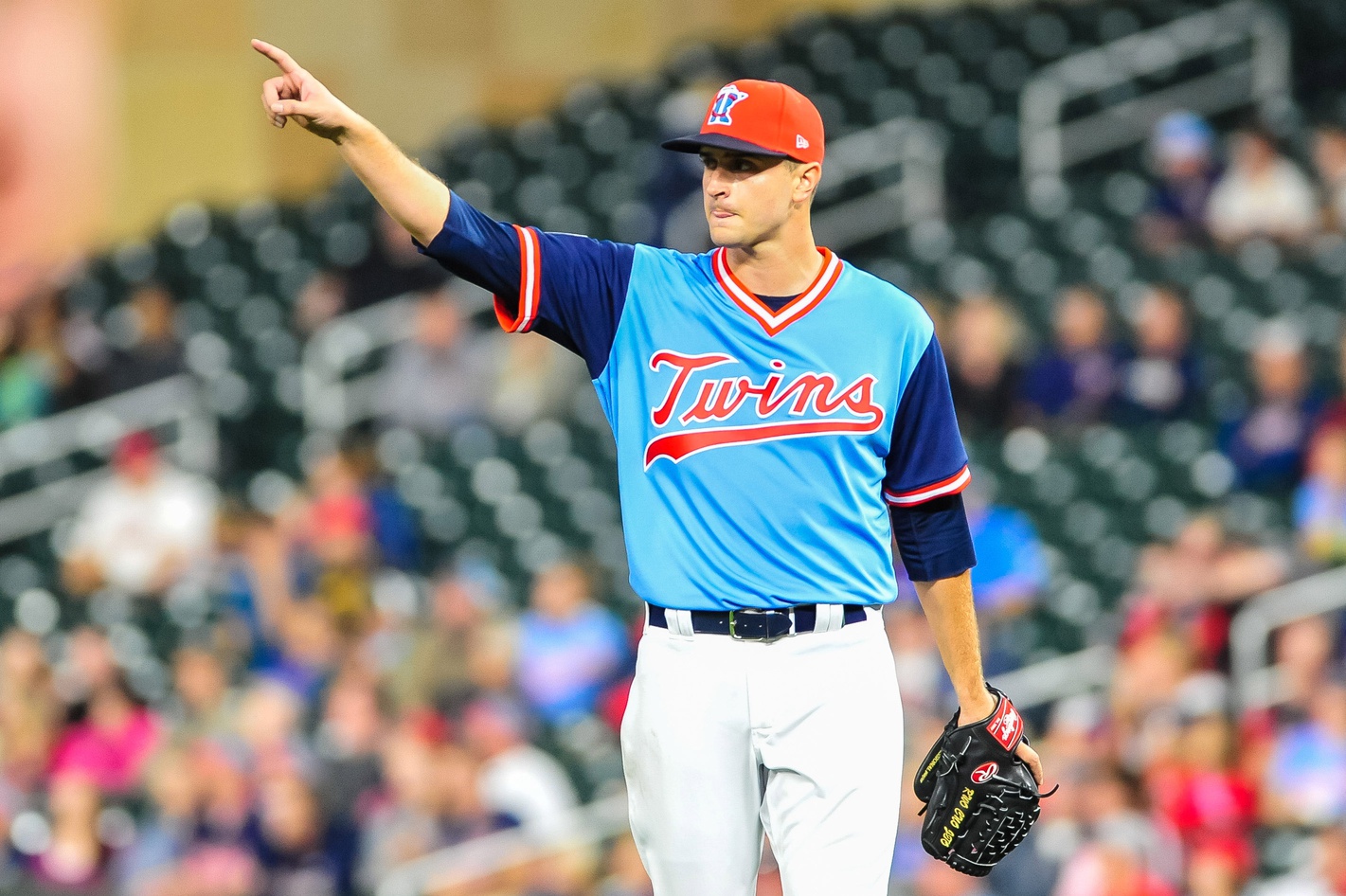 This is not a dismissal of Gibson. Far from it. I'm a believer in his emergence. Finally healthy and harnessing the full potential of his arsenal, he alternated between solid and filthy. His fastball clocked in at a career-high 93 MPH. Both his slider and curveball were among the league's toughest to hit in their respective categories. Gibson has STUFF and SPIN, at a time where those assets are being scrutinized and valued as much as ever. If he follows up with another strong campaign next year, he's gonna be in demand, and he knows it. While I'm sure he'd like to stick with the Twins, I doubt he'll be cutting them any ultra-sweet deal. Meanwhile, Odorizzi is coming off a second straight down year, by his standards anyway. Why extend him over Gibson? I'll give you five good reasons. 1. Gibson is 31. Odorizzi is 28. Odorizzi has thrown fewer career innings and has a strong bill of durability, with 28+ starts every season since 2014. Gibson isn't old, per se, but you could ink Odorizzi to a two-year extension and he'd be the same age when he finishes it as Gibby is now. 2. Odorizzi has a better track record than Gibson. He's got a 3.95 career ERA and 1.24 WHIP, compared to 4.47 and 1.41 for Gibson. What's more, Odorizzi has achieved those superior numbers mostly as a fly-ball pitcher in the AL East. Yes, Odo is coming off a career-worst 4.49 ERA in 2018, but that's nearly identical to Gibson's career mark. It troubles me that even in his big breakout season, Gibby's flaws were still evident as his control wavered and he allowed a fairly steady stream of baserunners, evidenced by an unspectacular 1.30 WHIP (we can't count on him replicating his career-high 75.5% strand rate). 3. Odorizzi might have turned a corner. One could make an argument that this is the perfect time to strike a multi-year pact with Odorizzi. He was quietly very effective in down the stretch, erasing his problematic long-ball vulnerability with only three home runs allowed over 10 starts between August and September. During that span he held opponents to a .203/.292/.318 slash line. Taking it back a step further, he surrendered just six homers in 20 starts after June 1st. Meanwhile, Odorizzi finished with the highest strikeout rate (8.9 K/9) since his rookie year. It sure seemed like the righty figured a few things out around the middle of the summer, and if he can build upon that with new pitching coach Wes Johnson, you've got something. 4. Contract security could make Odorizzi more open-minded about his usage. Odorizzi is a model candidate for the "opener" strategy, as he allowed the highest OPS his third time facing opposing lineups (1.135) of any qualified pitcher in the game this year. This was noted by Parker Hageman in his feature for the Offseason Handbook, but so too was this reality: it's tough to screw around with the usage of a starting pitcher who's staring down free agency and unsure of his future. “Hold on a sec, I’m a starter. I’m going to get paid as a starter,” Twins director of personnel Mike Radcliff empathized in the story, speaking not of Odorizzi specifically but the general conundrum of asking an established veteran to fill an experimental role. With some income certainty for the coming years, the right-hander (or more accurately his agent) may be less inclined to protest such an arrangement, which could benefit the team greatly. 5. Odorizzi will be cheaper. While you can easily find some positives in his numbers and trends (I did so above), the fact remains: Odorizzi is coming off a subpar season, just after the team that watched him blossom into a quality mid-rotation starter traded him for peanuts rather than pay him $6 million. I've gotta think he'd be amenable to a three-year contract on reasonable terms. I get that Gibson is the hot commodity right now. But taking a step back, Odorizzi has consistently shown a much higher floor, and given his reliable domination of opponents in the first meeting of a game (.645 OPS allowed and 24% K-rate, career) he's a good bet to at least excel as a reliever if it comes to that. Oh, and here's the other thing: if Gibson does have a beastly season next year, the Twins can extend a qualifying offer. That seems like a less viable scenario with Odorizzi. So, there you go. Where do you weigh in? Have I convinced you on the merits of an Odorizzi extension? Or do you lean more toward Gibson? Maybe you'd try and extend both? Neither? Let's hear it.
-
To be clear, I'm talking more of a "stacker" approach with that fifth turn in the rotation as opposed to a bullpen game where you have like 6 guys throw 1-2 innings. Ultimately this can actually help preserve some of the other bullpen arms. What is it that causes you to lack confidence in Mejia? He's pitched really well ever since coming over from San Fran. This year in 86 IP between the majors and Triple-A he had a 2.93 ERA and held opponents to a .226/.295/.320 line with a 12% swinging strike rate. Allowed only 4 HR. It's not too easy to find young left-handed hurlers with those kinds of credentials. His health and mediocre control are concerns, but to me he's shown enough that I'd absolutely be comfortable giving him a 5th starter or long reliever job. There aren't more red flags here than you're gonna find with any reasonably priced FA. And if he proves capable, that's a big boost.
-
-
True, but the Twins now have the ability to customize their personnel for the kind of staff they want to use (or, in other words, they can let the market dictate how the unit comes together). So if — as others have noted — the market for starters isn't all that strong, they might be best off loading up on relief arms and having each fifth day be a "bullpen day" if you will. I like this approach for a team in their position because it helps you manage workloads more closely and gives you the opportunity for extended looks at more arms.
-
The Twins have addressed their two biggest needs on the position-player side, adding C.J. Cron at first base and Jonathan Schoop at second. They are reportedly still monitoring the DH market, and might add another catcher yet, but now the front office is turning its attention to the pitching staff. It's obvious that Minnesota could stand to add multiple impact arms. But circumstances will make this a more complicated undertaking than it appears.Here in mid-December, the Twins have the following pitchers written onto next year's Opening Day roster in ink, more or less: Jose Berrios, Kyle Gibson, Jake Odorizzi, Michael Pineda, Trevor May, Taylor Rogers, Addison Reed. I would consider Trevor Hildenberger close to a lock, so long as he doesn't look like a total mess in spring training. That's eight members of a 12-man (possibly 13-man) staff. So the mission here seems clear, right? Add four more pitchers via free agency or trade – probably one starter and three relievers – and you're all set. It's not quite that simple. While I certainly think the Twins need to add more, and will, there are a few considerations that should be kept in mind as they attack the open market. * The 40-man roster is full. Any new addition on a major-league contract will require the Twins to drop one of their existing players. You might argue that's not the biggest deterrent, considering there are a number candidates for removal on the current roster (I marked nine that I would consider to be "at-risk" below) but it's something to note. Download attachment: 40manatrisk1216.png * Adalberto Mejia is out of options next year. So is Matt Magill, but I don't think the Twins are too concerned about losing him. Mejia is the kind of arm a rebuilding team needs to hold onto. In 2017 he threw fairly well for Minnesota as a rookie, posting a 4.50 ERA in 21 starts (he also put up a 2.83 ERA in six starts at Rochester). This year he was hampered by injuries but still turned in a 2.01 ERA in five outings for the Twins, and 3.27 over 63 innings at Triple-A. The left-hander has consistently performed since coming over to the Twins, with solid stuff to match. He doesn't turn 26 until next June. I'd go so far as to say that Mejia should be assured a spot as much as the "locks" I listed above, and if you're open to using him as a starter (or perhaps more fittingly a primary), then boom, you've got your rotation completed. * Fernando Romero deserves his shot. He isn't out of options yet, but will be in 2020, so the Twins need to get him settled in a big-league role. You could send him back to Triple-A to start the year but it feels kinda pointless – Romero showed he belonged during an MLB debut this year, and offers more upside than almost anyone else in the mix. I've argued that it might be best to bring him along as a multi-inning fireman reliever. * Andrew Vasquez decimates left-handed hitters. You might feel inclined to find a lefty specialist on the open market, with top bullpen southpaw Taylor Rogers serving in more of a matchup-agnostic setup role. But then again, you might already have that piece on hand in Vasquez, who was added to the 40-man roster during the season in advance of his Rule 5 eligibility, getting a taste of the majors in September. In 69 total innings last year Vasquez held left hitters to a .196/.274/.235 line over 114 PA, with a 38% strikeout rate. The prior year, same-sided batters went .200/.297/.200 against him, managing zero extra-base hits in 75 PA. There's always risk in going with a relatively untested and inexperienced option, but Vasquez is the kind of effective, inexpensive role-filler that can really be an asset to a team like the Twins. * Pitching staffs are fundamentally transforming. Like it or not, the rigid designations of "starter" and "reliever" are fading in today's game. Using openers, and piggybacking starters, should both be concepts in play as you assemble the staff – as should flexibility in the ninth inning. This can help guide your strategy. For instance, if you do end up going with a rotation featuring five right-handers, you might want an extra southpaw reliever that you could plug in for the first inning against a lefty-heavy lineup. Or maybe you want to plan on trying to get 3-4 innings apiece from Mejia and Kohl Stewart every fifth day. With an open-minded approach, there are a lot of options and possibilities. * The rotation lacks continuity going forward. Three of Minnesota's expected starters – Gibson, Odorizzi and Pineda, will be free agents after next season. In terms of rotation members that the Twins can comfortably count on past 2019, Berrios pretty much starts and ends the list. So the quest for rotation help this offseason shouldn't necessarily be limited to short-term commitments. A multi-year deal would make a lot of sense... if it's the right guy. Click here to view the article
-
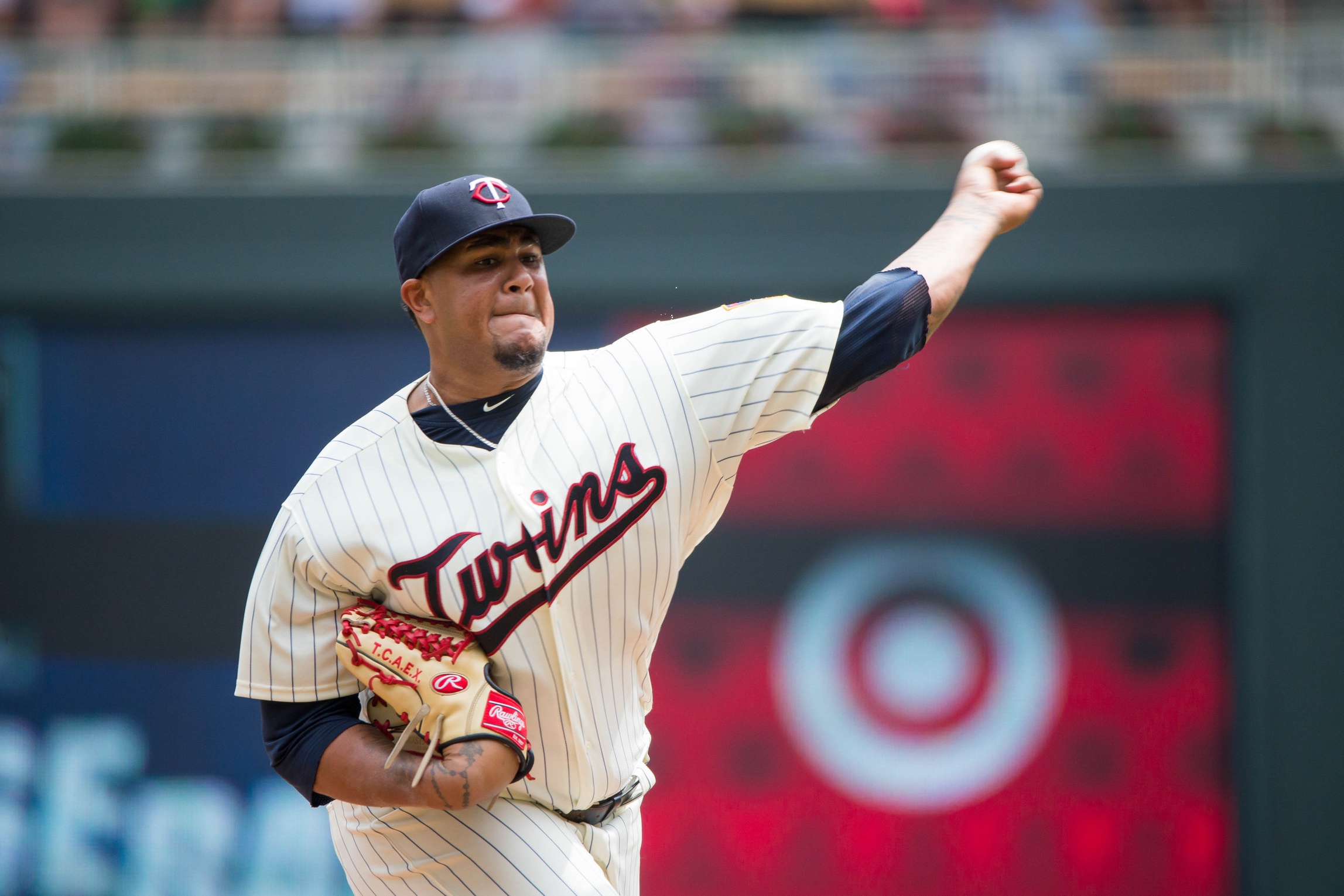 Here in mid-December, the Twins have the following pitchers written onto next year's Opening Day roster in ink, more or less: Jose Berrios, Kyle Gibson, Jake Odorizzi, Michael Pineda, Trevor May, Taylor Rogers, Addison Reed. I would consider Trevor Hildenberger close to a lock, so long as he doesn't look like a total mess in spring training. That's eight members of a 12-man (possibly 13-man) staff. So the mission here seems clear, right? Add four more pitchers via free agency or trade – probably one starter and three relievers – and you're all set. It's not quite that simple. While I certainly think the Twins need to add more, and will, there are a few considerations that should be kept in mind as they attack the open market. * The 40-man roster is full. Any new addition on a major-league contract will require the Twins to drop one of their existing players. You might argue that's not the biggest deterrent, considering there are a number candidates for removal on the current roster (I marked nine that I would consider to be "at-risk" below) but it's something to note. * Adalberto Mejia is out of options next year. So is Matt Magill, but I don't think the Twins are too concerned about losing him. Mejia is the kind of arm a rebuilding team needs to hold onto. In 2017 he threw fairly well for Minnesota as a rookie, posting a 4.50 ERA in 21 starts (he also put up a 2.83 ERA in six starts at Rochester). This year he was hampered by injuries but still turned in a 2.01 ERA in five outings for the Twins, and 3.27 over 63 innings at Triple-A. The left-hander has consistently performed since coming over to the Twins, with solid stuff to match. He doesn't turn 26 until next June. I'd go so far as to say that Mejia should be assured a spot as much as the "locks" I listed above, and if you're open to using him as a starter (or perhaps more fittingly a primary), then boom, you've got your rotation completed. * Fernando Romero deserves his shot. He isn't out of options yet, but will be in 2020, so the Twins need to get him settled in a big-league role. You could send him back to Triple-A to start the year but it feels kinda pointless – Romero showed he belonged during an MLB debut this year, and offers more upside than almost anyone else in the mix. I've argued that it might be best to bring him along as a multi-inning fireman reliever. * Andrew Vasquez decimates left-handed hitters. You might feel inclined to find a lefty specialist on the open market, with top bullpen southpaw Taylor Rogers serving in more of a matchup-agnostic setup role. But then again, you might already have that piece on hand in Vasquez, who was added to the 40-man roster during the season in advance of his Rule 5 eligibility, getting a taste of the majors in September. In 69 total innings last year Vasquez held left hitters to a .196/.274/.235 line over 114 PA, with a 38% strikeout rate. The prior year, same-sided batters went .200/.297/.200 against him, managing zero extra-base hits in 75 PA. There's always risk in going with a relatively untested and inexperienced option, but Vasquez is the kind of effective, inexpensive role-filler that can really be an asset to a team like the Twins. * Pitching staffs are fundamentally transforming. Like it or not, the rigid designations of "starter" and "reliever" are fading in today's game. Using openers, and piggybacking starters, should both be concepts in play as you assemble the staff – as should flexibility in the ninth inning. This can help guide your strategy. For instance, if you do end up going with a rotation featuring five right-handers, you might want an extra southpaw reliever that you could plug in for the first inning against a lefty-heavy lineup. Or maybe you want to plan on trying to get 3-4 innings apiece from Mejia and Kohl Stewart every fifth day. With an open-minded approach, there are a lot of options and possibilities. * The rotation lacks continuity going forward. Three of Minnesota's expected starters – Gibson, Odorizzi and Pineda, will be free agents after next season. In terms of rotation members that the Twins can comfortably count on past 2019, Berrios pretty much starts and ends the list. So the quest for rotation help this offseason shouldn't necessarily be limited to short-term commitments. A multi-year deal would make a lot of sense... if it's the right guy.
-
Well, Austin managed to get 101 PA against LHP while playing in just 69 games, so... potentially quite useful. He can start against southpaws and pinch-hit for guys like Kepler or Castro against nasty late-inning LH relievers. It's the kind of luxury you can afford when not dedicating a roster spot to someone who is incapable of playing defense anywhere. Nobody's suggesting Austin bat exclusively against LHPs — a 50/50 split sounds about right, with more opportunities against righties if he earns it. I figured the idea with this front office was to identify undervalued or overlooked assets elsewhere and turn them into valuable components of their rebuilding effort — thus the frantic waiver claims and deadline deals for prospects. If we're just going to shove those guys aside when they've shown real success and promise, in favor of a 38-year-old free agent, I'm just not really sure what we're doing here.
-
It sounds like Buxton is fired up, and feels as though he'll need to earn his starting job back next year. It sounds like the Twins still fully view Buxton as their starting center fielder, despite the mess of 2018. I think those are both good things.
-
Based on... ? Austin and Cave over the past 2 years have very consistently destroyed opposite-sided arms both in AAA and the majors. And at 26/27 we can reasonably expect them to get better, whereas we can only reasonably expect a 38/39-year-old Cruz will get worse. You can be confident Cruz will outhit them based on his track record, but to say you're "very, very sure" he'll be significantly more productive? Sorry, just no objective basis for that. Additionally, there are matters of depth at play here. Since we can safely assumed Austin will be DFA'd in the event of a Cruz signing, you lose 1B depth in exchange for someone who offers zero positional depth anywhere. Cruz cannot play in the field, anywhere. That's a bigger deal than people are making out to be.
-
I'm not sure what you're saying here RB. I'm using the data we have, which jibes with what I've seen. Austin has been a good hitter in the majors, was a very good hitter in the minors. Given that he just turned 27 and has only had the opportunity to play sporadically, I see room for growth yet. Finding him a role where he can maximize ABs against LHP seems like the best way to get him on the roster, derive immediate value, and gradually find him more playing time if he hits.
-
When the Twins added C.J. Cron and essentially tabbed him as their 2019 first baseman, the move puzzled me. Not because of Cron so much as what his addition seemed to say about the lone incumbent at first base. Is Tyler Austin being written out of Minnesota's plans already? Or is there still a way his very specific, very potent skills could be optimally put to use?Up to this point, Austin has shown some ability as a major-league hitter. Through his age 26-season, he owns a .758 OPS in 404 MLB plate appearances. This year between New York and Minnesota he slugged .480 in 268 PA; that's a higher mark than Eddie Rosario finished with, and barely below what Cron produced in a career year with Tampa. In many ways, Austin looks like the prototypical "change of scenery special." He showed promise with the Yankees but couldn't differentiate himself in a system full of big power bats. Having acquired him in the Lance Lynn deal, the Twins found themselves with a prime opportunity to give Austin a prolonged look, with first base becoming vacant, but instead they chose to go with Cron – a similar if not redundant player. Austin's solid overall production has been highly polarized in its concentration. Against right-handed pitchers he's been ineffective, with a .211/.259/.405 slash line and 39% K-rate. Against lefties he's been DOMINANT, at .272/.345/.592 and 32%. The way to best utilize such a player seems clear: partner him with a lefty swinger who can mash righties, and let Rocco Baldelli play the platoon game while also enjoying some great strategic pinch-hitting options. Cron throws a wrench in that, swinging from the same side as Austin. In fact, given his neutral platoon splits and his success in a full-time role this year, it seems likely Cron will be penciled as the everyday starter at first. This leaves only one path for Austin, who's out of options next spring and likely to land elsewhere if he doesn't make the roster: designated hitter. There is still opportunity there for the Twins to leverage Austin's strengths and deploy him impactfully. They can't trust him as full-time DH. It'd be irresponsible to go with Austin as the full-time solution, given his ugly numbers against righties. But if you equip the team with a lefty bat that can frequently plug in at DH? Then we're cooking. Theoretically, this can be accomplished with the existing setup. Roll with a bench of Mitch Garver, Ehire Adrianza, Willians Astudillo and Jake Cave, then rotate Cave (or Eddie Rosario) through the DH spot against righties. It'd be a good way to keep arguably your reigning two best hitters (Rosario and Cave) in the lineup regularly. Another bench construction that would intrigue me, if Garver is deemed good to go at catcher, would be swapping out Astudillo (who has an option remaining) for outfielder LaMonte Wade, recently added to the 40-man roster. He'll be 25 on Opening Day, has ample experience at Triple-A, and would help balance out a roster short on patience and plate discipline. Wade has a .391 OBP in the minors and walks more than he strikes out against right-handers. Alternatively, the Twins could seek out another lefty bat via trade or free agency to complement Austin as a DH/bench piece. It'd need to be someone with a bit of positional flexibility since the team surely isn't gonna carry three first basemen. These are scenarios in which Minnesota could still roster Austin and maximize his value. But the simple reality may be that they just don't see the 27-year-old fitting into their plans. Cron's addition already hinted toward this (why not just skip him and set up the Austin platoon at first?) and the reported serious interest in Nelson Cruz would be another indicator. If the Twins sign Cruz, Austin's out – that feels like a safe assumption. In fact, signing Cruz and essentially locking him in for 600 plate appearances at DH would all but eliminate any room for creative platoons or rotations, which strikes me as odd for a team that claims to be focused on sorting out existing assets and developing its core. Giving up on Austin wouldn't necessarily be malpractice, given that he's so one-dimensional both offensively and defensively, and so very very strikeout-prone. But based on the pure slugging prowess he showed during his short time in Minnesota this year, and his proven ability to terrorize southpaws, he certainly seems worthy of a longer look. For his part, Austin is undoubtedly tracking the front office's movements at the Winter Meetings as closely as any fan, knowing that the addition of Cruz would turn his grasp on a roster spot from precarious to perilous. Click here to view the article
-
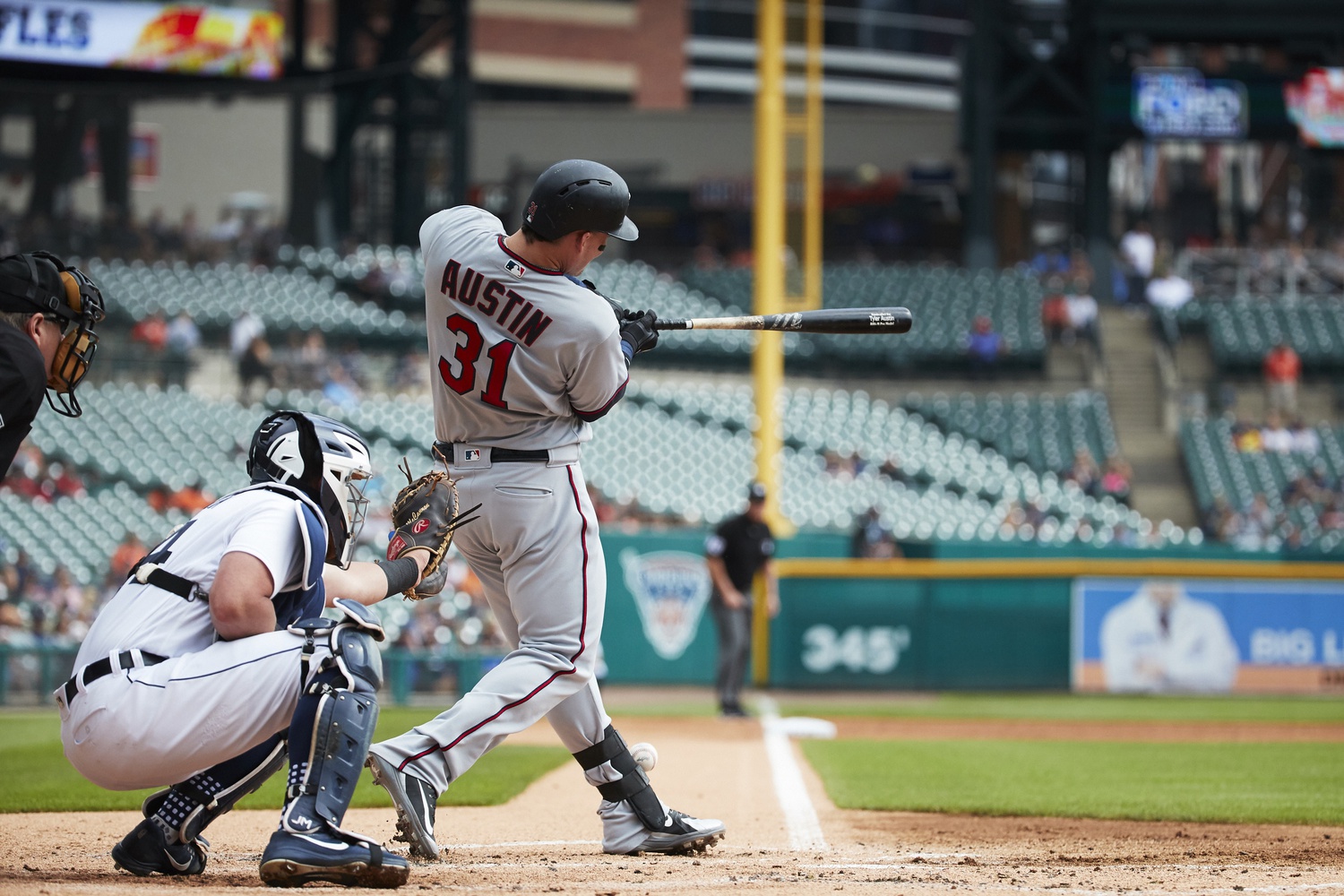 Up to this point, Austin has shown some ability as a major-league hitter. Through his age 26-season, he owns a .758 OPS in 404 MLB plate appearances. This year between New York and Minnesota he slugged .480 in 268 PA; that's a higher mark than Eddie Rosario finished with, and barely below what Cron produced in a career year with Tampa. In many ways, Austin looks like the prototypical "change of scenery special." He showed promise with the Yankees but couldn't differentiate himself in a system full of big power bats. Having acquired him in the Lance Lynn deal, the Twins found themselves with a prime opportunity to give Austin a prolonged look, with first base becoming vacant, but instead they chose to go with Cron – a similar if not redundant player. Austin's solid overall production has been highly polarized in its concentration. Against right-handed pitchers he's been ineffective, with a .211/.259/.405 slash line and 39% K-rate. Against lefties he's been DOMINANT, at .272/.345/.592 and 32%. The way to best utilize such a player seems clear: partner him with a lefty swinger who can mash righties, and let Rocco Baldelli play the platoon game while also enjoying some great strategic pinch-hitting options. Cron throws a wrench in that, swinging from the same side as Austin. In fact, given his neutral platoon splits and his success in a full-time role this year, it seems likely Cron will be penciled as the everyday starter at first. This leaves only one path for Austin, who's out of options next spring and likely to land elsewhere if he doesn't make the roster: designated hitter. There is still opportunity there for the Twins to leverage Austin's strengths and deploy him impactfully. They can't trust him as full-time DH. It'd be irresponsible to go with Austin as the full-time solution, given his ugly numbers against righties. But if you equip the team with a lefty bat that can frequently plug in at DH? Then we're cooking. Theoretically, this can be accomplished with the existing setup. Roll with a bench of Mitch Garver, Ehire Adrianza, Willians Astudillo and Jake Cave, then rotate Cave (or Eddie Rosario) through the DH spot against righties. It'd be a good way to keep arguably your reigning two best hitters (Rosario and Cave) in the lineup regularly. Another bench construction that would intrigue me, if Garver is deemed good to go at catcher, would be swapping out Astudillo (who has an option remaining) for outfielder LaMonte Wade, recently added to the 40-man roster. He'll be 25 on Opening Day, has ample experience at Triple-A, and would help balance out a roster short on patience and plate discipline. Wade has a .391 OBP in the minors and walks more than he strikes out against right-handers. Alternatively, the Twins could seek out another lefty bat via trade or free agency to complement Austin as a DH/bench piece. It'd need to be someone with a bit of positional flexibility since the team surely isn't gonna carry three first basemen. These are scenarios in which Minnesota could still roster Austin and maximize his value. But the simple reality may be that they just don't see the 27-year-old fitting into their plans. Cron's addition already hinted toward this (why not just skip him and set up the Austin platoon at first?) and the reported serious interest in Nelson Cruz would be another indicator. If the Twins sign Cruz, Austin's out – that feels like a safe assumption. In fact, signing Cruz and essentially locking him in for 600 plate appearances at DH would all but eliminate any room for creative platoons or rotations, which strikes me as odd for a team that claims to be focused on sorting out existing assets and developing its core. Giving up on Austin wouldn't necessarily be malpractice, given that he's so one-dimensional both offensively and defensively, and so very very strikeout-prone. But based on the pure slugging prowess he showed during his short time in Minnesota this year, and his proven ability to terrorize southpaws, he certainly seems worthy of a longer look. For his part, Austin is undoubtedly tracking the front office's movements at the Winter Meetings as closely as any fan, knowing that the addition of Cruz would turn his grasp on a roster spot from precarious to perilous.
-
-
Can someone explain the logic of signing a full-time DH to a roster that may already include (arguably) four starting-caliber OFs, two first basemen deserving of ABs, and Willians Astudillo? I'm just not seeing it. Presumably signing Cruz would mean pushing aside some younger guys, but I'm not sure how that makes sense in the scope of their "develop the core" strategy.
-
-
Buxton and Sano were derailed in large part by broken and damaged bones on foul balls. I'm not sure how you'd characterize that other than dumb luck. It's hard to argue that the health-based tribulations that struck the likes of Dozier, Santana, Castro, Reed etc last year were clearly preventable. I actually think the statement is a lot less naive than you're implying. Yes, there have almost certainly been player developmental issues in play at a macro level but those are being addressed forcefully by the front office. Who would you blame specifically right now for the current state of affairs that's actually still here?
-
When I say "standing pat" here I just mean staying the course -- not making any bold commitments or changes in direction because you're still tethered to the existing vision. Maintaining as much spending/roster flexibility as possible. I don't agree that this isn't strategic. You can disagree with the strategy but it's a strategy.
-
No, I was just pointing out that they are spending some money on the rotation in 2019, whereas they could have non-tendered or traded Odorizzi/Gibson if they wanted to go extreme with the "stand pat" approach. And I bet we'll see fairly significant $ spent on 2-3 more pitching staff additions, as well as a sizable deal to lock up Berrios.
-
-
-
Well that's the thing, they're not punting. I know the total payroll is going to disappoint people but they are set to pay like $30 million combined for Gibson, Odorizzi and Pineda. And I bet they ink Berrios to a long-term deal before the start of next season. They could've gone a lot more conservative than Schoop at second. This team will have a chance if some things break right offensively, it's just not a real aggressive push. And the problem is that it's all too easy to see them in a very similar position a year from now.
-
'As we speak cruel time is fleeing. Seize the day, believing as little as possible in the morrow.' – Horace By all appearances, this is going to be a low-key winter for the Minnesota Twins. Coming off a season full of setbacks, the front office is reluctant to make firm commitments or chart a new course, with so much uncertainty permeating its existing core. And you know what? I get it. It's a logical approach in the scope of long-term strategy. But that doesn't make coming to terms with this reality any less of a bummer.To their credit, the Twins have been proactive in addressing their needs this offseason. Already they have filled their two clearest positional vacancies. Granted, they've done so by gathering up castoffs non-tendered by other organizations, but C.J. Cron and Jonathan Schoop are hardly scraps. They're legitimate starters and intriguing flyers for a rebuilding team. It is that last part that stings. Every indication I've seen signals a conservative approach this offseason, as the front office continues to bide time and see how things shake out with its inherited volatile assets. "The Twins have indicated that next season will be about allowing their young core to continue to develop," La Velle E. Neal III wrote in forecasting a quiet week at the Winter Meetings. Derek Falvey himself echoed that sentiment during a Friday interview with 1500 ESPN. "I do believe that you build championship teams around an internal core," Falvey said. "In our particular situation I think we’re really attentive to how we impact that core with complementary pieces." "You have to be thoughtful, the more years out you go, how it impacts your club." This isn't a new narrative from Falvey's baseball ops group, and the strategy thus far has aligned. Schoop on a one-year deal allows the Twins to wait and see what happens next year with Nick Gordon, added to the 40-man roster last month. Gordon had an awful season in 2018 but he's 22, a former top-10 draft pick, and a fixture on national Top 100 prospect lists. Any kind of long-term answer at second base would have amounted to waving the white flag on this highly touted and talented youth. As far as stopgaps go, Schoop's a damn good one. He's 27 and one year removed from an All-Star campaign that earned him MVP votes. The Cron situation is similar. The Twins don't quite have a Gordon-level prospect coming up at first base but Brent Rooker looks like a player and could be ready by midseason. Minnesota also is accounting for the very real possibility that Miguel Sano will be relegated to first base in the near future. Cron gives them flexibility and offers a fairly high floor; he's almost certain to be a significant improvement over Joe Mauer v.2018. Plus, the Twins can control Cron in 2020, which will look great if he backs up his breakout campaign. So, like I said, I get the rationale for these moves. They're very defensible. But they're not bold or particularly ambitious. They don't point to an outright aspiration for serious contention in the division next year. At best, the Twins are hoping they catch fire with these low-wattage additions while things coalesce elsewhere. Even with solid returns on Cron and Schoop, and moderate improvements among the incumbent crowd, this position-player unit still doesn't look all that well designed. The offense is desperately lacking for on-base percentage. An infield alignment of Sano, Jorge Polanco, Schoop and Cron will likely be very poor defensively. Mitch Garver's status is basically a mystery at this point. The team is caught in flux, and that's not really anyone's fault so much as just the way things have played out. Most other positions on this roster are similar to first and second base – unestablished at present, but with too promising or undecided an outlook for drastic changes in direction. An offseason spent more or less standing pat makes sense for the Twins. But for fans – even those who fully understand and accept the thought process – it stinks nonetheless. Cron and Schoop are logical in the rebuilding framework because they're young and capable enough that either could turn into parts of the go-forward vision – or at least deadline trade chips to further supplement the pipeline. But they are probably not the kind of decisive difference-makers who help Minnesota take the next step, in the event that Buxton and Sano rebound. We all know they are at the heart of the matter – Buxton and Sano – and that neither of those outcomes can be fully counted upon, but it's almost as if the Twins are planning around it not happening, turning their gaze already to the next hot prospect wave led by Royce Lewis and Alex Kirilloff. Which brings me back to that Horace quote from the outset about the unrelenting passage of time. "As we speak cruel time is fleeing. Seize the day, believing as little as possible in the morrow." We can all hope Lewis, Kirilloff and the next group are up to the task of pulling this franchise from the dredges, but no one can be blamed for pessimism as we watch an endless rebuild carry on in perpetuity, with Buxton and Sano entering their theoretical primes. Falvey and Thad Levine have made some nice moves with the coaching staff and behind the scenes (where some would argue the real war is being waged), but those moves don't put fans in the seats, nor do savvy buy-low investments like Schoop and Cron. The Twins drew their lowest attendance this year since 2004 at the Metrodome, and while that's partially attributable to weather, it also speaks to growing fan apathy, which I fear will only worsen in 2019 if Minnesota stays on course to field a low-payroll, low-profile club. Fans have endured nearly a decade of mediocre or worse play at Target Field. Even if the current rhetoric and ensuing actions are perfectly reasonable and valid, the whole "building a sustainable long-term winner, eventually" model doesn't do much to energize or excite a base that could really use some energy and excitement. Right now, the real focus is on 2020. At various points in the past, it's been on 2018, 2017, 2016, etc. No one wants or expects a rebuild to take eight-plus years, but here we are. If you've been conditioned into believing as little as possible in the morrow, that's more than fair. Especially because of the unique window of winnability in the AL Central, which won't last forever. At the same time, if you put yourself in the shoes of the team's decision makers, with all they must account for, hopefully you can see why – from their view – it's not quite time to seize the day. But as we speak, cruel time is fleeing... Click here to view the article
-
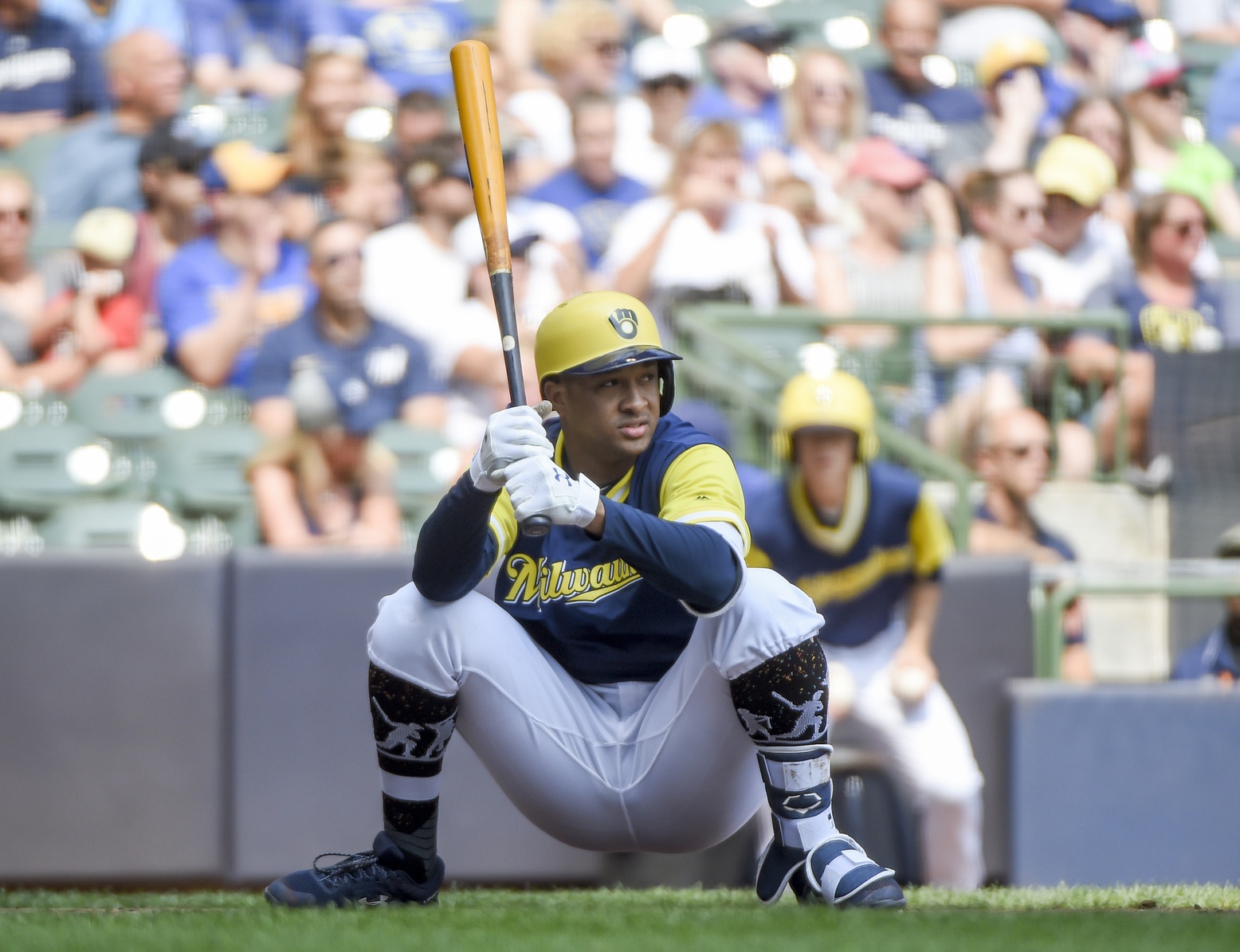 To their credit, the Twins have been proactive in addressing their needs this offseason. Already they have filled their two clearest positional vacancies. Granted, they've done so by gathering up castoffs non-tendered by other organizations, but C.J. Cron and Jonathan Schoop are hardly scraps. They're legitimate starters and intriguing flyers for a rebuilding team. It is that last part that stings. Every indication I've seen signals a conservative approach this offseason, as the front office continues to bide time and see how things shake out with its inherited volatile assets. "The Twins have indicated that next season will be about allowing their young core to continue to develop," La Velle E. Neal III wrote in forecasting a quiet week at the Winter Meetings. Derek Falvey himself echoed that sentiment during a Friday interview with 1500 ESPN. "I do believe that you build championship teams around an internal core," Falvey said. "In our particular situation I think we’re really attentive to how we impact that core with complementary pieces." "You have to be thoughtful, the more years out you go, how it impacts your club." This isn't a new narrative from Falvey's baseball ops group, and the strategy thus far has aligned. Schoop on a one-year deal allows the Twins to wait and see what happens next year with Nick Gordon, added to the 40-man roster last month. Gordon had an awful season in 2018 but he's 22, a former top-10 draft pick, and a fixture on national Top 100 prospect lists. Any kind of long-term answer at second base would have amounted to waving the white flag on this highly touted and talented youth. As far as stopgaps go, Schoop's a damn good one. He's 27 and one year removed from an All-Star campaign that earned him MVP votes. The Cron situation is similar. The Twins don't quite have a Gordon-level prospect coming up at first base but Brent Rooker looks like a player and could be ready by midseason. Minnesota also is accounting for the very real possibility that Miguel Sano will be relegated to first base in the near future. Cron gives them flexibility and offers a fairly high floor; he's almost certain to be a significant improvement over Joe Mauer v.2018. Plus, the Twins can control Cron in 2020, which will look great if he backs up his breakout campaign. So, like I said, I get the rationale for these moves. They're very defensible. But they're not bold or particularly ambitious. They don't point to an outright aspiration for serious contention in the division next year. At best, the Twins are hoping they catch fire with these low-wattage additions while things coalesce elsewhere. Even with solid returns on Cron and Schoop, and moderate improvements among the incumbent crowd, this position-player unit still doesn't look all that well designed. The offense is desperately lacking for on-base percentage. An infield alignment of Sano, Jorge Polanco, Schoop and Cron will likely be very poor defensively. Mitch Garver's status is basically a mystery at this point. The team is caught in flux, and that's not really anyone's fault so much as just the way things have played out. Most other positions on this roster are similar to first and second base – unestablished at present, but with too promising or undecided an outlook for drastic changes in direction. An offseason spent more or less standing pat makes sense for the Twins. But for fans – even those who fully understand and accept the thought process – it stinks nonetheless. Cron and Schoop are logical in the rebuilding framework because they're young and capable enough that either could turn into parts of the go-forward vision – or at least deadline trade chips to further supplement the pipeline. But they are probably not the kind of decisive difference-makers who help Minnesota take the next step, in the event that Buxton and Sano rebound. We all know they are at the heart of the matter – Buxton and Sano – and that neither of those outcomes can be fully counted upon, but it's almost as if the Twins are planning around it not happening, turning their gaze already to the next hot prospect wave led by Royce Lewis and Alex Kirilloff. Which brings me back to that Horace quote from the outset about the unrelenting passage of time. "As we speak cruel time is fleeing. Seize the day, believing as little as possible in the morrow." We can all hope Lewis, Kirilloff and the next group are up to the task of pulling this franchise from the dredges, but no one can be blamed for pessimism as we watch an endless rebuild carry on in perpetuity, with Buxton and Sano entering their theoretical primes. Falvey and Thad Levine have made some nice moves with the coaching staff and behind the scenes (where some would argue the real war is being waged), but those moves don't put fans in the seats, nor do savvy buy-low investments like Schoop and Cron. The Twins drew their lowest attendance this year since 2004 at the Metrodome, and while that's partially attributable to weather, it also speaks to growing fan apathy, which I fear will only worsen in 2019 if Minnesota stays on course to field a low-payroll, low-profile club. Fans have endured nearly a decade of mediocre or worse play at Target Field. Even if the current rhetoric and ensuing actions are perfectly reasonable and valid, the whole "building a sustainable long-term winner, eventually" model doesn't do much to energize or excite a base that could really use some energy and excitement. Right now, the real focus is on 2020. At various points in the past, it's been on 2018, 2017, 2016, etc. No one wants or expects a rebuild to take eight-plus years, but here we are. If you've been conditioned into believing as little as possible in the morrow, that's more than fair. Especially because of the unique window of winnability in the AL Central, which won't last forever. At the same time, if you put yourself in the shoes of the team's decision makers, with all they must account for, hopefully you can see why – from their view – it's not quite time to seize the day. But as we speak, cruel time is fleeing...
-
In a dispiriting 2018 season that was direly short on bright spots, Mitch Garver was unequivocally one of the best stories, progressively improving over the course of the summer and posting an .814 OPS in the second half. But a concussion suffered in September casts a cloud of uncertainty over the 27-year-old's future. For Twins fans, the familiarity of this feeling makes it all the more unsettling.To play professional sports is to put your body at risk. This is understood. But there are varying degrees of tolerable risk, and past a certain threshold, it becomes irresponsible to put a human being in harm's way. I'm not sure where that threshold lies with respect to Garver and his specific situation. I do know this: When Joe Mauer made the call to move away from catcher after a concussion ended his 2013 season, he talked about coming face-to-face with a sobering reality: "When I kept gathering information, to be honest with you, it wasn't really even a decision," said Mauer, who is signed through 2018 with $115 million remaining on his contract. "I kept searching to see if it was going to be OK, if it was going to be safe for me to go back there and catch, and I just wasn't finding that." He added: "All it could take is one foul tip in pitcher's batting practice, and I'm out for two or three months or even more." Unstated there is the impact on his personal life and his overall wellness. Even though he shifted away from catcher, Mauer experienced prolonged after-effects from his brain injury, which ultimately led him to retire well ahead of schedule. Garver was watching from the dugout when Mauer dove for a fly ball in May, flaring up those nasty concussion symptoms. Garver saw from up-close as Mauer then battled yet another round of life-altering impairments, which sidelined him for a month and were so severe initially he had to spend multiple days away from the stadium. Whatever stories and warnings Mauer heard about the dangers of successive concussions in 2013, Garver has seen first-hand since, torturing a player he deeply respects and admires. The gravity of this situation couldn't possibly be lost on him. Granted, Mauer had caught a lot more innings behind the plate, and had probably taken quite a few more foul tips off the mask. But this isn't about comparative volume. There's no magic number where the risk becomes untenable. Garver does have a troubling history. In his first game this season, he was hit in the side of the head by Manny Machado's bat, leaving Garver staggered and dazed. He wasn't diagnosed with a concussion in that case. "My brain does not hurt, but my skull does, however," Garver said afterward. He did acknowledge in September, though, that he suffered concussions at least twice in the minors, in 2014 and 2016. And although he stayed in to finish the inning after taking a foul tip off Luke Voigt's bat on September 12th (as did Mauer back in 2013 – he finished the game in fact), Garver hasn't donned the catcher's gear since. When you're still experiencing symptoms a week after taking a blow to the head... that's a scary thing. The Twins, for their part, seem to be preparing themselves for a scenario where Garver is unavailable behind the plate. Their reported early interest in Robinson Chirinos, who signed with the Astros on Tuesday for $5.75 million, is noteworthy. Chirinos isn't the kind of guy you bring in as a third catcher or as camp competition; he's an established big-leaguer who's averaged 300 plate appearances with the Rangers over the past five years, with a career OPS (.761) that bests Garver's rookie mark. If Garver were to move away from catcher, it becomes a question of how he figures into the team's plans. At catcher, his numbers were outstanding: Among MLB backstops with 300+ PA, he ranked 10th in OPS (.749), 10th in wOBA (.325), and seventh in hard-contact percentage (40.5%, per FanGraphs). At first base or DH, those numbers don't shine as much, and of course, the Twins already find that mix crowded with defensively limited righty hitters at the moment. Then again, you can make an argument Garver's bat is quite valuable to the Twins wherever they can fit him in. I wrote recently about this club's glaring dearth of OBP strength, which wasn't helped any by the signing of Jonathan Schoop on Thursday, nor the addition of Ronald Torreyes. Garver's .335 OBP this year ranked as the second-highest among players set to return, behind only Jorge Polanco (.345). And if you believe Garver turned a corner as he acclimated to the majors, you might even expect more; from June 1st onward he had a .349 OBP and 9% BB rate. It bears noting that in his preceding breakout season at Triple-A, Garver posted a .387 OBP and 13.4% BB rate over 372 plate appearances. With all that said, it's pretty hard to see him hanging around as strictly a 1B/DH. Does he have the offensive ability of a C.J. Cron or Tyler Austin? Doubtful. And those were readily available waiver types. In order to keep himself essential while not catching, Garver would need to become a versatile roster piece capable of helping in the outfield. In that capacity, his right-handed stick would actually be quite useful amidst a crowd of lefty swingers in the corners. And Garver did make 14 starts in left field at Rochester last year. However, Paul Molitor was never inclined to use him out there, and understandably so. Given his lack of speed or experience, it's hard to imagine Garver being much of an asset in the outfield. If you find yourself lacking for clarity after reading all this, that's kinda the point. Garver is one of the team's most intriguing young players, but also a total wild-card at this juncture. The tight-lipped Twins have been mum about his status. But if their interest in Chirinos was legit and serious, perhaps that says all we need to know. Click here to view the article
-
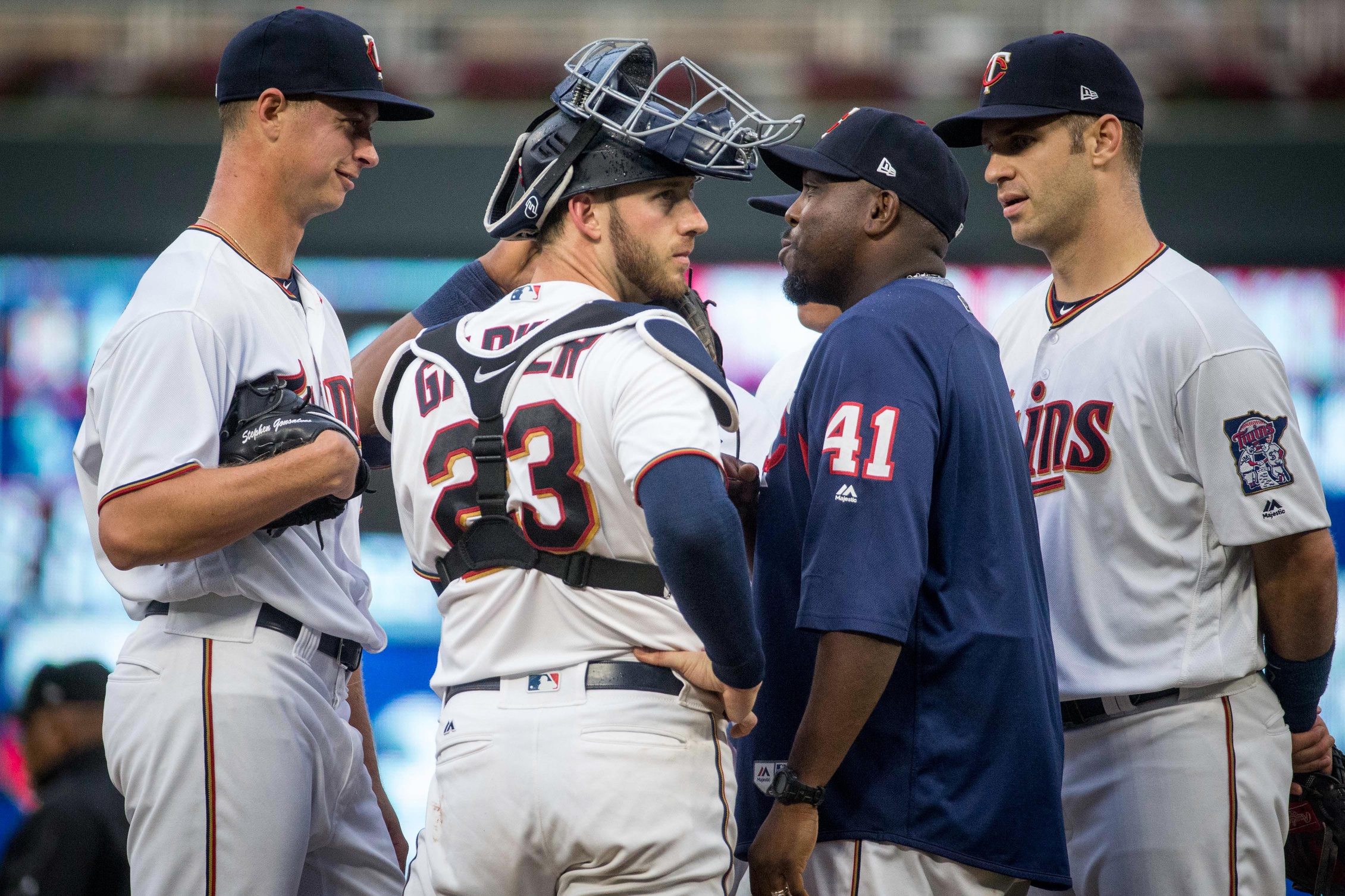 To play professional sports is to put your body at risk. This is understood. But there are varying degrees of tolerable risk, and past a certain threshold, it becomes irresponsible to put a human being in harm's way. I'm not sure where that threshold lies with respect to Garver and his specific situation. I do know this: When Joe Mauer made the call to move away from catcher after a concussion ended his 2013 season, he talked about coming face-to-face with a sobering reality: "When I kept gathering information, to be honest with you, it wasn't really even a decision," said Mauer, who is signed through 2018 with $115 million remaining on his contract. "I kept searching to see if it was going to be OK, if it was going to be safe for me to go back there and catch, and I just wasn't finding that." He added: "All it could take is one foul tip in pitcher's batting practice, and I'm out for two or three months or even more."Unstated there is the impact on his personal life and his overall wellness. Even though he shifted away from catcher, Mauer experienced prolonged after-effects from his brain injury, which ultimately led him to retire well ahead of schedule. Garver was watching from the dugout when Mauer dove for a fly ball in May, flaring up those nasty concussion symptoms. Garver saw from up-close as Mauer then battled yet another round of life-altering impairments, which sidelined him for a month and were so severe initially he had to spend multiple days away from the stadium. Whatever stories and warnings Mauer heard about the dangers of successive concussions in 2013, Garver has seen first-hand since, torturing a player he deeply respects and admires. The gravity of this situation couldn't possibly be lost on him. Granted, Mauer had caught a lot more innings behind the plate, and had probably taken quite a few more foul tips off the mask. But this isn't about comparative volume. There's no magic number where the risk becomes untenable. Garver does have a troubling history. In his first game this season, he was hit in the side of the head by Manny Machado's bat, leaving Garver staggered and dazed. He wasn't diagnosed with a concussion in that case. "My brain does not hurt, but my skull does, however," Garver said afterward. He did acknowledge in September, though, that he suffered concussions at least twice in the minors, in 2014 and 2016. And although he stayed in to finish the inning after taking a foul tip off Luke Voigt's bat on September 12th (as did Mauer back in 2013 – he finished the game in fact), Garver hasn't donned the catcher's gear since. When you're still experiencing symptoms a week after taking a blow to the head... that's a scary thing. The Twins, for their part, seem to be preparing themselves for a scenario where Garver is unavailable behind the plate. Their reported early interest in Robinson Chirinos, who signed with the Astros on Tuesday for $5.75 million, is noteworthy. Chirinos isn't the kind of guy you bring in as a third catcher or as camp competition; he's an established big-leaguer who's averaged 300 plate appearances with the Rangers over the past five years, with a career OPS (.761) that bests Garver's rookie mark. If Garver were to move away from catcher, it becomes a question of how he figures into the team's plans. At catcher, his numbers were outstanding: Among MLB backstops with 300+ PA, he ranked 10th in OPS (.749), 10th in wOBA (.325), and seventh in hard-contact percentage (40.5%, per FanGraphs). At first base or DH, those numbers don't shine as much, and of course, the Twins already find that mix crowded with defensively limited righty hitters at the moment. Then again, you can make an argument Garver's bat is quite valuable to the Twins wherever they can fit him in. I wrote recently about this club's glaring dearth of OBP strength, which wasn't helped any by the signing of Jonathan Schoop on Thursday, nor the addition of Ronald Torreyes. Garver's .335 OBP this year ranked as the second-highest among players set to return, behind only Jorge Polanco (.345). And if you believe Garver turned a corner as he acclimated to the majors, you might even expect more; from June 1st onward he had a .349 OBP and 9% BB rate. It bears noting that in his preceding breakout season at Triple-A, Garver posted a .387 OBP and 13.4% BB rate over 372 plate appearances. With all that said, it's pretty hard to see him hanging around as strictly a 1B/DH. Does he have the offensive ability of a C.J. Cron or Tyler Austin? Doubtful. And those were readily available waiver types. In order to keep himself essential while not catching, Garver would need to become a versatile roster piece capable of helping in the outfield. In that capacity, his right-handed stick would actually be quite useful amidst a crowd of lefty swingers in the corners. And Garver did make 14 starts in left field at Rochester last year. However, Paul Molitor was never inclined to use him out there, and understandably so. Given his lack of speed or experience, it's hard to imagine Garver being much of an asset in the outfield. If you find yourself lacking for clarity after reading all this, that's kinda the point. Garver is one of the team's most intriguing young players, but also a total wild-card at this juncture. The tight-lipped Twins have been mum about his status. But if their interest in Chirinos was legit and serious, perhaps that says all we need to know.


