


Nick Nelson
Administrator
-
Joined
-
Last visited
Everything posted by Nick Nelson
-
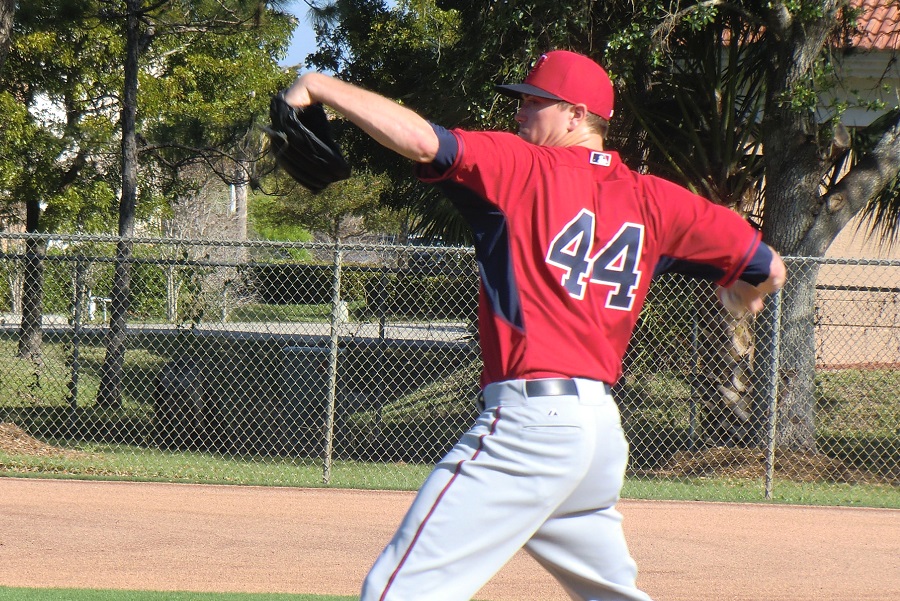 Making his third official start of the spring, Gibson delivered perhaps the best performance of any Twins pitcher thus far in Grapefruit League action, hurling four scoreless innings against an admittedly watered down traveling Cards lineup. Of the 12 outs Gibson recorded, 11 came on either grounders or strikeouts -- exactly what we want to see from the lanky sinkerballer. After the outing, he expressed satisfaction with a couple of key pitches in his arsenal. "The slider was about as good as it's been in any of my last three starts," Gibson said. "My change-up's been as I'd hope it would be against righties, so that's a pitch that's really showed up well for me." His manager echoed the positive sentiments. "His sinker was biting, off-speed good," Paul Molitor said. "He was good today." Gibson's target was 60 pitches and that was conveniently exactly where he finished after four frames. In his next start, the plan is to move up to about 75. * Gibson on notching four strikeouts after collecting only two total in his first two outings: "I'm not going to be mad if I get more swinging misses; then I don't have to answer the questions about why I don't get strikeouts. But it is what it is. As long as I'm executing down in the zone, the swings and misses will come. You can't get strikeouts unless you get to two strikes, and I think that was something I struggled with last year. The more 0-2 and 1-2 counts you see me in, the more I'm probably going to get strikeouts." * The infield alignment behind Gibson on Sunday is likely to be the one that we see regularly once the season starts, with Joe Mauer at first, Brian Dozier at second, Danny Santana at short and Trevor Plouffe at third. Gibson gave them plenty of work in this game and they converted every chance, including a tremendous effort by Santana to retire Peter Bourjos on the game's first play. The Cardinals lead-off hitter tapped a chopper between short and third, and Santana made an aggressive move to backhand it off a bounce, then quickly sent an off-balance one-hopper to Mauer at first to dispatch the speedy Bourjos. "That play on Bourjos to start the game was, I mean, I don't know that anybody has the arm to make that play in the league," Gibson said. "That was pretty impressive for Santana." Following that slick play, Gibson put a runner on base with a hit-by-pitch. He said Plouffe came over to him and instructed him to induce a 6-4-3 double play, adding "I'll take a 5-4-3 if you want to." Naturally, that's exactly what happened. Plouffe to Dozier to Mauer. Inning over. * Dozier has been locked in at the plate this spring. In his first at-bat on Sunday, he turned on a pitch and sent a scalding line drive toward left, though Cardinals third baseman Scott Moore jumped up and snagged it to rob a possible double. In his next at-bat, Dozier was able to hit the ball over the head of Moore, and everybody else -- a sky-high rocket that sailed beyond the left field wall for a two-run homer. In 14 at-bats this spring, Dozier has seven hits, including two home runs and a double. * Molitor knows he wants Dozier and Mauer to hit second and third in the lineup... he's just not sure in what order. "Dozier could fill that (No. 2 spot) well, mainly because he's a guy who despite hitting .240 last year his on-base percentage with 90 walks is good enough to do that role," the evidently stat-savvy rookie manager said, "but he's got the power to drive people in too." "I know Joe's been working this year on trying to pull more balls through the three-hole (between first and second) with a guy on first base, which is kind of suited to a No. 2 hitter possibly. We'll see how it looks." * Newly signed right-hander Tim Stauffer has really, really struggled through three Grapefruit League outings. He has allowed multiple runs each time out, totaling 12 (10 earned) on 16 hits in six innings of work while getting consistently barreled up by opposing lineups. There's reason to worry about Stauffer's outlook, mainly because he put up mediocre numbers while playing in an extremely pitcher-friendly park in the National League prior to signing here, but let's not overreact to three exhibition appearances. Molitor noted that, like Joe Nathan, Stauffer has a history of flashing decreased velocity in early March and building up toward the start of the season. With that said, it sounds as if any notion of Stauffer competing for a rotation spot is out the window. Molitor said that he and pitching coach Neil Allen would be meeting with the veteran hurler on Tuesday to reassess his role. He was never a realistic candidate to make the rotation anyway. * The Twins announced their first round of cuts on Sunday, and Seth posted an article with the full list. Terry Ryan spoke with us about some of the more prominent prospects to get sent out. On Byron Buxton: "He needs to go down and get some playing time. I think everybody's aware that, he got some time here and there, but we need to get him going. He needs regular playing time and four at-bats a day and center field everyday. But he is healthy and he is taking instruction well and he fared fine in the camp, but it's time for him to get some work in now." On Jose Berrios: "I don't think there's any question that he performed and he did everything that you'd ever want a young kid to do… Very professional, he's a good man. He took it well. He's a confident kid but he's not arrogant, he's not conceited. But he has a plan, and the plan that he came into camp with, he followed it. He made a good showing here, there's no question he's one of our better guys, we all know that." On Max Kepler: "He's made a lot of strides this year… mentally and physically. He's turned into a man. I thought he had one of the better camps of anybody in this camp to this point. Numbers aren't great but he got out there and put good at-bats together, he played well in right field, he played pretty good at first, and he showed that he's got some strength here to drive a baseball. He's kind of what we were envisioning when we signed him when he was about 16."
-
Good article. As the writer points out near the end, I think the expanding wave of more aggressive hitters (Arcia, Vargas, Santana, Sano, not to mention Hunter) will help balance out the more patient approaches from guys like Mauer and Dozier. I have high hopes for this offense.
-
-
When the Boston Red Sox signed Cuban infielder Yoan Moncada with a $31.5 million bonus last month, they were taking advantage of a flawed system that likely won't be in place much longer. Although it's on a much smaller scale, the Twins appear to be preparing to make a similarly savvy move with 16-year-old Dominican shortstop Wander Javier when the international signing period opens on July 2nd.Depending on which reports you choose to believe, the Twins either have very serious interest in Javier (La Velle says they are "definitely in on this one"), or they already have a tentative agreement in place (Kiley McDaniel of FanGraphs wrote that the shortstop is "widely believed to have a deal with the Twins"). If true, this signals that the Twins are not only on the verge of making their biggest financial splash ever on the international market, but also utilizing what may be one of their last opportunities to do so under the current favorable -- if somewhat ridiculous -- guidelines. Boston's signing of Moncada stirred up some controversy around a subject that has been touchy for some time, with Tampa Bay Rays pitcher Drew Smyly summarizing the basic conundrum in a tweet: "It's not right that a Cuban 19yr old gets paid 30m and the best 19yr old in the entire USA gets prob 1/6th of that. Everyone should have to go through same process." Unlike in the MLB amateur draft, there are no restrictions or limits on the bonuses that international players receive; it is an open bidding war among all 30 teams. Each club has a bonus pool that it is penalized for exceeding, but as the Red Sox showed, that tends to be a minor impediment. This isn't exactly fair for special young baseball talents who happen to be cultivated here in the States and must go through a far more regimented process. Last year, when the Twins selected 18-year-old shortstop Nick Gordon with the fifth overall pick, they signed him to a $3.85 million bonus, which was the slot-recommended amount. Meanwhile, reports suggest that the Twins are ready to hand Javier around $4 million. One could argue that Javier (who can be seen in the video below courtesy of FanGraphs) has more upside than Gordon did, but he's two years younger and considerably less seasoned. Clearly the Twins like this kid, and you certainly can't blame them for making aggressive moves to bring him aboard, especially since the same approach may not be possible after next year. Momentum is building toward the institution of an international draft. New commissioner Rob Manfred has expressed interest in taking this direction, and it might happen when the current collective bargaining agreement expires in 2016. If indeed the Twins make an historical investment to bring Javier aboard, they might be trying to get out in front of this coming development. And while it's extremely difficult to say how the teenaged infielder might develop -- he's got a great athletic build, with the defensive skills to stick at short, but his offensive ability is basically all projection at this point -- the last time the Twins took an international prospect plunge on this level was when they spent $3.15 million in 2009 to bring aboard Miguel Sano, who has transformed into a potentially franchise-altering talent. There's little doubt that Major League Baseball needs an international draft. But until then, the Twins are wise to take advantage of the open market and outbid all others to get the player they want. It appears that they are committed to doing just that. Click here to view the article
-
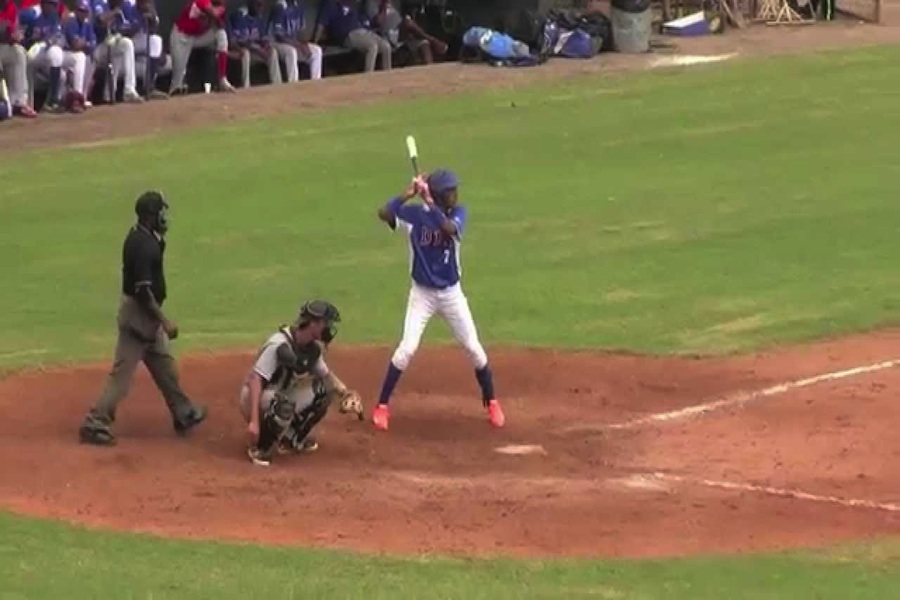 Depending on which reports you choose to believe, the Twins either have very serious interest in Javier (La Velle says they are "definitely in on this one"), or they already have a tentative agreement in place (Kiley McDaniel of FanGraphs wrote that the shortstop is "widely believed to have a deal with the Twins"). If true, this signals that the Twins are not only on the verge of making their biggest financial splash ever on the international market, but also utilizing what may be one of their last opportunities to do so under the current favorable -- if somewhat ridiculous -- guidelines. Boston's signing of Moncada stirred up some controversy around a subject that has been touchy for some time, with Tampa Bay Rays pitcher Drew Smyly summarizing the basic conundrum in a tweet: "It's not right that a Cuban 19yr old gets paid 30m and the best 19yr old in the entire USA gets prob 1/6th of that. Everyone should have to go through same process." Unlike in the MLB amateur draft, there are no restrictions or limits on the bonuses that international players receive; it is an open bidding war among all 30 teams. Each club has a bonus pool that it is penalized for exceeding, but as the Red Sox showed, that tends to be a minor impediment. This isn't exactly fair for special young baseball talents who happen to be cultivated here in the States and must go through a far more regimented process. Last year, when the Twins selected 18-year-old shortstop Nick Gordon with the fifth overall pick, they signed him to a $3.85 million bonus, which was the slot-recommended amount. Meanwhile, reports suggest that the Twins are ready to hand Javier around $4 million. One could argue that Javier (who can be seen in the video below courtesy of FanGraphs) has more upside than Gordon did, but he's two years younger and considerably less seasoned. https://www.youtube.com/watch?v=KQM2BzjyTNU Clearly the Twins like this kid, and you certainly can't blame them for making aggressive moves to bring him aboard, especially since the same approach may not be possible after next year. Momentum is building toward the institution of an international draft. New commissioner Rob Manfred has expressed interest in taking this direction, and it might happen when the current collective bargaining agreement expires in 2016. If indeed the Twins make an historical investment to bring Javier aboard, they might be trying to get out in front of this coming development. And while it's extremely difficult to say how the teenaged infielder might develop -- he's got a great athletic build, with the defensive skills to stick at short, but his offensive ability is basically all projection at this point -- the last time the Twins took an international prospect plunge on this level was when they spent $3.15 million in 2009 to bring aboard Miguel Sano, who has transformed into a potentially franchise-altering talent. There's little doubt that Major League Baseball needs an international draft. But until then, the Twins are wise to take advantage of the open market and outbid all others to get the player they want. It appears that they are committed to doing just that.
-
The Twins CAN contend. Just most likely won't. It isn't that hard to picture a scenario where the lineup is very strong and the rotation+bullpen are solid enough to keep them in the mix all the way to the end. It's key to remember that they have better reinforcements on deck right now than they have in any of the past four years. But yes, realistically, a .500 record would be a success.
-
Good comments. Just want to clarify 2 things: 1) I'm not saying Sano is "fat." He's just big. It's hard to move around and maintain mobility when you're that size, especially if he's not done growing. 2) Many of you may be OK with substandard defense from Sano at third, considering how much his value is boosted over all by staying there. I might be, personally. But are the Twins? This is a team that has emphasized the importance of fielding as much as any in the league. So that's really the pertinent question.
-
After taking a year off to recover from elbow surgery, Miguel Sano is back in Twins camp and opening some eyes with his prodigious power. Folks around the compound have marveled at his strength during batting practice sessions in which he has routinely driven baseballs well beyond the outfield walls. If Sano's bat isn't major-league ready, it is very, very close. Finding a place in the lineup for him will not be difficult. Finding a place in the field for him... well, that's another story.More than two years ago, I posed this question: Is Miguel Sano too big to stay at third? At the time, he was 19 years old and listed at 240 pounds -- already as big as any third baseman in the majors. Taking all factors into account, I concluded that "the odds seem heavily stacked against him remaining at his current position, especially with an organization that values steady defense more than most." Now, he's shown up to camp at a whopping 260 pounds, . According to 1500 ESPN's Derek Wetmore, the gain occurred "because for parts of his recovery period from last year's Tommy John surgery ... [sano] wasn't able to run or do workouts like he ordinarily would." There's also the fact that the young slugger seems to have little interest in keeping his weight down. In his own words: "I eat everything ... I don't like the nutrition. [i eat] whatever I want. If there's something here I'm eating." At age 21, Sano is already bigger than basically any third baseman in baseball. Pablo Sandoval is in the conversation; he's listed at 245 but is also five inches shorter than Sano. Nevertheless, it's rare for a guy that size to stick at the hot corner, and that's before you account for the questions that already surrounded Sano's footwork, accuracy and consistency -- not to mention the challenges he faces in learning to throw with a surgically repaired elbow. For their part, the Twins are publicly trying to maintain optimism that Sano can stay at third, as best they can. But the skepticism shows through when you read quotes like this one from Paul Molitor: "I was working today on the bunt defenses; he's trying," Molitor said. "There are things that are going to be a challenge for him. We've got to keep an eye on him. He's a big boy. He carries it pretty well, but you've got to have some athleticism. He's got to keep that ... if he wants to play a corner-infield position in the big leagues, especially third base." The Twins had their frustrations with Trevor Plouffe's defense, at least up until last year, and there's a good chance that the hulking Dominican will make Plouffe's range and reactions -- even in those early days at third base -- look stellar by comparison. Even if he does carry his weight well, it's difficult to imagine Sano offering much in the way of lateral movement or spryness when it comes to, say, charging and fielding a bunt. If (when?) the Twins decide that third base just isn't going to work out, there's been some talk of moving him to an outfield corner, but that seems like a less than ideal alternative. His lack of mobility would be an issue, particularly with Oswaldo Arcia patrolling the other side, and he also has zero professional experience playing anywhere other than the infield. The more likely destination would be first base or designated hitter. This is unfortunate because it would mean putting his powerful arm -- rated by some scouts as an 80 on a 20-80 scale -- to waste, and even more so because it's going to be very tricky to find room for him at either of those spots. Joe Mauer obviously is entrenched at first base, and while many fans have pondered the notion of moving him to an outfield spot, the Twins have never openly considered such a switch. More than likely, he's going to remain at first until his contract expires in 2018. So we're left with DH, where Kennys Vargas is currently penciled in. Vargas is young and unproven enough that there could be an opening here, but obviously everyone is hoping he can stick and the idea of him and Sano in the same lineup is beyond tantalizing. Unfortunately, it's growing more and more difficult to see how that's going to feasibly work. What do you think? Where can Sano fit in if the Twins want to get his bat up as quickly as possible? Click here to view the article
-
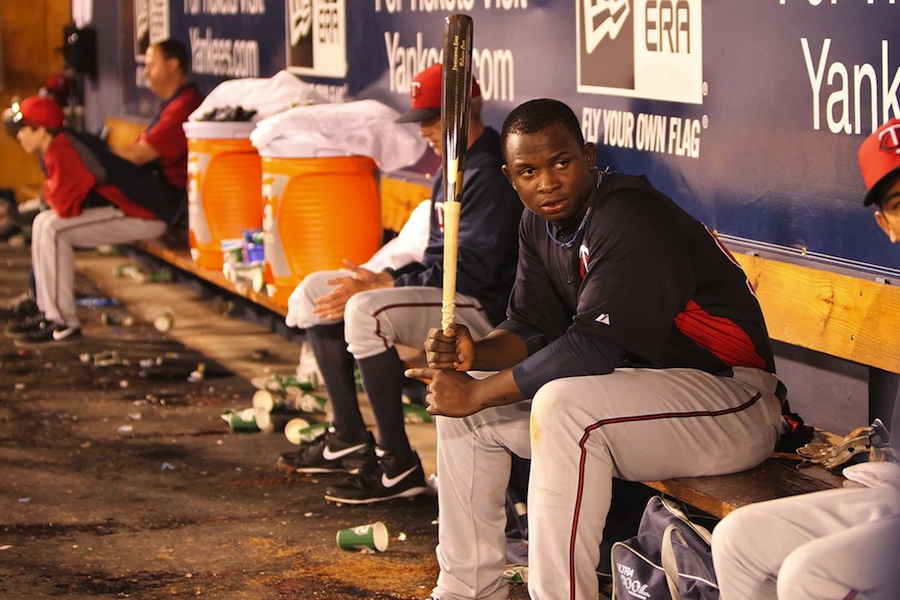 More than two years ago, I posed this question: Is Miguel Sano too big to stay at third? At the time, he was 19 years old and listed at 240 pounds -- already as big as any third baseman in the majors. Taking all factors into account, I concluded that "the odds seem heavily stacked against him remaining at his current position, especially with an organization that values steady defense more than most." Now, he's shown up to camp at a whopping 260 pounds, . According to 1500 ESPN's Derek Wetmore, the gain occurred "because for parts of his recovery period from last year's Tommy John surgery ... [sano] wasn't able to run or do workouts like he ordinarily would."There's also the fact that the young slugger seems to have little interest in keeping his weight down. In his own words: "I eat everything ... I don't like the nutrition. [i eat] whatever I want. If there's something here I'm eating." At age 21, Sano is already bigger than basically any third baseman in baseball. Pablo Sandoval is in the conversation; he's listed at 245 but is also five inches shorter than Sano. Nevertheless, it's rare for a guy that size to stick at the hot corner, and that's before you account for the questions that already surrounded Sano's footwork, accuracy and consistency -- not to mention the challenges he faces in learning to throw with a surgically repaired elbow. For their part, the Twins are publicly trying to maintain optimism that Sano can stay at third, as best they can. But the skepticism shows through when you read quotes like this one from Paul Molitor: "I was working today on the bunt defenses; he's trying," Molitor said. "There are things that are going to be a challenge for him. We've got to keep an eye on him. He's a big boy. He carries it pretty well, but you've got to have some athleticism. He's got to keep that ... if he wants to play a corner-infield position in the big leagues, especially third base." The Twins had their frustrations with Trevor Plouffe's defense, at least up until last year, and there's a good chance that the hulking Dominican will make Plouffe's range and reactions -- even in those early days at third base -- look stellar by comparison. Even if he does carry his weight well, it's difficult to imagine Sano offering much in the way of lateral movement or spryness when it comes to, say, charging and fielding a bunt. If (when?) the Twins decide that third base just isn't going to work out, there's been some talk of moving him to an outfield corner, but that seems like a less than ideal alternative. His lack of mobility would be an issue, particularly with Oswaldo Arcia patrolling the other side, and he also has zero professional experience playing anywhere other than the infield. The more likely destination would be first base or designated hitter. This is unfortunate because it would mean putting his powerful arm -- rated by some scouts as an 80 on a 20-80 scale -- to waste, and even more so because it's going to be very tricky to find room for him at either of those spots. Joe Mauer obviously is entrenched at first base, and while many fans have pondered the notion of moving him to an outfield spot, the Twins have never openly considered such a switch. More than likely, he's going to remain at first until his contract expires in 2018. So we're left with DH, where Kennys Vargas is currently penciled in. Vargas is young and unproven enough that there could be an opening here, but obviously everyone is hoping he can stick and the idea of him and Sano in the same lineup is beyond tantalizing. Unfortunately, it's growing more and more difficult to see how that's going to feasibly work. What do you think? Where can Sano fit in if the Twins want to get his bat up as quickly as possible?
-
Hey folks. We're going to run another mailbag column this week as we gear up to dive into full-on spring training coverage. What questions/topics are on your mind as camp gets underway?
-
Although the Twins scored more runs than all but four American League teams in 2014, they ranked 11th in home runs. That was par for the course. Over the past decade, the highest the Twins have ranked among AL teams in homers is ninth, and they've often been at the very bottom of the pack. There is reason to believe, however, that this year's Twins lineup will produce more long balls than any we've seen in quite some time.Let's take a look at the projected starters for each position. Catcher: Kurt Suzuki - 3 HR in 131 G in 2014 Not really a power threat. In his younger years Suzuki could be counted on for double-digit homer totals, but all signs indicate that those days are long gone. Fortunately, he's playing a position where offensive expectations are low, and he'll likely be splitting time with a guy in Josmil Pinto who offers much more deep ball potential. First Base: Joe Mauer - 4 HR in 120 G in 2014 He's never been a huge homer threat, but last year was strange even by Mauer's standards. Now that he's been able to go through a normal offseason, I think a healthy Mauer easily flies past his 2014 total, but he has only topped 13 homers once in his career, and last year 10 first basemen surpassed that number in the AL alone. This will pretty clearly be an area of relative weakness, but the rest of the lineup can make up for it. Second Base: Brian Dozier - 23 HR in 156 G in 2014 Is Dozier the homer-hitting machine that went deep 18 times in the first half, or the guy that hit only five home runs after the break? Probably somewhere in between, although his total of 18 in 2013 backs up the notion that he can be a consistent 20-HR threat. No AL second baseman other than Dozier hit 20 home runs last year. Third Base: Trevor Plouffe - 14 HR in 136 G in 2014 Plouffe emerged as one of the better young power-hitting infielders in the game in 2012, when he launched 24 balls into the seats in just 119 games, but in two seasons since he has hit only 14 homers apiece. Last year that total came along with 40 doubles, and if a few more of those clear the wall this year, he can rank in the upper echelon at the hot corner. Shortstop: Danny Santana - 7 HR in 101 G in 2014 His seven homers as a rookie last year came as somewhat of a surprise, considering he'd connected for only 25 in 548 games as a minor-leaguer, but he's always had a good line drive swing and as he matures into his mid-20s he seems to be adding more strength. Seven looks like a good baseline estimate for his first full season, and that'd be just fine; only five AL shortstops had a higher total last year. Left Field: Oswaldo Arcia - 20 HR in 103 G in 2014 Here's a guy I'm really excited about. Arcia got off to a bit of a slow start last year but was locked in after the All-Star break, cranking 15 homers in 57 games. He's entering his second full season in the majors, and if he can make some advancements with his plate approach while staying healthy, there's no reason he couldn't hit 35 or 40 bombs. Center Field: Aaron Hicks - 1 HR in 69 G in 2014 This one's tough to call, since we don't really know who's going to be the starter and we certainly don't know what to expect from Hicks if he lands the gig as expected. Hicks went deep only once last year, but hit eight homers in 81 games as a rookie in 2013. He certainly has the ability to reach double-digits but for now expectations are understandably scaled back. Right Field: Torii Hunter - 17 HR in 142 G in 2014 Hunter has been a model of consistency in numerous facets, and power is one of them. He has hit 14-plus homers every year since 2001, and was still producing plenty of pop last year at age 39, notching 17 dingers to rank fifth among AL right fielders. It would be no shock if he fell short of that total this year considering his age, but I'd expect Hunter to provide average output at worst. Designated Hitter: Kennys Vargas - 9 HR in 53 G in 2014 Another wild card. In terms of pure power, Vargas has much as anyone in the organization, and he showed it by putting some balls into orbit at Target Field last summer. In the minors, he hit 59 homers in 381 games. If he can make enough contact to stay in the lineup, he seems like a lock to reach at least the mid-teens, with the potential to approach 30. At a glance, the Twins look like a good bet to have at least average power at most positions, and there are other factors that could push them along even further. Will Pinto become the primary catcher at some point? Will Miguel Sano join the club? Can Hicks get it together and hit 10-plus homers as a regular? All things considered, I think this looks like a lineup that will place more balls in the seats than any in recent years, so snag those Home Run Porch tickets if you're a collector. Click here to view the article
-
 Let's take a look at the projected starters for each position. Catcher: Kurt Suzuki - 3 HR in 131 G in 2014 Not really a power threat. In his younger years Suzuki could be counted on for double-digit homer totals, but all signs indicate that those days are long gone. Fortunately, he's playing a position where offensive expectations are low, and he'll likely be splitting time with a guy in Josmil Pinto who offers much more deep ball potential. First Base: Joe Mauer - 4 HR in 120 G in 2014 He's never been a huge homer threat, but last year was strange even by Mauer's standards. Now that he's been able to go through a normal offseason, I think a healthy Mauer easily flies past his 2014 total, but he has only topped 13 homers once in his career, and last year 10 first basemen surpassed that number in the AL alone. This will pretty clearly be an area of relative weakness, but the rest of the lineup can make up for it. Second Base: Brian Dozier - 23 HR in 156 G in 2014 Is Dozier the homer-hitting machine that went deep 18 times in the first half, or the guy that hit only five home runs after the break? Probably somewhere in between, although his total of 18 in 2013 backs up the notion that he can be a consistent 20-HR threat. No AL second baseman other than Dozier hit 20 home runs last year. Third Base: Trevor Plouffe - 14 HR in 136 G in 2014 Plouffe emerged as one of the better young power-hitting infielders in the game in 2012, when he launched 24 balls into the seats in just 119 games, but in two seasons since he has hit only 14 homers apiece. Last year that total came along with 40 doubles, and if a few more of those clear the wall this year, he can rank in the upper echelon at the hot corner. Shortstop: Danny Santana - 7 HR in 101 G in 2014 His seven homers as a rookie last year came as somewhat of a surprise, considering he'd connected for only 25 in 548 games as a minor-leaguer, but he's always had a good line drive swing and as he matures into his mid-20s he seems to be adding more strength. Seven looks like a good baseline estimate for his first full season, and that'd be just fine; only five AL shortstops had a higher total last year. Left Field: Oswaldo Arcia - 20 HR in 103 G in 2014 Here's a guy I'm really excited about. Arcia got off to a bit of a slow start last year but was locked in after the All-Star break, cranking 15 homers in 57 games. He's entering his second full season in the majors, and if he can make some advancements with his plate approach while staying healthy, there's no reason he couldn't hit 35 or 40 bombs. Center Field: Aaron Hicks - 1 HR in 69 G in 2014 This one's tough to call, since we don't really know who's going to be the starter and we certainly don't know what to expect from Hicks if he lands the gig as expected. Hicks went deep only once last year, but hit eight homers in 81 games as a rookie in 2013. He certainly has the ability to reach double-digits but for now expectations are understandably scaled back. Right Field: Torii Hunter - 17 HR in 142 G in 2014 Hunter has been a model of consistency in numerous facets, and power is one of them. He has hit 14-plus homers every year since 2001, and was still producing plenty of pop last year at age 39, notching 17 dingers to rank fifth among AL right fielders. It would be no shock if he fell short of that total this year considering his age, but I'd expect Hunter to provide average output at worst. Designated Hitter: Kennys Vargas - 9 HR in 53 G in 2014 Another wild card. In terms of pure power, Vargas has much as anyone in the organization, and he showed it by putting some balls into orbit at Target Field last summer. In the minors, he hit 59 homers in 381 games. If he can make enough contact to stay in the lineup, he seems like a lock to reach at least the mid-teens, with the potential to approach 30. At a glance, the Twins look like a good bet to have at least average power at most positions, and there are other factors that could push them along even further. Will Pinto become the primary catcher at some point? Will Miguel Sano join the club? Can Hicks get it together and hit 10-plus homers as a regular? All things considered, I think this looks like a lineup that will place more balls in the seats than any in recent years, so snag those Home Run Porch tickets if you're a collector.
-
After a lengthy absence, Kevin Garnett made his triumphant return to Target Center on Wednesday night, helping lead the Timberwolves to a blowout victory in front of a packed house. After the game, coach Flip Saunders said that it was the most energetic and enthusiastic he could remember the arena being in a regular-season game -- a stark contrast to the typically bleak environment at Wolves games this year. Watching it all play out, I suddenly find myself understanding the Twins' decision to sign Torii Hunter a little more.The parallels between the current situations of the Wolves and Twins are quite distinct. Here you have two retooling teams that are fueled by hugely promising waves of youth, but have been unable to hold the attention and interest of casual fans due to brutally bad on-field performance. You can point to the bright future all you want, but that's a tough sell when your team has one of the worst records in the league. And while many want to point to personnel miscues in both of these stalled rebuilds, the truth is that uncontrollable injury issues have been largely to blame. The Wolves are not as bad a team as their 13-43 record suggests, but losing Ricky Rubio, Nikola Pekovic and other key players for sizable chunks of the season left them depleted, relying on overmatched backups and teenagers. As a result, the Wolves have suffered through loss after loss, watching fan interest drain in the process. That's a shame, because it has caused the incredibly encouraging performances from some young players -- most notably Andrew Wiggins -- to get overlooked. Somewhat quietly, Wiggins is enjoying one of the best seasons for a player his age in NBA history, but fans here in Minnesota have been so uninvested in the team that many haven't fully taken notice. The arrival of Garnett certainly provides a jolt on the court; though, at this stage of his career, probably not one as substantial as the giddy TV crew on Wednesday night would have you believe. More importantly, he's bringing back the fans. Nostalgia and familiarity for KG prompted Wolves faithful to fill up Target Center for his first game back and will almost certainly lead to increased attendance the rest of the year. While it's all well and good that those fans will get to watch KG do his thing for 20 minutes a night, the more important thing is that they'll get to watch players like Rubio, Wiggins, Zach LaVine and Shabazz Muhammad. KG isn't the future -- those guys are. The same dynamic is in play for the Twins with the Hunter signing. While the organization is moving in the right direction, casual fans can't be blamed for their reluctance to buy in after a fourth straight 90-loss season. While the club hardly expected to contend last year, they did expect to offer more glimpses of the promising future. Unfortunately, having the seasons of their two best prospects completely derailed by injury threw a big wrench into what should have been a youth showcase summer. The Twins still had young players like Danny Santana and Kennys Vargas break through, but those performances garnered reduced fanfare with the club posting its lowest attendance total since 2005. A beloved and familiar face like Hunter, who people associate with the success of the mid-2000s, will help draw back some of the less hardcore fans that might not presently have kids like Byron Buxton and Miguel Sano on their radar. I continue to believe that Hunter is a rather poor fit from a baseball perspective, but I'm coming around on the potential overall benefits of the move. It's more challenging for me to analyze anything from a business angle than strictly wins-and-losses, but the value of getting more fans in the seats -- and exposing those fans to what should hopefully be an exciting and productive group of young players -- is obvious. With both the Hunter and Garnett additions, there was some initial backlash that perhaps too much was given up to acquire players who won't be around long and won't drastically improve the quality of their respective teams. But in the big picture, the Wolves gave up a guy in Thaddeus Young who wasn't going to be part of the long-term equation, and while the Twins paid heftily for Hunter, they gave up nothing but money and it's a one-year deal. My initial reaction was that Hunter's "intangible" qualities were not enough to justify spending that much while surpassing other options who would have fit better as players, and I still believe his impact as a leader and mentor is being overblown to some extent, but seeing the response to Garnett's return does open my eyes a bit. If a casual fan shuffled into Target Center on Wednesday because of the Garnett buzz and then watched Rubio deliver a gorgeous bounce pass to Wiggins, who as part of an impressive 19-point performance, the trade is paying dividends well beyond what KG is doing on the court. Hopefully the same can be true of a Twins fan who might be enticed to come to the ballpark to relive some Hunter nostalgia, only to be treated to a triple by Buxton, a prodigious home run by Oswaldo Arcia or a 10-strikeout game from Alex Meyer or Trevor May. Bringing back past franchise fixtures -- who at least have a chance to contribute positively -- to help get fans invested in the young players that really matter. That's not so hard to figure. Click here to view the article
-
 The parallels between the current situations of the Wolves and Twins are quite distinct. Here you have two retooling teams that are fueled by hugely promising waves of youth, but have been unable to hold the attention and interest of casual fans due to brutally bad on-field performance. You can point to the bright future all you want, but that's a tough sell when your team has one of the worst records in the league. And while many want to point to personnel miscues in both of these stalled rebuilds, the truth is that uncontrollable injury issues have been largely to blame. The Wolves are not as bad a team as their 13-43 record suggests, but losing Ricky Rubio, Nikola Pekovic and other key players for sizable chunks of the season left them depleted, relying on overmatched backups and teenagers. As a result, the Wolves have suffered through loss after loss, watching fan interest drain in the process. That's a shame, because it has caused the incredibly encouraging performances from some young players -- most notably Andrew Wiggins -- to get overlooked. Somewhat quietly, Wiggins is enjoying one of the best seasons for a player his age in NBA history, but fans here in Minnesota have been so uninvested in the team that many haven't fully taken notice. The arrival of Garnett certainly provides a jolt on the court; though, at this stage of his career, probably not one as substantial as the giddy TV crew on Wednesday night would have you believe. More importantly, he's bringing back the fans. Nostalgia and familiarity for KG prompted Wolves faithful to fill up Target Center for his first game back and will almost certainly lead to increased attendance the rest of the year. While it's all well and good that those fans will get to watch KG do his thing for 20 minutes a night, the more important thing is that they'll get to watch players like Rubio, Wiggins, Zach LaVine and Shabazz Muhammad. KG isn't the future -- those guys are. The same dynamic is in play for the Twins with the Hunter signing. While the organization is moving in the right direction, casual fans can't be blamed for their reluctance to buy in after a fourth straight 90-loss season. While the club hardly expected to contend last year, they did expect to offer more glimpses of the promising future. Unfortunately, having the seasons of their two best prospects completely derailed by injury threw a big wrench into what should have been a youth showcase summer. The Twins still had young players like Danny Santana and Kennys Vargas break through, but those performances garnered reduced fanfare with the club posting its lowest attendance total since 2005. A beloved and familiar face like Hunter, who people associate with the success of the mid-2000s, will help draw back some of the less hardcore fans that might not presently have kids like Byron Buxton and Miguel Sano on their radar. I continue to believe that Hunter is a rather poor fit from a baseball perspective, but I'm coming around on the potential overall benefits of the move. It's more challenging for me to analyze anything from a business angle than strictly wins-and-losses, but the value of getting more fans in the seats -- and exposing those fans to what should hopefully be an exciting and productive group of young players -- is obvious. With both the Hunter and Garnett additions, there was some initial backlash that perhaps too much was given up to acquire players who won't be around long and won't drastically improve the quality of their respective teams. But in the big picture, the Wolves gave up a guy in Thaddeus Young who wasn't going to be part of the long-term equation, and while the Twins paid heftily for Hunter, they gave up nothing but money and it's a one-year deal. My initial reaction was that Hunter's "intangible" qualities were not enough to justify spending that much while surpassing other options who would have fit better as players, and I still believe his impact as a leader and mentor is being overblown to some extent, but seeing the response to Garnett's return does open my eyes a bit. If a casual fan shuffled into Target Center on Wednesday because of the Garnett buzz and then watched Rubio deliver a gorgeous bounce pass to Wiggins, who as part of an impressive 19-point performance, the trade is paying dividends well beyond what KG is doing on the court.Hopefully the same can be true of a Twins fan who might be enticed to come to the ballpark to relive some Hunter nostalgia, only to be treated to a triple by Buxton, a prodigious home run by Oswaldo Arcia or a 10-strikeout game from Alex Meyer or Trevor May. Bringing back past franchise fixtures -- who at least have a chance to contribute positively -- to help get fans invested in the young players that really matter. That's not so hard to figure.
-
Jim Souhan of the Star Tribune posted a blog this afternoon rattling off some of his early thoughts from camp in Ft. Myers. You can read them all at the link below. Among the topics he touches on are Torii Hunter's already apparent leadership, Ervin Santana's outgoing personality, Mike Pelfrey's impressive bullpen sessions and the enthusiasm/drive being shown by Latin players, who have all arrived on time with no visa issues. http://www.startribune.com/sports/twins/blogs/294078611.html
-
Minnesota Twins camp came to life over the weekend with the familiar sound of baseballs smacking mitts, as pitchers and catchers reported to camp and official bullpen sessions started getting underway. One hurler who is drawing early attention is J.R. Graham, whom the Twins acquired from the Atlanta Braves in December's Rule 5 Draft. Graham is worth tracking not only because of the upper-90s heat he's capable of bringing on the mound, but also because of the interesting decision the Twins face as they determine whether they can make room for him in a somewhat crowded bullpen and avoid sending him back to Atlanta.The Twins have a number of hard-throwing relievers in the pipeline, such as Nick Burdi, Jake Reed and Michael Cederoth, but the team can afford to patiently bring these young arms along. That's not necessarily true of Graham, who they must keep on the 25-man roster all year long or else ship back to the Braves. The Twins could work around this stipulation by hammering out a trade to keep him in the organization, as they did with Scott Diamond a few years ago, but one way or another Graham must make an impression over the next several weeks in order to force the club's hand. He'll have plenty of competition. For all intents and purposes, the Twins have committed to five relievers in the bullpen -- Glen Perkins, Casey Fien, Tim Stauffer, Brian Duensing and Caleb Thielbar -- so locking down one of those final slots will be no easy task. Graham is a rather unique specimen. While Minnesota's system is now stocked with pitchers who can touch the upper-90s, those guys all check in at well over six feet. Then you have Graham, who stands at about 5'11" but was hitting triple digits as a junior in college. It's rare to find a pitcher who can generate that kind of velocity from such a small frame, and perhaps that helps explain Graham's durability issues. Since being drafted, he has dealt with somewhat chronic shoulder pain, which substantially reduced his velocity, contributed to his shoddy results at Double-A in 2014 (5.58 ERA, 1.48 WHIP) and prompted the Braves to leave him unprotected and available to the Twins. It could be that his struggles to stay on healthy have been partially due to the Braves' decision to transition him from college reliever to pro starter. He reverted to relief duty late last season (though with little initial success) and the Twins intend to keep him on that path. If Graham can manage to shake off the injury woes, he offers no shortage of ability. Prior to the 2014 season, he had been ranked by Baseball America as the third-best Braves prospect, and was pegged as having the best control of any pitcher in the organization. Graham's brutal season last year as a 24-year-old in Double-A certainly lowered his stock considerably, and the most troubling part is that he saw no performance boost after moving to the bullpen in the final two months, allowing a .378 batting average with seven strikeouts and five walks in eight appearances. This differentiates him from Ryan Pressly, who had similarly switched from starting to relieving shortly before the Twins snagged him in the Rule 5 draft but had experienced far better results with that transition. Of course, with Graham, it all comes back to health, so the condition of his shoulder will be closely monitored in Ft. Myers. If he can keep his arm in shape and regain his velocity by pitching in one-inning stints -- as the Twins are hoping -- he offers more upside than Pressly ever did, and could end up being a major success story for Terry Ryan and Co. If nothing else, he'll go down as another example of the Twins getting creative in their efforts to add some power to the pitching staff. Click here to view the article
-
 The Twins have a number of hard-throwing relievers in the pipeline, such as Nick Burdi, Jake Reed and Michael Cederoth, but the team can afford to patiently bring these young arms along. That's not necessarily true of Graham, who they must keep on the 25-man roster all year long or else ship back to the Braves. The Twins could work around this stipulation by hammering out a trade to keep him in the organization, as they did with Scott Diamond a few years ago, but one way or another Graham must make an impression over the next several weeks in order to force the club's hand. He'll have plenty of competition. For all intents and purposes, the Twins have committed to five relievers in the bullpen -- Glen Perkins, Casey Fien, Tim Stauffer, Brian Duensing and Caleb Thielbar -- so locking down one of those final slots will be no easy task. Graham is a rather unique specimen. While Minnesota's system is now stocked with pitchers who can touch the upper-90s, those guys all check in at well over six feet. Then you have Graham, who stands at about 5'11" but was hitting triple digits as a junior in college. It's rare to find a pitcher who can generate that kind of velocity from such a small frame, and perhaps that helps explain Graham's durability issues. Since being drafted, he has dealt with somewhat chronic shoulder pain, which substantially reduced his velocity, contributed to his shoddy results at Double-A in 2014 (5.58 ERA, 1.48 WHIP) and prompted the Braves to leave him unprotected and available to the Twins. It could be that his struggles to stay on healthy have been partially due to the Braves' decision to transition him from college reliever to pro starter. He reverted to relief duty late last season (though with little initial success) and the Twins intend to keep him on that path. If Graham can manage to shake off the injury woes, he offers no shortage of ability. Prior to the 2014 season, he had been ranked by Baseball America as the third-best Braves prospect, and was pegged as having the best control of any pitcher in the organization. Graham's brutal season last year as a 24-year-old in Double-A certainly lowered his stock considerably, and the most troubling part is that he saw no performance boost after moving to the bullpen in the final two months, allowing a .378 batting average with seven strikeouts and five walks in eight appearances. This differentiates him from Ryan Pressly, who had similarly switched from starting to relieving shortly before the Twins snagged him in the Rule 5 draft but had experienced far better results with that transition. Of course, with Graham, it all comes back to health, so the condition of his shoulder will be closely monitored in Ft. Myers. If he can keep his arm in shape and regain his velocity by pitching in one-inning stints -- as the Twins are hoping -- he offers more upside than Pressly ever did, and could end up being a major success story for Terry Ryan and Co. If nothing else, he'll go down as another example of the Twins getting creative in their efforts to add some power to the pitching staff.
-
Studies in recent years have shown that lineup construction has less of a practical impact on overall scoring than many had previously believed. Still, it's hard to downplay the significance of the choice for that first spot in the batting order. Though he only leads off once per game, the No.1 hitter sets the tone for the offense, bats in front of the team's best run producers, and stands to receive more plate appearances than any other player. Who will step into the batter's box to start the season in Detroit on April 6th? As I see it, there are three primary candidates. Paul Molitor's choice among this trio might provide us with some deeper insights on his priorities and philosophies.Candidate 1: Danny Santana Santana jumped from the bottom of the lineup to the top one month after being called up last year, and never looked back. He consistently led off for the Twins over the final four months and did a terrific job, batting over .300 with tons of steals and surprising power. When he's performing like he did in his rookie season, he's almost an ideal leadoff man. However, most are not expecting him to replicate that performance. Santana's .319 batting average was propped up by a .405 BABIP, and when his average returns to a more standard level (he's a .275 career hitter in the minors) his lack of patience will leave him with a mediocre on-base percentage. He still offers some intriguing perks as a leadoff choice -- most notably his outstanding speed on the base paths -- but I believe Santana will create too many outs to be a good option at the top of the lineup. Candidate 2: Brian Dozier He was the team's leadoff man on Opening Day last year, and held that post for much of the first half before sliding down to the No. 2 spot after Santana's emergence. Dozier has some qualities that make him a very good fit at the top. He's a good base runner: last season he stole 21 bases and was thrown out only seven times. Between the steals and the extra-base power, he frequently puts himself in scoring position. And his propensity for taking walks -- he ranked third in the AL with 89 -- enables him to maintain a strong OBP without depending on his batting average to drive it. (Last year his average was 75 points lower than Santana's and his OBP was eight points lower.) Dozier was hitting home runs at a crazy pace in the first half last year, and the decision to move him down in the lineup was born partially out of a desire to give him the chance to knock in more runners with the long ball, but I would expect fewer home runs and a higher average from him this year. Candidate 3: Joe Mauer This is an idea that fans have long thrown around, but Ron Gardenhire never gave it a try. In his 1,298 career games, Mauer has never been written into the lineup as leadoff hitter. That's not surprising; he is an unconventional choice and Gardy was very much a conventional mind. But now there's a new manager in charge -- one with a reputation for seeing things in a different way. Mauer lacks the pure speed that you'll find in most No. 1 hitters, but he's a good bet to lead the team -- if not the league -- in on-base percentage. He'll always give the rest of the lineup a good long look at the opposing pitcher with lengthy at-bats. And assuming he rebounds from last year's struggles, he's likely to be one of the best hitters on the team and a guy whose plate appearances you want to maximize. What do you think? Do you prefer one of these three as leadoff hitter, or is there another sleeper candidate you'd like to see in the spot? Click here to view the article
-
 Candidate 1: Danny Santana Santana jumped from the bottom of the lineup to the top one month after being called up last year, and never looked back. He consistently led off for the Twins over the final four months and did a terrific job, batting over .300 with tons of steals and surprising power. When he's performing like he did in his rookie season, he's almost an ideal leadoff man. However, most are not expecting him to replicate that performance. Santana's .319 batting average was propped up by a .405 BABIP, and when his average returns to a more standard level (he's a .275 career hitter in the minors) his lack of patience will leave him with a mediocre on-base percentage. He still offers some intriguing perks as a leadoff choice -- most notably his outstanding speed on the base paths -- but I believe Santana will create too many outs to be a good option at the top of the lineup. Candidate 2: Brian Dozier He was the team's leadoff man on Opening Day last year, and held that post for much of the first half before sliding down to the No. 2 spot after Santana's emergence. Dozier has some qualities that make him a very good fit at the top. He's a good base runner: last season he stole 21 bases and was thrown out only seven times. Between the steals and the extra-base power, he frequently puts himself in scoring position. And his propensity for taking walks -- he ranked third in the AL with 89 -- enables him to maintain a strong OBP without depending on his batting average to drive it. (Last year his average was 75 points lower than Santana's and his OBP was eight points lower.) Dozier was hitting home runs at a crazy pace in the first half last year, and the decision to move him down in the lineup was born partially out of a desire to give him the chance to knock in more runners with the long ball, but I would expect fewer home runs and a higher average from him this year. Candidate 3: Joe Mauer This is an idea that fans have long thrown around, but Ron Gardenhire never gave it a try. In his 1,298 career games, Mauer has never been written into the lineup as leadoff hitter. That's not surprising; he is an unconventional choice and Gardy was very much a conventional mind. But now there's a new manager in charge -- one with a reputation for seeing things in a different way. Mauer lacks the pure speed that you'll find in most No. 1 hitters, but he's a good bet to lead the team -- if not the league -- in on-base percentage. He'll always give the rest of the lineup a good long look at the opposing pitcher with lengthy at-bats. And assuming he rebounds from last year's struggles, he's likely to be one of the best hitters on the team and a guy whose plate appearances you want to maximize. What do you think? Do you prefer one of these three as leadoff hitter, or is there another sleeper candidate you'd like to see in the spot?
-
These are certainly two of the biggest questions surrounding the team in general this season, but I'm not sure spring training will do much to clarify either.
-
After another long and frigid winter, spring training is almost here. We are only four days from the reporting date for pitchers and catchers in Ft. Myers, and from that point it will be a six-week countdown to the start of regular-season baseball. Like last year, Twins Daily will be on location covering the action in Twins camp, but before all of that gets underway, let's preview some of the storylines that figure to be most compelling to follow as Paul Molitor and his newly appointed staff work to solidify a roster and forge an identity.1. What's up with the catching depth? Kurt Suzuki is locked in as the starting backstop, but it's less clear how things will play out behind him. It appears that the plan is for Josmil Pinto will back him up and start once or twice a week, but the Twins are hardly enamored with his defense and have usually preferred to have a catch-and-throw specialist on the roster. If Suzuki or Pinto gets hurt, who is next in line? Chris Herrmann is on the 40-man roster but isn't a strong option offensively or defensively. Could someone like Stuart Turner emerge? 2. Who gets the fifth starter spot? This will be one of the most prominent storylines, and it's one we've already been covering extensively here. Make sure to check out Seth's writeups on various candidates for the job, including Trevor May, Tommy Milone, Tim Stauffer, Alex Meyer and Mike Pelfrey. 3. How will the bullpen shake out? We know Glen Perkins will be there. We basically know Casey Fien, Brian Duensing, Caleb Thielbar and Tim Stauffer will be there. That leaves one or two remaining spots, with a lengthy list of contenders set to make their cases. Hurlers like Michael Tonkin, Stephen Pryor, Ryan Pressly, A.J. Achter and Lester Oliveros will all be in the mix, not to mention the guys that lose out on the fifth starter competition mentioned above. 4. Who plays DH if not Kennys Vargas? Vargas had an exceptional rookie season, but the Twins have been insistent that nothing will be handed to him this spring. That makes sense, since he had played fewer than 100 games above Single-A prior to his promotion and took a downturn late in the season as big-league pitchers made adjustments. If Vargas doesn't appear up to the task in camp, who will the Twins turn to? Could Pinto be bumped into regular duty? Will Molitor rotate different players through the position? There's no obvious answer. 5. Will Danny Santana get a chance to stick at shortstop? We know that the Twins would like to give Santana an extended shot at holding down this job, but we also know that they liked what he did last year in center field, a position that remains in limbo. If Aaron Hicks fails to impress, will the club search for another answer so they can stick to their plan of bringing Santana along at short, or will they slide the 24-year-old to the outfield and fall back on Eduardo Escobar, hoping to replicate last year's results? I'm guessing the latter, though I hope that isn't the case; we need to see what Santana can do at shortstop. Where he plays in exhibition games should give us a good idea of the team's mindset. 6. How rusty are Miguel Sano and Byron Buxton? Sano hasn't played competitively for an entire year and will be learning to man the infield with a surgically reconstructed elbow. Buxton's 2014 campaign was full of fits and starts, and every time he came back from a long layoff, the rust was evident. The way these two start out should set the tone for their seasons. If they pick up quickly, either one could be in line for a first-half promotion to the majors. If not, September or 2016 would seem more likely. 7. Will Joe Mauer flash some power? You can't put too much stock into the way players -- particularly established veterans -- perform in spring exhibitions, but Mauer's bat was noticeably quiet in Grapefruit League play last year. While he was patient as usual, tying for the team lead with eight walks, Mauer managed just one extra-base hit (a double) in 48 at-bats, posting a .292 slugging percentage. That preceded a season in which he hit just four homers and slugged .371, both the worst marks of his career outside of an injury-ruined 2011 campaign. If Mauer comes out stinging the ball next month, we'll take it as a very promising sign. 8. What will we learn about Molitor? We likely won't be able to draw any meaningful conclusions about his in-game management, but Molitor's ideas about roster construction should tell us a few things about his general point of view. For instance, will he lean toward a seven-man bullpen at the expense of depth on the bench, as Ron Gardenhire often did? How highly does he value intangible qualities compared to demonstrable skills and production? Might he be more willing to take a chance on younger players given his heightened familiarity with many of these prospects through his work as a minor-league instructor? 9. What happens if Ricky Nolasco is a mess? Nolasco wasn't very impressive last spring, posting a 5.50 ERA that was highest of any rotation candidate other than Vance Worley. No one made a big deal out of it at the time, but after a disastrous 2014 season, Twins execs have emphasized repeatedly over the winter that nothing will be guaranteed for Nolasco this year despite his contract. It will be very interesting to see what happens if the right-hander comes out of the gates with a few ugly outings. 10. Which prospect will unexpectedly shine? A year ago it was Danny Santana, who batted .391 with five extra-base hits in 10 games. That wasn't enough to earn him a spot on the Opening Day roster, but the eye-opening production likely helped facilitate an early May call-up that led to an amazing rookie season. Who will be this year's Santana? Feel free to serve up your guesses on the answers to any of these questions, as well as any topics on your mind with camp approaching, in the comments section below. Click here to view the article
-
 1. What's up with the catching depth? Kurt Suzuki is locked in as the starting backstop, but it's less clear how things will play out behind him. It appears that the plan is for Josmil Pinto will back him up and start once or twice a week, but the Twins are hardly enamored with his defense and have usually preferred to have a catch-and-throw specialist on the roster. If Suzuki or Pinto gets hurt, who is next in line? Chris Herrmann is on the 40-man roster but isn't a strong option offensively or defensively. Could someone like Stuart Turner emerge? 2. Who gets the fifth starter spot? This will be one of the most prominent storylines, and it's one we've already been covering extensively here. Make sure to check out Seth's writeups on various candidates for the job, including Trevor May, Tommy Milone, Tim Stauffer, Alex Meyer and Mike Pelfrey. 3. How will the bullpen shake out? We know Glen Perkins will be there. We basically know Casey Fien, Brian Duensing, Caleb Thielbar and Tim Stauffer will be there. That leaves one or two remaining spots, with a lengthy list of contenders set to make their cases. Hurlers like Michael Tonkin, Stephen Pryor, Ryan Pressly, A.J. Achter and Lester Oliveros will all be in the mix, not to mention the guys that lose out on the fifth starter competition mentioned above. 4. Who plays DH if not Kennys Vargas? Vargas had an exceptional rookie season, but the Twins have been insistent that nothing will be handed to him this spring. That makes sense, since he had played fewer than 100 games above Single-A prior to his promotion and took a downturn late in the season as big-league pitchers made adjustments. If Vargas doesn't appear up to the task in camp, who will the Twins turn to? Could Pinto be bumped into regular duty? Will Molitor rotate different players through the position? There's no obvious answer. 5. Will Danny Santana get a chance to stick at shortstop? We know that the Twins would like to give Santana an extended shot at holding down this job, but we also know that they liked what he did last year in center field, a position that remains in limbo. If Aaron Hicks fails to impress, will the club search for another answer so they can stick to their plan of bringing Santana along at short, or will they slide the 24-year-old to the outfield and fall back on Eduardo Escobar, hoping to replicate last year's results? I'm guessing the latter, though I hope that isn't the case; we need to see what Santana can do at shortstop. Where he plays in exhibition games should give us a good idea of the team's mindset. 6. How rusty are Miguel Sano and Byron Buxton? Sano hasn't played competitively for an entire year and will be learning to man the infield with a surgically reconstructed elbow. Buxton's 2014 campaign was full of fits and starts, and every time he came back from a long layoff, the rust was evident. The way these two start out should set the tone for their seasons. If they pick up quickly, either one could be in line for a first-half promotion to the majors. If not, September or 2016 would seem more likely. 7. Will Joe Mauer flash some power? You can't put too much stock into the way players -- particularly established veterans -- perform in spring exhibitions, but Mauer's bat was noticeably quiet in Grapefruit League play last year. While he was patient as usual, tying for the team lead with eight walks, Mauer managed just one extra-base hit (a double) in 48 at-bats, posting a .292 slugging percentage. That preceded a season in which he hit just four homers and slugged .371, both the worst marks of his career outside of an injury-ruined 2011 campaign. If Mauer comes out stinging the ball next month, we'll take it as a very promising sign. 8. What will we learn about Molitor? We likely won't be able to draw any meaningful conclusions about his in-game management, but Molitor's ideas about roster construction should tell us a few things about his general point of view. For instance, will he lean toward a seven-man bullpen at the expense of depth on the bench, as Ron Gardenhire often did? How highly does he value intangible qualities compared to demonstrable skills and production? Might he be more willing to take a chance on younger players given his heightened familiarity with many of these prospects through his work as a minor-league instructor? 9. What happens if Ricky Nolasco is a mess? Nolasco wasn't very impressive last spring, posting a 5.50 ERA that was highest of any rotation candidate other than Vance Worley. No one made a big deal out of it at the time, but after a disastrous 2014 season, Twins execs have emphasized repeatedly over the winter that nothing will be guaranteed for Nolasco this year despite his contract. It will be very interesting to see what happens if the right-hander comes out of the gates with a few ugly outings. 10. Which prospect will unexpectedly shine? A year ago it was Danny Santana, who batted .391 with five extra-base hits in 10 games. That wasn't enough to earn him a spot on the Opening Day roster, but the eye-opening production likely helped facilitate an early May call-up that led to an amazing rookie season. Who will be this year's Santana? Feel free to serve up your guesses on the answers to any of these questions, as well as any topics on your mind with camp approaching, in the comments section below.
-
-
-
The more specific reports I've heard suggest that he often has trouble getting the fastball down in the zone, which isn't surprising considering his height. It hasn't been a big problem for him up to this point but there are concerns that MLB hitters will elevate the heaters up in the zone. That being said, I think he can usually throw the FB for strikes when he wants to... the secondary stuff, less so.



