


Nick Nelson
Administrator
-
Joined
-
Last visited
Everything posted by Nick Nelson
-
Because I'm much more curious to see how the new front office reacts and operates in-season than how they set the roster on Opening Day. And, because, yea. It's baseball.
-
He has been given one full season, during which he was working in an unfamiliar role but still piled up the most strikeout of any Twins reliever since prime Joe Nathan. People lament the Twins not giving young guys chances, lament the lack of velocity and strikeouts, then are so quick to give up on a dude after a bit of turbulence. His ERA was around 3 in mid-June before an unprecedented workload began to catch up with him. And again, who is he holding back? Chargois can be called up at any time. They didn't lose anyone to keep him, whereas they would have lost him to keep someone else.
-
-
You think relievers with Tonkin's minor-league numbers, and a 10 K/9 rate over a full big-league season, grow on trees? And you're telling me that if he were to end up somewhere else on waivers, turning into the quality setup man that both his AAA numbers and MLB K/BB suggest is possible, you're not going to be wringing your hands about the Twins letting him go because they favored Alex Wimmers? Problem is that he's not often going to get a three-run lead, especially considering that this is the Twins. More often he'll be trying to guard a one or two run lead, and in those situations a few grounders with eyes can erase that lead in a hurry, by no real fault of his own. You need K's in the 9th. Kintzler is a much better fit as a middle reliever, particularly since his efficiency makes him a good candidate to handle multiple frames.
-
I'm excited to see Tonkin let loose in a role that he's better suited for. Personally I believe that his struggles last year tied considerably to his being asked to throw tons of pitches while miscast as a long man. With Haley now occupying that role, Tonkin can unleash the fire in one-inning stints. If they were to let him go elsewhere and he succeeded in that capacity, we'd have looked back at it as a critical misstep.
-
... Finally For more than a decade, Minnesota Twins fans have been clamoring for a more analytical approach from the front office. Those cries have now been answered. The pivot from legendary scout Terry Ryan to relatively unknown young executive Derek Falvey at the head of baseball operations represents just about the starkest move in that direction possible, and we're already seeing evidence of it.During our Q&A session with him at the Winter Meltdown in January, Twins Director of Baseball Research Jack Goin opined that his organization ranked around the middle of the pack when it comes to optimizing analytics, though he candidly acknowledged they don't really hold a competitive advantage in that area at this time. Now, the Twins are positioned to move briskly toward gaining one. From Old School to New School While his department has certainly made significant strides in recent years, I doubt that Goin would deny that Minnesota was playing catch up for a while. As forward-thinking front offices across the league began to adopt cutting-edge tracking methods and advanced statistics, a Twins franchise run by Ryan and his largely stagnant braintrust remained decidedly traditional in its philosophies. The "if it ain't broke, don't fix it" approach lost any semblance of credibility in 2016 when a lengthy stretch of disappointment culminated with the worst season in Twins history. It was clear that things were broken. So, ownership made a move to fix them. A track record of insularity and deference to reputation was thrown on its side with the decision to hire Falvey. Young, energetic and little-known on the national scene, he was a blinding contrast to Ryan, the heralded scout whose very presence commanded respect, and whose affable gruffness was a defining characteristic. At a time where many fans understandably expected a minor change in course, and maybe even a simple switch to the next in command, Twins owner Jim Pohlad and president Dave St. Peter enacted a 180-degree turn. I give them a lot of credit for that. And everything I've seen thus far leads me to believe their choice was a savvy one. Riding the Wave Across the nation, analytics and technology are increasingly gaining influence – not just in baseball, but in the sports world at large. On Tuesday night, I had the privilege of co-hosting an event at The Pitch, an entrepreneurial hub in Northeast Minneapolis with a specific focus on innovative businesses operating in the field of sport. We were celebrating the launch of The Ultimate Guide to SportsTech in Minnesota, which I helped compile with TECHdotMN. The digital doc serves as a window to some of the state's brightest up-and-comers in this rapidly growing space. Back in January, I covered the MinneAnalytics SportCon event downtown, a first-of-its kind sports analytics conference bringing together experts and execs from various corners of the industry to discuss and dissect advancements within this evolving frontier. One of the featured panelists of the day? None other than Falvey, who had attained his title as Chief Baseball Officer only a few months earlier. A top Minnesota Twins executive speaking as an authority at a conference on analytics? Not so long ago, it would have seemed unthinkable, but it's a sign of the times at Target Field. And Falvey was very much at home on that stage. The Puzzle Solver Earlier this week, the New York Times published a profile on the new Twins CBO penned by Tyler Kepner. The piece discusses Falvey's career as a pitcher at Trinity College, wherein the right-hander relied upon his studious and strategic nature rather than superior talent to stay afloat. That's been the ongoing story for Falvey, who never played professional baseball and joined Cleveland's front office shortly after graduating Trinity with an economics degree. "He likes working puzzles and solving problems," as Kepner put it, and he very quickly ascended ranks with the Indians while capturing the attention and admiration of baseball lifers like Terry Francona. Despite his background, some might skeptically question what evidence exists of Falvey being a revolutionary figure in the scope of this franchise's story. He doesn't necessarily go around openly flaunting new-age stats and advanced metrics, after all. But there's no doubt he is well versed in such matters and, to be fair, constantly evangelizing those kinds of things right off the bat can be alienating in an organization with many lingering Ryan loyalists. And that's also not really the point. The definition of analytics is "information resulting from the systematic analysis of data or statistics." And if you pay any attention to what Falvey says, you're bound to hear him talk about the value of data-driven decisions based on versatile sets of available info. You could argue that we haven't necessarily seen those elements in action yet, as the realigned front office has taken a relatively hands-off approach with roster management in the early going. But if you look for them, signs of shifting philosophy are not difficult to find. The New Way Indications that Minnesota is taking a more modern approach to building a team and organization are, perhaps, somewhat sparse up to this point, but they are certainly noticeable. The aggressive pursuit and signing of Jason Castro, a renowned pitching framing specialist, was an early signal. And while some of the other acquisitions may bear marks of the old regime, the reasoning and outcomes have been different. While I was in Fort Myers, there was a belief among many covering camp that Ryan Vogelsong had an inside track for a rotation spot, especially after Trevor May went down. Such perceptions were, in my view, based on conditioning carried over from the previous era. Bringing the slow-tossing 39-year-old north based on little more than veteran influence would have been a trademark Ryan move, to be sure, but there's a different flavor now. Sure enough, the Vogelsong drama ended early when he was released last week, winnowing the fifth starter competition down to pitchers whose presence in the rotation can actually yield tangible long-term benefits. The signing and elevation of Craig Breslow might also look like a standard TR type maneuver, given his depth of MLB experience and previous ties to the Twins. At least, until you look deeper. Recognizing that he was probably reaching the end of his career unless he figured out a way to gain an edge, Breslow reinvented himself, purchasing an expensive tracking device and using it to alter his delivery in order to maximize the spin on his pitches. He and his agent sold his revival by selling the data, and that struck a chord with Falvey. "One of the things I think, as an industry, we can be a little bit better about is using evidence to help development," the CBO explained to Twins Daily earlier this month. "I think Craig was one who just went and did that on his own, which I commend him for." The favorable impression went both ways. After the southpaw threw in front of scouts from numerous teams during the winter, he received nearly a dozen offers, some of which included more money than Minnesota's $1.25 million plus incentives. But by all accounts, it was Falvey's acute understanding and appreciation of what Breslow was trying to do that tilted the scales. There are plenty of other subtle steps toward a more analytical approach in terms of the way Falvey, along with GM Thad Levine, have begun to piece things together. There has been an evident increase in hiring within Goin's research department, with job postings popping up a few times in the past few months. Jeff Pickler, added to the big-league coaching staff in December, has a background of implementing new data and software solutions. Paul Molitor named "the deciphering of information" as a distinct area Pickler can influence. So What? Now, of course, this is all fairly meaningless for the time being. Until we see real progress on the field, any supposed differences between the new leadership and the old are based only on rhetoric and platitudes. But as someone who has longed for the Twins to distance themselves from the outdated thinking and strictly observational analysis that embodied their outward mindset as an organization, I'm beyond refreshed by the things I have seen and heard from the individuals now running the show. I'll leave you with this quote from Falvey. It is his response to the final question I asked him in a one-on-one session outside the Twins clubhouse when I was in camp two weeks ago. "On the subject of analytics," I submitted, "is there anything that you see rising to the forefront that is maybe not being looked at too much right now?" It's a question that Terry Ryan – bless his heart – would have rolled his eyes at, and vaguely answered in some unsatisfying manner. Here's Falvey's full answer, verbatim, with no foresight that it was coming. "The evolution of StatCast is something that, of all 30 teams, I think there’s a few teams that have wrapped their hands around it a bit. I think there’s more teams that need to spend more time understanding it. But we have so much more information about how a player moves on the field, and where he’s positioned at the moment each pitch is thrown, how well he goes from first to third, efficiencies, things like that. And I think we’re going to have a better understanding of how to use that information to develop players’ individual skills. For instance an outfielder, routes to the ball and otherwise, we’re now going to have evidence and data that help us better understand how he moves around in the outfield, which will allow Jeff Pickler and our other minor league coaches along the way to better train at 2 o’clock in the afternoon to help put him in a better position at 7 o’clock. So that’s exciting. I’m excited about that particular tool impacting the game and each team is gonna be in a race to try to figure out who can do it best, that’s part of the deal. That’s the competition." Indeed, that is the competition. And the Twins, in my humble opinion, are now far better equipped for it. Click here to view the article
-
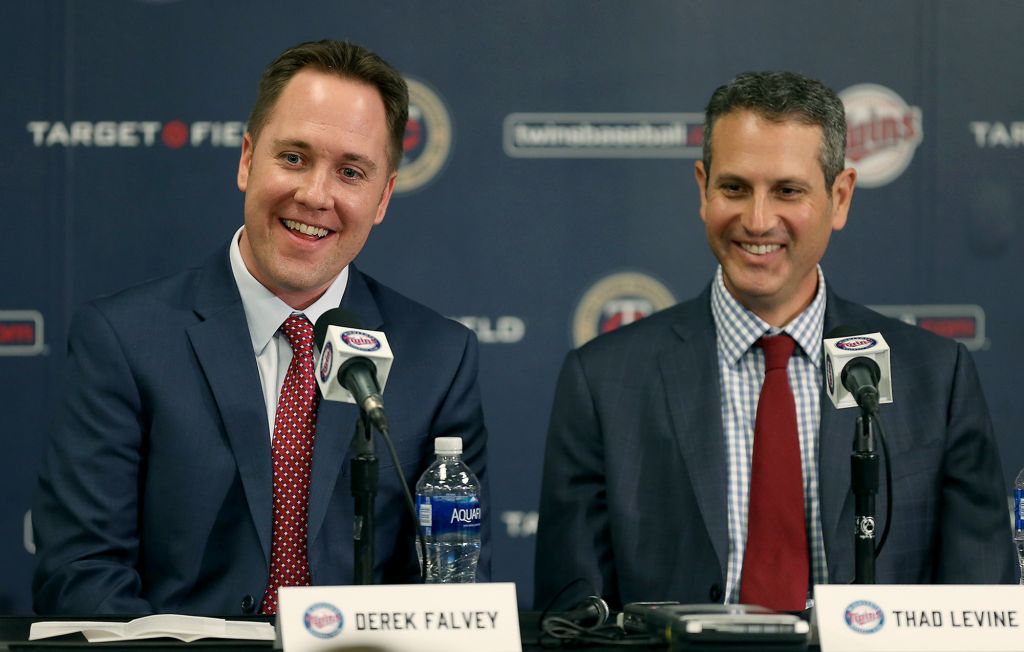 During our Q&A session with him at the Winter Meltdown in January, Twins Director of Baseball Research Jack Goin opined that his organization ranked around the middle of the pack when it comes to optimizing analytics, though he candidly acknowledged they don't really hold a competitive advantage in that area at this time. Now, the Twins are positioned to move briskly toward gaining one. From Old School to New School While his department has certainly made significant strides in recent years, I doubt that Goin would deny that Minnesota was playing catch up for a while. As forward-thinking front offices across the league began to adopt cutting-edge tracking methods and advanced statistics, a Twins franchise run by Ryan and his largely stagnant braintrust remained decidedly traditional in its philosophies. The "if it ain't broke, don't fix it" approach lost any semblance of credibility in 2016 when a lengthy stretch of disappointment culminated with the worst season in Twins history. It was clear that things were broken. So, ownership made a move to fix them. A track record of insularity and deference to reputation was thrown on its side with the decision to hire Falvey. Young, energetic and little-known on the national scene, he was a blinding contrast to Ryan, the heralded scout whose very presence commanded respect, and whose affable gruffness was a defining characteristic. At a time where many fans understandably expected a minor change in course, and maybe even a simple switch to the next in command, Twins owner Jim Pohlad and president Dave St. Peter enacted a 180-degree turn. I give them a lot of credit for that. And everything I've seen thus far leads me to believe their choice was a savvy one. Riding the Wave Across the nation, analytics and technology are increasingly gaining influence – not just in baseball, but in the sports world at large. On Tuesday night, I had the privilege of co-hosting an event at The Pitch, an entrepreneurial hub in Northeast Minneapolis with a specific focus on innovative businesses operating in the field of sport. We were celebrating the launch of The Ultimate Guide to SportsTech in Minnesota, which I helped compile with TECHdotMN. The digital doc serves as a window to some of the state's brightest up-and-comers in this rapidly growing space. Back in January, I covered the MinneAnalytics SportCon event downtown, a first-of-its kind sports analytics conference bringing together experts and execs from various corners of the industry to discuss and dissect advancements within this evolving frontier. One of the featured panelists of the day? None other than Falvey, who had attained his title as Chief Baseball Officer only a few months earlier. A top Minnesota Twins executive speaking as an authority at a conference on analytics? Not so long ago, it would have seemed unthinkable, but it's a sign of the times at Target Field. And Falvey was very much at home on that stage. The Puzzle Solver Earlier this week, the New York Times published a profile on the new Twins CBO penned by Tyler Kepner. The piece discusses Falvey's career as a pitcher at Trinity College, wherein the right-hander relied upon his studious and strategic nature rather than superior talent to stay afloat. That's been the ongoing story for Falvey, who never played professional baseball and joined Cleveland's front office shortly after graduating Trinity with an economics degree. "He likes working puzzles and solving problems," as Kepner put it, and he very quickly ascended ranks with the Indians while capturing the attention and admiration of baseball lifers like Terry Francona. Despite his background, some might skeptically question what evidence exists of Falvey being a revolutionary figure in the scope of this franchise's story. He doesn't necessarily go around openly flaunting new-age stats and advanced metrics, after all. But there's no doubt he is well versed in such matters and, to be fair, constantly evangelizing those kinds of things right off the bat can be alienating in an organization with many lingering Ryan loyalists. And that's also not really the point. The definition of analytics is "information resulting from the systematic analysis of data or statistics." And if you pay any attention to what Falvey says, you're bound to hear him talk about the value of data-driven decisions based on versatile sets of available info. You could argue that we haven't necessarily seen those elements in action yet, as the realigned front office has taken a relatively hands-off approach with roster management in the early going. But if you look for them, signs of shifting philosophy are not difficult to find. The New Way Indications that Minnesota is taking a more modern approach to building a team and organization are, perhaps, somewhat sparse up to this point, but they are certainly noticeable. The aggressive pursuit and signing of Jason Castro, a renowned pitching framing specialist, was an early signal. And while some of the other acquisitions may bear marks of the old regime, the reasoning and outcomes have been different. While I was in Fort Myers, there was a belief among many covering camp that Ryan Vogelsong had an inside track for a rotation spot, especially after Trevor May went down. Such perceptions were, in my view, based on conditioning carried over from the previous era. Bringing the slow-tossing 39-year-old north based on little more than veteran influence would have been a trademark Ryan move, to be sure, but there's a different flavor now. Sure enough, the Vogelsong drama ended early when he was released last week, winnowing the fifth starter competition down to pitchers whose presence in the rotation can actually yield tangible long-term benefits. The signing and elevation of Craig Breslow might also look like a standard TR type maneuver, given his depth of MLB experience and previous ties to the Twins. At least, until you look deeper. Recognizing that he was probably reaching the end of his career unless he figured out a way to gain an edge, Breslow reinvented himself, purchasing an expensive tracking device and using it to alter his delivery in order to maximize the spin on his pitches. He and his agent sold his revival by selling the data, and that struck a chord with Falvey. "One of the things I think, as an industry, we can be a little bit better about is using evidence to help development," the CBO explained to Twins Daily earlier this month. "I think Craig was one who just went and did that on his own, which I commend him for." The favorable impression went both ways. After the southpaw threw in front of scouts from numerous teams during the winter, he received nearly a dozen offers, some of which included more money than Minnesota's $1.25 million plus incentives. But by all accounts, it was Falvey's acute understanding and appreciation of what Breslow was trying to do that tilted the scales. There are plenty of other subtle steps toward a more analytical approach in terms of the way Falvey, along with GM Thad Levine, have begun to piece things together. There has been an evident increase in hiring within Goin's research department, with job postings popping up a few times in the past few months. Jeff Pickler, added to the big-league coaching staff in December, has a background of implementing new data and software solutions. Paul Molitor named "the deciphering of information" as a distinct area Pickler can influence. So What? Now, of course, this is all fairly meaningless for the time being. Until we see real progress on the field, any supposed differences between the new leadership and the old are based only on rhetoric and platitudes. But as someone who has longed for the Twins to distance themselves from the outdated thinking and strictly observational analysis that embodied their outward mindset as an organization, I'm beyond refreshed by the things I have seen and heard from the individuals now running the show. I'll leave you with this quote from Falvey. It is his response to the final question I asked him in a one-on-one session outside the Twins clubhouse when I was in camp two weeks ago. "On the subject of analytics," I submitted, "is there anything that you see rising to the forefront that is maybe not being looked at too much right now?" It's a question that Terry Ryan – bless his heart – would have rolled his eyes at, and vaguely answered in some unsatisfying manner. Here's Falvey's full answer, verbatim, with no foresight that it was coming. "The evolution of StatCast is something that, of all 30 teams, I think there’s a few teams that have wrapped their hands around it a bit. I think there’s more teams that need to spend more time understanding it. But we have so much more information about how a player moves on the field, and where he’s positioned at the moment each pitch is thrown, how well he goes from first to third, efficiencies, things like that. And I think we’re going to have a better understanding of how to use that information to develop players’ individual skills. For instance an outfielder, routes to the ball and otherwise, we’re now going to have evidence and data that help us better understand how he moves around in the outfield, which will allow Jeff Pickler and our other minor league coaches along the way to better train at 2 o’clock in the afternoon to help put him in a better position at 7 o’clock. So that’s exciting. I’m excited about that particular tool impacting the game and each team is gonna be in a race to try to figure out who can do it best, that’s part of the deal. That’s the competition." Indeed, that is the competition. And the Twins, in my humble opinion, are now far better equipped for it.
-
Holy hell I can't believe how horrendous these takes are. "José Berrios still hasn't turned the corner. I'm unimpressed by his ability to command the fastball" No freakin way "Brian Dozier is a dead high-ball hitter, but even if he hits 30 home runs, they could lose 100 games." One year after he hit 42 home runs and they lost 103 games. "This team has a chance to be the worst in the league." One year after they were the worst in the league. These are bold observations. "Joe Mauer's health is in question, like always. He's an opposite-field hitter now." KEEN INSIGHT SO GOOD THEY HAVE ANONYMOUS SCOUTS TO FEED THEM THIS STUFF Sorry I haven't read this whole thread and realize everyone has probably skewered this thing to bits but this is the worst thing I've read in 2017, Sports Illustrated should be completely ashamed for publishing this comment section drivel. Insulting to actual scouts everywhere.
-
I stopped reading when they said Kurt Suzuki was a good defensive catcher. No credibility in this report.
-
-
As we have expected for some time now, the Twins will roll with Craig Breslow and Taylor Rogers as their two bullpen lefties to so start the season. Today they optioned Buddy Boshers to Rochester, while also reassigning infielder Tommy Field. If Boshers had any chance left, he probably sealed his fate with a rocky outing on Sunday that saw him cough up four runs on two homers in one inning of work. Still, it's likely we will see him in Minnesota this summer. The southpaw had a good season in 2016 and is capable of handling hitters from both sides with a big curveball that induces whiffs. Are you confident in Breslow and Rogers as the LH tandem at Paul Molitor's disposal?
-
I'll admit that I was motivated to use the term so I could include that "fire Sale / fire sale" wordplay in the intro. I'll also admit that I have no shame.
-
I mean it sounds nice when your put those descriptors in front of their names, but they aren't really accurate. Todd Frazier was not an All Star last year, when he offered little offensive value outside of hitting a bunch of home runs. David Robertson was an All Star once, in 2011. Jose Abreu was a fairly average 1B last year. As I noted, there is still some talent on this roster, but I think it is apt to describe the offseason as a fire sale when they flipped their two leaders in WAR for a bunch of prospects who will all open the year in the minors.
-
Following an incident last summer where White Sox ace Chris Sale busted out a pair of scissors and cut up a uniform he didn't want to wear, he was suspended and fined. It appeared that the relationship between him and the team was reaching a perilous point. They didn't fire Sale, but during the offseason they did trade him, setting off a roster fire sale that saw Chicago trade away its pitching and position WAR leaders for hefty prospect hauls while also making a managerial change.2016 At A Glance Record: 78-84 Runs Scored: 686 Runs Allowed: 715 Pythag W/L: 78-84 Pitching WAR Leader: Chris Sale Position WAR Leader: Adam Eaton Season Recap The 2016 campaign qualified as Chicago's best in four years, but that wasn't saying much. Another sub-.500 finish spelled the end of Robin Ventura's tenure, which produced only one finish above fourth place, back in 2012. The story for the Sox was much the same: offensive mediocrity and a pitching staff that lacked superior quality beyond the undoubtedly stellar 1-2 rotation punch of Sale and Jose Quintana. Finally, the front office grew fed up with a formula that seemed to be going nowhere. During the offseason, Chicago committed to an approach that many have lamented Minnesota's avoidance of during a half-decade of ineptitude: they tore it down. Sale was shipped to Boston in exchange for a premium package headlined by Yoan Moncada, arguably the game's top prospect. Adam Eaton, who was worth more than twice as many wins as any other position player on the team according to FanGraphs, went to Washington with three young pitchers coming back. Outside of the returns in these blockbusters, the White Sox made no significant additions other than signing Derek Holland – a mid-rotation starter at best – to a one-year deal. Why They'll Be Better Well, anything can happen I suppose. They didn't set a particularly high bar last year and it's not like the White Sox are lacking in talent. Moncada is Baseball America's No. 2 prospect, and he's basically MLB-ready after debuting for Boston last September. The second baseman will start the year in Triple-A (mostly for service time reasons) but should be up quickly to partner with shortstop Tim Anderson for one of the game's best young keystone combos. Right-hander Lucas Giolito, the hard-throwing centerpiece in the Eaton deal, is 25th on BA's prospect list and could soon join Quintana and Carlos Rodon for a potent trio atop the rotation. If the youth movement can push things along and jell in a hurry, the White Sox have a chance to surprise this summer. Why They'll Be Worse It goes without saying that when you take away a team's top two contributors, it's probably going to take a step backward. Chicago doesn't really have anyone on hand to replace Eaton in center field (the presumed starter, Charlie Tillson, has a stress reaction in his foot and is out indefinitely). Of course, no pitcher is going to match the departed dominance of Sale. In fact, the starting corps is shaping up to be a big old mess. With Rodon experiencing ominous biceps soreness, Chicago figures to open the season with a rotation featuring Quintana and then Holland, James Shields, Miguel Gonzalez and... Dylan Covey? The expectation is that GM Rick Hahn will shop Quintana around in his continuing efforts to rebuild, especially if things go south early. Closer David Robertson is also potentially on the table. If the White Sox take away the few remaining standout veterans and leave it all in the hands of inexperienced youngsters and marginal players, they could be looking at 100 losses. It probably wouldn't be the worst outcome. Part of rebuilding, and the part where the Sox have lagged with their habit of being bad-not-awful, is accruing high draft picks and hitting on them. Chicago has selected higher than eighth in the draft only once in the past decade, even with all of those non-competitive seasons. They used that pick (third overall in 2014) to take Rodon, who might be their best starter by year's end. They'll get the 11th selection this June, but could be on the clock much earlier in 2018. In fact, they're probably counting on it. ~~~ Check out the rest of our Central Intelligence series previewing Minnesota's division rivals: Cleveland Indians Detroit Tigers Kansas City Royals Click here to view the article
-
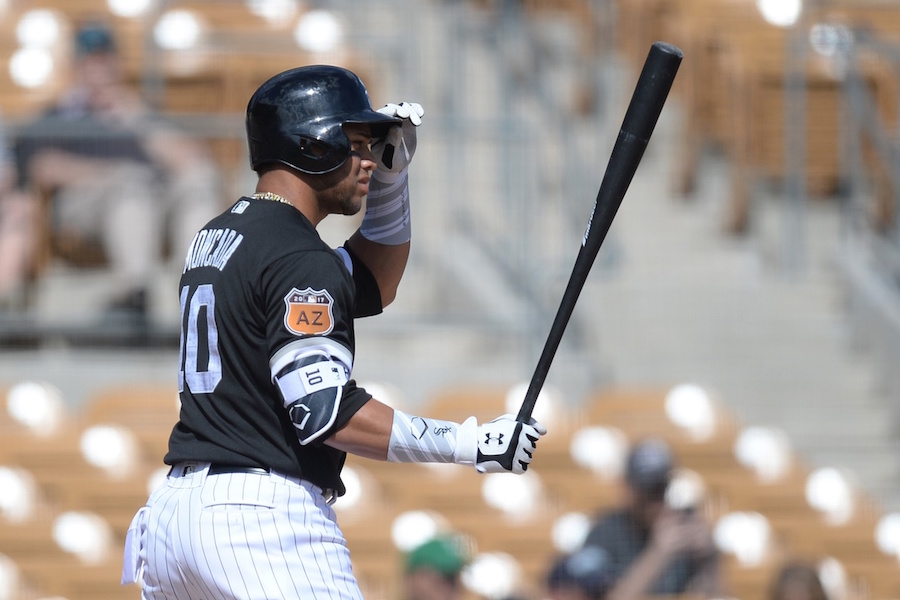 2016 At A Glance Record: 78-84 Runs Scored: 686 Runs Allowed: 715 Pythag W/L: 78-84 Pitching WAR Leader: Chris Sale Position WAR Leader: Adam Eaton Season Recap The 2016 campaign qualified as Chicago's best in four years, but that wasn't saying much. Another sub-.500 finish spelled the end of Robin Ventura's tenure, which produced only one finish above fourth place, back in 2012. The story for the Sox was much the same: offensive mediocrity and a pitching staff that lacked superior quality beyond the undoubtedly stellar 1-2 rotation punch of Sale and Jose Quintana. Finally, the front office grew fed up with a formula that seemed to be going nowhere. During the offseason, Chicago committed to an approach that many have lamented Minnesota's avoidance of during a half-decade of ineptitude: they tore it down. Sale was shipped to Boston in exchange for a premium package headlined by Yoan Moncada, arguably the game's top prospect. Adam Eaton, who was worth more than twice as many wins as any other position player on the team according to FanGraphs, went to Washington with three young pitchers coming back. Outside of the returns in these blockbusters, the White Sox made no significant additions other than signing Derek Holland – a mid-rotation starter at best – to a one-year deal. Why They'll Be Better Well, anything can happen I suppose. They didn't set a particularly high bar last year and it's not like the White Sox are lacking in talent. Moncada is Baseball America's No. 2 prospect, and he's basically MLB-ready after debuting for Boston last September. The second baseman will start the year in Triple-A (mostly for service time reasons) but should be up quickly to partner with shortstop Tim Anderson for one of the game's best young keystone combos. Right-hander Lucas Giolito, the hard-throwing centerpiece in the Eaton deal, is 25th on BA's prospect list and could soon join Quintana and Carlos Rodon for a potent trio atop the rotation. If the youth movement can push things along and jell in a hurry, the White Sox have a chance to surprise this summer. Why They'll Be Worse It goes without saying that when you take away a team's top two contributors, it's probably going to take a step backward. Chicago doesn't really have anyone on hand to replace Eaton in center field (the presumed starter, Charlie Tillson, has a stress reaction in his foot and is out indefinitely). Of course, no pitcher is going to match the departed dominance of Sale. In fact, the starting corps is shaping up to be a big old mess. With Rodon experiencing ominous biceps soreness, Chicago figures to open the season with a rotation featuring Quintana and then Holland, James Shields, Miguel Gonzalez and... Dylan Covey? The expectation is that GM Rick Hahn will shop Quintana around in his continuing efforts to rebuild, especially if things go south early. Closer David Robertson is also potentially on the table. If the White Sox take away the few remaining standout veterans and leave it all in the hands of inexperienced youngsters and marginal players, they could be looking at 100 losses. It probably wouldn't be the worst outcome. Part of rebuilding, and the part where the Sox have lagged with their habit of being bad-not-awful, is accruing high draft picks and hitting on them. Chicago has selected higher than eighth in the draft only once in the past decade, even with all of those non-competitive seasons. They used that pick (third overall in 2014) to take Rodon, who might be their best starter by year's end. They'll get the 11th selection this June, but could be on the clock much earlier in 2018. In fact, they're probably counting on it. ~~~ Check out the rest of our Central Intelligence series previewing Minnesota's division rivals: Cleveland Indians Detroit Tigers Kansas City Royals
-
-
-
Not exactly on topic, but here's one of the most bizarre stats of the 2016 Minnesota Twins season for me. Only four pitchers made 20+ starts for the Twins. Here's the team's record in those respective games started by each pitcher. Kyle Gibson starts: 12-13 Tyler Duffey starts: 11-15 Ricky Nolasco starts: 9-12 Ervin Santana starts: 8-22 Starting pitching was (rightfully) pointed to as the primary source of the team's woes. Yet, with their only half-decent starter on the mound, they were vastly worse than with greatly inferior options. Holy cow I can't believe they played .267 ball behind Erv with the way he pitched, that had to be frustrating. They owe him big-time this year.
-
The Twins officially announced today that they've moved Trevor May to the 60-day disabled list following his Tommy John surgery, and purchased the contract of Craig Breslow, who replaces him on the 40-man roster. This confirms what we've long suspected: Breslow will be one of the bullpen lefties. Ryan O'Rourke will open the season on the DL with a flexor strain, leaving Taylor Rogers and Buddy Boshers to battle for the likely second and final southpaw role. Rogers is a fairly clear favorite in that race.

-
There was a time when Kansas City's .500 finish in 2016 would have felt like a commendable achievement. It's a modest threshold the franchise had failed to reach in nine consecutive seasons prior to 2013. Of course, coming off two straight World Series appearances, the most recent of which they won, it felt like a let-down. More disappointment may be in store for 2017.Record: 81-81 Runs Scored: 675 Runs Allowed: 712 Pythag W/L: 77-85 Pitching WAR Leader: Danny Duffy Position WAR Leader: Jarrod Dyson Season Recap In mid-June, the Royals completed a sweep of the Cleveland Indians at Kauffman Stadium to pull into a tie for first place in the division. Soon after, they went into a prolonged slump while the Tribe caught fire, and six weeks later they trailed Cleveland by double digits. KC rebounded with a strong month of August and made a run at a wild-card spot, but then fell into a September funk that dropped them out of contention. The Royals have been a charmed club for quite a while. They handily outperformed their Pythagorean W/L in each of the past three seasons, taking a total of 14 more games than you'd mathematically expect during that span. In 2016 they were fortunate to win as many as they lost while allowing 37 more runs than they scored. In some respects, their strengths are conducive to such outcomes. Their lockdown bullpen gives them an edge in close games, and their consistently elite defensive units help cover up some warts. But no team can run away from the laws of baseball forever, especially with mediocre starting pitching, and in a way Kansas City's late-season swoon felt like a long overdue regression to the mean. The bullpen, as usual, was excellent. Same goes for the defense. But the rotation was a weakness, with no one other than Danny Duffy and Ian Kennedy offering much. The lineup sputtered, scoring just 675 runs and ranking last in the American League in homers. The leader in that category, Kendrys Morales, departed over the winter to join Toronto. Why They'll Be Better Duffy is a legitimate top-of-the-rotation type, and midway through last year the Royals finally made the full commitment to him as a starter. They went 17-9 in his 28 turns after moving him out of the bullpen halfway through May. He's expected to be their Opening Day starter against the Twins on April 3rd after signing a five-year extension in January. While Morales and his powerful bat are gone, the Royals did acquire Jorge Soler from the Cubs, adding some much needed young upside to the offense. They also added free agent Brandon Moss, a reliable source of 20-30 bombs. Mix in the better expected output from Mike Moustakas, Lorenzo Cain and Alex Gordon, whose campaigns were marred by injuries, and the lineup should improve. That last name is particularly vital. Gordon is the beating heart of this team – he led the roster in WAR every year from 2011 through 2014 – and getting him back to a healthy productive state could make a huge difference. Then again, he's now 33 and his K-rate rocketed upward last year, so it's possible that peak-level Gordon won't reappear. Why They'll Be Worse The pitching staff lost two cornerstones during the offseason, and replacing what they brought to the table will prove excruciatingly tough. Davis, who was one of the most dominant and impactful relievers in the game over the past three seasons, went to Chicago in the Soler trade. With Greg Holland leaving for Colorado, Kelvin Herrera is now the only remaining member of a spectacular late-inning trio that helped make KC a championship-caliber club in 2014 and 2015. Herrera will be closing, leaving manager Ned Yost with much less firepower to work with in the sixth, seventh and eighth. And then there was the heartbreaking death of Yordano Ventura, just 25 years old, in January. He endured his worst season as a big-leaguer last year, but Ventura's ace upside was a constant source of vitalizing hope for the Royals rotation. No one will fill the void left by his big personality and intense passion for the game. And his tragic passing also leaves a talent void that newcomers Jason Hammel and Nate Karns can't hope to replenish. Beyond Duffy, there's not too much to like in Kansas City's starting corps. Kennedy is trying to back up his best season in seven years, in which his ERA was a full run lower than his FIP. KC's system lacks any kind of bona fide stud pitching prospects offering the real potential for a midseason jolt. This looks like a rebuilding year for the Royals. There's nothing wrong with that; they had a hell of a run. But it seems far more likely that they will be selling off pieces to bolster a depleted farm system at the deadline than shopping for another postseason push. ~~~ This is the third in our Central Intelligence series previewing Minnesota's division rivals. Make sure to check out our deep dives on the Cleveland Indians and Detroit Tigers. Click here to view the article
-
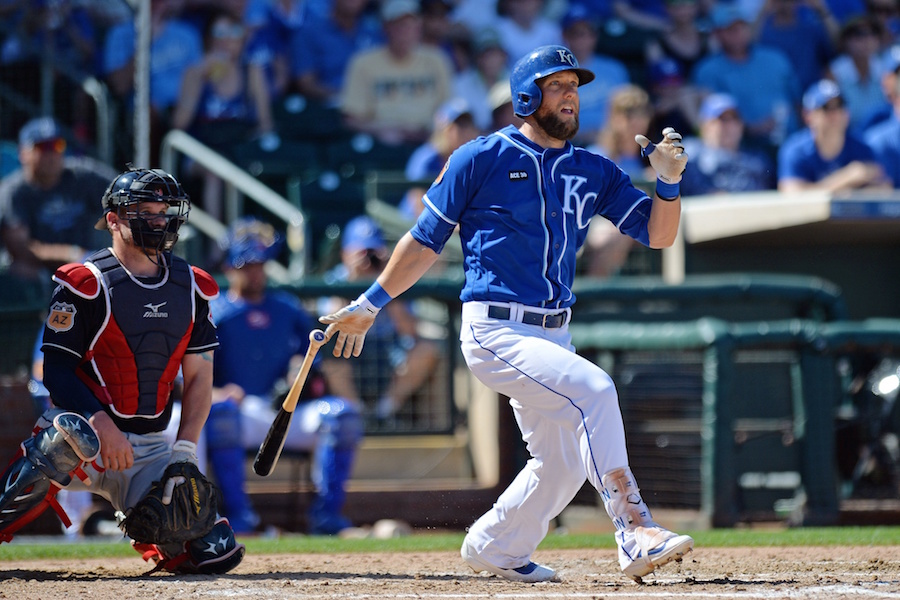 Record: 81-81 Runs Scored: 675 Runs Allowed: 712 Pythag W/L: 77-85 Pitching WAR Leader: Danny Duffy Position WAR Leader: Jarrod Dyson Season Recap In mid-June, the Royals completed a sweep of the Cleveland Indians at Kauffman Stadium to pull into a tie for first place in the division. Soon after, they went into a prolonged slump while the Tribe caught fire, and six weeks later they trailed Cleveland by double digits. KC rebounded with a strong month of August and made a run at a wild-card spot, but then fell into a September funk that dropped them out of contention. The Royals have been a charmed club for quite a while. They handily outperformed their Pythagorean W/L in each of the past three seasons, taking a total of 14 more games than you'd mathematically expect during that span. In 2016 they were fortunate to win as many as they lost while allowing 37 more runs than they scored. In some respects, their strengths are conducive to such outcomes. Their lockdown bullpen gives them an edge in close games, and their consistently elite defensive units help cover up some warts. But no team can run away from the laws of baseball forever, especially with mediocre starting pitching, and in a way Kansas City's late-season swoon felt like a long overdue regression to the mean. The bullpen, as usual, was excellent. Same goes for the defense. But the rotation was a weakness, with no one other than Danny Duffy and Ian Kennedy offering much. The lineup sputtered, scoring just 675 runs and ranking last in the American League in homers. The leader in that category, Kendrys Morales, departed over the winter to join Toronto. Why They'll Be Better Duffy is a legitimate top-of-the-rotation type, and midway through last year the Royals finally made the full commitment to him as a starter. They went 17-9 in his 28 turns after moving him out of the bullpen halfway through May. He's expected to be their Opening Day starter against the Twins on April 3rd after signing a five-year extension in January. While Morales and his powerful bat are gone, the Royals did acquire Jorge Soler from the Cubs, adding some much needed young upside to the offense. They also added free agent Brandon Moss, a reliable source of 20-30 bombs. Mix in the better expected output from Mike Moustakas, Lorenzo Cain and Alex Gordon, whose campaigns were marred by injuries, and the lineup should improve. That last name is particularly vital. Gordon is the beating heart of this team – he led the roster in WAR every year from 2011 through 2014 – and getting him back to a healthy productive state could make a huge difference. Then again, he's now 33 and his K-rate rocketed upward last year, so it's possible that peak-level Gordon won't reappear. Why They'll Be Worse The pitching staff lost two cornerstones during the offseason, and replacing what they brought to the table will prove excruciatingly tough. Davis, who was one of the most dominant and impactful relievers in the game over the past three seasons, went to Chicago in the Soler trade. With Greg Holland leaving for Colorado, Kelvin Herrera is now the only remaining member of a spectacular late-inning trio that helped make KC a championship-caliber club in 2014 and 2015. Herrera will be closing, leaving manager Ned Yost with much less firepower to work with in the sixth, seventh and eighth. And then there was the heartbreaking death of Yordano Ventura, just 25 years old, in January. He endured his worst season as a big-leaguer last year, but Ventura's ace upside was a constant source of vitalizing hope for the Royals rotation. No one will fill the void left by his big personality and intense passion for the game. And his tragic passing also leaves a talent void that newcomers Jason Hammel and Nate Karns can't hope to replenish. Beyond Duffy, there's not too much to like in Kansas City's starting corps. Kennedy is trying to back up his best season in seven years, in which his ERA was a full run lower than his FIP. KC's system lacks any kind of bona fide stud pitching prospects offering the real potential for a midseason jolt. This looks like a rebuilding year for the Royals. There's nothing wrong with that; they had a hell of a run. But it seems far more likely that they will be selling off pieces to bolster a depleted farm system at the deadline than shopping for another postseason push. ~~~ This is the third in our Central Intelligence series previewing Minnesota's division rivals. Make sure to check out our deep dives on the Cleveland Indians and Detroit Tigers.
-
If you were worried about Ryan Vogelsong landing the fifth starter job, you can breathe a sigh of relief. La Velle reported earlier today that the veteran's locker had been cleared out. And minutes ago, Mike Berardino confirmed with this tweet: So it looks like the race for the final rotation spot is down to Berrios, Mejia, Duffey and Haley.
-
Mays and (possibly) Gonsalves being injured are not "decisions." Santiago is a solid pitcher whose presence does nothing but add SP depth. I don't necessarily agree with the projection that Danny Santana will break camp but we'll cross that bridge when we get to it. So the only actual decisions you're criticizing here are keeping Santiago (perfectly defensible) and changing Jay's role, which I would argue is a proactive move that does contrast against the previous leaders. Doogie was relaying a quote from Tyler Jay's agent. Take it with a grain of salt.
-
It doesn't change it, but what good does it do for people to expend so much energy complaining about it? For the team to be formulating its view of how to handle Jay or what's best for him based on where the last regime drafted him would be the exact wrong approach. Frankly, you should be a lot more concerned about #4 overall pick from two years earlier showing few signs of being able to help in any meaningful way.
-
um, yes? I would like to see them both up quickly. When have I said otherwise?



