Leaderboard
-

-

Parfigliano
Verified MemberPoints1,257Posts -
-
Mike Sixel
Old-Timey MemberPoints36,790Posts




Popular Content
Showing content with the highest reputation on 07/30/2022 in Posts
-
Twins 1, Padres 10: Twins West Coast Tour Starts with Another Loss
MABB1959 and 12 others reacted to rv78 for a post in a topic
13 pointsThe team woes start with the Manager. Playing Sano is a mistake. The guys needs to be DFA'd. Batting Arraez 6th is a mistake. He should always be batting in front of Buxton. How many of Buxtons solo shots would be 2 or 3 run homers if Rocco knew how to set a lineup? Ryan gives up 10 runs only due to Roccos inability to in-game manage. He'll pull a starter who's at 80 pitches and pitching with the lead and then leaves Ryan in when he clearly doesn't have his best stuff to get hammered and make the game a blowout basically giving the team no chance to come back and win it. I said before the All-Star game this team was toast. Thanks to Rocco, the toast is burning.13 points -
Twins 1, Padres 10: Twins West Coast Tour Starts with Another Loss
Melissa and 11 others reacted to Nashvilletwin for a post in a topic
12 pointsDid we all see what the M’s gave up for Castillo? We’d have to completely gut our prospect list to get to that level - and we need 3-4 Castillo types to realistically have any chance to contend. The data points are there. It’s ok to take a step back and reevaluate where this team truly stands with a clear mind and open eyes. Sure - we are clinging to a rapidly evaporating division lead. But we are obviously more than one or two players away. Our window should be more open next year and then the following year than it is now. Any moves we make should be to enhance that realisation, not jeopardise it. Watching last night’s game, I was dumbfounded and saddened to see Rocco leave our top young starter in to give up 10 runs. After Machado it was perfectly clear to everyone it was not Ryan’s night. Rocco leaves him in to get battered for four more runs to get one more out. That was inexcusable. I hope Ryan can either forget or learn from that. Psyche’s in young pitchers can be tricky. Looking for a strong rebound game today!12 points -
Twins 1, Padres 10: Twins West Coast Tour Starts with Another Loss
Fritzderkat and 9 others reacted to Mark G for a post in a topic
10 pointsI agree with most everything, except for possibly one item. I hear lots of folks here and elsewhere talk about '23 and beyond, and how that may be our window realistically rather than the here and now. What is it that leads to that conclusion? The left side of our infield may very well be gone, our outfield won't be any better than it is now, the catching situation isn't playoff contending caliber as of now, or next year. And the pitching staff is counting on young, unproven guys to step up and seize the day up and down the staff, not to mention (but we always have to on this team) trying to stay off the IL. There will be things that are better, and things that are good now but gone soon. Overall, how are we contenders in the coming couple of years where we aren't now? I guess why I am not feeling the love is because I hear all about the guys coming up through the system that are going to step up and step into the areas we need. And in the same conversation I hear we haven't got enough high end prospects to put into trades to help us now and still have something left to bring up when the needs come in the next couple of years. Which is it? Are we good in the system with good up and coming players, or are the cupboards bare to the point that we can't compete in trade talks? Because if what we see is what we get in the immediate future I would like to take the kind of shot Seattle just did. Or at the very least, if we are not going to compete on that level, make the FO be up front and honest about it. Not that there is much chance of this pair being honest about anything, but at least put the pressure on.10 points -
Bailey Ober Update from MLB,com
PDX Twin and 9 others reacted to USAFChief for a post in a topic
10 pointsI am serious: go back to putting innings on these guys in the minors. Like they used to. I don't know if it'll keep more guys healthy, but it certainly can't keep LESS guys healthy. And Maybe they can wash out the guys who just can't handle any kind of workload. I mean, the entire injury thing is just to the point of ridiculousness. Current theory clearly isn't working.10 points -
Game Thread Twins @ Padres 7/30/22 6:15 PM Come To Jesus Time
USAFChief and 8 others reacted to Winston Smith for a post in a topic
9 pointsLeast we forget Pagan would have been an All Star if not for all the bad outings he had.9 points -
Twins 1, Padres 10: Twins West Coast Tour Starts with Another Loss
Dozier's Glorious Hair and 7 others reacted to AlwaysinModeration for a post in a topic
8 pointsIn Joe Ryan’s defense, trying to pitch to Padres batters wearing those uniforms would have been a challenge for anyone.8 points -
The Ever Underrated Jorge Polanco
Melissa and 7 others reacted to strumdatjag for a post in a topic
8 pointsYears ago, my wife and I took a trip to Cedar Rapids to see the number one prospect Byron Buxton. Jose Berrios was pitching that day. Yet, the future Twins player who impressed us the most that day was Jorge Polanco. He has never been under our radar since.8 points -
Twins 1, Padres 10: Twins West Coast Tour Starts with Another Loss
Melissa and 6 others reacted to Otto von Ballpark for a post in a topic
7 pointsI've seen Stranger Things than a starting pitcher allowing 10 runs in a game...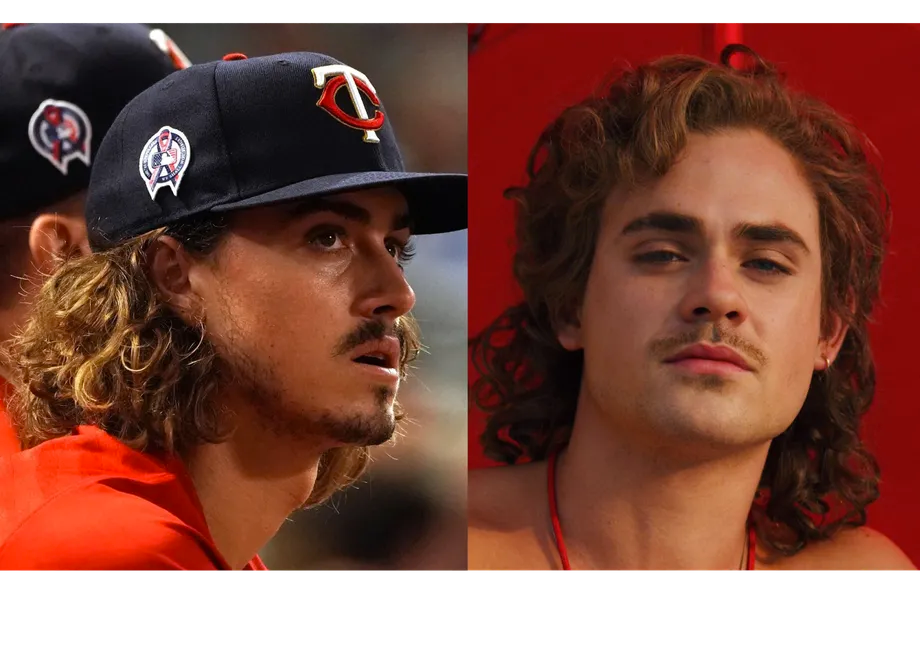 7 points
-
Bailey Ober Update from MLB,com
DocBauer and 5 others reacted to Game7-91 for a post in a topic
6 pointsAttention should rightfully be on the health of these athletes. I do wonder when there is a return to an emphasis on leg strength gained from running Interesting fact: Nolan Ryan's post-game routine after pitching: 60 minutes of intense stationary bike workout. Every time-every game. Said it was to keep his legs strong for 9 inning games.6 points -
Bailey Ober Update from MLB,com
DocBauer and 5 others reacted to Mike Sixel for a post in a topic
6 pointsGood luck to him. Sigh.6 points -
Game Thread Twins @ Padres 7/30/22 6:15 PM Come To Jesus Time
wabene and 4 others reacted to ashbury for a post in a topic
5 pointsRocco was playing the long game there. Duffey, in to pitch the ninth with a reasonably safe lead. He gets into his usual antics, walking a #8 hitter and plunking the #9. HR predictably comes next. No worries. He gets the next two guys out. Pitch count 28. Unavailable to mess up tomorrow's game. Rocco's playing chess while you're busy playing checkers.5 points -
Game Thread Twins @ Padres 7/30/22 6:15 PM Come To Jesus Time
IndyTwinsFan and 4 others reacted to Parfigliano for a post in a topic
5 pointsFor Sano that few Ks in 6 games would be breaking out of a slump5 points -
Bailey Ober Update from MLB,com
mikelink45 and 4 others reacted to ashbury for a post in a topic
5 pointsYou know I am comfortable with analytics, and I know it's a bit of waving a red flag for you, but bear with me. I believe that analytics is worthless unless it is integrated with deep insight in the fundamentals, which you are talking about. I am convinced that injury-proneness is one of the metrics that teams' baseball analytics staffs study, as some kind of secret sauce that isn't publicized and is treated as trade-secret - and some teams do it manifestly better than others. The Yankees in 2022 have been deprived of almost no starts (6 out of 101) among the five guys they decided in on spring. The Twins should be studying them carefully to understand this success. Talent evaluation and acquisition, and injury avoiding practices adopted by on-field coaches and off-field trainers - these tie together at every step of the roster construction process in the majors, and in player development in the minors. Our FO seems to believe there is a market inefficiency they can exploit by accepting a higher degree of risk with arms, and I certainly don't have the inside analytics to suggest where exactly it is they get it wrong. But acquiring non-workhorse front line pitching like Sonny Gray, and known injury risk Chris Paddack, in return for key trading chips, and counting on past injury risks like Winder and Ober, demonstrate well enough for me where their priorities lie: keep 24 pitchers on the 40-man and go light on position players, then deal with injuries as they arise through roster churn. Handing the ball twice (!) to a non-entity like Chi Chi Gonzalez demonstrates the failure of this approach, as far as I'm concerned. Good analytics looks for relationships among pieces that may be treated as independent. Your suggestion to increase the workload on the young arms might be at odds with the Twins philosophy under Wes Johnson to wring a few extra MPH from arms. But maybe the Twins have the balance wrong, and should be looking for whatever (few) extra MPH they can extract while keeping the workload higher. You can't sell out totally to workload, by soft-tossing the entire 7 or 8 or 9 innings - you have to get the maximum number of guys out while giving up the fewest baserunners and runs - but max-effort for 3 or 4 innings isn't getting the job done either. Send them your resume as a candidate for pitching coach, and list me as a reference because I'll back you up. And I need to ask around, to find them a new candidate to lead their analytics, because the current team isn't getting it done - they're getting schooled every time they make a significant trade, it seems.5 points -
The Ever Underrated Jorge Polanco
DocBauer and 4 others reacted to tony&rodney for a post in a topic
5 pointsPersonally, I have considered Polanco the best overall player on the team for five years. He is good.5 points -
Twins 1, Padres 10: Twins West Coast Tour Starts with Another Loss
Melissa and 4 others reacted to jorgenswest for a post in a topic
5 pointsI would have left him in. The pitch count was low enough. He was throwing strikes. He got hit hard but all 5 home runs were in the first row. Outfielders made a play on all 5. They need him to be able to work through a struggle and go deep. That didn’t happen last night. If he can’t handle getting beat and coming back stronger then he won’t have a long career in baseball.5 points -
Twins 1, Padres 10: Twins West Coast Tour Starts with Another Loss
TwinsChupacabra and 4 others reacted to Whitey333 for a post in a topic
5 pointsVery sad performance by Ryan. But he's been the teams best starter. What's frustrating is we were counting on him to be a stopper. At least in this case. Hopefully Gray can do well on Saturday but the ship is rapidly sinking. I agree with the contributed questioning Rocco's handling of pitching staff. Many times he takes the pitcher out way too early then other times he leaves him in way too long. He should have gotten Ryan out of there much earlier. It probably wouldn't have made any difference in the final score. But maybe by letting him get hammered and embarrassed you hurt his confidence. I've been saying since April. This team is not good enough to be a serious contender and Rocco will wind up managing his way out of playoff consideration. Front Office, where are you???5 points -
Twins 1, Padres 10: Twins West Coast Tour Starts with Another Loss
mikelink45 and 4 others reacted to D.C Twins for a post in a topic
5 pointsIs it possible that Sano is trying to be DFA'ed so he can join another team? Or is he just that lost at the plate and guessing like he is playing a game of rock/paper/scissors? Either way.... no mas por favor!5 points -
Bailey Ober Update from MLB,com
DocBauer and 4 others reacted to Linus for a post in a topic
5 pointsI seriously think part of it is taking guys and adding 3-4 mph to their fastball over and above what they naturally threw. Add in increased slider usage which the Twins are famous for and increased injuries shouldn’t be much of a surprise.5 points -
Game Thread Twins @ Padres 7/30/22 6:15 PM Come To Jesus Time
wabene and 3 others reacted to Squirrel for a post in a topic
4 pointsShould've been the Arachnids4 points -
Game Thread Twins @ Padres 7/30/22 6:15 PM Come To Jesus Time
Mortimerkenny21 and 3 others reacted to Squirrel for a post in a topic
4 pointsProbably about as difficult as spelling his name correctly ... ?♀️4 points -
Game Thread Twins @ Padres 7/30/22 6:15 PM Come To Jesus Time
Danchat and 3 others reacted to UpstateNewYorker for a post in a topic
4 pointsOn the broadcast A.J is really scratching his head over Rocco removing Gray.4 points -
Game Thread Twins @ Padres 7/30/22 6:15 PM Come To Jesus Time
Hosken Bombo Disco and 3 others reacted to h2oface for a post in a topic
4 points.... or..... an excellent read that let a slower runner make the right play. Looked smart to me.4 points -
Game Thread Twins @ Padres 7/30/22 6:15 PM Come To Jesus Time
USAFChief and 3 others reacted to ashbury for a post in a topic
4 pointsThe team shopped him and found no takers at all. They aren't ready to cut bait yet. So... "Miguel. Your knee looks like it's hurting. A stint on the IL may do you good. You did say it hurts now, right? Right?" Just my own speculation.4 points -
Twins 1, Padres 10: Twins West Coast Tour Starts with Another Loss
Danchat and 3 others reacted to Squirrel for a post in a topic
4 pointsThis has been pretty well documented his reasons for taking the job ... close to home, less travel, more money, and it started NOW, he couldn't wait until the end of season because of how college sports/baseball works and what their schedule is ... let's not invent things because of your dislike for the Twins right now4 points -
Twins 1, Padres 10: Twins West Coast Tour Starts with Another Loss
SanoMustGo and 3 others reacted to roger for a post in a topic
4 pointsWatched most of the two games versus the Brewers. Didn't watch last night as those west coast games are just too late. Kind of glad I didn't. What have we learned over the past three games? I believe it only confirmed that the Twins are a ways from being a legit contender for a long playoff run. Should Buxton be injured and go on the IL, any hope of winning a weak division becomes a dream. Should the FO make some moves over the next three days, certainly. But they all should be smaller moves that will help the team in 2023 and beyond. Maybe a good, young reliever? Maybe a young catcher who can compete with Jeffers in 2023?4 points -
Twins 1, Padres 10: Twins West Coast Tour Starts with Another Loss
Dozier's Glorious Hair and 3 others reacted to Mark G for a post in a topic
4 pointsI read he got the pitching coach job at LSU, which is really close to home for him, and he wants to be with his family because his kids are at that age. I also read he got a raise for doing so, as the school really wanted him.4 points -
Bailey Ober Update from MLB,com
DocBauer and 3 others reacted to tony&rodney for a post in a topic
4 pointsPitching is really stressful on your body. Attention should rightfully be on the health of these athletes. I do wonder when there is a return to an emphasis on leg strength gained from running. Certainly some changes, even mild, should be considered in how pitchers build their bodies to pitch. The number of injuries seem overwhelming. Max effort velocity makes hitting difficult and uncomfortable but is often unproductive and leads to injury. Joe Ryan is a decent pitcher and an example of how a pitcher can have some success pitching to spots as opposed to blowing batters away with uber velocity. I had high hopes for Josh Winder with his solid repertoire of pitches complemented by his excellent control. Hopefully he can recover but two years of shoulder issues are not a positive omen of things to come. I was hoping Ober could avoid injuries too ... very frustrating for them .... and us.4 points -
Twins 1, Padres 10: Twins West Coast Tour Starts with Another Loss
Dave Overlund and 3 others reacted to Whitey333 for a post in a topic
4 pointsYes Seattle gave up 4 prospects including a couple of high prospects. But they haven't been in the playoffs since 2000 or 2001. I don't think it's an overpay for the moment. You can play your prospects if they are so great or use them in trades. Prospects are an asset. At least the few that may be able to make the majors. But what good does it do to hoard prospects when the major league team is floundering and in obvious need of help. This team has been so flawed from the start but the FO so far has only been good at signing washed up pitchers no one else wants. Yes I agree we should be thinking 2023 and beyond. But first there is no guarantee as of today that the team in 2023 will be any better than this year's team. So what's wrong with adding a little major league pitching now and getting someone good enough to help with that supposedly open window? My opinion is if Falvey and Company is unable or unwilling to make some noticeable improvement on this team they should not be here. That's there job. I'm expecting some kind of help coming via trade. Some significant meaningful help. Can Sano pitch? He's not much good at anything else.4 points -
Twins 1, Padres 10: Twins West Coast Tour Starts with Another Loss
h2oface and 3 others reacted to Game7-91 for a post in a topic
4 pointsIt's the hairdoo-doo! JR needs needs to grow back the "SoCal-heydude" look to reclaim the magic. Let 'er grow Joe!4 points -
Twins 1, Padres 10: Twins West Coast Tour Starts with Another Loss
Scott51104 and 3 others reacted to USAFChief for a post in a topic
4 pointsI wouldn't invest another PA in Sano. The offense is thin enough. And I might be an old curmudgeon, but I find zero entertainment in Nick Gordon pitching for my favorite ballclub.4 points -
Twins 1, Padres 10: Twins West Coast Tour Starts with Another Loss
PDX Twin and 3 others reacted to terrydactyls for a post in a topic
4 pointsTime to forget 2022, trade some MLB players for AAA talent, and start planning for 2023.4 points -
Bailey Ober Update from MLB,com
DocBauer and 3 others reacted to Danchat for a post in a topic
4 pointsCan we hire a new medical staff or something? I'm being sarcastic, but how are we ever going to build a pitching pipeline if our no prospect/young pitcher can stay healthy?4 points -
Twins 7, Padres 4: Correa’s Clutch Homer Sparks Late-Inning Rally
Minny505 and 2 others reacted to Seth Stohs for a post in a topic
3 pointsKey Play: No question the biggest play of the game was Profar drilling the 2nd base umpire. If it doesn't hit the ump, it's a 2-2 game and that inning takes on a whole new direction, potentially. Megill - First pitch tonight, 100... After that, nothing but low-80s slow, 12-6 curveballs, which are a nice pitch, but man, I'd like to see him throw the heat a bit more. He can be a late-inning guy.3 points -
Game Thread Twins @ Padres 7/30/22 6:15 PM Come To Jesus Time
IndyTwinsFan and 2 others reacted to tony&rodney for a post in a topic
3 pointsGotta say that the old way to look was: 1) What is the deal at the AllStar Game; 2) Finally check the standings on August 1; and 3) What does the schedule look like in the last two months. The Twins have a good team that surely needs at least a couple of pitchers but they are going to be in first place on August 1. That is huge. September might be a tough row but August seems doable. Despite wanting Falvey to do something big before the trade deadline, I'm a happy Twins fan because the team is interesting and winning enough right now.3 points -
Game Thread Twins @ Padres 7/30/22 6:15 PM Come To Jesus Time
wabene and 2 others reacted to Squirrel for a post in a topic
3 pointsWell, now that i've read the whole game thread, surprised it was only 7-4 ... sounded more like we were losing 23-1. Good times were had by all?3 points -
Game Thread Twins @ Padres 7/30/22 6:15 PM Come To Jesus Time
ashbury and 2 others reacted to nicksaviking for a post in a topic
3 pointsAre the Padres looking to deal their relievers? Asking for a (White Sox) fan.3 points -
Game Thread Twins @ Padres 7/30/22 6:15 PM Come To Jesus Time
cHawk and 2 others reacted to Parfigliano for a post in a topic
3 pointsNon solo shots are the best shots3 points -
Game Thread Twins @ Padres 7/30/22 6:15 PM Come To Jesus Time
cHawk and 2 others reacted to Richie the Rally Goat for a post in a topic
3 pointsC4!3 points -
Game Thread Twins @ Padres 7/30/22 6:15 PM Come To Jesus Time
Rik19753 and 2 others reacted to Parfigliano for a post in a topic
3 pointsOnly need 6 numbers for Power Ball tonight. Dont like my odds on either.3 points -
Game Thread Twins @ Padres 7/30/22 6:15 PM Come To Jesus Time
IndyTwinsFan and 2 others reacted to gil4 for a post in a topic
3 pointsWhen you have low expectations you're never disappointed.3 points -
Game Thread Twins @ Padres 7/30/22 6:15 PM Come To Jesus Time
Hosken Bombo Disco and 2 others reacted to RpR for a post in a topic
3 pointsBuxton does his part.3 points -
Trade Deadline News
chpettit19 and 2 others reacted to ashbury for a post in a topic
3 pointsA mere child compared to Chief, and doesn't know the depth of surliness that is possible.3 points -
Twins 1, Padres 10: Twins West Coast Tour Starts with Another Loss
darwin22 and 2 others reacted to TwinsChupacabra for a post in a topic
3 pointsThe way Rocco handled the young starter last night was disgusting. My friends and I watching the game were so angry. Keep in mind, this game was following a day off where relievers would have been available, We are so sick of Rocco. I'll say it again. They will never win a playoff game as long as he is manager. Watching Sano last night was a joke. This team is not serious about their performance on the field. In the story, Gleeman mentioned about how his is the first time in a long while the starter gave up 10 runs. I was at a game in August 2019 where Berrios gave up 9 runs. Another Rocco debacle. In that game they came back with 4 homers but it was too late, Rocco had already thrown the game away. Can we trade Rocco, please?3 points -
Bailey Ober Update from MLB,com
DocBauer and 2 others reacted to Parfigliano for a post in a topic
3 pointsAt 88 MPH very few guys are MLB talent in todays game3 points -
3 pointsI want this team to add, be better, not fold the tent, and to make the playoffs, and hopefully make some noise. But as much as I would love to have a guy like Castillo...WOW...3 of the Mariner's top 10 for a little under a year and a half just sounds crazy to me. I just can't see doing that unless you really believed a guy was the final piece to the puzzle.3 points
-
Bailey Ober Update from MLB,com
DocBauer and 2 others reacted to Richie the Rally Goat for a post in a topic
3 pointsagreed on the stress pitching puts on a human body. We just weren’t made to throw a ball 100 mph. Strengthening makes your muscles strong, not your ligaments and tendons more resilient. Strength without adequate resilience seems to be correlated/causal from my very uneducated perspective. I’m shocked we don’t hear of more yoga, but maybe it’s widely practiced and it’s just not “news”. My PT swears by yoga, and it has helped a ton with my own struggle with Thoracic Outlet Syndrome and Cubital Tunnel Syndrome (neither hip/leg injuries, but both common pitcher injuries). My PT also has me doing strengthening, but it’s counterbalancing. The prescription for TOS is to stretch out my pecks and strengthen my serratus and trap, along with manually pushing my ribs further apart. No it’s not pitching related, but being treated the same way. In all things, balance and moderation.3 points -
Twins 1, Padres 10: Twins West Coast Tour Starts with Another Loss
Dozier's Glorious Hair and 2 others reacted to chinmusic for a post in a topic
3 pointsTrue, and though the Twins lost by a demoralizing 9 runs, they maintained their sartorial dignity.3 points -
Twins 1, Padres 10: Twins West Coast Tour Starts with Another Loss
darwin22 and 2 others reacted to Game7-91 for a post in a topic
3 pointsYep......to me the most surprising thing about that whole situation was that he was making $350K.....I'm not up on coaching staff salaries, but I was stunned the pitching coach was making such a comparatively small amount. I honestly thought the top pitching and hitting coaches would be in the upper six figures, even lower mil's.....I've never paid attention to that stuff, but man I was really surprised. I dont blame Wes Johnson for seeing a chance to double his income in one job change. These things keep circling back to a problem, and I know how much some here do not want to harp on the Twins not paying up, but the org overall does not want to pay to keep higher level talent,not only players, but also apparently coaching and development. This continues to be an ownership issue imho. If the org is all about developing talent internally, then it would seem the investing in cost of player development is done without question, and with the highest quality in mind at all levels of the system. In my mind that means finding, and hiring high level scouting and coaching personnel at all levels, supporting their work and rewarding their results with ultra-competetive pay and benefits. It's not 100M contracts here, even the small market teams should be able to make these types of investments. This is investing more than just another operational expense. Does anyone know how the Twins compare to other org's in committing investments to developmental costs up and down the system? Would love to know if there is info out there abt how MLB org's spend and support the process, but I cannot find info. Either that, or buy players at MLB level. Are there other alternatives out there?3 points -
Twins 1, Padres 10: Twins West Coast Tour Starts with Another Loss
operation mindcrime and 2 others reacted to chinmusic for a post in a topic
3 pointsI'm wondering just how significant Wes Johnson's departure was to this current mess.3 points -
Twins 1, Padres 10: Twins West Coast Tour Starts with Another Loss
operation mindcrime and 2 others reacted to ChermesZ for a post in a topic
3 pointsCan anyone tell me the twins ERA after Wes Johnson left? And what is our record now since Sano came back?3 points