Leaderboard
-
tony&rodney
Verified MemberPoints2,874Posts -
Nick Nelson
AdministratorPoints7,006Posts -

-
mikelink45
Verified MemberPoints7,531Posts




Popular Content
Showing content with the highest reputation on 11/12/2021 in all areas
-
Are the Twins About to Build a Radically Unconventional Pitching Staff?
glunn and 8 others reacted to chaderic20 for a post in a topic
9 pointsMy idea for an unconventional staff is having three sets of three pitchers that all throw three innings each every three days. Mix and match lefties and righties in each group so opponents can't just stack their lineup to one side. Also try to mix different pitch styles, flamethrowers with guys with nasty breaking stuff, etc. Those three groups take up 9 roster spots, which still leaves you with 3-4 guys for spot matchups, or relief for someone having an off day, or just to give someone a day off every now and then. Since they're only pitching three innings they can throw a little harder than if they were trying to go six or seven innings, and they only need to have two decent pitches since they're only facing most batters just once.9 points -
Parting Ways with Colome Leaves Some Troubled
Brandon and 7 others reacted to RandBalls Stu for an article
8 points “When I was growing up, we didn’t just cut a guy loose after a bad year, we kept him on the team for years,” said Stephen Gilchrest, an electrician from Castle Rock Township. “It sucked. I hated every minute of it.” The 50-year-old father of two was in the prime of his Twins-loving life when Minnesota acquired reliever Ron Davis from the New York Yankees. It left a mark on Gilchrest that he says he still feels. “I don’t think you really ever get over something like that,” said Gilchrest, his voice lowering as he battled to keep his emotions in check. “At the same time, it teaches you so many valuable lessons that you can draw on in everyday life.” Such as? “Pain. Life is pain. Keep your expectations low. Understand that the world is not fair, and it will never be fair. Unqualified people will maintain positions of privilege despite flaws so glaring it’ll make your teeth hurt. Ron Davis will be your team’s closer for over four years and there’s nothing you can do about it. Admittedly that last one is super specific, but it still resonates.” Although many might be glad the Twins are opening a new chapter in their search for a 2022 closer, Gilchrest is not among their ranks. “What kind of lesson does it teach the kids of today when the Twins can just go out and make the right decision, just like that,” asked Gilchrest. “I had to suffer for years. I listened to the Jamie Quirk game on the radio and my dog died the next day. I buried Shep and my dreams on the same weekend in 1984. “You know who the closer was in 1985? Ron Davis. That’s when I stopped going to mass.” Gilchrest worries that the move might cause some younger fans to get too confident in the team’s prospects. “They’ll probably get a younger guy on a cheaper deal and he’ll turn out to be OK, maybe even better than OK, and the kids will get their hopes up,” said Gilchrest. “Hope. That’s what always gets you. Hell, I’m thrilled that they’re going in a different direction, but isn’t it even more important to let the children know that nothing gets better? Put Colome out there with a 2-run lead on Opening Day 2022. They’ll learn something that day.”8 points
-
Are the Twins About to Build a Radically Unconventional Pitching Staff?
flatlanddad and 7 others reacted to Old Twins Cap for a post in a topic
8 pointsLook at Tampa Bay, poster boys for this kind of thing. Bulk guys and non-bulk guys, that's how their staff is sorted. Low-budget team, always a contender, this year better than the Yanks and Red Sox who are over $200M in payroll. Not dwelled on here but it's the kind of strategy that is hard to counter: Who is going to start? How many innings will he go? Lefty? Righty? What should our line-up look like? And, the manager plays his cards all game based on a slew of factors: who's hot? how's it coming out of his hand? who's swinging it good on the other side? And this important fact: early leads mean something in MLB. You want to put pressure on the other team by being in front. These guys crunch a lot of numbers and they have a strategy that involves getting out of the gate early and forcing the other team to be uncomfortable. That's a big part of this. You hold the other team down for the first three, four innings, get a lead and take your chances from there. Works for the Rays, that's for sure.8 points -
Are the Twins About to Build a Radically Unconventional Pitching Staff?
TopGunn#22 and 6 others reacted to tony&rodney for a post in a topic
7 pointsSounds like a really unique way to explain a 90 loss season - "We were strapped for pitching and just tried to do the best we could with the hand we were dealt in a creative manner."7 points -
Are the Twins About to Build a Radically Unconventional Pitching Staff?
glunn and 6 others reacted to Tom Froemming for a post in a topic
7 pointsGood stuff, fun to think about this. Some team is going to do it eventually. Once one finds a way to get it right, I think it won't be long before this is just normal. In addition to shifting guys who've traditionally started into multi-inning relief roles, it shouldn't be difficult to also stretch traditional relievers into multi-inning guys. Down in the minors, it seems more common than not that a guy records more than three outs. Take Jovani Moran as an example. He made 40 relief appearances last year and only recorded three or fewer outs in four of them. He recorded six outs or more in 22 outings and eight+ outs in eight of his appearances. There's been a lot of exploration in the big leagues the past decade but it's still pretty paint-by-numbers when it comes to bullpen/reliever usage.7 points -
Are the Twins About to Build a Radically Unconventional Pitching Staff?
glunn and 5 others reacted to mikelink45 for a post in a topic
6 pointsGood article and it really scares me. I am not ready for this change. I like good pitchers who pitch a lot of innings. I am not ready for hybrids even though I drive one. I am reading "Maybe I'll Pitch Forever" by Satchel Paige and loving it. I am not ready for "I pitched three innings in all my games and was considered a star."6 points -
Are the Twins About to Build a Radically Unconventional Pitching Staff?
glunn and 4 others reacted to Nick Nelson for a post in a topic
5 pointsGreat point. Yennier Cano another example, pitched 2.0+ innings in 15 of his 30 appearances for St. Paul this year. You almost wonder if they've been building toward something like this for awhile and we just haven't noticed...5 points -
Are the Twins About to Build a Radically Unconventional Pitching Staff?
glunn and 3 others reacted to Nick Nelson for an article
4 points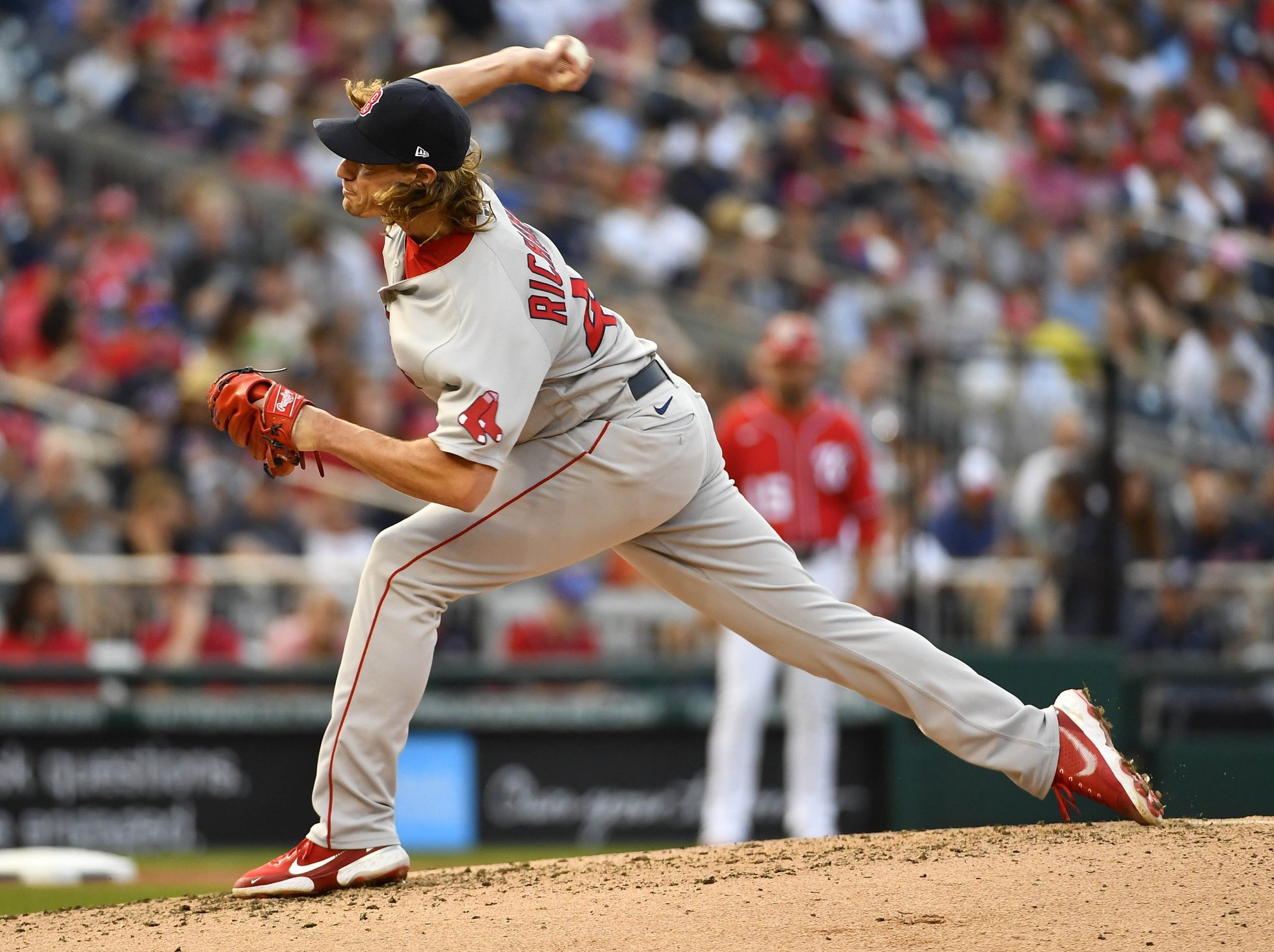 Earlier this week, Dan Hayes of The Athletic penned a piece sizing up the monumental challenge ahead of the Twins as they seek to fill the top three spots in their rotation from the outside. The end of the piece includes this quote from the Twins GM, which really caught my attention: “I think with the challenge comes opportunity,” Levine said. “We’re going to be as creative as we can be in terms of not being necessarily hemmed into the notion of it has to look exactly the way it has always looked. We may end up looking at this from the lens of how many multi-inning guys can we add to a staff and how far does that take us?” While Levine's allusion is not overly specific, one could take it to mean the Twins are envisioning a staff filled with "hybrid" pitchers – not quite starters, but not traditional one-inning relievers either – stringing together nine-inning games, without the expectation of one guy throwing six or seven. This is, in some respects, the direction baseball is trending, and it's been very noticeable in recent postseasons. For a team in Minnesota's position, embracing this revolution fully would make a lot of sense. Here are some reasons why: Free agent starting pitchers are expensive and hazardous. Mid-market teams like the Twins rarely play at the highest level because it's tough to be outbid resource-intensive (not to mention more appealing) heavy hitters, and because getting it wrong on a guy you commit $100+ million to can really set you back. As Hayes notes in his article, the Twins face an especially tough challenge because the two "sure things" in their rotation, Bailey Ober and Joe Ryan, are young and inexperienced starters who threw about 100 innings apiece this season. They'll surely have workload limits in place next year, and the model we're discussing would help accommodate that, while reducing a need to compensate by going out and finding proven durable workhorses on the open market (far and few between, highly expensive). Theoretically this could be a way to maximize effectiveness for a multitude of pitchers. We've seen many failing starters reinvent themselves as outstanding relievers, and this would be a pivot in the same vein. Guys can let loose more in shorter stints, rely on a two- or three-pitch mix, and avoid going through the lineup multiple times. In the not-too-distant past, it would've been difficult if not impossible to facilitate a system like this, but the expansion of rosters and the ability to continually carry 13-14 pitchers makes it feasible. You might ask, what types of pitchers would fit under an approach like this? There are a few names on the free agent market that catch my eye, but first, let's discuss some internal candidates to thrive under such an arrangement. Randy Dobnak: He's not really built up to a starter's full workload after throwing 46 and 70 innings in the last two seasons. As a multi-inning reliever or "extended opener" type starter, he'd be able to stretch out without pushing too hard. Griffin Jax: I wrote a while ago about why I like Jax as a candidate to level-up in a relief role: he's got one really good pitch (his slider), and he held opponents to a .597 OPS the first time through the lineup this year. Limiting him to two- or three-inning stints could help unlock his peak form. Lewis Thorpe: I'm not sure if the Twins will continue to try and see things through with Thorpe, and it wouldn't surprise me if he's dumped from the 40-man roster in the near future. That said, if they are committed to giving him one more shot to get healthy and show his stuff, this seems like the way to do it. Full-time starter is out the window at this point. Upcoming Prospects: The Twins have a wealth of near-ready prospects in the minors, but most of them have been plagued by injury issues and nearly all will need to be carefully managed and monitored. This approach helps here, just as it does with managing young MLB starters like Ober and Ryan. Of course, the Twins can't do it all with what they have on hand. They'll need to bring in some talent. The downside of this model is that established MLB starters are probably not going to want to sign on for such unconventional and reduced usage. The upside is that you can possibly make savvy and cost-effective moves, signing down-and-out guys and turning them around. To be clear, the kinds of pitchers who would likely to be signed to support this framework are NOT going to excite anyone. As you look at some of the names I'll throw out below, it's important to think of them not as they are, but as what they could be. Surely no one in Seattle was excited when they signed downtrodden starter Kendall Graveman for $1.25M last year, but now he's suddenly a hot commodity after posting a 1.77 ERA as a reliever. Here are a few pitchers from the current free agent class who strike me as fits in the hybrid mold: Garrett Richards: Struggled as a starter for Boston this year, but moved to the bullpen in mid-August and posted a 3.42 ERA with one homer allowed in 18 appearances the rest of the way. He threw two or more innings in five of those appearances. Jordan Lyles: Been terrible the past two years while mostly pitching out of the rotation. But he's still only 31 and had some success as a multi-inning RP/swing-man type as recently as 2018. Vince Velasquez: I don't have a specific reason for identifying Velasquez in this mix other than he's always had good stuff that has never really played as a starter. Why not try something else? He'll be extremely cheap despite a career 9.9 K/9 rate. Trevor Cahill: Sort of the same deal here as above. Cahill has a good repertoire but has struggled to sustainably harness it. He has plenty of experience as both starter and reliever, so the shift to a role like this could be relatively natural for him. Josh Tomlin: There's nothing very interesting or exciting about Tomlin; I just think he'd be a likely target if the Twins were to take an approach like this. He's an experienced veteran who spent the past three years in Atlanta pitching in such a capacity – frequent multi-inning relief appearances with the occasional start mixed in – and he has Derek Falvey ties from his days in Cleveland. I'm sure much of the response to names like these, or even to an overall experimental approach like the one being proposed, will be some variation of "Cheap Pohlads." But I'd submit that the cost efficiencies of this approach enable the team to invest heavily elsewhere – say, a star shortstop, or a high-end closer, or putting all of their chips on one workhorse type starter while using the shorter-duration usage patterns otherwise. Will the Twins actually lean into a radically innovative pitching staff model like this? I don't know. Would I personally advise it? I'm not sure. But you don't have to read between the lines much to see they're considering something along these lines, and you don't have to squint too hard to see the logic and potential value in it. "How many multi-inning guys can we add to a staff and how far does that take us?” Maybe we're about to find out. MORE FROM TWINS DAILY — Order the Offseason Handbook — Latest Twins coverage from our writers — Recent Twins discussion in our forums — Follow Twins Daily via Twitter, Facebook or email4 points
-
Can Ryan Jeffers Hit With Consistency?
jmlease1 and 3 others reacted to Mike Sixel for a post in a topic
4 pointsI'm not the least bit worried about him. I have no idea why anyone would be.4 points -
CBA Musings (11/12): What’s Happening and What’s Next?
snap4birds and 2 others reacted to Seth Stohs for a post in a topic
3 pointsThey could do a two-part type of thing... After 29 1/2 ... OR after 6 years, whichever is sooner. That way if a guy is called up at 21 and has six full seasons at age 27, he can become a free agent too. That might be a middle ground.3 points -
Trusting the Twins FO - pitching Free agents
mikelink45 and 2 others reacted to LastOnePicked for a post in a topic
3 pointsNot the kind of grades you'd be eager to show your parents. I think most fans understand that FA starting pitcher acquisitions are hard for non-top-tier teams. Most top FAs want to go elsewhere for greener pastures or fatter paychecks. In that regard, I don't really hold these less-than-stellar acquisitions against them. HOWEVER, I expect that highly-touted pitching developmental pipeline to start flowing. Whatever essentials one can't buy in the marketplace, one has to develop at home. We need to start seeing tangible results in 2022.3 points -
Are the Twins About to Build a Radically Unconventional Pitching Staff?
TopGunn#22 and 2 others reacted to bean5302 for a post in a topic
3 pointsPeople like referencing Tampa Bay, but would never accept the methodology the Rays employ. We wouldn't even be talking about a Buxton extension. He wouldn't even have gotten an offer from the Rays because every team in baseball would know he was going to be traded. Kepler, Polanco, Garver, Sano, Donaldson (who wouldn't be on the team to begin with) would all be on the open trade market. At least 3 of the 5 would be gone. Also, the Rays were miserable for a decade while they built up their farm system and no, they're not "always a contender" as they finished 2014-2017 under .500 every year. The Rays have an unorthodox approach similar to Oakland, but the Rays' have been better at developing pitching than the A's, and the Rays seem to have a little more payroll flexibility when they need it.3 points -
A case against signing the top free agents
wabene and 2 others reacted to bean5302 for a post in a topic
3 pointsSmall/Mid Market are not the same. They should not be grouped the same in this discussion as they operate differently. Mid market teams need to spend mid market money by definition and that means the money needs go to somewhere. Either to their own players who signed extensions just before free agency or by signing free agents. Anyway, one way or the other, successful teams usually have multiple big contracts on the books. Josh Donaldson's $21MM year a is big, but not that big. The 2016 Tigers had 3 people under contract making more than Donaldson and 3 more making $17MM+. Half of those big contracts were in house extensions and half were free agents. Of course, Detroit was out of control like a drunk retiree living on HSN back then. Just shooting from the hip Small Market = 1-2 year window, 4-5 year rebuild. Mid Market = 3-4 year window, 3-4 year rebuild. Large Market = 5-6 year window, 2-4 year rebuild. In terms of payroll, Small market < $130MM, Mid Market $130-160MM, Large Market $160MM+ on an annual basis. A $20MM short term (1-2 year) bump in the competitive window should be expected. The Twins should, but do not, operate in that fashion. Instead, they're a mid market team which is trapped in its small market roots.3 points -
Trade Target: Luis Castillo
Rigby and 2 others reacted to specialiststeve for a post in a topic
3 pointsYah ... if their needing Austin Martin, Royce Lewis, and Matt Canterino... for 2 years of service as not likely we would be able to resign him.... hard pass.3 points -
Trade Target: Luis Castillo
DocBauer and 2 others reacted to TopGunn#22 for a post in a topic
3 pointsArraez probably doesn't work here Mike because the reds have N.L. Rookie of the Year candidate Jonathon India at 2B and Suarez at 3B. What the reds REALLY need is a SS. But so do we. Once they move on from Castellanos and Winker they will be desperate for corner OF'ers. Larnach and Kepler could be in the mix, but the BTV of Castillo is HIGH. I could go Lewis, Canterino and Larnach, but I'd never include BOTH Lewis and Martin in the same deal. He would be our Berrios replacement and even though he would be expensive going forward, you would trade for him to KEEP him. Long term.3 points -
Are the Twins About to Build a Radically Unconventional Pitching Staff?
Hunter48 and 2 others reacted to bean5302 for a post in a topic
3 pointsMake it 100 losses and I'll agree even more.3 points -
Are the Twins About to Build a Radically Unconventional Pitching Staff?
MN_ExPat and 2 others reacted to AceWrigley for a post in a topic
3 pointsIn the perfect condition of 3 sets of 3 pitchers and 9 inning games, each pitcher appears in 54 games and pitches 162 innings and all could qualify for league leaders. Interesting symmetry.3 points -
Are the Twins About to Build a Radically Unconventional Pitching Staff?
tarheeltwinsfan and 2 others reacted to Andrew Bryz-Gornia for a post in a topic
3 pointsI don't think it should be a concern for free agent starting pitchers. This model sounds like a variation of the opener or planned bullpen games, but those still use prototypical starters in the other rotation spots. Someone like Pineda will be relatively cheap and can go 5-6 innings consistently (when healthy). Bring him back (or sign someone similar), splash on a higher-end starting pitcher, and then the other rotation spots can be the 3-inning guys.3 points -
When talking about innings, shouldn’t you include his Olympic innings? Don’t know what that total was, but I suspect it was more than a few if you include the innings he must have pitched in both actual games and other game/scrimmages leading up to Tokyo. You show 92-2/3, it wouldn’t be surprising if there were another 15-25 on top that. So he may have been close to 120 this year.3 points
-
CBA Musings (11/12): What’s Happening and What’s Next?
Richie the Rally Goat and one other reacted to Ted Schwerzler for an article
2 points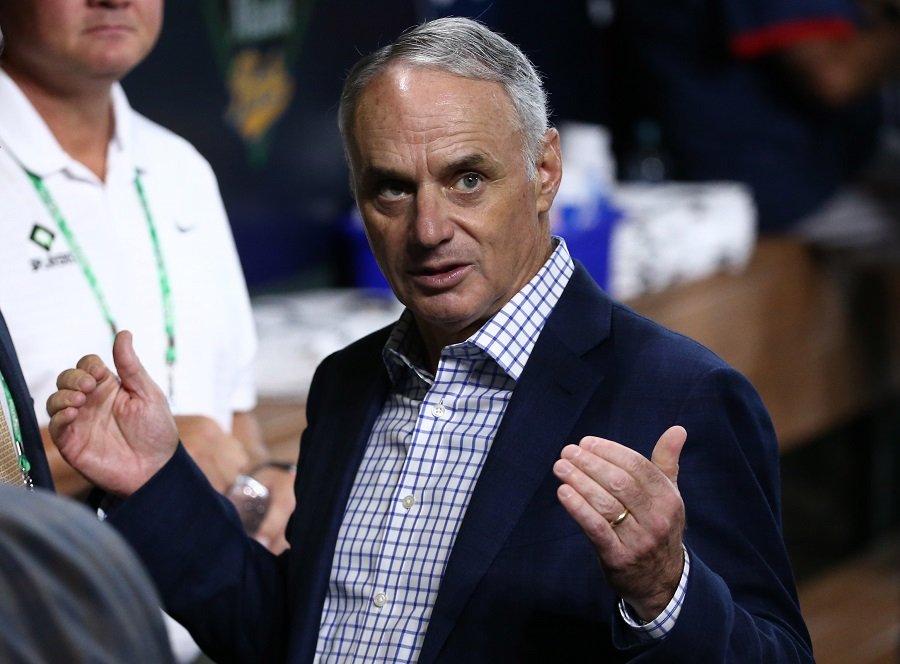 For months, and maybe most of the past season, it has been assumed that ugly labor negotiations would commence this offseason. During the Covid shutdown, owners attempted to blame the players while the athletes themselves looked for equitable financial conditions. That set the stage for a large amount of discourse when actual CBA discussions needed to be held. We’re now less than a month away from the expiration of the current CBA, and both sides must agree before the 2022 season can commence. A lot has taken place in the past week. Here is what you need to know: It’s obvious there’s conflicting information within the industry. Obviously, reporters have sources whose water they carry (we saw that recently with Adam Schefter in the NFL). Both Nightengale and Heyman are well-respected journalists, but the outcome of these two reports couldn’t be further from agreement. Again, Rob Manfred represents the owners, and his goal is to get them the most significant chunk of money for their product. While he oversees the product consumed by the fans, his bottom line is not necessarily aligned with that of MLBPA President Tony Clark. The likely situation here is sources on opposing sides looking to strike fear in one another. Service time was the focal point of MLB’s initial proposal to the players. The suggestion is that free agency would commence in the season following 29 1/2 years of age instead of six years of MLB service. Arbitration would also be directly correlated to MLB revenues, and a pool of funds would be allocated to the players. That was sharply denied. This week’s proposal, as reported by The Athletic’s Evan Drellich, focused on the same free agency threshold but noted that pay before reaching free agency would directly correlate to WAR (Wins Above Replacement) valuation. Specifically, the number generated from Fangraphs’ calculation. An algorithm to determine pre-free agency pay has also been reported upon, but there’s little belief that players will view this idea favorably. Nothing about this current proposal seems promising for inclusion in a future agreed-upon deal. First and foremost, tying players to teams until 29.5-years-old would be detrimental to those reaching the big leagues quickly. Both Carlos Correa and Corey Seager have yet to hit that age. Juan Soto would be tied to the Nationals longer; as would players like Vladimir Guerreo Jr. and Ronald Acuna Jr. As stars reach the big leagues quicker, their goal is to be compensated earlier in their prime, not after it has begun. An age closer to 27 may tilt the scales more fairly. Speaking as someone who is a fan of advanced analytics and the application of WAR (specifically fWAR), there are challenges here. Valuation isn’t static, and it would be difficult to quantify all players equally. Franchises that embrace analytics on the defensive side will put athletes in a better position to capitalize upon their value. Relievers are not adequately valued solely by looking at WAR, either. On top of that, WAR adjusts on a game-by-game basis. As Jeremy Frank pointed out on Twitter, imagine the guy that gets shelled and released now being negatively valued and therefore owing a former organization money. It is interesting to note that there’s a belief some of the top free agents will sign before the December 1st expiration of the current CBA. The best players will get their money regardless, but seeing how those in the middle tiers are impacted could drag this offseason to a rapid halt. I hope we don’t see a lockout that requires missed games, Spring Training, or otherwise. I’d bet heavily on a work stoppage coming effective December 1, however. MORE FROM TWINS DAILY — Latest Twins coverage from our writers — Recent Twins discussion in our forums — Follow Twins Daily via Twitter, Facebook, or email2 points
-
Trade Target: Luis Castillo
Doctor Gast and one other reacted to Nash Walker for an article
2 points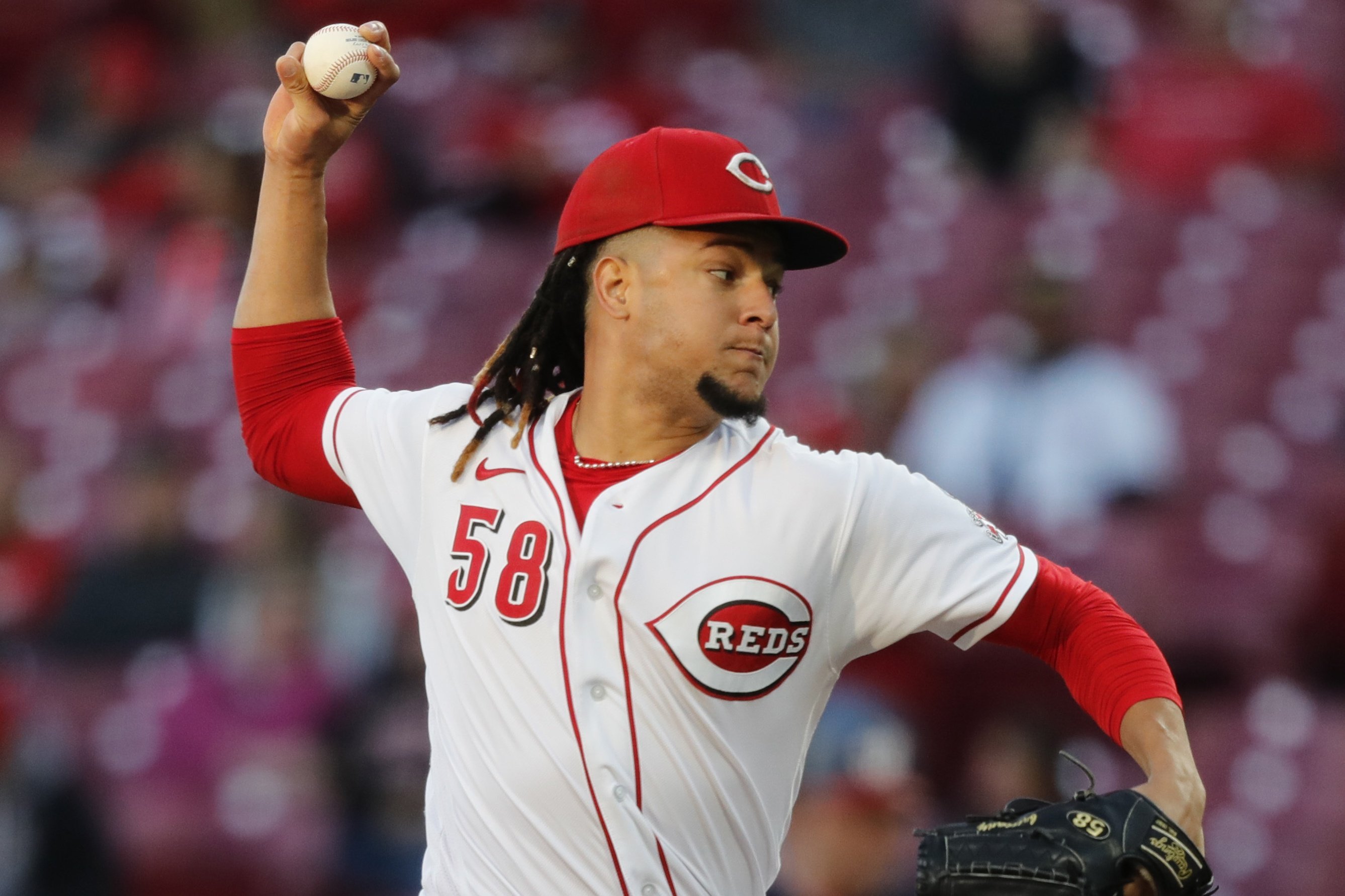 Jon Morosi reported Monday that Reds starter Luis Castillo could be on the move this offseason. His availability presents a prime opportunity for the Twins. THE PLAYER Luis Castillo, 28, is precisely the type of pitcher the Twins should be seeking. An established, hard-throwing right-hander who’s under team control through 2023 at modest salaries. Castillo is already an excellent, durable starter. He’s thrown 618 innings since 2018, the 10th most in MLB. His ERA+ of 123 since 2017 (100 is average) ties him with Marcus Stroman for the 11th highest. Castillo is elite at limiting home runs and missing barrels. Castillo’s 10.7 Wins Above Replacement since 2019 trails only Lance Lynn (15), Jacob deGrom (14.9), Gerrit Cole (14.4), Zack Wheeler (14.4), Max Scherzer (13.6), and Lucas Giolito (11). Most excitingly, Castillo’s stuff - a 97 mph fastball, a devastating 88 mph changeup, and a fantastic 86 mph slider - provide dreamable upside. Over his final 20 starts of 2021, Castillo posted a 2.69 ERA. He's a Cy Young candidate in 2022. THE COST Oh boy. A ton. For all of the reasons listed above, plenty of teams will vie for Castillo. He’s projected to make $7.6 million in 2022 and, with a strong season, could get $10 or $11 million in 2023. Call it two years and $18 million. That’s an incredible bargain. The Reds have signaled that they’re ready to slash payroll this offseason. Castillo and fellow starter Sonny Gray would likely be the most sought-after in an overhaul. Castillo’s upside, though, makes him the one to target. MLB Trade Simulators is an imperfect tool but can give us a sniff of player values. Castillo’s is predictably hefty. According to the simulator, the Twins would need to part with Austin Martin, Royce Lewis, and Matt Canterino (or a package of similar value). The Twins have no track record of paying such a price. But with three gaping holes in the rotation and an embarrassing summer to overcome, do they have the right to be conservative this winter? THE BOTTOM LINE The Twins must address at least one rotation hole via the trade market. It’s simply untenable to sign three quality starters via free agency. The Twins don’t have the payroll or the leverage. We’ve heard many excuses of why free-agent starters don’t choose Minnesota. The weather, the income tax, the contract offer, and so on. The Twins can rarely secure a player of Castillo’s ilk and upside. They can finally make a splash and a statement. By trading for Castillo, the Twins would signal that they are serious about 2022 and 2023. The move would alert free agents - Marcus Stroman, Robbie Ray, and others - that you’re committed to improving and winning. The Twins indeed had opportunities to make impactful moves in recent years. Those chances are gone. What matters now is how aggressive they are in living up to the notion that a “rebuild” is not in the cards. If you’re going to do it, do it. MORE FROM TWINS DAILY — Latest Twins coverage from our writers — Recent Twins discussion in our forums — Follow Twins Daily via Twitter, Facebook, or email2 points
-
Long time fan first time poster. In making this offseason blueprint, I sourced ideas from TwinsDaily offseason handbook, MLB Trade Rumors, Baseball Savant, Fangraphs, a number of previous offseason blueprints, and leveraged MLB Trade Values for some inspiration. My strategy focuses on reinvest, restructure, and retry. For the reinvest, it means putting the cash to use with the belief that the team can be a contender like it was in 2019 & 2020. But this is not just an eye on 2022, but over the next 5 year window which aligns where we still have core pieces being joined by top prospects. One note is, that the trade price for any top SP was very high, and with the chance that we may not be good next year, i didn't think it was a good use of prospects to get a 1 year rental or even a 2 year option just because of how many pieces we would have to give up. My first step in the reinvest is to extend Buxton. It was previously reported that there was a framework of $80mm over 7 years. In my plan, I recommend a base salary of $12mm with a range of incentives. I modeled it giving Byron an additional $8mm for playing in 120 games, or a yearly rate of $20mm. I think there could be further incentives that could scale to paying another $8mm should he play in 150 games. While this would exceed the "remain even" payroll scenario I have planned, the Twins would generate enough of an on and off the field impact to pay that much. The second part in the reinvest is to bring in a controllable pitcher. One thing stood out to me when looking at our prospects - there is no LH SP. To compound this issue, the 2022-2023 FA class also lacks this element, so I felt it was critical to solve it this offseason. To solve this I identified three solutions, one who was recently taken Andrew Heaney, ERod, and Alex Wood. ERod and Wood have good swing and miss stuff, but the upside of ERod and his Stat cast number makes me think he is the right investment. He throws decently hard for a LH SP, limits hard contact, and has quality swing and miss type stuff. The community had a wide opinion on his contract, so I went with the high end and signed him for 5 years at $16mm per ($80mm.) To me, he is like Jose a borderline #1 but more #2 type guy; plus he has had to face the Yankees and the rest of the AL East so he is battle tested. To round out the reinvest part, I resigned Michael Pineda for $9.5mm - he is a solid middle or back of the rotation arm that could be had for a 1 year deal and is well liked, so if a prospect is doing well, he would move to the Pen. I also signed Mchugh for 2 years $6mm. Looking through Fangraphs on k-bb% he is among the leaders. Transitioning to the restructure part of the offseason, this is focused on the infield, bullpen, and 40 man roster maintenance. For the infield, I borrowed the idea of acquiring Jean Segura; however, I get him in a three team trade with the Phillies and Blue Jays. This trade actually solves needs for all teams involved. The Blue Jays had poor production from third last year and would love Josh back. They get rid of Grichuk who doesn't cleanly fit in with his contract, but he would be a big help to Philly as they were near dead last in production from both CF and LF. Using MLB Trade Values as a model each team gets what it needs: Twins SS (yes he hasn't played there in a year, but he played it well before; Blue Jays get a good player back. From a salary perspective Grichuk is making $10mm while Josh is $23mm, but the $7mm from the twins can be used for the 2024 buyout. I actually modeled it as $2mm would be for this year. The Phillies unload Segura who is making $14.85mm + $1mm and pick up Grichuk and his $10mm, and would receive $8mm from the Twins this year, meaning $13.85mm is freed up for them to pursue their SS mega signing. This move frees up future payroll space for the twins beyond the 2022 season meaning if there is another season of injuries to our SP prospects we can supplement in the winter of 2022 i.e. Berrios. I move Sano to DH, put Alex at first, and bring up Miranda to compete with Luis for the every day 3rd base, but both will play around the diamond. The restructured bullpen also comes with the 40 man roster considerations. The immediate locks are Rogers, Duffy, Alcala, Thielbar, McHugh, and Coulombe (surprisingly he is on the first two pages for RP who pitched more than 30 innings and had a good k-bb%, and a decent stat case too. The next bit is a trade Padres style giving up bulk, but not premium for a great controllable reliever, who I am willing to bet most haven't heard of David Bednar + Sam Howard (who also has good stuff, but a slight control issue.) Why it makes snese for the other teams. Reds need cost controlled talent at SP which they get with Barnes, Maciel is a good OF prospect, and Rooker would be fun in that ballpark. Pirates get a number of prospects, and an affordable rotation hometown kid in Dobnak (the cash is for Dobnak's buyout) David is controllable through the 2026 season and is elite. He provides good insurance if Duff and Rogers leave next year. The following would be the Twins. Of note, 2 spots in the pen would be kept for the prospects to cycle through, so that there is always fresh arms. In addition to the FA and trades (Sam Howard has 2 option years left), I would add Vallimont, as I think a team would take him and use him in the pen+ Lewis, Miranda, Enlow, Winder, and Sands; and the 60 IL which brings us to 45 people for 40 spots. For those 5 spots, I would cut Garlick, Smeltzer, Thorpe, Garza Jr,, Minaya, The other member of the 40 man not listed above include: Celestino, Baly, Rortvedt, Cotton, Duran, Jax, Strotman, Stashak. Please let me know your thoughts on the approach. I truly think one of Winder or Balzy could contribute out of the gate towards the rear of the rotation, and believe Lewis will be ready so that Segura's money is off the books in 1 year. I hope this makes us competitive, but keeps the top shelf prospects to fill out the future years of the window. Thank you Twins Daily for providing such a cool platform, and the best content and analysis that there is on the MN Twins.


 2 points
-
CBA Musings (11/12): What’s Happening and What’s Next?
Richie the Rally Goat and one other reacted to mikelink45 for a post in a topic
2 pointsI really can't figure out what is truly equitable, but I think that we should set free agency at so many years after signing. I am for anything that removes the goofy idea that waiting until June is good for the game, the player, or the team2 points -
CBA Musings (11/12): What’s Happening and What’s Next?
Vanimal46 and one other reacted to tony&rodney for a post in a topic
2 pointsThe owners make their money and that is fine, good for them. Manfred needs to think in terms of MLB as a product to gain consumers, such as in attendance at games, watching on TV, listening to the radio, reading online/newspaers, subscribing to game services (mlb.com), and like kind. The players should consider the younger players and milb to some degree. 27 is a reasonable age, 29 is not. A more simple solution might be to reduce the years of control from six to five and get rid of the bogus rules that hold a player in the minor leagues until May 15 or June something. If you spend 30 days on the roster, that is Year 1 and so forth. A strike into March or later will be deleterious for the game, both the owners and the players.2 points -
Are the Twins About to Build a Radically Unconventional Pitching Staff?
wabene and one other reacted to Nick Nelson for a post in a topic
2 pointsThey have developed pitching. There are few if any teams in baseball with more quality arms awaiting at the top level of their system. In evaluating them on this front, we can't underestimate the disruptive impact of 2020's canceled MiLB season on health, routines, timelines, etc. It takes 4-5 years to develop pitching from scratch (which is largely what they had to do) and that was Year 4. Part of the appeal in this plan is that it becomes easier to bring those prospects along in a carefully managed way that also portends more immediate success (because the guys can lean more on their best pitches, not face lineups multiple times, etc.). Also, what we're talking about here is taking fringy arms (Griffin Jax, Lewis Thorpe, or free agents like Garrett Richards) and making them more effective by altering their roles and usage. Isn't that the definition of developing pitching?2 points -
Are the Twins About to Build a Radically Unconventional Pitching Staff?
USAFChief and one other reacted to Twodogs for a post in a topic
2 pointsBut Falvey and Levine were supposed to be pitching Gurus, so isn't it a failure if by now they havent developed any pitching and are looking for creative ways to fill the stopgap of a pitching staff?2 points -
Can Ryan Jeffers Hit With Consistency?
DocBauer and one other reacted to gman for a post in a topic
2 pointsPeople seem to forget that Jeffers was a rookie last year. He only had 62 plate appearances total in 2020. That of course means he didn't see much pitching. His experience prior to 2020 only includes 96 plate appearances above A ball. Give a rookie a chance.2 points -
There were 12 teams in baseball whose starters average less then 5 innings per start. The Twins were one of them. Tampa Bay with the best record win the American League got about 14 outs per game from there starters. The third fewest in baseball. They pitched even fewer innings in 2019. 5 years ago Cincinnati starters had the fewest innings in baseball with 859 innings. That would have been 4th most in 2021. So baseball has quickly been trending away from long innings from starters. Anyone who has been a baseball fan for a long time remembers starters who made 40 starts a year with over 20 complete games and 300+ innings. When was the last time you saw that. The future I expect to see guys who train as 4, 3 & 2 innings pitchers with no thought to starter or reliever. The matchups will move from game to game, with no real set "rotation" which won't exist anymore.2 points
-
Can Ryan Jeffers Hit With Consistency?
DocBauer and one other reacted to wsnydes for a post in a topic
2 pointsThis is part SSS initially and part opposing pitchers learning a little something about him and using it effectively. Jeffers simply needs to learn to adjust to that too. I think he'll be fine with more, and more consistent, at bats.2 points -
Can Ryan Jeffers Hit With Consistency?
DocBauer and one other reacted to rv78 for a post in a topic
2 pointsThey need to keep both Garver and Jeffers. They have no one else ready to step in as Rortvetd showed he hits even worse than Jeffers at this point. Could it be that someone tried to get Jeffers to hit more HR thus explaining why he is swinging under the ball and missing more often? Shame on them if that happened and hope he reverts back to his swing of 2020.2 points -
Trusting the Twins FO - pitching Free agents
mikelink45 and one other reacted to rv78 for a post in a topic
2 pointsI think a big part of this article is missing. You need to include why the Twins were able to acquire these guys. 1. Pineda was injured and no one else probably wanted to pay him for a year for nothing. 2. Odorizzi was a trade so he, like Maeda doesn't count. 3. Hill is an older veteran who isn't going to get many suitors for his services when any day, week, month or year he will reach the end of his career. 4. Bailey like Hill is an older pitcher probably reaching the end. Certainly not in his prime and these average pitchers are pretty easy to find so there was no striking gold here even if he was going to pitch as good as he ever has in the past. 5. Perez was coming off a year where he went 2-7 with an ERA of 6.22 for Texas. Seriously was there much competition for him? I doubt it. 6. Shoemaker. Are we seeing a trend here? Another veteran hoping they catch lightning in a bottle. The last time he was an effective pitcher really worth something was back in 2014. 7. Happ. Rinse and repeat. Older veteran at the end of his career. Was once a really good pitcher but when you only sign these guys after they have lost the best years of their careers you aren't going to get anything but the scraps. Looking at the effort of the FO in these signings I would say they haven't tried too hard to bring in someone who will really make a difference. It's been more like filling a hole with a turd and hoping it turns into a rose.2 points -
Can Ryan Jeffers Hit With Consistency?
DocBauer and one other reacted to farmerguychris for a post in a topic
2 pointsHope we can keep both Garver and Jeffers as our backstops for another year. Give them more time to see how good Jeffers can be, and don't really feel good about who would be an acceptable #2 if one of them were traded for a position so frequently injured.2 points -
Parting Ways with Colome Leaves Some Troubled
adjacent and one other reacted to sampleSizeOfOne for a post in a topic
2 pointsWasn't it some sort of mutual option? Maybe Colome chose to leave... Then all would be right with the Twins, wouldn't it?2 points -
Can Ryan Jeffers Hit With Consistency?
DocBauer and one other reacted to Bigfork Twins Guy for a post in a topic
2 pointsI believe he will come back to the middle and be fine. I’d like him retained as one of or even our primary catcher. He needs more MLB at bats.2 points -
Trade Target: Luis Castillo
DocBauer and one other reacted to Otaknam for a post in a topic
2 pointsMartin AND Lewis plus pitchers is too high a price for two years of Castillo, especially since the Buxton extension is not done. How about one of the two from Martin and Lewis, Kepler, and a pitcher.2 points -
Parting Ways with Colome Leaves Some Troubled
Richie the Rally Goat and one other reacted to theBOMisthebomb for a post in a topic
2 pointsAs a fellow Twins fan who lived through the Ron Davis years, this is accurate. You never really recover from the RD experience. I remember a middle school Spanish class where the authorized topic of conversation for the entire hour was how awful RD was.2 points -
Are the Twins About to Build a Radically Unconventional Pitching Staff?
Hunter48 and one other reacted to Nashvilletwin for a post in a topic
2 pointsThe ultimate strategy won’t be as dire or radical as some of us are describing on this thread, but it will be significantly in that direction. A couple of observations: 1. We are a small to mid market team. The good news is we are blessed with owners who will pay at the upper end of the range of those teams, especially if a window seems open. 2. In conjunction with trends in the modern MLB, our coaching staff does not support long starter outings. Instead, they prefer a two time through the order approach. 3. We do not have the capital or risk appetite to go “all in” on high end FA SPs - certainly not where we are in our current fairly closed window and given #1 and #2 above. 4. We actually have a decent cadre of young starter talent ready to test their mettle at the Show level. 5. The FO and coaching staff subscribe to the Bomba strategy of looking to score lots of runs and there are no signs they are looking to abandon that. So, what’s the right, sensible strategy then? You build a starting staff full of low cost, controllable assets that seek to pitch five IPs per start. The goal is to have each of these starters have an ERA of between 4 and 5. So our starters work half the game or so giving up 2-3 earned runs per start. You then augment your staff with a lights out bullpen that can hold your opponent to no more than a run or two per game. Such a bullpen can be used much more situationally and be built at a much less cost than investing in high end starters. The overall cost savings then can be applied to building your starting eight for hitting and defense. The goal is to win a lot of games by scoring more than 4 runs. When the window is clearly open, you then can splurge on a true #1 or #2 if need be - who knows, there is a decent chance one or two of our youngsters will develop into that role anyway and it won’t cost $25MM/year. Not only is this the approach the I think the Twins will take, but I also think it’s the right one.2 points -
2 pointsMLB Trade Simulators is an imperfect tool but can give us a sniff of player values. Castillo’s is predictably hefty. According to the simulator, the Twins would need to part with Austin Martin, Royce Lewis, and Matt Canterino (or a package of similar value). If that is the cost, I would say "Hell No". I would rather start a complete rebuild. I want to see all three of these guys in Twins MLB uniforms someday soon. (Two years max?)2 points
-
Are the Twins About to Build a Radically Unconventional Pitching Staff?
Karbo and one other reacted to Whitey333 for a post in a topic
2 pointsGood article. Lots of well thought out ideas. I hope it doesn't come to this. It's funny how s "starting" pitcher goes maybe 5 inning gives up 3 or 4 runs and gets a standing ovation. The Twins ruined their pitching staff last year by adding pitchers that no one else wanted. Look at the results. Even if it is tried all we have at this point is mostly unproven prospects with little or no major league experience. Analytics don't mean much if the people you are counting on can't produce. MLB is being ruined by all of the efforts to turn the game into one huge video game. Bring back real baseball before it's too late.2 points -
Possible trade candidates from Oakland to acquire.
brockbesler and one other reacted to Major League Ready for a post in a topic
2 pointsIt sure sounds like they are talking about a complete teardown and rebuild. They would be extremely fortunate to be back in contention after 3 years but it's most likely longer. So, best case scenario, they might have one year with Arraez. He has far more value to a team in a contention window or confident they are entering a contention window.2 points -
Trade Target: Luis Castillo
DocBauer and one other reacted to mikelink45 for a post in a topic
2 pointsI would take him - the question is - what would the Reds take for him? Buxton is not under control as long as Castillo is and will cost more - the Reds are the A's of the NL and do not want cost. Could Kepler fill the void that is coming in RF? Which young arm would you add to the trade? Luis Arraez? I think it is at least a three for one.2 points -
Are the Twins About to Build a Radically Unconventional Pitching Staff?
Karbo and one other reacted to TwinsDr2021 for a post in a topic
2 pointsOne of the problems I see with this is drafting pitchers, which agent would ever let their client sign with a team that does this? College Seniors with no other options? This would have been a great thing to do last year towards the end, and maybe this year to get the prospects up and given a chance without putting the pressure on them to go deep into a game. But as a long term strategy is bad for the players, fans and the game of baseball.2 points -
Are the Twins About to Build a Radically Unconventional Pitching Staff?
Greglw3 and one other reacted to Mill1634 for a post in a topic
2 pointsAdding a bunch of low to below average pitchers and hoping it works because you ask them to pitch < 5 innings (more like 2-3 as suggested, and sometimes 4 if things are going smoothly) isn’t a good strategy over 162 in my opinion. When you throw out 2 or 3 Lewis thorpe types in a game, odds are one of them is going to get lit up. I like to think outside the box as anyone, but I think as far as I’m willing to go with this is the bulk pitcher type we’ve seen many teams use. A good team still needs 3 really good pitchers who you feel good about when they take the mound, and another handful that you feel like you have a shot if you only ask them to throw 4 or 5 innings.2 points -
Possible trade candidates from Oakland to acquire.
MABB1959 and one other reacted to Rosterman for a post in a topic
2 pointsI see Arraez as a possible solid player to sign to a decent longterm contract, that any team should be able to flip. Right up Billy beane's alley!2 points -
Possible trade candidates from Oakland to acquire.
stringer bell and one other reacted to brockbesler for a post in a topic
2 pointsI’m not sure if I completely agree with this. It’s not like Arraez is a rental, he has 4 years of control left. However, if they do decide to go for a complete rebuild then he might not interest them much.2 points -
Possible trade candidates from Oakland to acquire.
glunn and one other reacted to brockbesler for a post in a topic
2 pointsHow about this. Twins get: Montas Manaea Andrus A’s get Arraez Larnach Cavaco Enlow According to mlb trade sim this is a slight overpay for the Twins, but I think taking on Andrus salary would really entice the A’s.2 points -
Twins Offseason Status Update: Early Maneuvering and Rumors
wabene and one other reacted to Nick Nelson for a post in a topic
2 pointsI continue to believe people are way too down on Dobnak! The guy was pitching through a bum finger on his pitching hand most of last year. When healthy and on his game, he's a great fit in a long-relief role: a strike-throwing, efficient, GB pitcher who can bridge several innings on a regular basis. I'm not ready to judge him entirely on the basis of his 2021 season. He did some special things in the first ~60 MLB innings and he has a legit formula to succeed.2 points -
Possible trade candidates from Oakland to acquire.
glunn and one other reacted to TwinsDr2021 for a post in a topic
2 pointsIt certainly seems like the time for the Twins FO, to call up OAK, and try to pry a few of those starting pitchers away. Montas FA in 2024, Bassitt and Manaea in 2023, so it seems like it shouldn't cost a ton for Bassitt and Manaea, Montas maybe a bit more. I would be willing to give up bunch of the prospects and/or maybe Laranch for Montas and one of the others.2 points -
The problem is very few of those top end guys you penny up and pay pan out over their deal. Look up the top 20 paid pitchers and what they get paid to how they have done over their contract. Only about 3 to 4 lived up to deal, and about half did fine for about half the deal, and the other half were mostly train wrecks for the money they got. If the Twins know which one will be living up to the deal, great, but breaking bank on 1 guy that plays less than 1/5th of the innings played in a season, That is a huge risk. It also fills only 1 hole, even if it works out great, but then you have to save on the other 2 holes. I am not saying they should refuse to sign a top guy, if they truely feel they are worth the risk, but to just say lets go out and overspend everyone on guy x because we need to sign the best player out there, will not set us up for WS. As the game evolves, top end starters are losing even more value, they pitch less inning each year meaning at most they influence even less of the games. Only 4 guys pitched over 200 innings, and they were are barely over 200. At minimum you have 1,458 innings in a season. Tat means even the best starters these days influence the game 1/7th of the season, but get paid over like 1/4 of the total payroll for some mid-level payroll teams. Even in playoffs, look at Dodgers staff, nothing was guaranteed of winning.1 point
-
Don't disagree with that sentiment, but also I can't say that agree with it either. There's a lot going on here, so I'll do my best at attempting to address each point (probably poorly, so bear with me): If you are a first or second round talent , maybe 3rd(or the parent or the agent) do you really want to sign with a team that basically says for the next 10 years you are going to be a 3 inning pitcher? I honestly think this depends on a lot of factors. First, every kid is different and wants different things. There are some who wouldn't accept a role like this, while others don't care at all and just want to play and do whatever it takes to excel and help the team succeed. And what team is going to draft a pitcher in one of those rounds and pay them the slot money to be a part-time pitcher? So basically the team will have said we won't ever go after healthy top end talent, we are going to settle for lesser? Again, this depends. There are so many variables that go into drafting and then getting an arm to the majors, that in the end a wise/good team usually winds up going with talent and projectability over role/status. Also, at no time has the FO EVER said, literally or figuratively, "we won't ever be going after healthy top end talent, we are going to settle for less." And yes it is bad for baseball to try and remove the star starting pitchers, quite a few of the games I have attended with my son revolve around who the Twins are playing and who is pitching that day. Multiple times we have decided not to go to a game on a bullpen day, because they tend to get long and boring and have went when Berrios or Odo, or a stud on the other team was pitching. I don't in any way feel that baseball is trying to remove "star" starting pitchers. This in many ways feels more akin to what I see in HS and many college settings these days. Multiple arms that can be interchanged and used in a variety of ways. MLB may be the melting pot of the worlds major talent of baseball, but it feels like the league lags behind HS/College/the Minors in being creative about how to mange the game and roster usage. I am not saying this year it would be a bad idea I am saying the philosophy is a bad idea, and I can't believe the players union would accept it. This isn't really a player's union type of thing in my opinion. Also, not a big fan of MLBPA in the regards that they don't (at least openly) campaign for the betterment of players in the minors, but that's a conversation for another time. I actually think pairing Winder with a Ryan and Ober with Balazovic, would be a great way to build them up. Sign a couple of pitchers, trade for a pitcher, then let the rookies thrive but not asking too much of them for too long. Honestly, I think this is more of what the team and others around the league may have in mind. For what it's worth, this is what I think.1 point