Leaderboard
-

-
Riverbrian
Old-Timey MemberPoints24,024Posts -

-
Hosken Bombo Disco
Community LeaderPoints14,795Posts





Popular Content
Showing content with the highest reputation on 09/03/2014 in all areas
-
Game Thread: White Sox@Twins 9/3 7:10PM
glunn and 7 others reacted to Riverbrian for a post in a topic
8 pointsTrue Story: I was flying back from Baltimore... I had a Window seat and I was looking down at what I figured was West Virginia. I hadn't said a word to the stranger next to me but for some reason I felt like sharing and I said to him... "You know... It sure doesn't look like much is happening in West Virginia from this height. And he replied... "I like West Virginia... People from there... Keep to themselves". It made the rest of the trip... Kinda uncomfortable.8 points -
Small world. I sat next to her on my flight home from SABR.6 points
-
Game Thread: White Sox@Twins 9/3 7:10PM
crapforks and 5 others reacted to ashbury for a post in a topic
6 pointsLike a bat out of hell, I presume? / RB didn't go there? Or did I simply miss a reference?6 points -
Game Thread: White Sox@Twins 9/3 7:10PM
glunn and 5 others reacted to Squirrel for a post in a topic
6 pointsThe Miracle are headed to the FSL Championship series!6 points -
Game Thread: White Sox@Twins 9/3 7:10PM
glunn and 4 others reacted to Riverbrian for a post in a topic
5 pointsI have a bunch of stories but this is one of my favorites. I think I've told it before but oh well. I was watching a high school baseball tourney in East Grand Forks. My nephew was playing for Thief River Falls and they were playing Fergus Falls. I was sitting on the top row of portable metal bleachers down the right field line and it was very very windy. The bathrooms and concession stand are situated behind the RF fence so people were always walking behind these portable bleachers. A big gust of wind came up and blew my hat off and I jumped off the bleachers to get it back and a guy walking past grabbed my hat and was trying to throw it back to me but the wind caught it again and it went even further away. The guy actually kinda ran after my hat and this time... He handed it to me. The jokester that I am... I said... "You'll never make the majors leagues with an arm like that". The guy kinda chuckled and continued on his way. Now the interesting part.... I had no idea who the guy was when I said that... But it turns out... It was Dave Goltz. He was watching his son... Who was playing for Fergus Falls. He probably thought... I knew who he was when I made that joke... And I was just amazed at the random coincidence of making that joke toward someone who actually pitched in he major leagues without knowing he was in the major leagues.5 points -
Anything bad that happens after you pointed this out is on you.5 points
-
Game Thread: White Sox@Twins 9/3 7:10PM
glunn and 4 others reacted to Riverbrian for a post in a topic
5 pointsI'm just going to point out that JB left during the rain delay. I like JB a lot but... Is there any doubt anymore... She is obviously a Jinx.5 points -
Game Thread: White Sox@Twins 9/3 7:10PM
Riverbrian and 4 others reacted to Hosken Bombo Disco for a post in a topic
5 pointsand I was just finishing a 3,200 word post on taxation policies and effects following the '29 market crash - yeah, thanks a lot. Maybe there's a ballgame on somewhere so I can blow off some steam...5 points -
Game Thread: White Sox@Twins 9/3 7:10PM
Riverbrian and 4 others reacted to ashbury for a post in a topic
5 pointsGood luck with that, Internet Tough Guy.5 points -
Game Thread: White Sox@Twins 9/3 7:10PM
LaBombo and 3 others reacted to ashbury for a post in a topic
4 pointsCarnac: Water Buffalo Ed: Yadda... Carnac: ... yadda.... Ed: ...yadda. Hey-yo! Carnac: What must you do every day to grow a beautiful bed of Buffalo?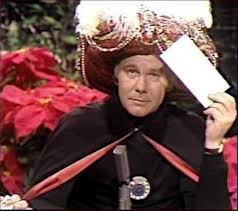 4 points
-
Game Thread: White Sox@Twins 9/3 7:10PM
LaBombo and 3 others reacted to ashbury for a post in a topic
4 pointsPressly struck out the side. Too often, the phrase is used when a pitcher gives up a two-run homer but scattered three strikeouts elsewhere in the inning. Not the case here; three up, thirteen pitches, three down.4 points -
Game Thread: White Sox@Twins 9/3 7:10PM
Riverbrian and 3 others reacted to GCTF for a post in a topic
4 pointshttp://sadderbutwiser.files.wordpress.com/2013/06/family-guy-it-gon-rain.png4 points -
Different than the norm. A talk at this year's SABR convention reminded us that league-wide the first inning is the biggest scoring inning (and the noteworthy thing, not pertinent here, is that most of the home advantage is found in this first inning). It's not hard to imagine why: managers get to choose their lineups after all, and only in the first are you guaranteed to get what you wanted. Second inning, by the same logic, I believe has the lowest scoring or close to it. So it would be strange for any pitcher to not benefit from pitching to the lower part of the order. I'll have to go with Small Sample Size to explain this year's numbers for him, and not part of a larger pattern.4 points
-
Game Thread: White Sox@Twins 9/3 7:10PM
glunn and 3 others reacted to Riverbrian for a post in a topic
4 pointsNot me... TC Bear is all that scares me. I often think he's just acting friendly but eventually his natural instincts will take over and someone is going to get mauled.4 points -
Game Thread: White Sox@Twins 9/3 7:10PM
ashbury and 3 others reacted to USAFChief for a post in a topic
4 pointsUnless you took 87 and 91 off, I'm going to guess it's not you.4 points -
Game Thread: White Sox@Twins 9/3 7:10PM
Riverbrian and 3 others reacted to ashbury for a post in a topic
4 pointsMan. They really must have been in Gardy's doghouse. / AKA : Gardenhire Acres VIP Kennels, R. Clyde Gardenhire Prop.4 points -
Game Thread: White Sox@Twins 9/3 7:10PM
Richie the Rally Goat and 3 others reacted to Hosken Bombo Disco for a post in a topic
4 pointsLook at that lineup - did Gardy lose a bar bet or something?4 points -
4 pointsSo did Terry Ryan. Remember he was traded for Sam Fuld. This kind of illustrates my point that you don't have to keep rotation spots open for guys like Milone. He should be more of a plan B.4 points
-
Game Thread: White Sox@Twins 9/3 7:10PM
Riverbrian and 2 others reacted to D. Hocking for a post in a topic
3 pointsI bet if he ever asked "Can I help you" it would be in an a-hole fashion.3 points -
Game Thread: White Sox@Twins 9/3 7:10PM
LaBombo and 2 others reacted to ashbury for a post in a topic
3 pointsSo you ditched Algebra class but attended English, I see.3 points -
Game Thread: White Sox@Twins 9/3 7:10PM
LaBombo and 2 others reacted to ashbury for a post in a topic
3 points11 runs in. At this point you almost feel sorry for the Wh- .... no. No.3 points -
Disconcurs: http://elname.com/elname/wp-content/uploads/2012/12/bufalos-mojados-picapiedras-220x140.jpg3 points
-
Game Thread: White Sox@Twins 9/3 7:10PM
glunn and 2 others reacted to D. Hocking for a post in a topic
3 pointsOr Tommy Milone being the Twins starter in game 1 of the 2015 World Series (while dating Kathy Ireland - due to her being on the rebound from RB).3 points -
Game Thread: White Sox@Twins 9/3 7:10PM
Hosken Bombo Disco and 2 others reacted to Riverbrian for a post in a topic
3 pointsAll stories are good stories. Stories are triumphs of the human experience and should be celebrated. Stories are what separate us from Water Buffalo. I will always stop and take time to listen to a story.3 points -
Game Thread: White Sox@Twins 9/3 7:10PM
LaBombo and 2 others reacted to ScrapTheNickname for a post in a topic
3 pointsGreat, great story. I have one that doesn't involve a major leaguer, but it's set in Fergus Falls and there is wind involved. I hit two homeruns in one inning when I was playing JC ball for Crookston. Two homeruns in one inning. That very rarely happens to anyone, at any level. So it sounds pretty freaking spectacular. But it was because the wind was blowing like 50 mph, straight out to center field, and I wasn't the only one hitting the ball around. It was mostly funny because I wasn't capable, actually, of hitting any homeruns at all.3 points -
Game Thread: White Sox@Twins 9/3 7:10PM
Hosken Bombo Disco and 2 others reacted to USAFChief for a post in a topic
3 pointsIs that all ya got, Vargas?3 points -
Game Thread: White Sox@Twins 9/3 7:10PM
Squirrel and 2 others reacted to Riverbrian for a post in a topic
3 pointsYou have a lovely voice but your yodeling needs some work.3 points -
Game Thread: White Sox@Twins 9/3 7:10PM
Mike Sixel and 2 others reacted to Squirrel for a post in a topic
3 pointsYou know, these central time zone games are just too late for me.3 points -
Game Thread: White Sox@Twins 9/3 7:10PM
glunn and 2 others reacted to Riverbrian for a post in a topic
3 pointsI'm not sure but I handled the situation like an adult. I spent the rest of the flight playing peek-a-boo with him.3 points -
Game Thread: White Sox@Twins 9/3 7:10PM
Don't Feed the Greed Guy and 2 others reacted to Squirrel for a post in a topic
3 pointsI have a John Danks story. Actually, is more a story about my neighbor. She sat next to him on a plane on a trip a year or two ago. She found out everything about him ... and his fiancée ... that he was a pitcher for the White Sox, what his plans are after baseball, what his fiancee's name was and what she did, where/when they were getting married and so on and so forth. So when I asked her who it was she said she didn't know because she didn't want to be too nosy and ask him his name. She finds out EVERYTHING but, but asking him his name was too nosy. But he seemed like a very nice guy from what she said.3 points -
If I win the bidding for the swimming pool in the auction, will someone deliver and install it, or do I have to pick it up?3 points
-
Game Thread: White Sox@Twins 9/3 7:10PM
USAFChief and 2 others reacted to JB_Iowa for a post in a topic
3 pointsThat would be history or economics .... not politics.3 points -
Game Thread: White Sox@Twins 9/3 7:10PM
USAFChief and 2 others reacted to GCTF for a post in a topic
3 pointsI aspects to get what I ax for.3 points -
Game Thread: White Sox@Twins 9/3 7:10PM
WLFINN and 2 others reacted to Squirrel for a post in a topic
3 pointsHome from the game. It's not over, but it was enough for my dad. Was good what I saw. Listening to the last little bit on the radio. Zack Jones finishing it up.3 points -
Did I stutter? I asked for three.3 points
-
Game Thread: White Sox@Twins 9/3 7:10PM
WLFINN and 2 others reacted to ScrapTheNickname for a post in a topic
3 pointsIf Pinto hits .340 again this September, then I think we should call him up every September!3 points -
Game Thread: White Sox@Twins 9/3 7:10PM
USAFChief and 2 others reacted to Brock Beauchamp for a post in a topic
3 pointsI flipped on the game and see that May hadn't self-destructed. Now that I'm paying attention, I expect that to change.3 points -
Game Thread: White Sox@Twins 9/3 7:10PM
WLFINN and 2 others reacted to Squirrel for a post in a topic
3 pointsMy vantage for tonight's Miracle game. Weather cooperating so far but have rain gear just in case.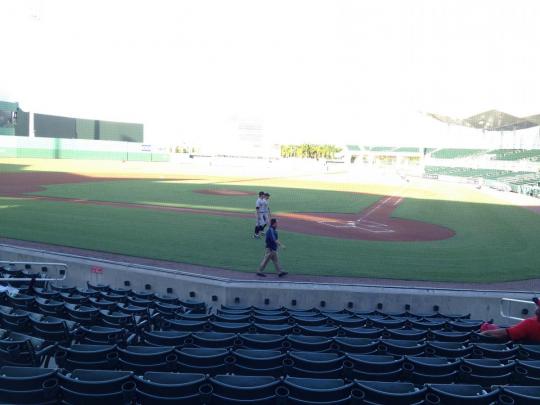 3 points
-
Game Thread: White Sox@Twins 9/3 7:10PM
Don't Feed the Greed Guy and 2 others reacted to ashbury for a post in a topic
3 pointsSantana at short, Hicks in center, Pinto catching, Vargas DHing - this is a lineup worth watching in September, not just today but the rest of the way. / edit - my only change would be Parmelee instead of Schafer, and that amounts merely to a disagreement with the Twins over which player we want to see whether he can be more than he seems - and the likely answer is "neither one"3 points -
What's wrong with Baseball?
DocBauer and 2 others reacted to iTwins for a post in a topic
3 pointsI was set to post my take on the issue and argue some of the finer points mead within the thread - but I stopped when an idea hit me. It's hard (or darn near impossible) for baseball fans to objectively define what's wrong with their sport simply because they, (by the very definition of being a fan) enjoy the game already. Are their elements that I'd like to tweak? You bet, but maybe the issues the game has are from things that we, as fans of the game, take for granted. So, I looked at things from my wife's perspective. She's relatively new to baseball (a fan for 3 years) and while she watches most games with me - she's not really "watching" a majority of the action. Here's what I got from her: 1. Interleague play: the rules change based on the park, the match-ups are weird and typically not a draw (Miami vs. Minnesota! ... uh... Twins vs. D-Backs? ... hmm). It dillutes natural AL / NL rivalries (MIN / MIL) to the point where it all feels like a waste of time. 2. Slow pitchers: My wife's attention wanes when Pelfrey or Tommy Milone are on the mound. There is simply too much time taken between pitches. I don't know if a play clock is the answer - umpires should really just enforce the rules already in place. 3. Inconsistent rules / strike zones: In trying to teach my wife the workings of baseball, this was the area that gave me the most trouble and frustrated her as a casual fan the most. Some umpires are blatantly incosistent or just flat out bad and yet they are not held accountable for their poor jobs. I don't know if the fix is "robot" umps calling balls and strikes or if MLB needs to add a reward / penalty system for umpries calling the zone behind the plate, but clearly for new or casual fans - this is a frustration. Things I would have added regarding competitive balance and international free agent / draft rules don't even hit my wife's radar. In the end, it was pretty simple. Inconsistent rules / rulings and the pace of the game were her big issues.3 points -
MUST SEE: Kennys Vargas Murder-Death-Killing A Baseball
Platoon and 2 others reacted to big dog for a post in a topic
3 pointsNot if I'm in charge. I reject the question! Hah! My game plan? Pinto catching, Sano at 3rd (hey, Harmon did it), Arcia in right, Vargas at DH. Dozier, Mauer, Buxton, etc. Then I try to win games 10-6, with quality pitching doing the best it can under the circumstances and settling for some weak fielding. That would be a lot like the Twins of the late 70s, when they were not bad- hitters like Bostock, Hisle, Ward, Carew, and some fielding challenges. Ideally, we will have several pitchers at least as good as Dave Goltz. If I have to, absolutely have to trade one, I wait at least a year and see what their best possible fielding position is, and how it fits with plans. I'm not ready to give up on Pinto behind the plate, not yet by any means.3 points -
What's wrong with Baseball?
Pius Jefferson and 2 others reacted to Steven Buhr for a post in a topic
3 pointsI can't believe it took me so long before I decided to click on this thread and read it. What a great discussion (at least until it became about what did or didn't advance the game of baseball/football... that's when ya lost me). A few general (and hopefully quick) observations. Most of us are very interested in the subtleties of the game. Backing up the play, pitch selection, "productive outs," etc. But if you never played the game as a kid, would you be as in tune with those things? I think part of the problem is that fewer kids are playing the game (more options) and so, as they grow up, baseball is just a spectator sport that lacks obvious action. Selig and the owners have intentionally taken the regional sports path, because that allowed a "competitive balance" model that did not require true revenue sharing. As previously pointed out, they also have plenty of financial motive to minimize the "fame" of individual players. But to what end? If (and I might argue, "when") the cable/regional sports network bubble bursts because non-sports fans refuse to subsidize the increased RSN fees being demanded, where will MLB turn to then for revenue? NFL and MLB each have doomsday scenarios on the horizon and I'm not sure which will occur first. For the NFL, it happens when enough parents refuse to let their kids play a game that could cause serious and permanent brain injuries. Kids not participating means lesser levels of talent and less adult fan interest. For MLB, it's also fewer kids participating, but in their case, it means less understanding of what makes the sport "great" to those who do understand it, but also results in less adult interest, to the point where RSNs can't blackmail cable companies in to enormous rights fees because cable companies can't make the money back from the broader customer base. NFL is (and should be) jealous of MLB's (and NBA's) global interest in their game. They will need more international players as domestic supplies diminish. MLB, meanwhile, is allowing the RSNs and cable companies (two dinosaurs who simply don't know they're about to become extinct) to impede the distribution of the MLB product and waste the technological advantages they have developed over rival sports leagues. As for pace of game, you can't just make a simple change without it having unwanted consequences. Sure, calling a strike a strike would speed up play because batters wouldn't take so many pitches. But it would also mean much less successul hitting and result in a lot more 1-0 games. That might make it more interesting to soccer fans, but not many others. Enforcing the pitch clock would do little. The rule, I believe, says the time starts when the batter is ready for the pitch. So the clock wouldn't even start until the batter adjusts his gloves, redigs his foot hole, and adjusts his jock. Games are longer as much because of increased time between innings, to allow more advertising, than anything else. Good luck getting MLB to do anything about that. They essentially slowed the game down to sell more beer and now want the players to make adjustments to compensate for that. I'm as old school as just about anyone and it will bother me to see certain things change. But change must occur and that change must come in some form that (1) makes the game's "stars" more famous to young people, (2) makes more kids want to play the game, in addition to watching it, and (3) makes EVERY GAME involving every team available to every fan to watch via the devices they are most likely to use (smart phones, tablets, etc.). EDIT: so much for being "quick" points, sorry. And I learned you have to use (1) (2) (3) rather than letters (a)..., etc., or you end up with a bunch of emoticons and symbols! Ah technology.3 points -
Article: The New Top Twins Pitching Prospect?
Major League Ready and 2 others reacted to diehardtwinsfan for a post in a topic
3 pointsJokin, You are changing the subject again. I don't think anyone here would disagree that the Twins drafting philosophy needed changing, and I think we'd both agree that it has changed over the last couple of years... That said... Call me crazy if you must, but I don't see how the fact that Washington brought up their guys younger is a cause for their current fwar values. Correlation does not equal causation. Strasburg, as an example, was a very highly thought of prospect (drafted 1st overall in 2010) and absolutely dominated the minors in ways Meyer never did. To compare how Washington handled him in comparrison to Meyer comes across as disengenious at best. These are two individuals who produced different results with different expectations. What I find most amusing about it is that Meyer came over from Washington, and the Twins simply continued with the progression that he made during his tenure there. They didn't force him to repeat high A, they put him in AA where Washington would have put him. He started out well and got hurt and missed most of last year. The Twins promoted him in spite of that, at which point he's struggled for most of the season, as well as having to deal with a workload designed to strengthen him long term. I can see the case for him being called up at one point this season (which we obviously disagree on), but at the same time, he came over from Washington, who you are saying we should mimic, and they didn't handle him in this way. It really is quite possible that the front office knows what they are doing here.3 points -
Milone is terrible
messed up and 2 others reacted to Hosken Bombo Disco for a post in a topic
3 pointsI don't completely buy the argument that Milone has gotten lucky for over two seasons, and that we shouldn't be too surprised at how he's pitched since he got here. That's sort of what I hear people saying; I don't think I'm mischaracterizing too much? I won't compare him to Hughes again but I don't see why he should suddenly go in the tank when he pulls on the Twins uniform either. Twins need to figure out what's wrong with their pitching operation and fix it asap - goes beyond Milone. Careful throwing that name around.3 points -
Article: The New Top Twins Pitching Prospect?
DocBauer and 2 others reacted to diehardtwinsfan for a post in a topic
3 pointsUsing age as a reason to promote is not a good idea in my opinion. For one, it ignores the reality that Meyer was hurt for a good chunk of last season, and from what I understand, has also had other injury issues in his career. Second, it completely sets aside the concept of readiness. I get that very few people are truly ready in that the can come in and contribute, but if there's still quite a bit of learning that can be done in the minors, I'd think it's in the player and the team's best interest to allow that learning to be done in lower leverage/development type situations. I unerstand that he can be flat out dominant at times. We also saw this year that he's got some serious control issues that plague him at times. He didn't improve on that this season as he stepped up, and I fail to see how a promotion will somehow cure that and not exacerbate an already concerning issue. Third, in this case, it ignores very real workload situations. Berrios successfully pitched 100 innings last year and 140 this year (not counting winter/fall ball, as I don't know what those totals were). Meyer has pitched less. He's an older prospect but is on roughly the same workload restrictions as Berrios, with next year looking at approximately 160-180 innings (assuming of course his inability to get loose isn't something bigger). That sais, I still see Meyer as the better prospect, though not my much as that gap has closed. JO has done nothing but prove doubters wrong at every step, and I'm hoping that trend continues into 2015. If it does, he may find himself in Minnesota by the summer.3 points -
Article: A Closer Look at the 2015 Twins
chpettit19 and 2 others reacted to Deduno Abides for a post in a topic
3 pointsStrong optimism for 2015 with the present roster and minor leaguers requires the following: (1) Phil Hughes not to develop an elbow or shoulder issue or otherwise repeat his historical pattern of one good year followed by one or two bad years; (2) Joe Mauer to return to the physical skills of ages 24-28 during his 32nd year of living, and not to require extended time on the DL or fatuous excuses from management, and to recover his batting eye or bat speed or whatever it was that caused his BB/K ratio this year to be his career worst by a long shot; (3) Byron Buxton at age 22 to perform like Andrew McCutcheon when he was 25, even though McCutcheon had a .770 OPS in AAA when he was 21, whereas Buxton had a lost year in A/AA at the same age, and McCutcheon did not fully approach dominance until his fourth year in the majors; (4) Miguel Sano to perform at age 22 like Miguel Cabrera performed at age 22, even though Cabrera at 21 was a major league all-star, an age at which Sano did not play, and Cabrera received major league MVP votes at age 20, an age at which Sano played A/AA; (5) Alex Meyer to be healthy and effective (and given a meaningful chance and not criticized publicly by his coaches or their media mouthpieces every time he doesn't look like Roy Halladay in his prime); (6) Ricky Nolasco to be, not just better, but significantly better than he was this year, even though the only year in his career he was more than a 1.8 WAR pitcher was 2008, when he was 25; (7) Danny Santana and Kennys Vargas not to significantly regress and Oswaldo Arcia to significantly improve; (8) Kurt Suzuki to confirm that he has reached a new level of performance and not to regress into the Suzuki of 2010-2013; (9) Trevor May to significantly improve (this may be the most likely item on this list); (10) Tommy Milone and/or Mike Pelfrey to be serviceable major league pitchers; (11) The team to rebuild its bullpen and hope that Glen Perkins stays strong and Casey Fien of 2015 doesn't turn into Jared Burton of 2014; and (12) One or two minor leaguers with question marks - Pinto? Hicks? Rosario? - to figure out what's holding them back and make an impact. If you're comfortable that the negative items in this list are unlikely and the positive items are likely, then you should be comfortable not making significant moves this winter. If, on the other hand, you are pessimistic about several items on this list, the Twins should either go after Max Scherzer and/or James Shields and a couple of bats, or push even harder to rebuild the minor league system by trading for top prospects like the Cubs did in getting Addison Russell and others. My guess is that some of these items will be positive, while several will be negative. Sure, the team looks more hopeful this year, with the emergence of some young players and the pitching of Phil Hughes, but the team is once again collectively a 90+ loss team. If all else holds even or improves (e.g., Dozier, Cabrera, Gibson, left field) and these items are on balance mildly positive, the team likely would still be sub .500. To truly compete for the post-season without major changes in the roster, these items must on balance be mostly positive and the Doziers, Gibsons and Cabreras must be much better.3 points -
Game Thread: White Sox@Twins 9/3 7:10PM
ashbury and one other reacted to Riverbrian for a post in a topic
2 pointsAnd... And... The ball scared the crap out of someone in Arden Hills2 points -
Game Thread: White Sox@Twins 9/3 7:10PM
LaBombo and one other reacted to Squirrel for a post in a topic
2 pointsWarming up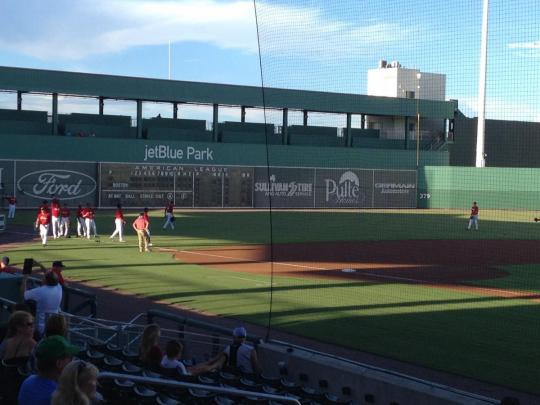 2 points
-
Article: A Closer Look at the 2015 Twins
Nick Nelson and one other reacted to Yoshii for a post in a topic
2 pointsNick, I just want to say that you are amazing. I have followed your blog since 2009 and have thoroughly enjoyed it all the way. The attention brought up recently, negative or positive, only reiterates how good of a writer, blogger, analyzer you are. I too thought you were affiliated with the Twins at one point, but that's newb talk....you always keep it real and address the issues that matter most, by getting right down to the point! Keep up the good work Nick!!!!2 points -
2 pointsThey don't have makeup games for the post season.
 2 points