John Bonnes
Administrator
-
Joined
-
Last visited
Everything posted by John Bonnes
-
That's a good point, and I asked Clark about whether teams gradually approaching the cap is having an effect, given payroll growth has exceeded luxury tax level growth. He admitted we saw five teams go over last year but still thought the bigger issue is the lower end of the market. I'm not so sure I agree. He did admit there were a number of teams withing about $20M of the cap limit.
-
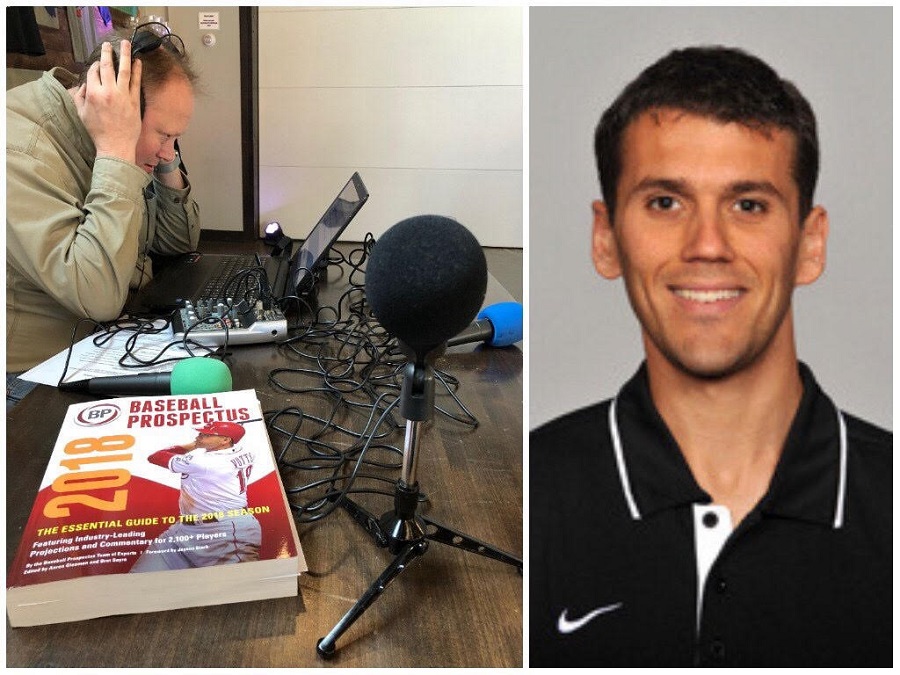
Aaron and John chat with Twins Director of Baseball Operations Daniel Adler over beers at Modist Brewing. Sponsored by Harry's Razors. You can listen to the episode here. listen to it immediately here or subscribe to it on iTunes here, so you don't miss an episode all season.http://traffic.libsy...3?dest-id=74590 Click here to view the article
-
 http://traffic.libsyn.com/gleemangeek/Ep_358_Daniel_Adler_Twins_Director_of_Baseball_Operations.mp3?dest-id=74590
-
FT. MYERS - The Twins signing of Logan Morrison was sudden and unexpected, but it was the result of forces that have been developing for years and even decades. This historically slow offseason has been analyzed by many, but perhaps none have had more incentive to decipher it than the Major League Baseball Player's Association (MLBPA) Executive Director Tony Clark. Clark sees a double-whammy affecting the free agent market and warned that it might not be a one-time event. His perception of what is happening differs from the most popular narrative.That narrative is that luxury tax is having a huge effect and it is, but “not as much as everyone seems to be pointing too,” says Clark. “The resetting provision that most are now aware of has been in the CBA [Collective Bargaining Agreement] for last three CBAs now.” Clark is talking about some specific parts of the agreement between MLB and the Players Union which is mean to create competitive balance. In MLB, there is a “luxury tax.” If a team surpasses a certain number in overall team salary, they need to pay a tax for every dollar they go over. Last year that number was $196M and five teams were over it. But the percentage taxed gets higher every consecutive year a team exceeds that level. The first year a team pays 20%, the second, 30%, and the third they pay 50%. The “resetting provision” is another way of saying that if a team can get back below the luxury tax threshold, they can reset back to year one of that escalating scale. This year, three of the teams that were over the luxury tax (the Yankees, Dodgers and Giants) worked hard to get back under the threshold for a simple reason: next year there will likely be some VERY good free agents on the market. For instance, if the Yankees want to sign Bryce Harper next year for $40M per year, and almost all of that will be over the luxury tax threshold, they want to pay him $48M ($40M + 20% tax) instead of $60M ($40M + 50% tax). That strategy eliminated at least a few of the most free-spending teams in MLB. Clark is right that the provision has been in the CBA for years. But there are two important caveats. First, payroll has grown faster than the luxury tax level has increased, so what used to affect one or two teams now affects as many as five. The second is that the most recent CBA added some additional penalties for going more than $20M or $40M over the threshold. For $20M, there is a 12% surcharge on amounts over $20M to $40M. There is also a 45% surcharge on amounts over $40M for repeat offenders. Plus, if any team goes over $40M, they can also have their top amateur draft pick dropped back 10 slots. “If teams are treating the luxury tax as a cap, that’s a different world than we ever have been in before,” says Clark. He’s right, and there is a good deal of evidence that for this year at least, there are several teams that are doing exactly that. But Clark doesn’t see it as a major affect for a couple of legitimate reasons. First, even if you count the two teams over the cap (which one might, considering how damaging those new surcharges are), it’s only five teams. Second, two of those teams – the Yankees and the Red Sox – acquired very expensive players this offseason, which suggests only three teams were frozen. Far more damaging in Clark’s mind is the opposite end of the spectrum. He sees as many as three times that many teams cutting salary and not seriously competing in 2018. His reasoning is solid, but this is also a result of provisions in the CBA to enhance competitive balance. There are two very good reasons for MLB teams to slash payroll even if it means being uncompetitive. The first, is that being a bad team returns good draft picks and those picks can fuel a high-level resurgence in the future. This method was popularized most recently by the (World Champion) Houston Astros. And that doesn’t even count prospects a team might receive from trading away their veteran talented players. But the second reason might be even more compelling. Those teams with the lowest payroll and least revenue tend to receive more money from revenue sharing. It is extremely profitable for a team to stink. And after stinking, hopefully they have accrued enough talent to not just make the postseason but be favored. This has two big impacts, both of which hurt the market for free agents. The obvious one is that it reduces the demand in the marketplace. Between the teams that are passively (or actively – I’m looking at you Miami) tanking and the teams being careful of the luxury tax, there are really only 17 or so of the 30 teams that are trying to sign free agents. The second impact is that selling off players to reduce payroll increases the supply of players in the market. A prime example was the Marlins shopping slugger Giancarlo Stanton at the beginning of the offseason. He ended up being the one big salary the Yankees took on this year, and then they were no longer in the market for free agents. So the tanking philosophy creates a double-whammy to the market, affecting both the supply and demand side. It’s no wonder the prices on free agents dropped precipitously. “That’s why this is different,” says Clark. “That’s why when you take the talent that’s being moved, when you take the revenue sharing dollars that are being accessed, and you flood the system [with players] while removing a number of teams that appear to not being interested in winning today … it creates some challenges.” When you look at those forces, it is not clear that this is a one-year blip only due to next year’s free agent market and a few high-end teams shedding payroll. “When there are concerns across multiple levels to the competitive integrity of our system and how it’s manifesting itself – that’s not going to go away overnight,” warns Clark. And the forces that drive it are not likely to change until the next Collective Bargaining Agreement is negotiated. That’s four seasons away. The market that produced Logan Morrison might not be as short-lived as it appears. Click here to view the article
-
 That narrative is that luxury tax is having a huge effect and it is, but “not as much as everyone seems to be pointing too,” says Clark. “The resetting provision that most are now aware of has been in the CBA [Collective Bargaining Agreement] for last three CBAs now.” Clark is talking about some specific parts of the agreement between MLB and the Players Union which is mean to create competitive balance. In MLB, there is a “luxury tax.” If a team surpasses a certain number in overall team salary, they need to pay a tax for every dollar they go over. Last year that number was $196M and five teams were over it. But the percentage taxed gets higher every consecutive year a team exceeds that level. The first year a team pays 20%, the second, 30%, and the third they pay 50%. The “resetting provision” is another way of saying that if a team can get back below the luxury tax threshold, they can reset back to year one of that escalating scale. This year, three of the teams that were over the luxury tax (the Yankees, Dodgers and Giants) worked hard to get back under the threshold for a simple reason: next year there will likely be some VERY good free agents on the market. For instance, if the Yankees want to sign Bryce Harper next year for $40M per year, and almost all of that will be over the luxury tax threshold, they want to pay him $48M ($40M + 20% tax) instead of $60M ($40M + 50% tax). That strategy eliminated at least a few of the most free-spending teams in MLB. Clark is right that the provision has been in the CBA for years. But there are two important caveats. First, payroll has grown faster than the luxury tax level has increased, so what used to affect one or two teams now affects as many as five. The second is that the most recent CBA added some additional penalties for going more than $20M or $40M over the threshold. For $20M, there is a 12% surcharge on amounts over $20M to $40M. There is also a 45% surcharge on amounts over $40M for repeat offenders. Plus, if any team goes over $40M, they can also have their top amateur draft pick dropped back 10 slots. “If teams are treating the luxury tax as a cap, that’s a different world than we ever have been in before,” says Clark. He’s right, and there is a good deal of evidence that for this year at least, there are several teams that are doing exactly that. But Clark doesn’t see it as a major affect for a couple of legitimate reasons. First, even if you count the two teams over the cap (which one might, considering how damaging those new surcharges are), it’s only five teams. Second, two of those teams – the Yankees and the Red Sox – acquired very expensive players this offseason, which suggests only three teams were frozen. Far more damaging in Clark’s mind is the opposite end of the spectrum. He sees as many as three times that many teams cutting salary and not seriously competing in 2018. His reasoning is solid, but this is also a result of provisions in the CBA to enhance competitive balance. There are two very good reasons for MLB teams to slash payroll even if it means being uncompetitive. The first, is that being a bad team returns good draft picks and those picks can fuel a high-level resurgence in the future. This method was popularized most recently by the (World Champion) Houston Astros. And that doesn’t even count prospects a team might receive from trading away their veteran talented players. But the second reason might be even more compelling. Those teams with the lowest payroll and least revenue tend to receive more money from revenue sharing. It is extremely profitable for a team to stink. And after stinking, hopefully they have accrued enough talent to not just make the postseason but be favored. This has two big impacts, both of which hurt the market for free agents. The obvious one is that it reduces the demand in the marketplace. Between the teams that are passively (or actively – I’m looking at you Miami) tanking and the teams being careful of the luxury tax, there are really only 17 or so of the 30 teams that are trying to sign free agents. The second impact is that selling off players to reduce payroll increases the supply of players in the market. A prime example was the Marlins shopping slugger Giancarlo Stanton at the beginning of the offseason. He ended up being the one big salary the Yankees took on this year, and then they were no longer in the market for free agents. So the tanking philosophy creates a double-whammy to the market, affecting both the supply and demand side. It’s no wonder the prices on free agents dropped precipitously. “That’s why this is different,” says Clark. “That’s why when you take the talent that’s being moved, when you take the revenue sharing dollars that are being accessed, and you flood the system [with players] while removing a number of teams that appear to not being interested in winning today … it creates some challenges.” When you look at those forces, it is not clear that this is a one-year blip only due to next year’s free agent market and a few high-end teams shedding payroll. “When there are concerns across multiple levels to the competitive integrity of our system and how it’s manifesting itself – that’s not going to go away overnight,” warns Clark. And the forces that drive it are not likely to change until the next Collective Bargaining Agreement is negotiated. That’s four seasons away. The market that produced Logan Morrison might not be as short-lived as it appears.
-
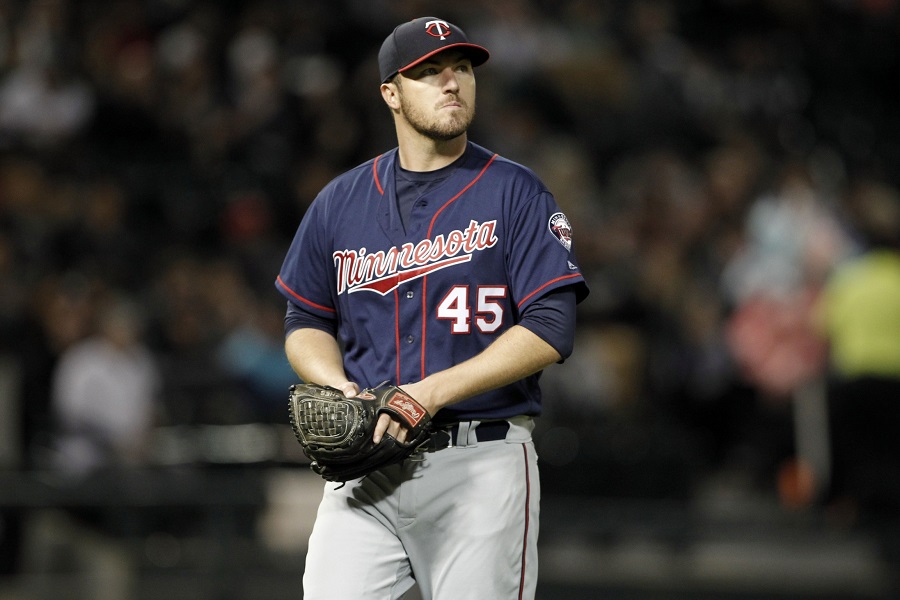
FT MYERS - Today Twins manager Paul Molitor reaffirmed his plan is to only have four pitchers designated as starting pitchers when the Twins break training camp. This means the decision regarding a fifth starter may not happen until April. The Twins won't need a fifth starting pitcher until April 11th, almost two weeks into the 2018 season. What’s more, the second start would not come until almost two weeks later, on April 24. That happens during a 19-game stretch where the Twins would need a fifth starter three times. But then they don’t need a fifth starter again until late in May on the 22nd, when starter Ervin Santana should be back in the rotation. And all of that is assuming the Twins have no rainouts or postponed games, which could help even more.It’s also an open question whether the fifth starter would be better served being the eighth guy in the bullpen or starting the season in Rochester. For that matter, given how often new Twins management utilized the waiver wire last year, it wouldn’t be inconceivable that they grab someone from another organization to pitch the April 11th game or give someone a three-start tryout during the 19-game stretch. A linchpin in that decision might be Phil Hughes, or rather Hughes and his remaining two-year $27 million contract. The new management team didn’t offer that extension to Hughes, and thus might be able to view it more objectively. But objectively, it’s still $27 million out the door, unless they can get some results from it, or have Hughes develop enough value to move at least a portion of it. Hughes would probably like that too, but that’s easier said than done. After two years of dismal results and unresolved shoulder issues, Hughes is trying to find his way into the rotation’s mix. He’s likely on the outside looking in for one of the top four spots. But he has to be considered a contender, and maybe even the favorite, for the fifth spot until Santana rejoins the rotation. It isn’t totally clear that Hughes will ever be able to return back to a major-league caliber starting pitcher, partly because we don’t know if he’ll ever be healthy enough to be a major-league caliber starting pitcher. Hughes said last week that he wasn’t sure of that himself. “I’m going to have to get towards that 100-pitch mark to really have an idea,” he admitted. He’s nowhere near that limit now, but he felt good in his second start of the season yesterday, even noting that he got loose easily in warmups. “It’s something I don’t even think about anymore,” he said after Saturday’s game. “So that’s a good thing. My main focus has been executing pitches, and not thinking about anything arm-related or anything like that. That’s been a good thing, because we have enough to worry about. Baseball is a pretty hard game without having to take your health and everything else into account.” However, even if he is healthy, he need to win the fifth starter job, which means he likely starts the season in the bullpen. And if he doesn’t, the Twins would probably like him to start the season in the bullpen too. They can’t send him to the AAA Rochester club to wait his turn, unless he is still hurt and on a rehab assignment. So either way, Hughes' most likely path (provided he stays with Minnesota) has him spending some time in the bullpen. He says he hasn’t spent any time considering that. “To be honest, I haven’t really given it any thought,” Hughes claims. “My one and only focus this spring has been on the rubber to the plate. That’s all I’ve been focused on. I haven’t really gone into our schedule all that deep. I’m just trying to make sure I’m healthy and improving and showing good stuff while I’m out there. So I can’t really give you an answer on that.” A generous soul might call that focus commendable. A cynic might call it willfully obtuse. I’ll call it doing whatever it takes to regain the ability and confidence to get another season in the sun. But Phil Hughes 'road back to the rotation likely goes through the bullpen, and it will likely be a longer road than to just Opening Day. Saturday's Game The Twins lost 13-8 on the road versus the Toronto Blue Jays on Saturday afternoon. The score reflects the wind conditions more than the quality of the pitching as it was a windy day blowing straight out from home plate to center field. Molitor, who of course played with the Blue Jays for three years, summed it up: "I’ve played in this park long enough to know that when the prevailing wind is to right center, the ball is going to find its way over the fence a few times.” The game featured a lineup of mostly probable bench and non-roster players at Dunedin, where the Blue Jays train and is about a 3-hour drive from Fort Myers. The most likely to make the Twins roster included Zach Granite, Edire Adrianza, Eduardo Escobar, Ryan Pressly and Hughes. Click here to view the article
-
 It’s also an open question whether the fifth starter would be better served being the eighth guy in the bullpen or starting the season in Rochester. For that matter, given how often new Twins management utilized the waiver wire last year, it wouldn’t be inconceivable that they grab someone from another organization to pitch the April 11th game or give someone a three-start tryout during the 19-game stretch. A linchpin in that decision might be Phil Hughes, or rather Hughes and his remaining two-year $27 million contract. The new management team didn’t offer that extension to Hughes, and thus might be able to view it more objectively. But objectively, it’s still $27 million out the door, unless they can get some results from it, or have Hughes develop enough value to move at least a portion of it. Hughes would probably like that too, but that’s easier said than done. After two years of dismal results and unresolved shoulder issues, Hughes is trying to find his way into the rotation’s mix. He’s likely on the outside looking in for one of the top four spots. But he has to be considered a contender, and maybe even the favorite, for the fifth spot until Santana rejoins the rotation. It isn’t totally clear that Hughes will ever be able to return back to a major-league caliber starting pitcher, partly because we don’t know if he’ll ever be healthy enough to be a major-league caliber starting pitcher. Hughes said last week that he wasn’t sure of that himself. “I’m going to have to get towards that 100-pitch mark to really have an idea,” he admitted. He’s nowhere near that limit now, but he felt good in his second start of the season yesterday, even noting that he got loose easily in warmups. “It’s something I don’t even think about anymore,” he said after Saturday’s game. “So that’s a good thing. My main focus has been executing pitches, and not thinking about anything arm-related or anything like that. That’s been a good thing, because we have enough to worry about. Baseball is a pretty hard game without having to take your health and everything else into account.” However, even if he is healthy, he need to win the fifth starter job, which means he likely starts the season in the bullpen. And if he doesn’t, the Twins would probably like him to start the season in the bullpen too. They can’t send him to the AAA Rochester club to wait his turn, unless he is still hurt and on a rehab assignment. So either way, Hughes' most likely path (provided he stays with Minnesota) has him spending some time in the bullpen. He says he hasn’t spent any time considering that. “To be honest, I haven’t really given it any thought,” Hughes claims. “My one and only focus this spring has been on the rubber to the plate. That’s all I’ve been focused on. I haven’t really gone into our schedule all that deep. I’m just trying to make sure I’m healthy and improving and showing good stuff while I’m out there. So I can’t really give you an answer on that.” A generous soul might call that focus commendable. A cynic might call it willfully obtuse. I’ll call it doing whatever it takes to regain the ability and confidence to get another season in the sun. But Phil Hughes 'road back to the rotation likely goes through the bullpen, and it will likely be a longer road than to just Opening Day. Saturday's Game The Twins lost 13-8 on the road versus the Toronto Blue Jays on Saturday afternoon. The score reflects the wind conditions more than the quality of the pitching as it was a windy day blowing straight out from home plate to center field. Molitor, who of course played with the Blue Jays for three years, summed it up: "I’ve played in this park long enough to know that when the prevailing wind is to right center, the ball is going to find its way over the fence a few times.” The game featured a lineup of mostly probable bench and non-roster players at Dunedin, where the Blue Jays train and is about a 3-hour drive from Fort Myers. The most likely to make the Twins roster included Zach Granite, Edire Adrianza, Eduardo Escobar, Ryan Pressly and Hughes.
-
The Minnesota Twins got both a lot more boring and a lot more intriguing on Wednesday afternoon. In the span of two hours, a series of events left little room for drama and speculation, instead leaving an offensive lineup that excites no matter which way you look at it. About noon, the Twins had a press conference with their new free agent signee Logan Morrison, who declared himself to be ready to be the Twins primary designated hitter. An hour later, Miguel Sano took the field for his first spring training action at third base. An hour after that, Twins Chief of Baseball Operations Derek Falvey said four simple sentences that put a wrap on the Twins offseason. Here they are.“We explained to [Morrison] that Joe Mauer is our first baseman.” The initial question when Morrison signed was where he would fit into the Twins lineup. Would he be sharing at-bats with another left-handed hitting first baseman? Maybe at times. But Morrison wasn’t going to be cutting into Mauer’s at-bats, because …. “DH is the primary role we sold [Morrison] on.” Last year the Twins had ten different players start there and combined for a .711 OPS. Morrison’s OPS last year was .868. So that’s better. “Miguel [sano] is our primary third baseman.” But the titanium rod? The injury? The weight? My gawd, what about ALL THE ENORMOUS OFFSEASON WEIGHT? Fake news, and that’s only slightly tongue-in-cheek. To reference Moneyball, Sano might never model a pair of jeans. To reference Moneyball again, there are likely old-timers in the Twins organization who don't like that and columnists willing to parrot that point of view. But here’s what Sano can do, which he showed last year while everybody worried about his carb intake: play a competent third base while hitting the holy snot out of a baseball. When asked whether Sano was the third baseman, Falvey seemed genuinely surprised anyone would ask that. “Yeah”, replied Falvey bluntly. ”I mean, that’s our view and that was our view last year. Nothing has changed.” “High likelihood this is the group here.” Falvey sounds like he’s done actively shopping. Yes, there are still three good free agent starting pitchers available, but there is still no sign that the prices on those players have dropped. Falvey even hesitated to characterize the free agent market as “down” saying we’ll see how it ends up. But his view is that the most efficient way to “buy wins” at this point was to buy a bat instead of an arm. No matter whether you look at it analytically or traditionally, Morrison adds a lot to the Twins lineup. He adds power. He adds patience. He provides protection for Sano or Mauer. He improves the top of the lineup. He improves the middle of the lineup. He adds to the depth of the lineup. He adds a big left-handed bat to pair with Sano’s right-handed bat. The Twins lineup finished first in the American League the second half of last year, and they just added a big bat to the middle of it. What we saw Wednesday in Fort Myers were a bunch of pieces fall into place. The resulting picture looks promising. Click here to view the article
-
 “We explained to [Morrison] that Joe Mauer is our first baseman.” The initial question when Morrison signed was where he would fit into the Twins lineup. Would he be sharing at-bats with another left-handed hitting first baseman? Maybe at times. But Morrison wasn’t going to be cutting into Mauer’s at-bats, because …. “DH is the primary role we sold [Morrison] on.” Last year the Twins had ten different players start there and combined for a .711 OPS. Morrison’s OPS last year was .868. So that’s better. “Miguel [sano] is our primary third baseman.” But the titanium rod? The injury? The weight? My gawd, what about ALL THE ENORMOUS OFFSEASON WEIGHT? Fake news, and that’s only slightly tongue-in-cheek. To reference Moneyball, Sano might never model a pair of jeans. To reference Moneyball again, there are likely old-timers in the Twins organization who don't like that and columnists willing to parrot that point of view. But here’s what Sano can do, which he showed last year while everybody worried about his carb intake: play a competent third base while hitting the holy snot out of a baseball. When asked whether Sano was the third baseman, Falvey seemed genuinely surprised anyone would ask that. “Yeah”, replied Falvey bluntly. ”I mean, that’s our view and that was our view last year. Nothing has changed.” “High likelihood this is the group here.” Falvey sounds like he’s done actively shopping. Yes, there are still three good free agent starting pitchers available, but there is still no sign that the prices on those players have dropped. Falvey even hesitated to characterize the free agent market as “down” saying we’ll see how it ends up. But his view is that the most efficient way to “buy wins” at this point was to buy a bat instead of an arm. No matter whether you look at it analytically or traditionally, Morrison adds a lot to the Twins lineup. He adds power. He adds patience. He provides protection for Sano or Mauer. He improves the top of the lineup. He improves the middle of the lineup. He adds to the depth of the lineup. He adds a big left-handed bat to pair with Sano’s right-handed bat. The Twins lineup finished first in the American League the second half of last year, and they just added a big bat to the middle of it. What we saw Wednesday in Fort Myers were a bunch of pieces fall into place. The resulting picture looks promising.
-
FT MYERS - John recaps why Jake Odorizzi is better than you think he is (or was), looks at where Twins payroll will be NEXT offseason and fanboys over Jorge Polanco a bit. Listen here OR, if you would like to add this podcast to you iTunes podcast app, see below for instructions. It'll take just a couple of minutes.To add this podcast to your iPhone podcast app, do the following: 1. Open up this page in your iphone and copy this link: http://twinsdaily.libsyn.com/rss 2. Go into your iPhone podcast app and click on the "Library" tab at the bottom and then click on "Edit" in the upper right-hand corner: Download attachment: Subscribe 1.jpg 3. Click on "Add a Podcast by URL..." Download attachment: Subcribe 2.5.jpg 4. Paste the link you just copied into the dialog box and click on 'Subscribe'. Download attachment: Subscribe 3.5.jpg Now you'll get every episode delivered to your phone to listen to whenever you want. Click here to view the article
-
 “Below average,” replies Odorizzi. “I built a rapport of being better than that. I guess it comes with the territory. I guess when you decline a little bit, people just automatically say it’s a horrible year.” It was a decline from the 3.69 ERA the year before, which was a decline from the 3.35 ERA in 2015. But his 3.71 ERA over that stretch would be a welcome addition to the Twins. So would the 500.1 innings which would make him one of the most durable starters on the staff. Getting away from just ERA, some of his other numbers were more alarming. His walk rate climbed while his strikeout rate held steady. That 4.14 ERA is fortunate given those. So how would he explain his “below average” year? “I pitched through a back strain for the majority of the year,” explains Odorizzi. “Then I took some time off in July. When I came back, my numbers were back to normal.” He’s right. Odorizzi went on the disabled list July 26. He was back just two weeks later on August 9. His ERA before the move was 4.47. Afterward, his ERA was 3.51. His strikeout rate was up a bit, too. But the biggest improvement was in his weakest area: he gave up a lot fewer home runs. That’s been a perceived weakness for the flyball-prone Odorizzi for the last two years. Even after the time on the DL, he gave up a home run about every seven innings. That’s about average for a major league pitcher last year. But before the injury, it was every four(!) at-bats. Odorizzi is convinced that the injury had him changing his mechanics and that was affecting the control of his fastball. “My fastball location was way below what it normally is. Just part of the mechanics. I was trying to open up my front side earlier to take some pressure off [my back],” explains Odorizzi. “It was more of a side-to-side pitch and rotational instead of straight down through pitches. Usually my pitches are on target but miss up and down, but now they were missing left and right, and that lead to balls being left over the plate more often, which I’ve done in the past and it affects my home run rate. So I know exactly why stuff happened.” Odorizzi says there shouldn’t be any carryover. He hasn’t had back injuries in the past, and this one was coupled with a strained hamstring on the same side, which may have been a contributing factor. This offseason he was far more careful with lifting that could affect his back, and took up Pilates regularly to work on his flexibility and core. If he’s right, and Odorizzi is back to “normal” that’s very good news for Twins fans. Odorizzi’s career ERA is 3.83, which is the lowest of any probable starting pitcher in the Twins rotation. It certainly is a lot more promising than the tandem of Hector Santiago and Bartolo Colon who combined for a 5.39 ERA in the 29 starts they made last year. Even if Odorizzi duplicates his "bad" 2017, he represents a 20-run improvement over those two. The Twins brain trust might not have been able to convince Yu Darvish to come to the Twins Cities, but the 27-year-old Odorizzi has the pedigree, the history and now hopefully the health to make a very positive impact on the Twins rotation. Hey, you're only getting half the story. For the rest of our spring training coverage, check out tonight's Nightly Wrap, which has all the stuff we didn't have time to write in one small 10-15 minute audio file that you can listen to on your smartphone or PC. Over 400 people check out yesterday's initial episode. We think you're going to love it.
-
 To add this podcast to your iPhone podcast app, do the following: 1. Open up this page in your iphone and copy this link: http://twinsdaily.libsyn.com/rss 2. Go into your iPhone podcast app and click on the "Library" tab at the bottom and then click on "Edit" in the upper right-hand corner: 3. Click on "Add a Podcast by URL..." 4. Paste the link you just copied into the dialog box and click on 'Subscribe'. Now you'll get every episode delivered to your phone to listen to whenever you want.
-
FT. MYERS - Today Jake Odorizzi takes the mound for a new team and a new season, putting his “bad” 2017 year behind him. That was the narrative as he was shopped by the Rays this offseason: Odorizzi got worse, he was hurt, he gave up too many home runs, all his numbers went backwards. But in that bad year, he had a 4.14 ERA, which would have made him the Twins third best pitcher. Perhaps he was bad compared to the rest of the loaded Tampa Bay rotation. Or perhaps he was bad compared to the previous standards he set. How would he evaluate it?“Below average,” replies Odorizzi. “I built a rapport of being better than that. I guess it comes with the territory. I guess when you decline a little bit, people just automatically say it’s a horrible year.” It was a decline from the 3.69 ERA the year before, which was a decline from the 3.35 ERA in 2015. But his 3.71 ERA over that stretch would be a welcome addition to the Twins. So would the 500.1 innings which would make him one of the most durable starters on the staff. Getting away from just ERA, some of his other numbers were more alarming. His walk rate climbed while his strikeout rate held steady. That 4.14 ERA is fortunate given those. So how would he explain his “below average” year? “I pitched through a back strain for the majority of the year,” explains Odorizzi. “Then I took some time off in July. When I came back, my numbers were back to normal.” He’s right. Odorizzi went on the disabled list July 26. He was back just two weeks later on August 9. His ERA before the move was 4.47. Afterward, his ERA was 3.51. His strikeout rate was up a bit, too. But the biggest improvement was in his weakest area: he gave up a lot fewer home runs. That’s been a perceived weakness for the flyball-prone Odorizzi for the last two years. Even after the time on the DL, he gave up a home run about every seven innings. That’s about average for a major league pitcher last year. But before the injury, it was every four(!) at-bats. Odorizzi is convinced that the injury had him changing his mechanics and that was affecting the control of his fastball. “My fastball location was way below what it normally is. Just part of the mechanics. I was trying to open up my front side earlier to take some pressure off [my back],” explains Odorizzi. “It was more of a side-to-side pitch and rotational instead of straight down through pitches. Usually my pitches are on target but miss up and down, but now they were missing left and right, and that lead to balls being left over the plate more often, which I’ve done in the past and it affects my home run rate. So I know exactly why stuff happened.” Odorizzi says there shouldn’t be any carryover. He hasn’t had back injuries in the past, and this one was coupled with a strained hamstring on the same side, which may have been a contributing factor. This offseason he was far more careful with lifting that could affect his back, and took up Pilates regularly to work on his flexibility and core. If he’s right, and Odorizzi is back to “normal” that’s very good news for Twins fans. Odorizzi’s career ERA is 3.83, which is the lowest of any probable starting pitcher in the Twins rotation. It certainly is a lot more promising than the tandem of Hector Santiago and Bartolo Colon who combined for a 5.39 ERA in the 29 starts they made last year. Even if Odorizzi duplicates his "bad" 2017, he represents a 20-run improvement over those two. The Twins brain trust might not have been able to convince Yu Darvish to come to the Twins Cities, but the 27-year-old Odorizzi has the pedigree, the history and now hopefully the health to make a very positive impact on the Twins rotation. Hey, you're only getting half the story. For the rest of our spring training coverage, check out tonight's Nightly Wrap, which has all the stuff we didn't have time to write in one small 10-15 minute audio file that you can listen to on your smartphone or PC. Over 400 people check out yesterday's initial episode. We think you're going to love it. Click here to view the article
-
FT. MYERS - From Minnesota Twins spring training, John recaps a big day, including Miguel Sano's first action at third base, Logan Morrison being introduced to the press, and Derek Falvey discussing the state of the roster and and the potential for additions. Click below to: play this episode.see the page for this episode.subscribe to future episodes. Click here to view the article
-
-
FT MYERS – Logan Morrison knows his secret. And he’s not telling it to you. The Twins introduced their new designated hitter to the media on Wednesday, and boy can he talk. He talked about his teammates. He talked about the slow offseason. He gave his new manager a nickname. And he talked about all the things that led to his breakthrough year, without really talking about anything in particular that led to his breakthrough year.“There’s a lot of things, you know? I think having a daughter helped keep things in perspective,” says Morrison. “Being able to press the reset button. I remember early in my career taking 0-fers home. And then you take them home and they tend to kind of stay with you when you go to the field the next day. And you find yourself chasing pitches, prolonging slumps, things like that. For me, I think the ability to take every day as a new day has helped me out a lot. Baseball is just a game. Also, I have a theory about the JFK assassination.....” OK, I made up that last sentence, but you get the idea. Not that settling in as a family man isn’t something that can motivate. It does for many of us. But what we’re really asking about is something a little bit more concrete. I mean, if there isn’t a question with the words “launch angle” in this press conference, Parker could burst into blue flame. Fortunately for all of us (and most of all for Parker), there was. “You know, I definitely have looked at it,” Morrison explained. “But it wasn’t something I just started. But it maybe clicked for me a little bit last year. You look at film. You see how they do it and then you go and try to apply that. But to find the feel that you want to is the main thing that a hitter looks for. And being able to find that feel consistently last year should help me this year.” So he found the feel of launching balls to the moon? That’s the trick to hitting 38 home runs? That still doesn’t provide a high degree of confidence that his success will continue. Or that he knows why he had that success. Are we sure he does? Twins Chief of Baseball Operations Derek Falvey is sure he does, because Morrison explained it to him quite clearly when asking him for a job. “Logan will be the first to tell you that he feels like he’s made some adjustments,” says Falvey. “And that sometimes you see a spike in a season, and you figure it may have come out of nowhere and you’re not sure of exactly why? Logan can articulate the things that he did, and felt like he made adjustments to allow him to tap into the power that he’s always had.” In fact, Morrison's articulation was an important reason why the Twins signed him. “That’s key,” says Falvey. “I think any time you go into a conversation with a player about a change or a big year, I’m always asking. And sometimes it goes the other way - when a guy struggled. What was it? Why? If you can articulate – and we can back it up with some scouting information, some data or otherwise - then we feel a lot better about the projection moving forward. I think in his case, that’s exactly where the conversation went. He knew the things he had done to change. Got a better feel for who he was as a hitter, and that helps for sure.” Cool. So what were those adjustments? “I’ll leave that to Logan, to the extent that he feels comfortable sharing whatever that is,” replies Falvey. “I think there’s always a competitive edge and advantage for him. But there’s a lot of things out there on fly balls and how things have changed., Every guy does it differently. I don’t think it’s one size fits all. He certainly made some some adjustments that really helped him.” Looking at those stats, we see an increased launch angle, more home runs, more strikeouts and more walks. Is it as simple as just swinging for the fences? Maybe. He certainly is thinking of himself more as a power hitter these days. “I never thought of myself as a power hitter,” says Morrison. “Being able to embrace that, I think, has helped me hit. I’m going to strikeout. I’m going to walk. I’m going to hit homers and do some damage and hopefully there’s guys on base.” Indeed. Morrison has a chance to do some real damage being inserted into a Twins lineup that led the American League in runs after the All-Star break. But he isn’t going to tell us how. Click here to view the article
-
 “There’s a lot of things, you know? I think having a daughter helped keep things in perspective,” says Morrison. “Being able to press the reset button. I remember early in my career taking 0-fers home. And then you take them home and they tend to kind of stay with you when you go to the field the next day. And you find yourself chasing pitches, prolonging slumps, things like that. For me, I think the ability to take every day as a new day has helped me out a lot. Baseball is just a game. Also, I have a theory about the JFK assassination.....” OK, I made up that last sentence, but you get the idea. Not that settling in as a family man isn’t something that can motivate. It does for many of us. But what we’re really asking about is something a little bit more concrete. I mean, if there isn’t a question with the words “launch angle” in this press conference, Parker could burst into blue flame. Fortunately for all of us (and most of all for Parker), there was. “You know, I definitely have looked at it,” Morrison explained. “But it wasn’t something I just started. But it maybe clicked for me a little bit last year. You look at film. You see how they do it and then you go and try to apply that. But to find the feel that you want to is the main thing that a hitter looks for. And being able to find that feel consistently last year should help me this year.” So he found the feel of launching balls to the moon? That’s the trick to hitting 38 home runs? That still doesn’t provide a high degree of confidence that his success will continue. Or that he knows why he had that success. Are we sure he does? Twins Chief of Baseball Operations Derek Falvey is sure he does, because Morrison explained it to him quite clearly when asking him for a job. “Logan will be the first to tell you that he feels like he’s made some adjustments,” says Falvey. “And that sometimes you see a spike in a season, and you figure it may have come out of nowhere and you’re not sure of exactly why? Logan can articulate the things that he did, and felt like he made adjustments to allow him to tap into the power that he’s always had.” In fact, Morrison's articulation was an important reason why the Twins signed him. “That’s key,” says Falvey. “I think any time you go into a conversation with a player about a change or a big year, I’m always asking. And sometimes it goes the other way - when a guy struggled. What was it? Why? If you can articulate – and we can back it up with some scouting information, some data or otherwise - then we feel a lot better about the projection moving forward. I think in his case, that’s exactly where the conversation went. He knew the things he had done to change. Got a better feel for who he was as a hitter, and that helps for sure.” Cool. So what were those adjustments? “I’ll leave that to Logan, to the extent that he feels comfortable sharing whatever that is,” replies Falvey. “I think there’s always a competitive edge and advantage for him. But there’s a lot of things out there on fly balls and how things have changed., Every guy does it differently. I don’t think it’s one size fits all. He certainly made some some adjustments that really helped him.” Looking at those stats, we see an increased launch angle, more home runs, more strikeouts and more walks. Is it as simple as just swinging for the fences? Maybe. He certainly is thinking of himself more as a power hitter these days. “I never thought of myself as a power hitter,” says Morrison. “Being able to embrace that, I think, has helped me hit. I’m going to strikeout. I’m going to walk. I’m going to hit homers and do some damage and hopefully there’s guys on base.” Indeed. Morrison has a chance to do some real damage being inserted into a Twins lineup that led the American League in runs after the All-Star break. But he isn’t going to tell us how.
-
Tonight's wrap includes additional notes on Brian Dozier's expectations for free agency, why Jake Odorizzi struggled last year, Lewis Thorpe's health and what Paul Molitor likes about Nick Gordon. It's an eight-minute audio file that you can listen to on your smartphone or computer by clicking here. If you have any problems, or have any questions you would like me to address tomorrow, put them in the comments below.Download audio. Click here to view the article
-
 Download audio.
-
-
-
FT. MYERS – If you’re a Twins fan hoping for a contract extension between Brian Dozier and the Minnesota Twins, prepare for some disappointment. It sounds like Dozier is resolved to hit the free agent market at the end of the season. He’s even excited about it. “You mentioned “intriguing.” [Free agency] is very intriguing,” said Dozier. “And it’s something that to get excited about. I feel like it’s always a goal of anybody at this level to reach free agency. And that’s no disrespect to this organization because I love this organization. It is all I know. But I do know I’ll be a free agent at the end of the season.”It is not clear if there have been any discussions between the Twins and Dozier this offseason. Dozier didn’t want to go into the details, and also wanted to emphasize it is not a distraction. “I don’t want to elaborate too much on this, but I will say: my focus really is just on this year. All that stuff takes care of itself," said Dozier, when asked about possibly his last spring training as a Twin. “But also at the same time, I do know this is it. I mean, this is it. I’ll be a free agent.” Of course, hitting free agency doesn’t necessarily mean that he won’t be on the Twins next year. It is the organization that he has been with since he was drafted out of the University of Southern Mississippi. So it isn’t safe to assume that this is his last year with the Twins. “I’m not going to say anything is going to happen or anything,” said Dozier. “But I do know: I’m a free agent at the end of the year.” Ok then. Apparently Brian Dozier will be a free agent. Click here to view the article
-
 It is not clear if there have been any discussions between the Twins and Dozier this offseason. Dozier didn’t want to go into the details, and also wanted to emphasize it is not a distraction. “I don’t want to elaborate too much on this, but I will say: my focus really is just on this year. All that stuff takes care of itself," said Dozier, when asked about possibly his last spring training as a Twin. “But also at the same time, I do know this is it. I mean, this is it. I’ll be a free agent.” Of course, hitting free agency doesn’t necessarily mean that he won’t be on the Twins next year. It is the organization that he has been with since he was drafted out of the University of Southern Mississippi. So it isn’t safe to assume that this is his last year with the Twins. “I’m not going to say anything is going to happen or anything,” said Dozier. “But I do know: I’m a free agent at the end of the year.” Ok then. Apparently Brian Dozier will be a free agent.
-
FT. MYERS - It's all the thoughts, rumors, speculation and notes that don't make it into our stories. It's the nightly wrap. Tonight's focuses on a pregame injury, learning what a balk is in spring training, the suddenly competitive roster battles and a possibly overlooked bullpen arm. It's eight minutes long and you can ask questions for tomorrow night's Wrap below. Download it here.Download it here. Click here to view the article
-
 Download it here.